U.S. House Defense Bill Includes Pilot Review of Vapes, Nicotine Pouches and Heated Tobacco for Military Smokers

Jul.28
U.S. House Defense Bill Includes Pilot Review of Vapes, Nicotine Pouches and Heated Tobacco for Military Smokers
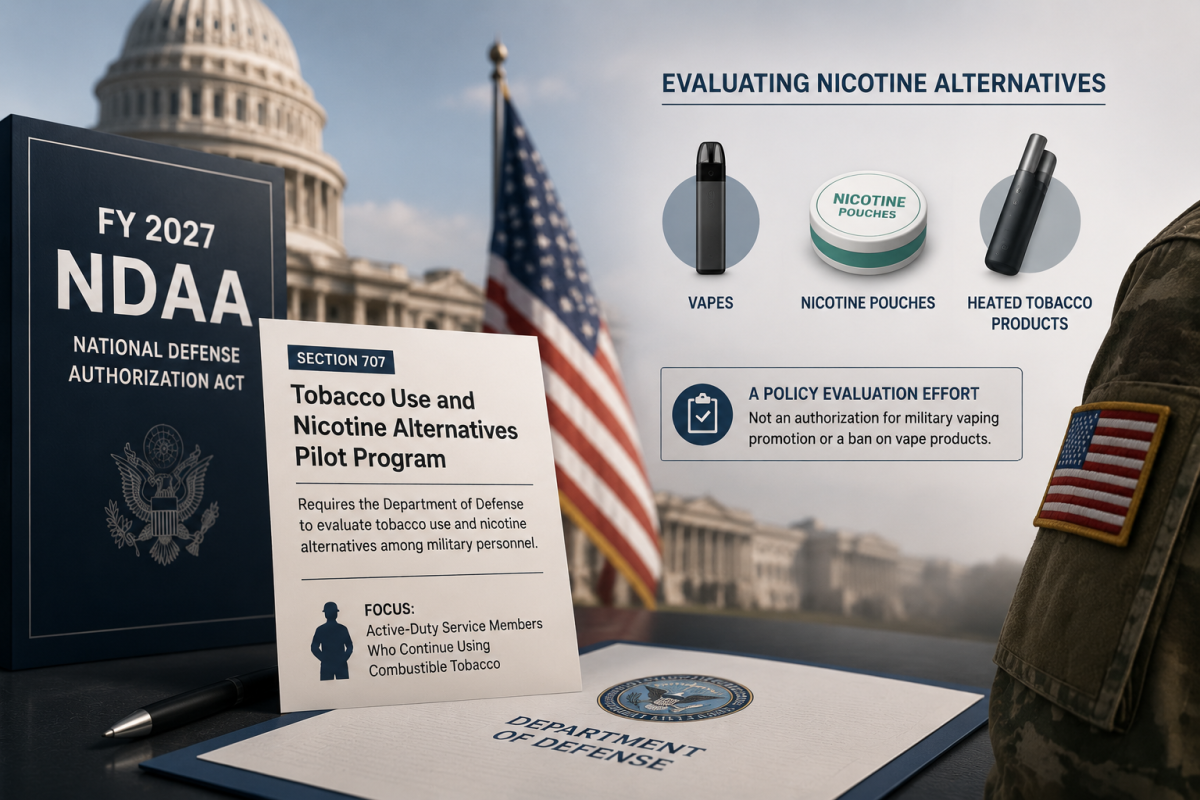
On July 23, 2026, the U.S. House of Representatives passed its version of the Fiscal Year 2027 National Defense Authorization Act (NDAA), which includes Section 707 provisions requiring the Department of Defense to evaluate tobacco use and nicotine alternatives among military personnel. The pilot program would examine products including vapes, nicotine pouches and heated tobacco products, primarily among active-duty service members who continue using combustible tobacco. The provision is a policy evaluation effort, not an authorization for military vaping promotion or a ban on vape products.

Key Points

  • The U.S. House passed H.R. 8800, its version of the FY2027 NDAA.
  • Section 707 includes a pilot evaluation of tobacco use and nicotine alternatives among military personnel.
  • Vapes, nicotine pouches and heated tobacco products are included in the assessment.
  • The pilot focuses on active-duty personnel who continue using combustible tobacco.
  • The provision is a research initiative, not a vape endorsement or prohibition.

2Firsts

July 28, 2026

On July 23, 2026, the U.S. House of Representatives passed H.R. 8800, its version of the Fiscal Year 2027 National Defense Authorization Act (NDAA), by a vote of 216-212. Section 707 of the bill includes provisions related to a Department of Defense pilot evaluation of tobacco use among military personnel, with emerging nicotine products including vapes, nicotine pouches and heated tobacco products included in the review.

According to Vaping360, the provision is designed to assess different smoking cessation and nicotine alternative approaches among military personnel, including potential effects on health outcomes, tobacco-use behavior and related policy decisions.

The measure does not authorize the U.S. military to promote vaping products, nor does it establish a ban on vapes. Instead, it creates a framework for policy evaluation within military health management.

Defense Bill Includes Nicotine Product Pilot Evaluation

The National Defense Authorization Act (NDAA) is one of the most significant annual defense policy bills considered by Congress, covering military funding, programs and related policy matters.

Section 707 of the House-passed FY2027 NDAA version would direct the Department of Defense to conduct a one-year pilot program evaluating tobacco use and alternative nicotine approaches among service members.

The pilot focuses primarily on active-duty personnel who continue using combustible tobacco products and examines options including vaping products, nicotine pouches, heated tobacco products and traditional nicotine replacement therapies.

Because the bill remains subject to further legislative steps, the final provisions and implementation details may change.

Vapes and Nicotine Pouches Enter Military Health Policy Discussion

The U.S. military has long focused on tobacco use because of its links to healthcare costs, long-term health outcomes and readiness considerations.

As newer nicotine products such as vapes and nicotine pouches have expanded, policymakers have increasingly examined their role among adult populations.

The NDAA provision is significant because it moves emerging nicotine products beyond traditional consumer regulation discussions and into military health policy evaluation.

Congress Has Previously Focused on Military Tobacco Use

Congressional attention to military tobacco use is not new.

Lawmakers have previously pushed tobacco control and smoking cessation measures within defense policy discussions, focusing on service member health, healthcare costs and military readiness.

Representative Don Davis has previously advanced tobacco-related NDAA amendment discussions, reflecting continued congressional attention to tobacco use within military environments.

The FY2027 NDAA provision expands that discussion by including emerging nicotine products such as vapes, nicotine pouches and heated tobacco products.

Provision Is Neither Vape Promotion Nor Ban

The provision may generate different interpretations among industry participants and policymakers.

Based on currently available information, the focus is on evaluating whether different nicotine products may serve as alternatives for adult smokers and what implications they may have for health and policy.

The measure does not authorize military promotion of vaping products and does not establish a broad prohibition on their use.

For the vape industry, the significance lies in the expansion of nicotine policy discussions into new institutional settings, including military health and government policy evaluation.

U.S. Nicotine Policy Debate Expands Into New Areas

Recent U.S. nicotine policy discussions have focused largely on FDA authorization, youth protection, market regulation and public health concerns.

The NDAA provision shows that policymakers are increasingly examining nicotine products through broader frameworks, including their role among specific adult populations.

Future government assessments of vapes, nicotine pouches and other alternatives may influence the regulatory environment.

For vape companies, policy attention is expanding beyond market access issues into health policy, institutional management and broader public policy discussions.

Follow 2Firsts for the latest updates on global tobacco and nicotine regulation, industry developments and market trends.

Cover Image source: generated by AI

Kantar Study Finds More Than 93% of Vape Products in Ukraine Fail Regulatory Requirements
According to Interfax-Ukraine, a study conducted by market research firm Kantar Ukraine at the request of major tobacco companies found that more than 93% of vape products in Ukraine did not fully comply with regulatory requirements. The research examined product categories, brand distribution and consumer purchasing channels, showing that pod systems and disposable vapes represent major segments of the market, while offline retail remains the dominant purchasing channel. The findings highlight ongoing compliance challenges in Ukraine’s vape market.
Aug.26
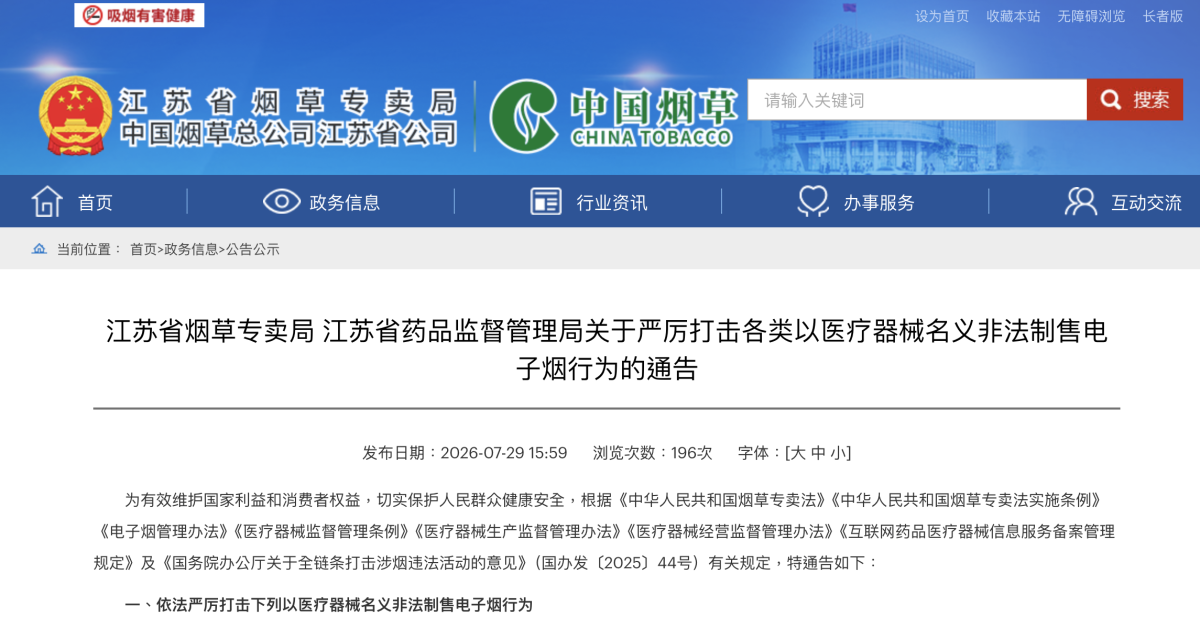
China’s Jiangsu Tobacco Monopoly Bureau and Drug Regulator Target Illegal Vape Sales Disguised as Medical Devices, Define Six Violations
China’s Jiangsu Tobacco Monopoly Bureau and Jiangsu Provincial Medical Products Administration have issued a joint notice targeting illegal production and sales of vape products disguised as medical devices. The notice identifies six categories of violations, including obtaining medical licenses through false materials, misusing medical device credentials, expanding production beyond approved scopes, and using medical device-related online platforms to promote or sell vape products. The action is based on China’s tobacco and medical device regulations and aims to strengthen vape oversight and consumer protection.
Aug.04
UK Vape Maker Riot Enters Clacton By-Election to Fight Government 'White Packaging' Proposals
British e-liquid manufacturer Riot Labs has introduced a fictional “candidate” called Riot Man around the Clacton parliamentary by-election, seeking to mobilize consumers and retailers against parts of the UK government’s proposed restrictions on vape packaging, device appearance and retail displays. Riot Man is not listed as an official candidate.
Aug.12
Philippine Local Governments Urge Marcos to Prioritize Smoke- and Vape-Free Bill
The League of Municipalities of the Philippines (LMP) has urged President Ferdinand Marcos Jr. to prioritize the Smoke- and Vape-Free Bill, seeking a nationwide legal framework for tobacco and vape regulation. Local government leaders said national legislation would help standardize enforcement and strengthen public health measures. The proposal remains at the advocacy stage and has not yet become law.
Jul.29
Charlie’s Says 30 PACHA Vape SKUs Tentatively Identified for FDA’s Non-Priority Enforcement Public List
Charlie’s Holdings said the U.S. Food and Drug Administration notified the company on June 23, 2026, that 30 PACHA vape SKUs with submitted PMTAs had been tentatively identified for inclusion on a planned public-facing FDA webpage. Under enforcement guidance issued by FDA in May, the webpage is intended to identify certain unauthorized products for which the agency generally does not intend to prioritize enforcement of premarket authorization requirements. Charlie’s disclosed the development alongside second-quarter revenue of $3.8 million, up 116% year over year.
Aug.25
BAT Calls for Retailer Input in Future Nicotine Regulations
British American Tobacco (BAT) has called for stronger retailer involvement in shaping future nicotine product regulations in the UK, arguing that frontline market feedback should be considered during policy development. BAT said retailers provide direct insight into consumer behavior, market changes and regulatory implementation challenges. The comments come as the UK nicotine market undergoes regulatory changes, including the disposable vape ban, Vaping Products Duty and efforts to address illicit vape sales.
Jul.29