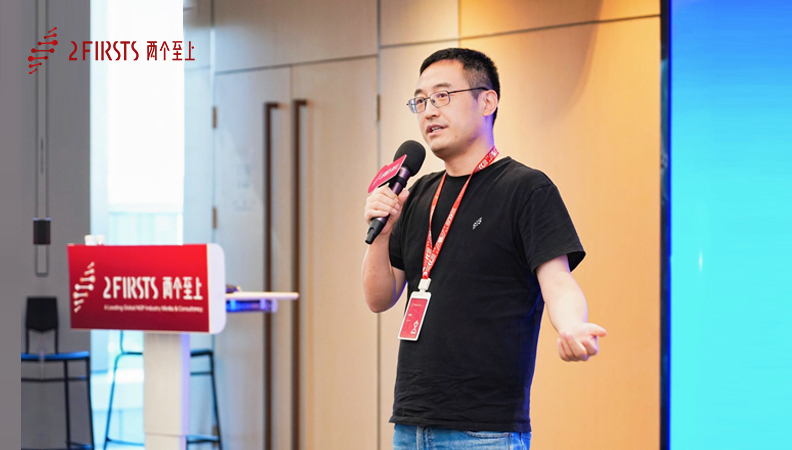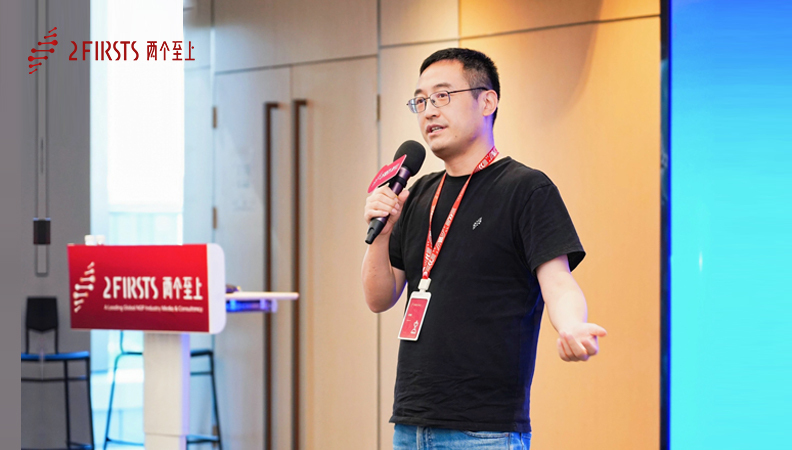
By Alan Zhao, Co-founder & CEO of 2Firsts
1. Bloomberg on JTI: Industry Transition Doesn’t Mean an Immediate Abandonment of Combustibles
A recent article from Bloomberg, titled “Japan Tobacco Is Doubling Down on Cheap Cigarettes”, spotlights Japan Tobacco International (JTI), the world’s third-largest tobacco company, and its differentiated strategy during a time of industry-wide transformation. While Philip Morris International (PMI) and British American Tobacco (BAT) continue to push aggressively toward a smoke-free future and expand their reduced-risk product (RRP) portfolios, JTI is doubling down on its combustible business — notably by acquiring U.S.-based Vector Group to strengthen its position in the low-price cigarette segment.

The article highlights several key points:
- JTI acquired Vector Group for $2.4 billion, gaining control of budget brands such as Eagle 20’s, Montego, and Pyramid;
- Outside the U.S., in markets such as Germany and Italy, JTI has boosted volume and revenue through upgraded packaging, flavors, and distribution strategies for its conventional products;
- While JTI has launched a next-generation heated tobacco product — Ploom AURA — in Japan and partnered with Altria for U.S. commercialization, the company’s overall revenue from RRPs remains significantly lower than that of its peers;
- In emerging markets like Tanzania, JTI currently only offers traditional cigarettes, drawing criticism from public health voices over a perceived lack of global harm reduction commitment.
While the article refrains from directly judging JTI’s approach, it raises a critical question for the entire industry: As companies pivot toward new nicotine products, do combustibles still have commercial and strategic relevance? And how should firms balance innovation with their legacy product base?
2. Combustibles Are Not Obsolete — They’re Undergoing Structural Redistribution
There is widespread consensus that reduced-risk products represent the long-term future of the tobacco and nicotine industry. However, practical realities vary greatly across regions — in terms of policy maturity, consumer behavior, and infrastructure readiness. During this transitional phase, traditional combustible products continue to serve an important function, particularly by stabilizing cash flow and maintaining distribution networks.
JTI’s strategy is not one of denial, but rather a pragmatic response to on-the-ground market dynamics. As noted in the Bloomberg piece, the share of premium cigarette brands in the U.S. has declined from 80% in 2021 to around 70%, with consumers showing growing price sensitivity. JTI’s timely acquisition of lower-cost brands fills the structural gap left by this shift — a logical and commercially sound move.
At the same time, JTI is not abandoning reduced-risk efforts. It is advancing its heated tobacco and nicotine pouch offerings at its own pace — a dual-track strategy that may prove more adaptable in the context of today’s fragmented global marketplace.
3. Implications for China Tobacco: Strategic Diversification, Independent Timing
China National Tobacco Corporation (CNTC) is currently entering a critical phase of international expansion. On one front, it is deepening high-quality development within its domestic market. On another, it is actively implementing its “go global” strategy by accelerating overseas industrial and market deployment.
The global shift from traditional to new tobacco products presents CNTC with a unique two-fold opportunity: to simultaneously strengthen both its combustible and new product portfolios. This moment calls for a strategic vision that goes beyond single-category export. Instead, China Tobacco’s internationalization should be framed as a “dual-tobacco strategy” — advancing both segments in a coordinated, full-spectrum approach across the value chain.
JTI’s case offers a compelling strategic insight: transition does not imply total replacement. Combustibles remain the dominant choice for most consumers in many markets. There is still room for optimization, innovation, and repositioning. For China Tobacco, the challenge is how to integrate its existing advantages with a more globally adaptive strategy that aligns its traditional and new offerings.
4. Foundational Capabilities for Combustible-Focused Companies in Transition
For tobacco companies in the midst of transformation, the core question is how to build a sustainable strategic framework. Experience shows that companies with long-term viability tend to possess the following three essential capabilities:
1. Stabilizing their core combustible business in traditional markets to ensure operational security and cash flow;
2. Investing consistently in reduced-risk products, driving scientific R&D and regulatory validation to establish viable alternatives;
3. Adapting flexibly to global diversity, enabling region-specific transition strategies rather than enforcing rigid, uniform models — with respect for differing consumer needs and regulatory environments.
Only by mastering these three capabilities can a company strike the right balance between continuity and change — moving forward while safeguarding its foundation.
5. Conclusion: Pursuing Harm Reduction Through Differentiated Strategic Paths
The global tobacco industry now stands at a crossroads of structural realignment and value redefinition. The JTI case, as presented by Bloomberg, serves as a reminder that transformation should be understood through a multidimensional lens.
Transition is not a singular model — it is a gradual process. There is no universal standard or pace. Across different markets, policy stages, and institutional contexts, coexisting strategies and asynchronous rhythms are not an exception — they are the rule.
The core challenge for global tobacco companies is how to remain stable amid volatility, and how to develop their own path and pace within this evolution.
Ultimately, the answer leads to a shared objective: accelerating the development of reduced-risk products, guiding consumers toward less harmful alternatives, and making harm reduction a global norm.