Key Points
- Australia's illicit tobacco market is estimated at 4,453–5,893 tonnes, below the previous peak of 5,972 tonnes, potentially reversing five years of growth.
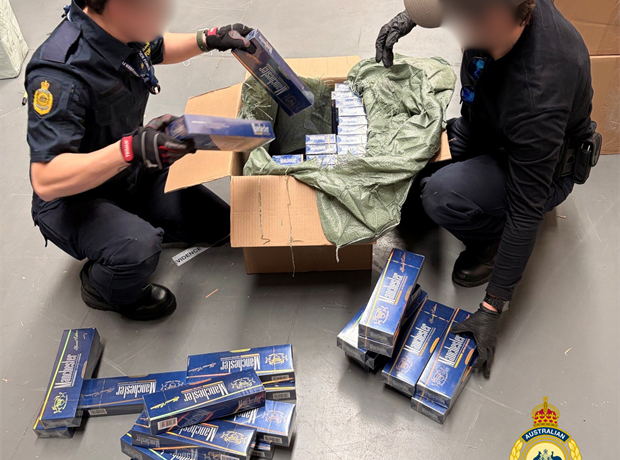
- Australian Border Force seized more than 2,300 tonnes of illicit tobacco and 13.2 million illicit vaping products during the 2025–26 financial year.
- Border authorities seized another 730 tonnes of illicit tobacco in the first quarter of 2026–27, while related domestic enforcement has led to approximately 1,300 store closures.
- The government favors stronger enforcement, while opposition parties have proposed substantial tobacco excise cuts and changes to the regulation of vaping products and nicotine pouches.
2Firsts
November 16, 2026
Australia's illicit tobacco market may have contracted for the first time after five years of growth, with new government estimates placing its volume between 4,453 and 5,893 tonnes, down from a previous peak of 5,972 tonnes, according to a November 15 report by the Australian Broadcasting Corporation (ABC).
Figures from the Illicit Tobacco and E-cigarette Commissioner (ITEC) indicate an estimated decline of approximately 1.3% to 25.4%, following average annual growth of 22.6% over the preceding five years.
The Australian government attributed the change to stronger border enforcement, domestic retail operations and closer cooperation among federal, state and territory authorities.
Assistant Minister for Customs Julian Hill said increased enforcement investment and public health measures aimed at reducing demand were helping reverse the illicit market's previous growth.
Illicit Tobacco Market Estimated at 4,453–5,893 Tonnes
The latest estimates from the Office of the Illicit Tobacco and E-cigarette Commissioner incorporate additional datasets, including periodic surveys conducted by the Australian Institute of Health and Welfare (AIHW).
The government said the additional information helped narrow the estimated market range.
| Indicator | Estimate |
|---|---|
| Previous estimated market peak | 5,972 tonnes |
| Latest higher estimate | 5,893 tonnes |
| Latest lower estimate | 4,453 tonnes |
| Estimated decline from previous peak | Approximately 1.3%–25.4% |
| Average annual growth over the preceding five years | 22.6% |
The illicit tobacco market remains difficult to measure directly. The two latest estimates differ by 1,440 tonnes.
Separate experimental research published by the Australian Bureau of Statistics (ABS) in June 2026 offers another measure of illicit nicotine consumption.
Combining wastewater nicotine-metabolite monitoring, consumer surveys and administrative data, the ABS estimated that total nicotine consumption increased by almost 40% between 2017 and 2025.
The proportion of nicotine consumption sourced from illicit products increased from 12% to 80% over the same period.
The ABS analysis covers illicit cigarettes, loose-leaf tobacco, vaping products and other nicotine products, while the newly released ITEC tonnage estimates concern the illicit tobacco market.
Border Force Seizes 13.2 Million Illicit Vaping Products; Tobacco Seizures Continue
Australian Border Force (ABF) reported in July 2026 that it had seized more than 2,300 tonnes of illicit tobacco across border and domestic enforcement operations during the 2025–26 financial year.
At the border, officers seized more than 2.2 billion illicit cigarettes and 586.7 tonnes of loose-leaf tobacco, representing a combined volume exceeding 2,259.4 tonnes.
The seized tobacco represented estimated evaded duties of more than A$4.7 billion, excluding goods and services tax.
ABF also seized more than 13.2 million illicit vaping products at the border, an increase of 112% from the previous financial year.
During the first quarter of 2026–27, from July to September 2026, border authorities seized approximately another 730 tonnes of illicit tobacco.
Domestically, the ABF-led National Disruption Group (NDG) brings together 31 federal, state and territory agencies.
According to figures released on November 15, the group had coordinated 607 enforcement operations involving 486 targets since its establishment in October 2025.
The operations resulted in the seizure of approximately 24 million illicit cigarettes and 3.6 tonnes of loose-leaf tobacco, representing more than A$45 million in estimated evaded tobacco duties.
Related retail enforcement actions have also led to approximately 1,300 store closures.
The government reported that 340 intelligence and case referrals from foreign enforcement partners had contributed to tobacco and vaping-product seizures.
Illicit Nicotine Consumption Remains High as Tobacco Tax Debate Continues
Despite the latest estimates suggesting a contraction in illicit tobacco volume, consumer surveys continue to show widespread use of illicit products.
According to the AIHW's 2025 National Drug Strategy Household Survey, 34% of current smokers reported recently using illicit tobacco, up from 17% in 2022–23.
Among current smokers aged 18–24, the proportion reached 56%.
In its 2024–25 annual report, the ITEC Commissioner estimated that illicit tobacco accounted for 50%–60% of Australia's total tobacco market, with an estimated value of A$4.1 billion to A$6.9 billion.
The same report estimated the illicit e-cigarette market at A$1.6 billion, representing 95.7% of the e-cigarette market.
These figures are based on different methodologies, including market modelling, consumer surveys and historical regulatory estimates.
Australia's major political parties remain divided over how to address the illicit trade.
The opposition Coalition has proposed an 80% reduction in tobacco excise, while One Nation has advocated a 75% cut, arguing that lower taxes could narrow the price gap between legally taxed and illicit cigarettes.
The Coalition has also proposed legalising and taxing vaping products and nicotine pouches under a regulated framework.
The government has maintained its emphasis on enforcement and existing public health measures. Hill argued that cutting tobacco excise could undermine tobacco-control progress and opposed easing restrictions on vaping products.
The ABS previously reported that prices for legal tobacco products had almost tripled since December 2016, while estimated illicit tobacco prices had remained relatively stable.
Follow 2Firsts for timely updates on global tobacco and nicotine regulations, market developments and industry trends.
Cover image source: Australian Border Force