Brazil Considers Ban on E-cigarettes: Anvisa Decision Coming Soon

Regulations by 2FIRSTS.ai
Apr.17.2024
Brazil Considers Ban on E-cigarettes: Anvisa Decision Coming Soon
Brazil's health regulator Anvisa discusses banning e-cigarettes at meeting on Wednesday, replacing 2009 law, amid rising usage concerns.

According to a report from O Globo on April 17th, the board of the Brazilian National Health Surveillance Agency (Agência Nacional de Vigilância Sanitária, Anvisa) held a meeting on Wednesday to discuss a draft bill to continue the ban on e-cigarettes.


This Wednesday (17th), Dicol will vote on the proposal, and if approved, the bill will replace the 2009 version. "Any 'tobacco product' that mimics smoking behavior using electricity, batteries, or other non-fuel power sources will not be allowed." According to the proposal, manufacturing, importing, selling, distributing, storing, carrying, and advertising for electronic smoking devices will still be prohibited in Brazil.


The proposal is more detailed than the 2009 version, further elaborating on the e-cigarette ban. The proposal clearly defines e-cigarette products to include not only e-liquid, but also all accessories, parts, components, and power supplies. It also states that any form of privately owned devices and their use in enclosed public places are strictly prohibited. Violating the ban will constitute a public health violation, resulting in fines and confiscation of products.


The Brazilian Medical Association (AMB) and the Brazilian Society of Respiratory Diseases and Tuberculosis (SBPT) support the implementation of the ban, while opponents argue that since e-cigarettes are already widely circulated in Brazil, with most of them coming from smuggling, this demonstrates the ineffectiveness of Anvisa's current regulations. They believe that if e-cigarettes were to be legalized and regulated properly, it could at least impose a standard on health conditions.


However, the proposals to regulate and allow the sale of e-cigarettes in Brazil by Anvisa, as well as the proposals to ban the legalization of e-cigarettes, have not yet been voted on in parliament.


According to a survey, the use of e-cigarettes is on the rise in Brazil. A study by the research and consulting intelligence company Inteligência em Pesquisa e Consultoria (Ipec) in 2022 found that 2.2 million adults in Brazil use e-cigarettes, compared to less than 500,000 in 2018. According to the National Student Health Survey (PeNSE) conducted by IBGE in 2019, 16.8% of adolescents aged 13 to 17 have tried e-cigarettes.


We welcome news tips, article submissions, interview requests, or comments on this piece.

Please contact us at info@2firsts.com, or reach out to Alan Zhao, CEO of 2Firsts, on LinkedIn


Notice

1.  This article is intended solely for professional research purposes related to industry, technology, and policy. Any references to brands or products are made purely for objective description and do not constitute any form of endorsement, recommendation, or promotion by 2Firsts.

2.  The use of nicotine-containing products — including, but not limited to, cigarettes, e-cigarettes, nicotine pouchand heated tobacco products — carries significant health risks. Users are responsible for complying with all applicable laws and regulations in their respective jurisdictions.

3.  This article is not intended to serve as the basis for any investment decisions or financial advice. 2Firsts assumes no direct or indirect liability for any inaccuracies or errors in the content.

4.  Access to this article is strictly prohibited for individuals below the legal age in their jurisdiction.


Copyright


This article is either an original work created by 2Firsts or a reproduction from third-party sources with proper attribution. All copyrights and usage rights belong to 2Firsts or the original content provider. Unauthorized reproduction, distribution, or any other form of unauthorized use by any individual or organization is strictly prohibited. Violators will be held legally accountable.

For copyright-related inquiries, please contact: info@2firsts.com


AI Assistance Disclaimer


This article may have been enhanced using AI tools to improve translation and editorial efficiency. However, due to technical limitations, inaccuracies may occur. Readers are encouraged to refer to the cited sources for the most accurate information.

We welcome any corrections or feedback. Please contact us at: info@2firsts.com

Ispire Q4 Revenue Rebounds 33% but Full-Year Sales Still Fall 25% as FY2027 Focus Shifts to Malaysia Manufacturing, ODM, Nicotine Pouches and Age Verification
Ispire Technology reported FY2026 revenue of about $96 million, down 24.7% year over year, as U.S. cannabis-vapor hardware and European e-cigarette sales declined by $17.4 million and $12.7 million, respectively. Fourth-quarter revenue rose 32.5% to $26.7 million, while quarterly gross margin fell to 6.3%. For FY2027, the company is prioritizing Malaysia manufacturing and vapor ODM while continuing to develop nicotine pouches, IKE Tech age-verification technology and G-Mesh licensing. Ispire has not separately disclosed the revenue or profit contribution of those newer businesses.
Regulations
Sep.17 by 2Firsts Perspectives
Japan Survey Finds 49.5% Would Cut Tobacco Use if Prices Rise, 64.6% Show Interest in Nicotine-Free Alternatives
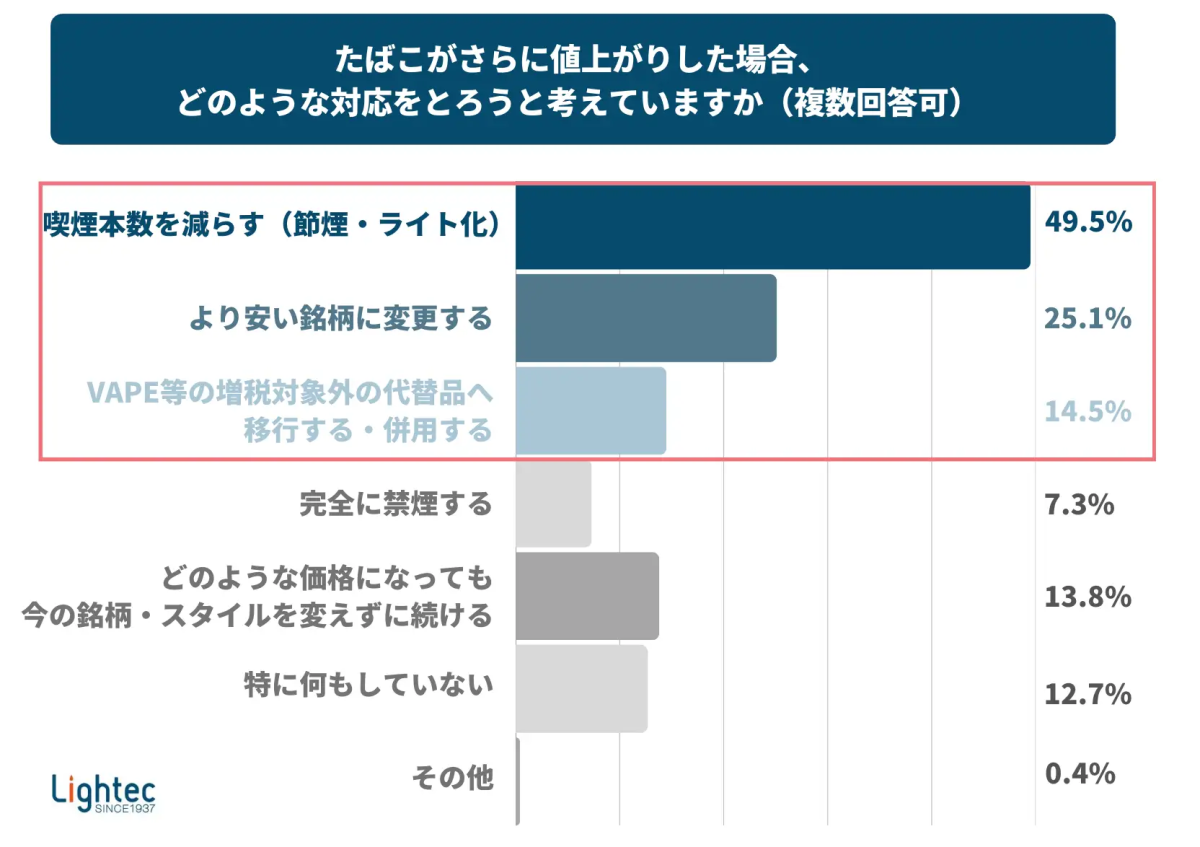
A September online survey commissioned by Japanese smoking-accessories company Lightec found that 49.5% of respondents would consider reducing tobacco use if prices rose further, while 25.1% would consider switching to cheaper brands and 14.5% would consider using or combining alternatives such as vapes and nicotine-free herbal sticks. Another 64.6% expressed some level of interest in such alternatives. The survey covered 1,088 respondents aged 20 to 70 and was conducted by a company that sells NICOLESS nicotine-free vaping and herbal-stick products, meaning its findings should not be treated as representative of Japan's smoking population.
DATA
Oct.12
Special Report|CrossBar's High-Puff Vapes Draw Attention on Pennsylvania's 163-Product Directory as Link Between Earlier 1.3mL PMTA Filings and New 13mL Products Remains Unclear
Pennsylvania began enforcing its electronic nicotine delivery system directory restrictions on October 19, 2026. Among 163 product listings recorded before enforcement, four CrossBar 20K disposables stood out with 13mL capacity, advertised puff counts of up to 20,000 and a flattened design distinct from conventional pod systems and compact disposables. Historical records identify earlier 1.3mL CrossBar products associated with Romo LLC, while newer 13mL products appeared in several state directories beginning in 2025 under entities including Blue Nine LLC. PMTA compliance expert Mr. K identified amendments and application ownership transfers as possible regulatory mechanisms, although neither has been confirmed in this case. Separately, Reynolds' $7.5 million acquisition of 16 PACHA products and related assets illustrates the commercial value of products linked to historic PMTA submissions.
Special Report
Oct.22
Special Report | Altria's NACS Booth Raises Questions Over U.S. Tobacco Advertising Warnings
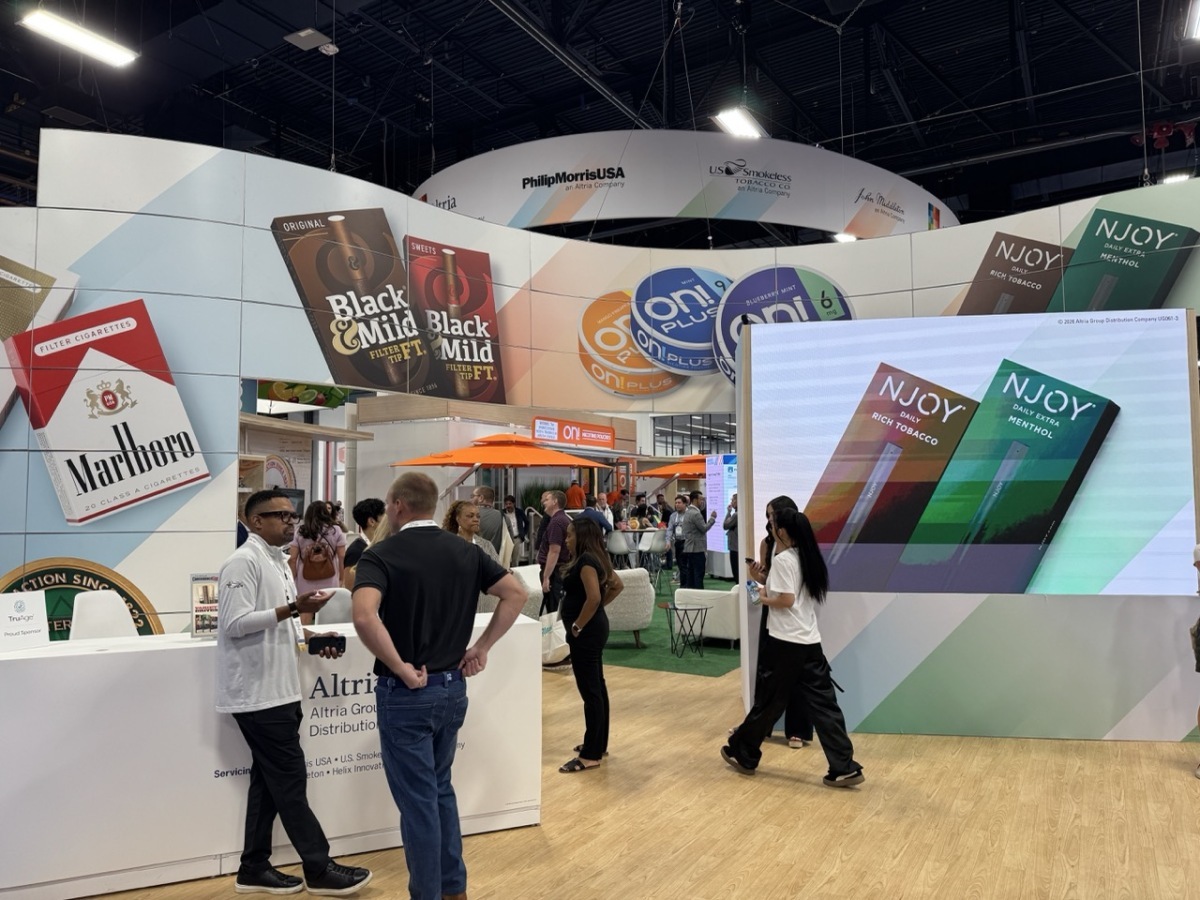
During its coverage of Altria's booth at NACS Show 2026, 2Firsts documented product displays that prompted questions about U.S. tobacco advertising warning requirements. Following public comments from a former FDA official, 2Firsts sought responses from Altria and independently consulted U.S. regulatory lawyer Azim Chowdhury. Altria maintained that its B2B communications complied with applicable laws, while Chowdhury explained that federal warning rules provide no general trade-show exemption for e-cigarettes and nicotine pouches. The special report examines the broader regulatory implications.
Nov.04
How Investors Are Repricing the Global Tobacco Industry as Nicotine Markets Shift
How are investors reassessing the global tobacco industry as nicotine markets evolve? In an interview with 2Firsts, Charlie Chen, Head of Research at CCB International Securities, forecasts annual growth of 30–50% for nicotine pouches, outpacing vaping and heated tobacco. He examines how regulatory enforcement, shifting market shares and new business models are influencing company valuations. The report also explores differences between multinational tobacco groups and Chinese companies, drawing on insights from the New Approaches Summit on profitability, investment strategies and industry consolidation.
Nov.11
How Many Nicotine Pouch Factories Does Europe Need? 2Firsts Interviews AIRSCREAM on the OEM Market
At InterTabac 2026, nicotine pouch growth was visible not only in brands but across equipment, raw materials and OEM manufacturing. 2Firsts interviewed AIRSCREAM commercial head Steve Moore on how many pouch factories Europe may ultimately need and where manufacturers can differentiate, from formulation and flavour to pouch materials, production consistency and customer service. The category continues to expand, but questions remain over future capacity, consolidation and the long-term structure of the supply chain.
Sep.18