Call2Recycle Expands Vape Recycling in Canada, Bringing Cannabis Devices Into Quebec-Wide Program

Dec.03.2025
Call2Recycle Expands Vape Recycling in Canada, Bringing Cannabis Devices Into Quebec-Wide Program
Call2Recycle Canada, the country’s battery stewardship organization, is expanding its vape recycling program in Quebec to include cannabis vape devices, strengthening the safe recovery of embedded batteries and device materials. Backed by government bodies, producers and other stakeholders, the initiative aims to reduce landfill waste and create a scalable model for other Canadian provinces.

Key Points


  • Canada’s battery stewardship organization has expanded its program to include cannabis vape devices, with support from the Quebec government and Recyc-Québec.
  • The initiative aims to address environmental pressures from the growing use of battery-powered products and will add more collection points to increase accessibility.
  • Call2Recycle aims to apply its 30 years of battery management experience to develop a model that can be replicated across other Canadian provinces.


2Firsts, December 3, 2025 — According to Recycling Today, Call2Recycle Canada, the country’s battery stewardship organization, has announced an expansion of its Recycle Your Vapes program in Quebec to include cannabis vape devices under a unified recycling system. The organization says the move, supported by the Quebec government and Recyc-Québec, is intended to address “urgent environmental concerns.”


Call2Recycle Canada says the expansion builds on the original program launched on January 1, 2024, and responds to mounting waste-management pressures created by the rapid growth of battery-powered products and changing patterns in cannabis consumption. The goal is to ensure these devices receive appropriate end-of-life treatment.


The organization is working with manufacturers, retailers, government agencies, municipal authorities and industry stakeholders to implement what it calls a “safe and responsible” recycling solution designed to keep batteries and device components out of landfills, while providing a model that can be replicated nationwide.


Joe Zenobio, president and CEO of Call2Recycle Canada, said that as the market evolves, recycling solutions must evolve as well. Whether dealing with household batteries or those embedded in new consumer products, the organization’s mission remains to provide safe, convenient and proven recycling pathways. He noted that with nearly 30 years of battery management experience, Call2Recycle aims to support Quebec’s waste-reduction goals through innovative program design.


According to the organization, the expanded Recycle Your Vapes program strengthens the collection and processing of embedded batteries and other recyclable materials such as metals and plastics. The initiative is being implemented jointly by Call2Recycle, producers, government bodies and Crown corporations, in collaboration with the Ministry of the Environment, the Fight Against Climate Change, Wildlife and Parks; the Ministry of Health and Social Services; Recyc-Québec; and other stakeholders.


The program is currently scaling up its collection network across the province to improve accessibility for adult consumers. Participating locations will be equipped with specially designed collection containers to ensure safe handling, with additional sites to be added over time. Once collected, partner processors will sort and recycle batteries and other materials to extract reusable components and ensure proper treatment.


Cover image: Recycling Today

We welcome news tips, article submissions, interview requests, or comments on this piece.

Please contact us at info@2firsts.com, or reach out to Alan Zhao, CEO of 2Firsts, on LinkedIn


Notice

1.  This article is intended solely for professional research purposes related to industry, technology, and policy. Any references to brands or products are made purely for objective description and do not constitute any form of endorsement, recommendation, or promotion by 2Firsts.

2.  The use of nicotine-containing products — including, but not limited to, cigarettes, e-cigarettes, nicotine pouchand heated tobacco products — carries significant health risks. Users are responsible for complying with all applicable laws and regulations in their respective jurisdictions.

3.  This article is not intended to serve as the basis for any investment decisions or financial advice. 2Firsts assumes no direct or indirect liability for any inaccuracies or errors in the content.

4.  Access to this article is strictly prohibited for individuals below the legal age in their jurisdiction.


Copyright


This article is either an original work created by 2Firsts or a reproduction from third-party sources with proper attribution. All copyrights and usage rights belong to 2Firsts or the original content provider. Unauthorized reproduction, distribution, or any other form of unauthorized use by any individual or organization is strictly prohibited. Violators will be held legally accountable.

For copyright-related inquiries, please contact: info@2firsts.com


AI Assistance Disclaimer


This article may have been enhanced using AI tools to improve translation and editorial efficiency. However, due to technical limitations, inaccuracies may occur. Readers are encouraged to refer to the cited sources for the most accurate information.

We welcome any corrections or feedback. Please contact us at: info@2firsts.com

German Bundestag Passes Tobacco Tax Hikes: Vape Liquid Duty to Reach €0.44/ml, Heated Tobacco Taxes to Rise and Cigarettes Seen Near €12 a Pack
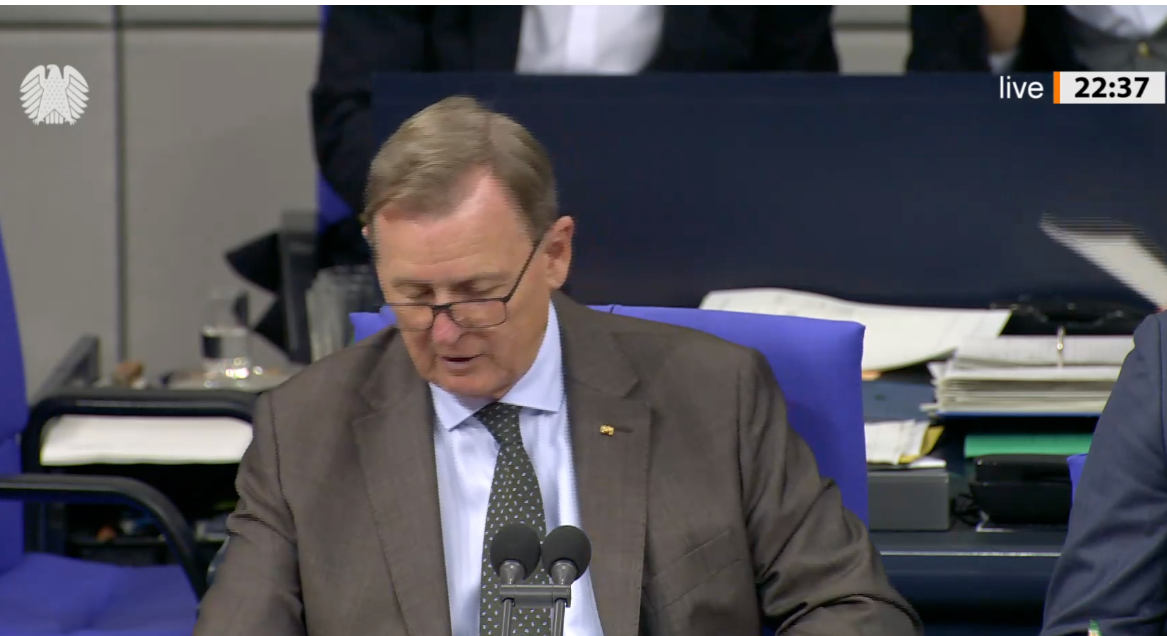
Germany's Bundestag passed amendments to the Tobacco Tax Act on October 15, 2026, setting out annual excise tax increases from 2027 through 2030 for e-cigarette liquids, heated tobacco, cigarettes and other tobacco products. Under the Finance Committee's amended bill, duty on qualifying e-liquids will rise from €0.32/ml in 2026 to €0.44/ml in 2030, an increase of 37.5%. Heated tobacco will retain its tax calculation based on 80% of the corresponding cigarette excise duty. The average price of a 20-cigarette pack is projected to approach €12 by 2030, with some brands potentially reaching €14. The legislation is projected to generate approximately €11.8 billion in additional tax revenue over four years and remains subject to further legislative procedures.
Regulations
Oct.19
From Vuse, Velo and glo to AI Consulting: Former BAT Content Lead Launches Destreza
Former BAT global content lead Andy Parton has left the company and launched Destreza, a London-based AI-native marketing consultancy. Parton previously worked across BAT's New Category brands Vuse, Velo and glo and had also served as Global Brand Lead for Vuse Go. Destreza says it will advise consumer businesses on AI in brand strategy, operating models, capability and agency configuration, using specialist AI agents to support research, strategy and creative development. BAT reported £3.621 billion in New Category revenue in 2025.
Sep.22
South Korea Extends Vape Rules to Unmanned Stores After Bringing Synthetic Nicotine Under Tobacco Law
South Korea's Ministry of Gender Equality and Family said on September 14 that it plans to designate unmanned e-cigarette stores as businesses where minors are prohibited from entering or working. Operators would be required to verify customers' ages and display notices restricting access by minors. The proposal is open for public comment through October 6. The move follows an April expansion of South Korea's statutory tobacco definition that brought products made with natural or synthetic nicotine under the Tobacco Business Act. Nicotine-free liquids and products using nicotine analogues such as 6-methylnicotine, however, remain an emerging regulatory issue.
Sep.21
Smoke-Free Business Hits 42% of Q2 Net Revenue as PMI’s First TNFD Report Covers Single-Use Electronics, Critical Raw Materials and IQOS Repairs
Philip Morris International has published its first report aligned with the Taskforce on Nature-related Financial Disclosures, bringing its electronics supply chain and the use and end-of-life stages of smoke-free devices and consumables into its nature-related assessment. PMI said its smoke-free business accounted for about 42% of total net revenues in the second quarter of 2026. The report says non-circular electronic products, particularly single-use items, can increase consumption of limited natural resources and also details an IQOS repair pilot. A 2040 circularity scenario tests assumptions including a 50% reduction in product waste-related costs, 10% raw-material savings and a 25% substitution rate for refurbished products versus new products.
Sep.23
JUUL Purchasers Ask Ninth Circuit to Preserve Antitrust Classes in Case Over Altria’s $12.8 Billion Investment
Private antitrust litigation stemming from Altria's 2018 $12.8 billion investment for a 35% economic interest in JUUL is advancing before the U.S. Court of Appeals for the Ninth Circuit. Direct purchasers, indirect purchasers and indirect resellers of JUUL products filed answering briefs this week seeking to preserve class certifications granted by a California federal court in February. Altria and JUUL argue that individual consumers and large distributors differ too much in purchasing terms to remain in a single direct-purchaser class, while a separate dispute concerns whether California antitrust law can apply to indirect purchasers across 27 jurisdictions. A September trial has been put on hold during the appeal.
Sep.23
2Firsts Interview | Cigarette Sales Fall as Smokeless Alternatives Gain in U.S. Convenience Stores, NACS Says
Ahead of the 2026 NACS Show, 2Firsts interviewed Chris Rapanick, NACS managing director of research, on changes reshaping the U.S. convenience-store tobacco and nicotine market. NACS data show cigarette sales declining while smokeless alternatives, including nicotine pouches, continue to grow. The interview also examines higher OTP margins, shifting backbar space, weaker store traffic, regulatory uncertainty and NACS’ outlook for 2027, offering a retailer-side view of one of the world’s largest nicotine markets.
Interview
Oct.03