Chinese E-Cigarettes: A Major Concern for US Youth

Regulations by 2FIRSTS.ai
Nov.27.2023
Chinese E-Cigarettes: A Major Concern for US Youth
Over 89% of American middle school students admit to using e-cigarettes, with China suspected as the main source, according to a CDC report.

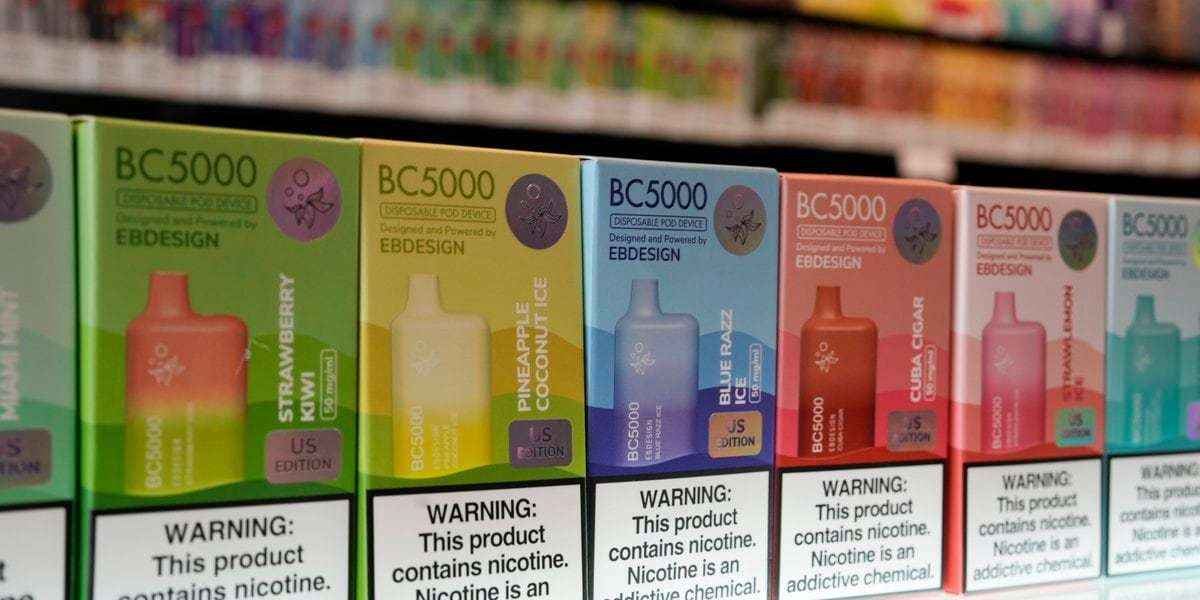
According to a report released by the Centers for Disease Control and Prevention (CDC), over 89% of American middle school students have admitted to using e-cigarettes, with China being suspected as the primary source of these devices.


The report further indicates that despite the US FDA's ban on the sale of fruit-flavored e-cigarettes in February 2020, the prevalence of youth using disposable flavored e-cigarettes remains alarming.


According to the report, teenagers are the heaviest users of disposable flavored e-cigarettes. In February 2020, the FDA banned the sale of fruit-flavored e-cigarettes like blueberry or cotton candy. It is now believed that many of these e-cigarettes are originating from China, indicating limited capabilities of the FDA to combat this issue.


However, there is some good news as the CDC reports that by 2023, 10% of teenagers are projected to use e-cigarettes on a daily basis, a decrease from the 14.1% recorded in 2022.


We welcome news tips, article submissions, interview requests, or comments on this piece.

Please contact us at info@2firsts.com, or reach out to Alan Zhao, CEO of 2Firsts, on LinkedIn


Notice

1.  This article is intended solely for professional research purposes related to industry, technology, and policy. Any references to brands or products are made purely for objective description and do not constitute any form of endorsement, recommendation, or promotion by 2Firsts.

2.  The use of nicotine-containing products — including, but not limited to, cigarettes, e-cigarettes, nicotine pouchand heated tobacco products — carries significant health risks. Users are responsible for complying with all applicable laws and regulations in their respective jurisdictions.

3.  This article is not intended to serve as the basis for any investment decisions or financial advice. 2Firsts assumes no direct or indirect liability for any inaccuracies or errors in the content.

4.  Access to this article is strictly prohibited for individuals below the legal age in their jurisdiction.


Copyright


This article is either an original work created by 2Firsts or a reproduction from third-party sources with proper attribution. All copyrights and usage rights belong to 2Firsts or the original content provider. Unauthorized reproduction, distribution, or any other form of unauthorized use by any individual or organization is strictly prohibited. Violators will be held legally accountable.

For copyright-related inquiries, please contact: info@2firsts.com


AI Assistance Disclaimer


This article may have been enhanced using AI tools to improve translation and editorial efficiency. However, due to technical limitations, inaccuracies may occur. Readers are encouraged to refer to the cited sources for the most accurate information.

We welcome any corrections or feedback. Please contact us at: info@2firsts.com

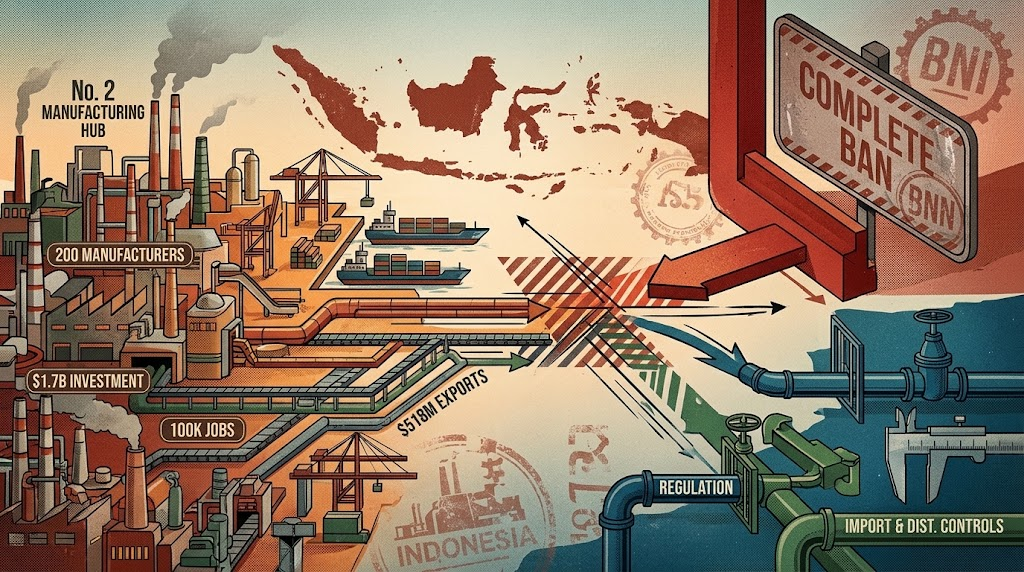
Special report|Indonesia's Vape Industry Has 200 Manufacturers and $1.7 Billion in Investment. Could a Regulatory Divide Derail Its Rise as the World's No. 2 Manufacturing Hub After Shenzhen?
Indonesia's Ministry of Industry said at a November 3, 2026, policy forum that the country has about 200 electronic cigarette companies, Rp31 trillion (approximately $1.71 billion) in cumulative industry investment and around 100,000 jobs across the supply chain. The National Narcotics Agency is seeking a comprehensive ban on vape use and circulation, while the industry ministry favors tighter import, product-standard and distribution controls. Indonesia exported approximately $518 million in vaping products in 2025, and Chinese manufacturers including Smoore, GEEKVAPE and Jinjia Group have established local operations. An international logistics specialist interviewed by 2Firsts said more Chinese vape companies began production in Indonesia from the second half of 2025, accompanied by increased shipments of manufacturing equipment and investment in logistics facilities. The regulatory debate comes as Indonesia expands its role in international vaping manufacturing.
Special Report
Nov.05
Italy Proposes Earlier Vape and HTP Tax Hikes, New Rules for E-Liquid Pricing, Exclusive Deals and Distribution
Italy's proposed 2027–2029 budget would bring forward scheduled tax increases for e-cigarette liquids and heated tobacco products from January 1, 2028, to July 1, 2027. The consumption tax coefficient for nicotine-containing e-liquids would rise from 20% to 22%, that for nicotine-free liquids and applicable flavorings from 15% to 17%, and the heated-tobacco coefficient from 41% to 42%. The bill would also introduce official retail price schedules for e-liquids, restrict exclusive agreements between retailers and suppliers, and limit single-brand-dominated displays, sales incentives and bundled offers. Importing, authorized warehousing and retailer sourcing arrangements would also change. The proposals remain subject to parliamentary approval and subsequent implementing regulations.
Regulations
Nov.04
As Regulators Focus on Nicotine Pouch Child Safety, Safeguard Pursues an External Packaging Route
As regulators pay closer attention to child safety in nicotine pouches, manufacturers face a practical challenge: how to strengthen child-resistant packaging without unnecessarily reworking products, production lines and regulatory submissions already in place. In a written interview with 2Firsts, Chemular detailed Safeguard’s external packaging approach, its customer-specific testing requirements and possible PMTA pathways. The model remains early-stage, but it offers a new way to think about an increasingly important regulatory and manufacturing issue.
Industry Insight
Sep.19
NAS 2026 | FDA CTP Director Says PMTA Pathway Is “Predicated on Tobacco Harm Reduction”
At the 2026 New Approaches Summit in New York, FDA Center for Tobacco Products Director Bret Koplow said the PMTA pathway is “predicated on tobacco harm reduction.” He outlined four CTP priorities: youth prevention, helping adults quit or switch to lower-risk products, improving relative-risk communication, and reducing unauthorized products. Koplow also addressed flavored e-cigarettes, public risk perceptions, industry credibility and efforts to make PMTA reviews more efficient and predictable.
Sep.26
Swedish-Founded Nicotine Pouch Retailer GotPouches Shifts to U.S.-Based Operations, Reaching Over 25 States
Swedish-founded online nicotine pouch retailer GotPouches has completed the localization of its U.S. operations under UpNorth Retail LLC, with corporate operations in Franklin, Tennessee, domestic fulfillment from Nashville and U.S.-based customer support. The company says its catalog covers more than 20 nicotine pouch brands and it currently serves customers in more than 25 U.S. states.
Sep.18
PMI Pushes Smoke-Free Business in Latin America as Argentina Lifts Heated Tobacco Ban, Mexico City Share Tops 7%
Philip Morris International (PMI) showcased IQOS heated tobacco systems and nicotine pouch products at Technovation 2026 in Buenos Aires on October 7–8, presenting research on consumer attitudes, regulatory developments and illicit cigarette trade across Latin America. PMI Chief Global Growth Officer Stefano Volpetti said smoke-free products accounted for more than 7% of the Mexico City market. Argentina repealed its heated tobacco ban in May 2026 and introduced registration requirements for tobacco and nicotine products, while local media reported nicotine pouch sales in Mendoza. A PMI-commissioned survey found that only 8% of respondents across four Latin American countries were familiar with nicotine pouches. A separate KPMG study estimated illicit cigarette consumption at 77 billion sticks across 11 markets in Latin America and Canada in 2025.
PMI
Oct.13