Dutch Government Announces Further Delay in E-Cigarette Flavor Ban

Regulations by 2FIRSTS.ai
Jun.28.2023
Dutch Government Announces Further Delay in E-Cigarette Flavor Ban
According to Dutch media rtlnieuws, the Dutch government has decided to further delay the implementation of the e-cigarette flavor ban. The ban will now come into effect on January 1, 2024, three months later than originally planned. The government had previously announced the flavor ban in 2021, with plans to implement it on July 1, 2022.

According to Dutch media outlet rtlnieuws, the Dutch government has decided to once again postpone the implementation of the e-cigarette flavor ban, which will now come into effect on January 1, 2024. Previously, the government had planned to prohibit all e-cigarette flavors except tobacco starting from October 1, 2023, but the new timetable sets the ban three months later than originally intended.


Ongoing Postponement of the 'Flavor Ban'


The "flavor ban" in the Netherlands was announced as early as 2021, with the government originally planning to implement it officially on July 1, 2022. However, by June 2022, government spokespersons stated that there had been some complications in implementing the flavor ban, necessitating additional checks to ensure the safety of the flavoring ingredients being used.


As a result, the implementation has been postponed until January 1, 2023, allowing a window period of 10 months (effective from October 1) for the tobacco industry to absorb existing flavored tobacco products.


The Dutch National Institute for Public Health and the Environment (RIVM), in accordance with the demands of the Ministry of Health, has compiled a preliminary list of sixteen ingredients for the only permitted tobacco-flavored e-cigarette.


However, the current discovery by RIVM is that listing sixteen ingredients for tobacco flavors is disproportionately harmful to the interests of the tobacco industry.


The government spokesperson has clarified that the flavor ban has had a larger impact on tobacco manufacturers than previously anticipated. As a result, Minister Maarten van Ooijen has decided to grant tobacco manufacturers more time, which has raised concerns among public health officials.


A spokesperson from RIVM clarified:


"Our initial calculations concluded that about a quarter of tobacco flavors can still exist, but upon recalculating, it was found that only 2% to 23% of flavors can continue to exist for manufacturers to use."


Public health officials are concerned that the ongoing delay in implementing the "flavor ban" could lead to a further rise in the popularity of e-cigarettes and result in a series of adverse effects.


Marten responded by expressing his preference for immediate implementation of a "flavor ban.


"Clearly, these flavors are designed to lure children and young people into using e-cigarettes."


However, he emphasized that this is a postponement of the plan rather than a cancellation of the plan.


According to a supplementary analysis by RIVM, the ban on flavors has a potentially greater impact on manufacturers than we have previously believed. From the principles of good governance, I have a responsibility to address this.


According to reports, the Dutch government aims to achieve a smoke-free society by 2040. In the meantime, the government is making every effort to reduce smoking behavior; during this term, the price of cigarettes will rise to 10 euros.


Reference: [1] Flavors ban on e-cigarettes postponed again: tobacco manufacturers granted more time.


Disclaimer

This article is provided solely for professional research, industry discussion, and informational purposes. Any references to brands, companies, products, technologies, or policies are made for factual reporting and analytical purposes only, and do not constitute endorsement, recommendation, promotion, or advertising by 2Firsts.

Nicotine-containing products, including but not limited to cigarettes, e-cigarettes, heated tobacco products, and nicotine pouches, carry significant health risks. Readers are responsible for complying with all applicable laws and regulations in their respective jurisdictions, including age restrictions and access limitations.

The information contained in this article should not be regarded as investment, legal, medical, regulatory, or commercial advice. While 2Firsts strives to ensure the accuracy and reliability of its content, it does not assume liability for any direct or indirect loss arising from errors, omissions, inaccuracies, or reliance on the information contained herein.

This article is not intended for individuals below the legal age for accessing tobacco or nicotine-related information in their jurisdiction.


Copyright Notice

This article is either original content produced by 2Firsts or content reproduced, translated, summarized, or adapted from third-party sources with attribution where applicable. The intellectual property rights of the original content remain with 2Firsts or the respective original rights holders.

No individual or organization may copy, reproduce, distribute, republish, modify, translate, or otherwise use this content without prior authorization. Any unauthorized use may result in legal action.

For copyright-related inquiries, corrections, or removal requests, please contact: info@2firsts.com.


AI-Assisted Translation and Editing Notice

Portions of this article may have been translated, edited, or reviewed with the assistance of artificial intelligence tools to improve efficiency and readability. Due to the limitations of AI-assisted translation and editing, discrepancies, omissions, or inaccuracies may exist when compared with the original source.

Where applicable, readers are advised to refer to the original source for the most complete and accurate information. If you identify any errors or believe that any content infringes upon your rights, please contact us at info@2firsts.com, and we will review and address the matter promptly.

NAS 2026 | Cliff Douglas: Risk Continuum Should Play a Central Role in Tobacco Policy
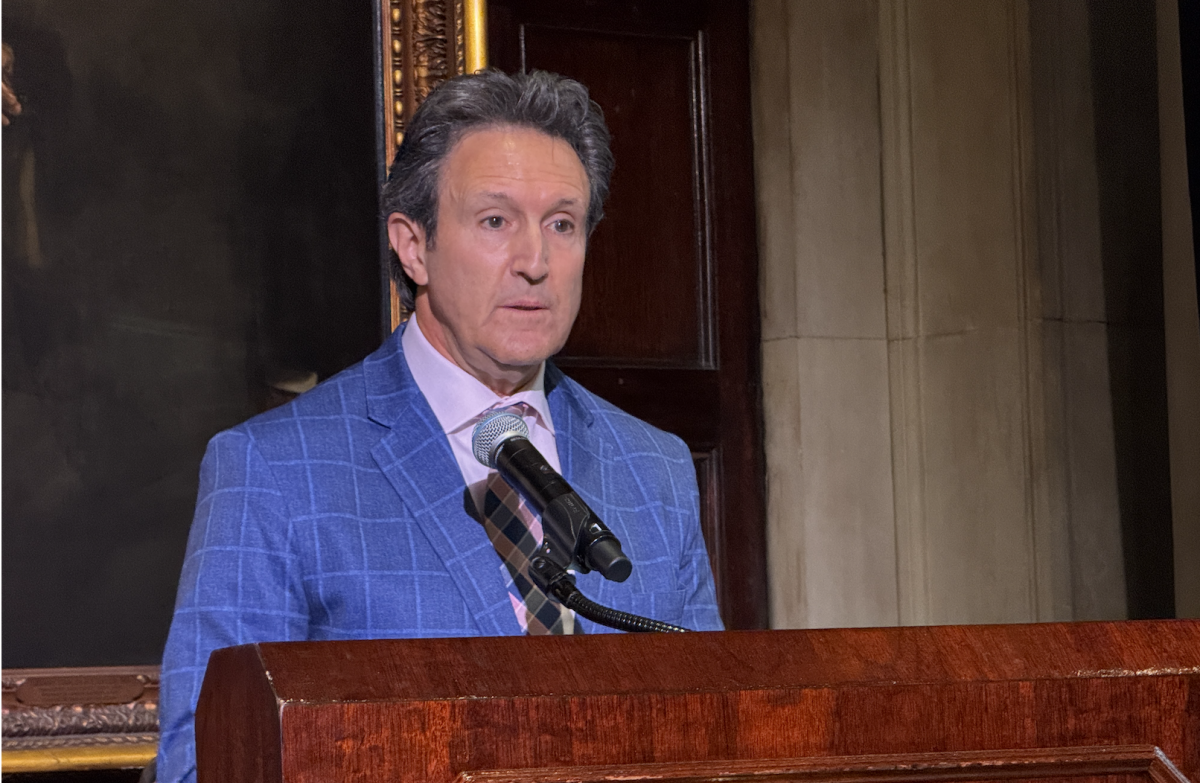
Cliff Douglas, a veteran U.S. tobacco-control and public health policy figure, told NAS 2026 that the “continuum of risk” should play a central role in tobacco policy. He called for clearer market pathways, stronger risk communication, differentiated regulation and enforcement, and said possible FDA reforms to PMTA reviews could be a “welcome correction” if they create a more efficient, predictable route for scientifically substantiated lower-risk products. Read 2Firsts’ on-site coverage.
Sep.26
Snowplus Enters Japan’s FamilyMart Network With Zero-Nicotine NEO Line and Kishidan Campaign
Snowplus distributor H&S said the zero-nicotine, zero-tar NEO vaping line will begin rolling out across FamilyMart stores in Japan from September 14, 2026, excluding some locations. The DASH line will also be sold at selected FamilyMart stores in southern Kyushu and Okinawa. Snowplus simultaneously named Japanese rock band Kishidan as a brand ambassador, combining convenience-store distribution with a broader consumer marketing push in Japan.
Sep.15
U.S. Health Groups Seek to Overturn FDA Enforcement Discretion for Pending PMTAs as Altria's Helix, NJOY and AVM Move to Intervene
American Vapor Manufacturers (AVM) and Altria subsidiaries Helix Innovations and NJOY filed separate motions on October 7, 2026, seeking to intervene on the FDA's side in a lawsuit challenging its enforcement guidance for certain e-cigarette and nicotine pouch products with pending premarket tobacco product applications (PMTAs). Seven public health and tobacco-control organizations, including the Campaign for Tobacco-Free Kids, sued the agency in July to overturn the policy. AVM argues that vacating the guidance could disrupt orders, inventory, retail distribution and investments in regulatory submissions.
Regulations
Oct.09
DATA|UK Retail Research Group IGD Says Convenience Tobacco and Vape Sales Fell 10.6%, With 15.4% Market Share Versus Alcohol's 15.1%; Top Rank at Risk in 2027
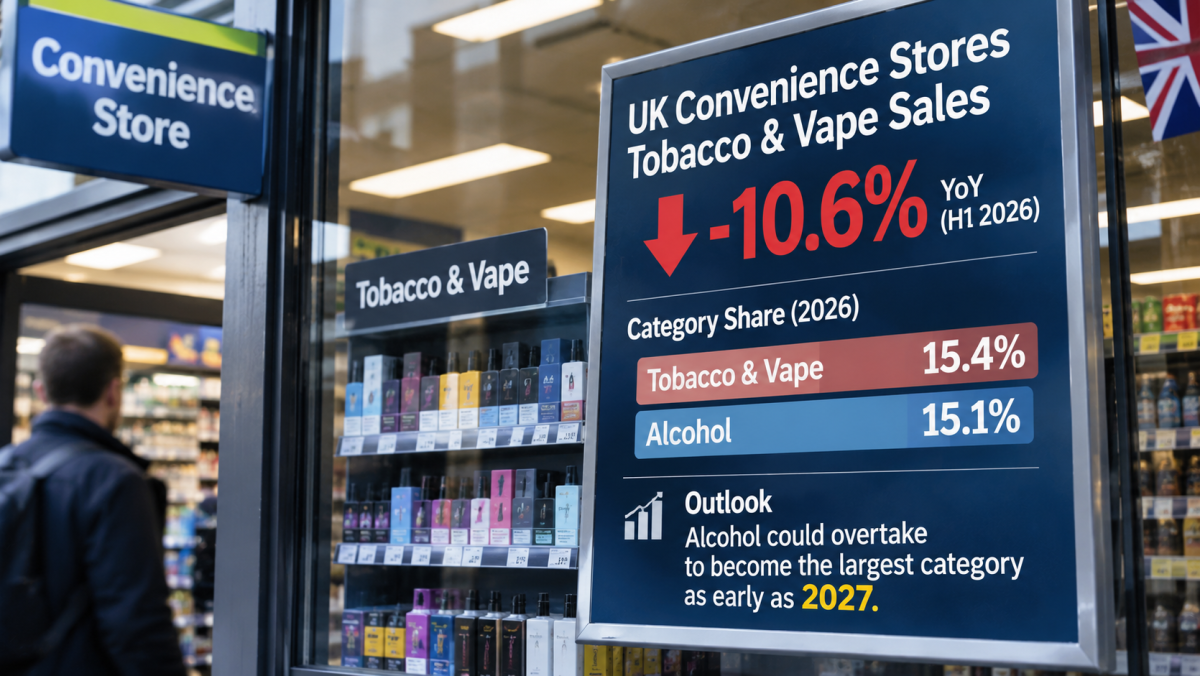
Combined tobacco and vaping sales in UK convenience stores fell 10.6% year over year in the first half of 2026, making the category a major drag on channel performance, according to retail research organization IGD. Total convenience sales declined 1.2%, while sales excluding tobacco and vaping increased 0.7%. IGD's 2026 category-share figures show tobacco and vaping accounting for 15.4% of convenience sales, compared with 15.1% for alcohol. The organization forecasts alcohol could overtake tobacco and vaping as the largest category by sales value as early as 2027 if current trends continue. IGD expects the convenience market to increase from £48.6 billion in 2026 to £54.9 billion in 2031, a 2.5% compound annual growth rate, or 3.4% excluding tobacco and vaping.
DATA
Nov.11
BAT Adds Former Apple General Counsel Bruce Sewell to Board as Finance, Legal, Marketing and Regional Leadership Shift
British American Tobacco has appointed former Apple Senior Vice President, General Counsel and Secretary Bruce Sewell as an independent non-executive director, effective January 1, 2027. He will also join BAT's Audit and Nominations Committees. BAT Chair Luc Jobin highlighted Sewell's experience in technology, government and regulatory affairs, public-company governance and AI-company boards. Over the past 18 months, BAT has changed or announced changes to its CFO, general counsel, CMO and APMEA regional leadership, while the main board has also seen multiple changes. The appointment comes as BAT advances Horizon 2030 and its Fit2Win transformation while expanding New Categories and reshaping parts of its digital, technology and operating structure.
Business
Oct.29
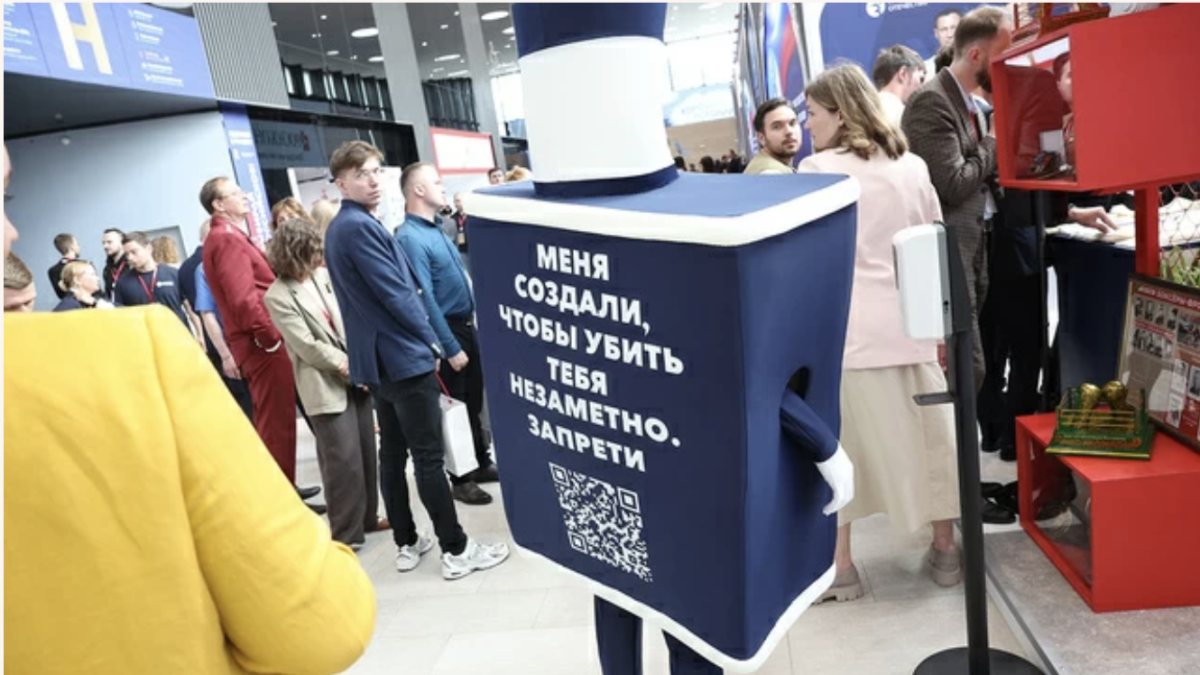
Russia's State Duma Passes Tobacco and Nicotine Ingredient Disclosure Bill, Targeting 2027 End to Trade-Secret Protection for Certain Harmful Ingredient Data
Russia's State Duma passed a government-sponsored amendment on November 11, 2026, by 414 votes to none, seeking to prevent businesses from classifying information on the presence and number of types of certain harmful ingredients in tobacco and nicotine-containing products as trade secrets. The measure covers ingredients capable of increasing nicotine dependence or exhibiting toxic, carcinogenic, mutagenic or reproductive toxicity, including substances that acquire such properties during heating or smoldering. Bill No. 1286415-8 would amend Article 5 of Federal Law No. 98-FZ on Commercial Secrets and is scheduled to take effect on January 1, 2027. The bill has cleared all three readings in the State Duma but has not completed the remaining legislative procedures.
Regulations
Nov.12 by 2Firsts Perspectives