Since 2019, Estonia has prohibited the purchase of flavored e-cigarette liquid and other related products from abroad. However, it was initially unclear if the ban applied to flavor additives sold separately for use in e-cigarettes. It has since been determined that these additives are indeed prohibited.
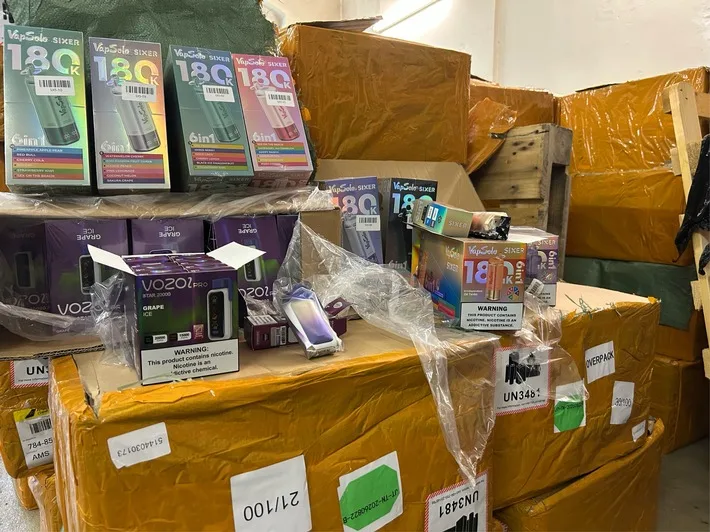
According to a report by ERR (the Estonian Broadcasting Company), the restrictions on e-cigarettes have not had the intended effect, as disposable e-cigarettes can still be purchased from overseas and are becoming increasingly popular.
The Minister of Social Affairs, Peep Peterson, stated that he has no influence over the entry of electronic cigarettes into the country, even if they are prohibited items. When asked by ERR's Madis Hindre, he said, "This is a classic role for customs inspections and controlling business at the border.
Meanwhile, Eerik Heldna, head of the Customs Department at the Estonian Tax and Customs Board (MTA), has stated that the organization intercepts illegal tobacco products entering Estonia on a daily basis.
However, this does not mean that more people will not get through.
Heldna stated that border checks "cannot fully solve social problems. This situation where 100% of illegal goods are seized by customs, regardless of what they are, does not exist anywhere in the world," and added that measures from the demand side are crucial.
Despite this, Peep Peterson suggests that the MTA may be successful in curbing the proliferation of tobacco products, given that the eastern border with Russia is effectively closed and the southern borders with Latvia, an EU and Schengen country, could become more prominent.
The minister stated, "If the closure is related to the war in Ukraine and is implemented on the southern border, then MTA may need to monitor the transportation of goods more closely.
Heldna stated that the majority of illegal new tobacco products originate from another EU country. She also added that restrictions at the EU level, such as restrictions on heated tobacco products, would be helpful to address this issue.
Any such measures at the EU level that begin to weaken this market, especially among young people, will be welcomed. They will greatly change this situation, not just by one successful program or action," said Heldna.
According to current EU laws, the ban on flavored cigarettes (removing mint and similar products from the Estonian market) does not extend to flavored e-cigarette oils. This may be due to the belief that e-cigarettes could assist with smoking cessation. However, Peterson added that flavored e-cigarette oils can be addictive, just like disposable e-cigarettes.
The Department of Social Affairs may soon introduce more legislation to tackle the issue of disposable electronic cigarettes, as they are concerned about their potential appeal to underage individuals - in some cases, minors have been charged with picking up discarded e-cigarettes and using them.
The minister stated that 'in theory, the decision to ban disposable e-cigarettes or e-cigarettes has already been put on the table,'" he added that retailers are not at fault and are good at checking the age of customers at the appropriate time.
Possible measures may include retailers being required to take back used e-cigarettes, but there are also environmental considerations regarding disposal.
According to a report by ERR, the market for disposable e-cigarettes is also thriving, thanks to clever marketing tactics such as "fresh flavors." In Estonia, sales of individualized flavored e-cigarettes increased from 2.5 million in 2020 to 35 million last year.
Another issue is lobbying. Tarmo Krussimäe, a member of the Estonian Reform Party, emphasizes that he proposes several bills each year to reduce restrictions and consumption taxes. His main argument, backed up by some empirical evidence, is that failing to do so would lead to a thriving black market.
Heldna noted that the ability to purchase electronic cigarettes online sets it apart from traditional tobacco smuggling. This decentralized and individual-based ordering system may be much more important in the overall alternative tobacco economy.
According to Heldna, the MTA is currently focusing on inspecting sanctioned goods that arrive at the border. This summer, retailers of flavored e-cigarette additives have requested additional time to address the upcoming restrictions, clarifying that the 2019 ban on flavored e-cigarette products includes flavor additives.
Statement:
This article is compiled from third-party information and intended for industry communication and learning purposes only.
This article does not represent the views of 2FIRSTS, and 2FIRSTS cannot confirm the truthfulness or accuracy of the content. The compilation of this article is only intended for industry exchange and research.
Due to limitations in our translation abilities, this article may not perfectly convey the same meaning as the original text. Please refer to the original text for accuracy.
2FIRSTS maintains complete alignment with the Chinese government on any domestic, Hong Kong-Macao-Taiwan-related, and foreign-related statements and positions.
The copyright of compiled information belongs to the original media and author. If there is any infringement, please contact us for removal.
Disclaimer
This article is provided solely for professional research, industry discussion, and informational purposes. Any references to brands, companies, products, technologies, or policies are made for factual reporting and analytical purposes only, and do not constitute endorsement, recommendation, promotion, or advertising by 2Firsts.
Nicotine-containing products, including but not limited to cigarettes, e-cigarettes, heated tobacco products, and nicotine pouches, carry significant health risks. Readers are responsible for complying with all applicable laws and regulations in their respective jurisdictions, including age restrictions and access limitations.
The information contained in this article should not be regarded as investment, legal, medical, regulatory, or commercial advice. While 2Firsts strives to ensure the accuracy and reliability of its content, it does not assume liability for any direct or indirect loss arising from errors, omissions, inaccuracies, or reliance on the information contained herein.
This article is not intended for individuals below the legal age for accessing tobacco or nicotine-related information in their jurisdiction.
Copyright Notice
This article is either original content produced by 2Firsts or content reproduced, translated, summarized, or adapted from third-party sources with attribution where applicable. The intellectual property rights of the original content remain with 2Firsts or the respective original rights holders.
No individual or organization may copy, reproduce, distribute, republish, modify, translate, or otherwise use this content without prior authorization. Any unauthorized use may result in legal action.
For copyright-related inquiries, corrections, or removal requests, please contact: info@2firsts.com.
AI-Assisted Translation and Editing Notice
Portions of this article may have been translated, edited, or reviewed with the assistance of artificial intelligence tools to improve efficiency and readability. Due to the limitations of AI-assisted translation and editing, discrepancies, omissions, or inaccuracies may exist when compared with the original source.
Where applicable, readers are advised to refer to the original source for the most complete and accurate information. If you identify any errors or believe that any content infringes upon your rights, please contact us at info@2firsts.com, and we will review and address the matter promptly.