Key Points
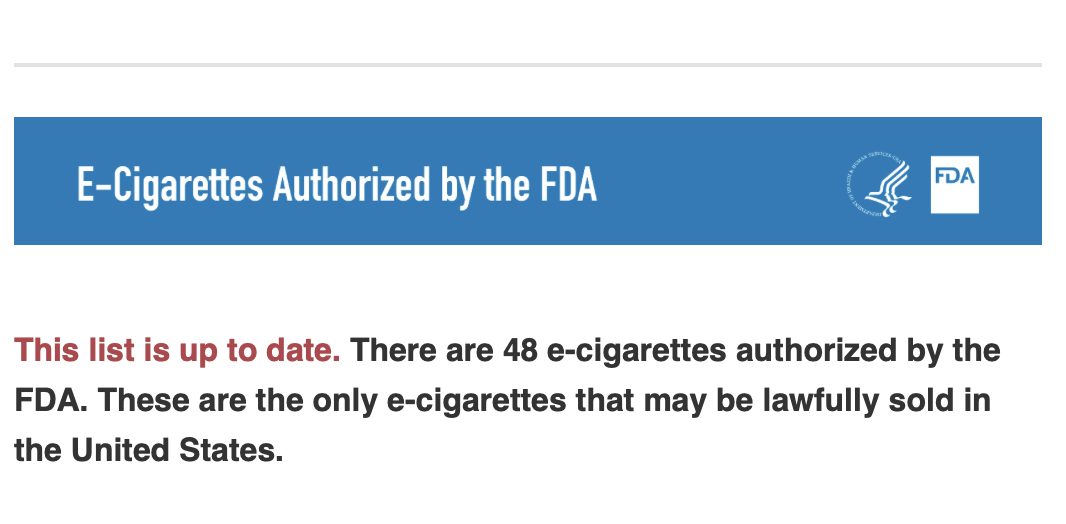
● JUUL2 Authorization: FDA authorized the JUUL2 device and tobacco- and menthol-flavored pods, bringing the total number of FDA-authorized e-cigarette products to 48.
● Adult Switching: FDA highlighted complete switching among adult smokers, with six-week switching rates of 28.4%–49.3% for the menthol pod and 19.9%–34.6% for the tobacco pod.
● Menthol Benefit-Risk Balance: FDA said the added benefit of the menthol product to adult smokers was sufficient to outweigh its risks, including youth appeal.
● PMTA Acceleration: FDA has been reducing review backlogs, shortening review stages and applying efficiency measures developed through its nicotine-pouch pilot to other PMTAs.
● Regulated Market Shift: More e-cigarettes and nicotine pouches are receiving MGOs while FDA continues to prioritize enforcement against certain unauthorized products.
2Firsts
Shenzhen, August 29, 2026
The U.S. Food and Drug Administration on the afternoon of Aug. 28, U.S. Eastern Time, authorized the JUUL2 device and its tobacco- and menthol-flavored pods through the premarket tobacco product application, or PMTA, pathway, bringing the number of FDA-authorized e-cigarette products to 48.
The FDA highlighted complete switching among adult cigarette smokers in explaining the decision. It said 28.4% to 49.3% of adults using the menthol-flavored JUUL2 pod had stopped smoking cigarettes entirely at six weeks, compared with 19.9% to 34.6% among those using the tobacco-flavored pod.
The agency said the added benefit of the menthol product to adults who smoke was sufficient to outweigh its risks, including youth appeal. The decision comes as FDA has been implementing measures to accelerate PMTA reviews and issuing a series of new marketing orders for e-cigarettes and nicotine pouches.
FDA Cites Higher Switching With Menthol JUUL2
The FDA authorized three products: the JUUL2 device, a tobacco-flavored pod and a menthol-flavored pod. Both pods contain 18 mg/mL of nicotine, which the agency said is equivalent to a nicotine concentration of about 1.5% to 1.6%.
According to the FDA, a substantial proportion of adult smokers using the products completely switched away from combustible cigarettes within six weeks.
The complete-switching rate ranged from 19.9% to 34.6% for the tobacco-flavored pod and from 28.4% to 49.3% for the menthol-flavored version.
The FDA's Aug. 28 announcement did not specify the basis for presenting the switching figures as ranges.
The agency also said adults who completely switched to the authorized JUUL2 products were exposed to lower levels of harmful chemicals than they would have been if they had continued smoking cigarettes.
For the menthol-flavored product, FDA specifically said the additional benefit to adults who smoke was sufficient to outweigh the product's risks, including youth appeal.
FDA also stressed that adults need to switch completely from cigarettes to e-cigarettes or other lower-risk alternatives to obtain the same degree of health benefit, saying dual use does not provide the same benefit as complete switching.
A marketing granted order allows a product to be legally marketed in the United States. It does not mean the product is safe or has been "FDA approved."

JUUL2 Extends JUUL's U.S. Product Platform
According to Juul Labs, JUUL2 is its next-generation vapor platform and was first launched in the United Kingdom in 2021.
Juul Labs materials reviewed by 2Firsts show that the company submitted its first U.S. PMTA for the next-generation platform in July 2023, covering the JUUL2 device and a Virginia Tobacco pod at 18 mg/mL nicotine. It followed in December 2023 with a PMTA for a menthol-flavored pod at the same nicotine concentration.
According to the company's materials, the JUUL2 platform incorporates age-verification and device-locking capabilities, along with Bluetooth connectivity and pod authentication. When Juul Labs submitted its menthol PMTA in December 2023, it said the menthol pods were designed to require user age verification before use.
The FDA's Aug. 28 announcement, however, did not mention those access-control technologies or state what role, if any, they played in the authorization decision. Its public explanation focused on adult switching, exposure to harmful chemicals and the balance between benefits to adult smokers and risks including youth appeal.
JUUL's original U.S. PMTAs were submitted in 2020 and ultimately authorized in 2025 after a lengthy regulatory process.
According to FDA records reviewed by 2Firsts, the agency issued marketing denial ordersfor JUUL's original device and pods in June 2022, citing insufficient evidence on aspects of their toxicological profile.
FDA placed those orders under administrative stay less than two weeks later while it conducted additional scientific review. In June 2024, it rescinded the denial orders and returned the applications to substantive review, citing additional information and developments in case law involving e-cigarette marketing-denial decisions.
In July 2025, FDA authorized five original JUUL products: the JUUL device and Virginia Tobacco and Menthol pods in 3% and 5% nicotine concentrations.
The latest orders extend JUUL's U.S. marketing authorization from its original product line to the JUUL2 platform.
FDA PMTA Decisions Pick Up in 2026
The JUUL2 orders add to a series of e-cigarette and nicotine-pouch marketing decisions issued by FDA over the past year.
A review of FDA marketing orders by 2Firsts shows that nine e-cigarette products have received marketing granted orders so far in 2026.
On March 12, FDA authorized the Glas G2 device and a Blonde Tobacco pod. On May 5, it authorized four additional Glas pods: Classic Menthol, Fresh Menthol, Gold and Sapphire.
Gold is mango-flavored and Sapphire is blueberry-flavored. FDA said at the time that the two products were the first e-cigarettes it had authorized with flavors other than tobacco or menthol.
With the three JUUL2 products authorized on Aug. 28, the number of FDA-authorized e-cigarette products has risen from 39 following the original JUUL authorization in July 2025 to 48.
FDA has also issued a series of decisions for nicotine pouches.
The agency launched a nicotine-pouch PMTA pilot program in September 2025, introducing more frequent real-time communication between reviewers and applicants in an effort to resolve scientific and technical issues earlier in the review process.
In December 2025, FDA authorized six on! PLUS nicotine pouches made by Helix Innovations, an Altria Group subsidiary. FDA later said those first pilot decisions were issued just three months after scientific review under the program began, describing the timeframe as a PMTA review record.
Further decisions followed in August.
FDA authorized four additional on! products on Aug. 4 and issued further marketing granted orders to Helix Innovations on Aug. 19. Two days later, it authorized 11 ZYN ULTRA nicotine pouches made by Swedish Match USA.
FDA's current list includes 43 authorized nicotine-pouch products.
Separately, the Center for Tobacco Products has announced broader changes aimed at speeding product review.
In a May statement, CTP Acting Director Bret Koplow said the center had reduced its PMTA backlog by about 70% during 2025. He said new applications were no longer waiting in a queue for Acceptance Review and that the agency was working to accelerate Filing Review and streamline scientific reviews and final decisions.
FDA has also said it can, where appropriate, issue decisions for products within the same submission separately, allowing products that have completed review to receive marketing orders without waiting for other products in the application that may still require additional information.
The agency is also developing an expedited process for some supplemental PMTAs involving modifications to previously authorized products.
FDA has described these measures as efforts to make product review faster and more efficient while maintaining the same statutory public-health standard.
Faster Reviews Could Expand the Authorized Market
FDA's efforts to speed PMTA review are occurring alongside updated enforcement priorities for products that have not received federal marketing authorization.
In May, FDA issued final guidance setting out enforcement priorities for certain unauthorized e-cigarettes and nicotine pouches.
The JUUL2 decision shows one set of evidence FDA considered in an individual PMTA review. In its public announcement, the agency emphasized complete switching among adult smokers, lower exposure to harmful chemicals among those who switched completely, and the balance between adult benefits and youth risks.
In other recent cases, FDA has also considered measures intended to restrict youth access. When it authorized additional Glas products in May, for example, the agency cited device-access restriction technology together with marketing restrictions in its assessment of youth risk.
FDA says PMTAs are reviewed on a product-specific basis, and the JUUL2 announcement did not indicate that any single technology or type of evidence would determine future decisions.
What is clear from FDA's own statements is that the agency is seeking to reduce review times. It has reported a roughly 70% reduction in its PMTA backlog, removed the queue for Acceptance Review and begun applying efficiency measures developed through the nicotine-pouch pilot to other product reviews.
Whether a larger pool of authorized e-cigarettes and nicotine pouches will materially shift competition in the U.S. market toward products that have completed federal premarket review remains an open question.
Follow 2Firsts for continuing coverage of the latest U.S. PMTA developments.
Cover image: Screenshot from the FDA website.
![2FIRSTS | [Breaking] Juul’s Device and 4 Pod Products Officially Authorized by FDA, Reenters the U.S. Regulated Market](https://static.2firsts.com/uploads/20241113/34ffc17feb2b6076367c9e5f413641f2.jpg?x-oss-process=style/origin)

Disclaimer
This article is provided solely for professional research, industry discussion, and informational purposes. Any references to brands, companies, products, technologies, or policies are made for factual reporting and analytical purposes only, and do not constitute endorsement, recommendation, promotion, or advertising by 2Firsts.
Nicotine-containing products, including but not limited to cigarettes, e-cigarettes, heated tobacco products, and nicotine pouches, carry significant health risks. Readers are responsible for complying with all applicable laws and regulations in their respective jurisdictions, including age restrictions and access limitations.
The information contained in this article should not be regarded as investment, legal, medical, regulatory, or commercial advice. While 2Firsts strives to ensure the accuracy and reliability of its content, it does not assume liability for any direct or indirect loss arising from errors, omissions, inaccuracies, or reliance on the information contained herein.
This article is not intended for individuals below the legal age for accessing tobacco or nicotine-related information in their jurisdiction.
Copyright Notice
This article is either original content produced by 2Firsts or content reproduced, translated, summarized, or adapted from third-party sources with attribution where applicable. The intellectual property rights of the original content remain with 2Firsts or the respective original rights holders.
No individual or organization may copy, reproduce, distribute, republish, modify, translate, or otherwise use this content without prior authorization. Any unauthorized use may result in legal action.
For copyright-related inquiries, corrections, or removal requests, please contact: info@2firsts.com.
AI-Assisted Translation and Editing Notice
Portions of this article may have been translated, edited, or reviewed with the assistance of artificial intelligence tools to improve efficiency and readability. Due to the limitations of AI-assisted translation and editing, discrepancies, omissions, or inaccuracies may exist when compared with the original source.
Where applicable, readers are advised to refer to the original source for the most complete and accurate information. If you identify any errors or believe that any content infringes upon your rights, please contact us at info@2firsts.com, and we will review and address the matter promptly.