Key Points:
- Tikki Pang advocates for establishing independent parallel platforms to promote dialogue and accelerate tobacco harm reduction (THR).
- While the WHO Framework Convention on Tobacco Control (FCTC) has significantly reduced the health toll of tobacco use, 8 million smoking-related deaths still occur annually.
- Despite the proven safety and effectiveness of safer alternative tobacco products (ATP), the WHO has maintained a strong anti-THR position, preventing broader acceptance and implementation of these alternatives.
- The tobacco industry is highly fragmented, with large state-owned companies, depending heavily on traditional cigarette sales, making the creation of a unified pro-THR industry platform challenging.
- Investors could play a key role in supporting the transition to safer alternatives, as research shows that tobacco companies shifting faster toward ATPs tend to have higher share prices, making investors a potential driving force for change in the industry.
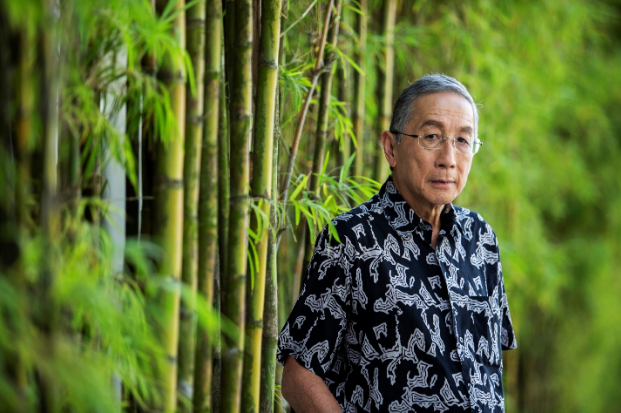
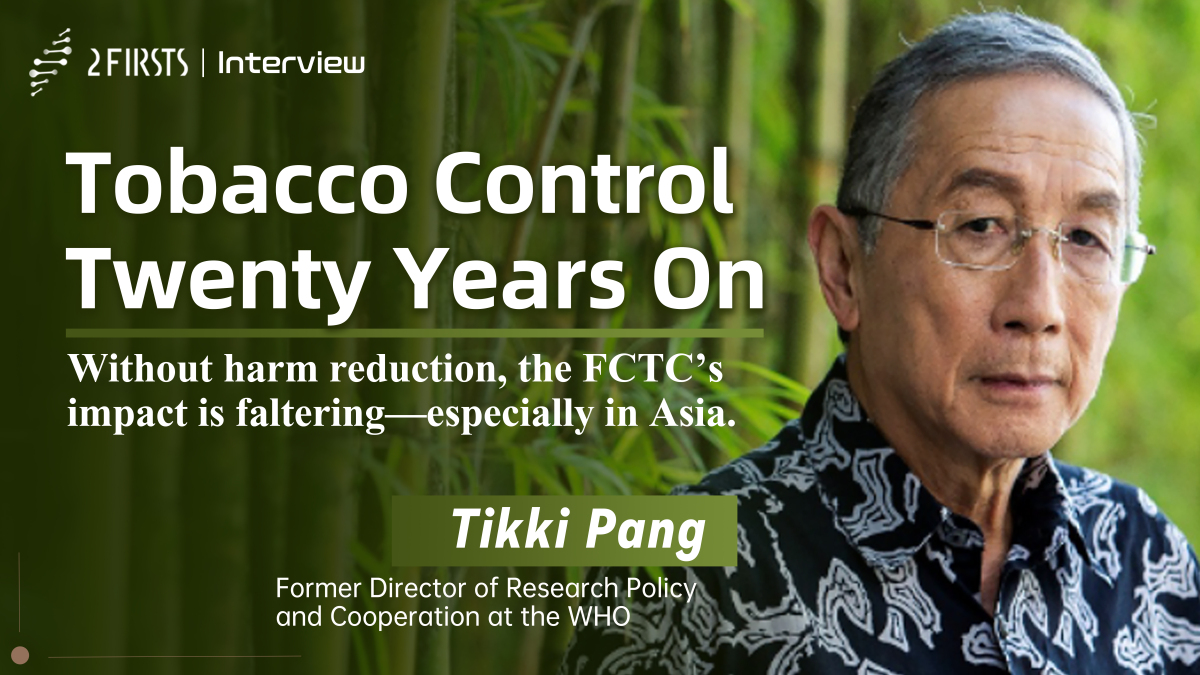
2Firsts, Sept. 8, 2025 (by Taco Tuinstra)-Rather than lamenting the World Health Organization’s (WHO) rejection of tobacco harm reduction (THR), stakeholders should consider establishing parallel platforms to promote dialogue and coordination, and thus accelerate the end of smoking, according to Tikki Pang, a leading public health expert and a former WHO director. Pang made his call Aug. 27 at the inaugural Asia Forum on Nicotine, where he gave a presentation about the impact of the WHO Framework Convention on Tobacco Control (FCTC), which celebrates its 20th anniversary this year. In force since 2005, the treaty provides a legal framework with a comprehensive set of tobacco control measures to protect people from harmful effects of tobacco use and exposure. According to Pang, the FCTC has been ratified by 183 countries covering 90 percent of the world’s population.
FCTC Impact and Limitations
In terms of public health impact, Pang considers the FCTC to be in the same league as the WHO’s eradication of smallpox in the 1980s. The interventions prescribed by the FCTC, he noted, have contributed to a significant reduction in smoking prevalence around the world, particularly in rich and developed countries. “By various estimates, between 22 million and 24 million deaths have been averted,” said Pang, adding that smoking causes 85 percent of lung cancers, which in turn constitute 20 percent of all cancer deaths globally. “This is a major achievement for the FCTC,” said Pang.
Unfortunately, the treaty is less successful than it could have been, Pang noted. “Despite the earlier success of the FCTC, today we still see 8 million deaths [annually] linked to smoking,” he said, adding that four out of five of these premature deaths occur in low- and middle-income countries.
Pang attributes this situation to member states’ relatively slow implementation of substantive FCTC articles and the WHO’s failure to support the use of safer alternative tobacco products as a tool to end smoking.
“Only 38 percent of countries that have ratified the FCTC have in place bans on smoking in public places,” said Pang. “Only 9 percent have bans on all forms of tobacco advertising, promotion and sponsorships.” This slow rate, he observed, means the current WHO target of a 30 percent relative reduction in tobacco use between 2010 and 2025 will not be met by the end of this year—although it may be achievable by 2030.
What’s more, despite the overwhelming evidence of the safety, efficacy and cost-effectiveness of safer alternative tobacco products—and despite the fact that hundreds of millions of people are actually using these safer alternatives—WHO has adopted a strong anti-THR stance, stating that these products are as harmful as combustible cigarettes and called on its member states to ban them, according to Pang.
A Different Approach
Recognizing that criticizing the WHO position has had little effect to date, Pang suggested a different approach. “Instead of banging our heads against a brick wall, why not find ways of skirting the problem with the same final goal of more widespread acceptance of THR?” he asked.
One possible approach, suggested Pang, would be to build strong evidence-driven and independent parallel platforms for the key stakeholders to improve dialogue and coordination. These independent platforms, he explained, would exist outside the FCTC structure; they would serve to bring stakeholders together and to put pressure on WHO to change its position and perhaps ultimately bypass and make the WHO stance irrelevant.
The platform, Pang suggested, could initially be formed among three key stakeholders: producers, consumers and investors.
He acknowledged that the likelihood of successfully establishing such platforms differs per group. Manufacturers in the nicotine business, Pang noted, might struggle to copy examples from other sectors, such as the International Federation of Pharmaceutical Manufacturers and Associations in the drugs business, due to their diverging strategies.
The challenge, he said, is that state-owned companies account for the lion’s share of global cigarette sales. The annual revenue of the China National Tobacco Corp. (CNTC), at $200 billion, dwarfs that of publicly traded firms such as Philip Morris International and British American Tobacco, according to Pang. “CNTC has huge domestic cigarette market and is therefore unlikely to get into ATPs [alternative tobacco products] any time soon,” Pang said.
“While PMI and BAT have made strong commitments to a ATPs, until we see these large state-owned companies transitioning to ATPs, the idea of a united association among alternative tobacco producers advocating a unified message on THR remains a pipedream. The field is too fragmented, and the key players have very different economic and political agendas.”
On the consumer front, there is the Global Alliance for Tobacco Control, a coalition of more than 500 public health, human rights and consumer rights groups from more than 100 countries. “Regretfully they take a strong anti-THR position, which needs to be countered by an alliance of THR supporters,” said Pang.
Pang reckoned that investors are best positioned to establish a pro-THR platform. “Research has shown that there is a close correlation between the state of transformation of tobacco companies and their share price,” he said. “This suggests that investors are prepared to pay more for the shares of tobacco companies transitioning to ATPs faster than they are for companies transforming more slowly.”
The Path Forward
Should an independent global THR coalition arise, Pang suggested it focus on five goals:
- Demanding improvement in the transparency and inclusivity of WHO processes and content focus.
- Placing THR in the broader context of noncommunicable diseases, the United Nations sustainable development goals, and universal healthcare.
- Promoting more inclusive and effective stakeholder engagement across companies, civil society, industry, consumers, professionals, etc.
- Broadening the definition of tobacco control and advocating for risk-proportionate regulations.
- Working with governments to highlight and disseminate success stories from countries that have been successful with THR.
Despite the prevailing despair regarding the WHO’s dogmatic opposition to THR, Pang expressed optimism about the future. “In the years since I became supporter of THR, I have been struck by the support the cause has received from many quarters: senior former colleagues at the WHO, highly respected academic and professional societies, physicians on the frontlines; civil society, consumers groups and, of course, industry,” he said. “We cannot all be wrong.”
Pang went on to quote Dr. Alex Wodak, a prominent THR advocate in Australia, and Herbert Stein, economic advisor to U.S. President Richard Nixon. Wodak compared the WHO’s stance on THR to that of the governments of Eastern Europe and the Soviet Union on the future of central command economies in the 1980s, predicting that the WHO’s position, too, would collapse.
Stein put it more succinctly: “Things that can't go on forever, don't.”
Reading more: