Key Points
- Hungary plans to end ODBE's exclusive tobacco-shop supply concession on June 1, 2027, roughly eight years before its 2035 expiry.
- BAT's Hungarian subsidiary owns 49% of ODBE, while Tabán Trafik owns 51%. The government proposes no compensation for early termination.
- ODBE accumulated HUF 67.3 billion ($200 million) in after-tax profits and distributed nearly HUF 64 billion ($191 million) in dividends from 2015 to 2025.
- Hungary had 5,588 licensed tobacco shops in 2025. The bill would allow other qualified suppliers and tobacco wholesalers to serve the network.
- Proposed changes also cover retail margins for cigarettes, heated tobacco and other tobacco products, as well as inventory, payment and procurement-penalty rules.
2Firsts
November 19, 2026
Hungary's government is seeking to terminate a nationwide tobacco-shop supply monopoly held by a joint venture partly owned by British American Tobacco (BAT), approximately eight years before its contract expires, without compensating the existing concession holder.
The venture, Országos Dohányboltellátó (ODBE), generated approximately $200 million in cumulative after-tax profits from 2015 to 2025.
Transport and Investment Minister Dávid Vitézy announced late on November 17 that the government had proposed legislation to terminate ODBE's exclusive supply rights and concession agreement on June 1, 2027.
ODBE is owned 49% by BAT Pécsi Dohánygyár, a Hungarian BAT subsidiary, and 51% by Hungarian tobacco company Tabán Trafik. Its 20-year concession was awarded in 2015 and was due to expire in 2035.
According to Hungary's November 18 government announcement, Reuters and Hungarian news outlet Telex, the reform would allow other appropriately licensed operators to supply the country's tobacco shops. Hungary had 5,588 licensed tobacco shops in 2025.
BAT-Backed Venture Faces Early Loss of Exclusive Rights Without Compensation
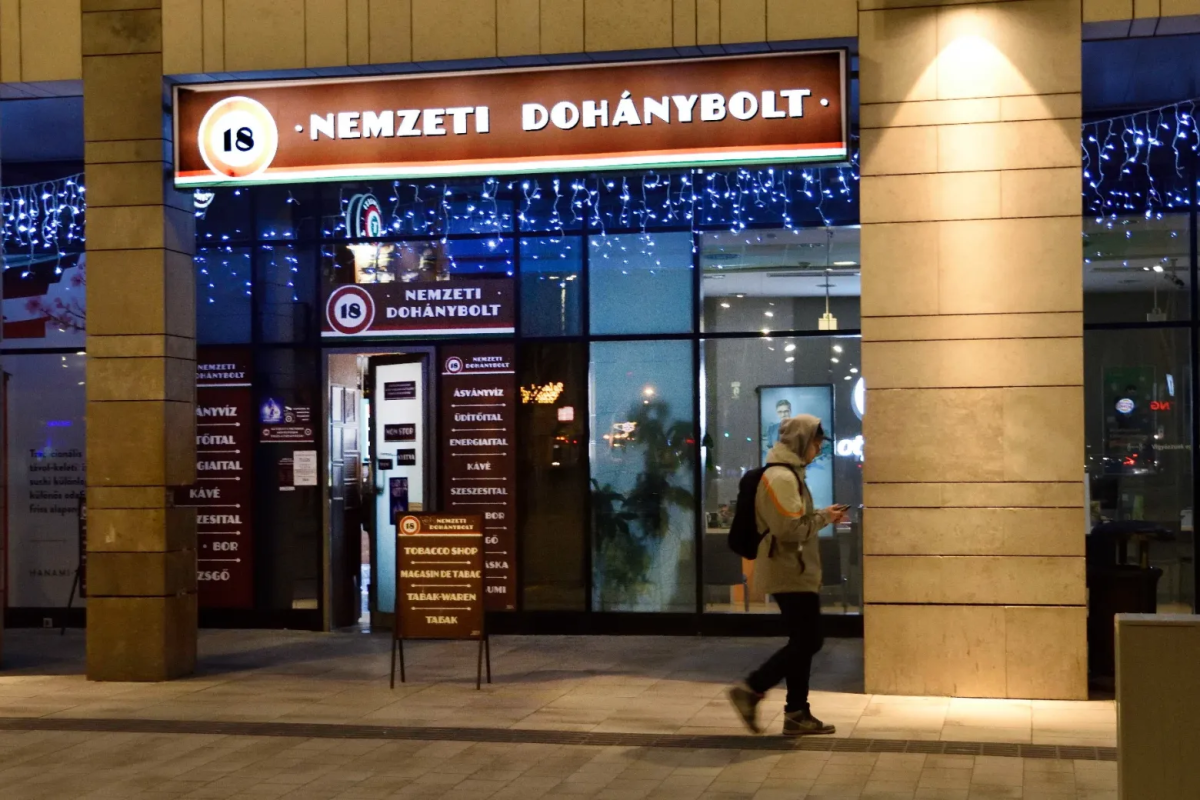
Hungary introduced a concession-based tobacco retail system in 2013, requiring tobacco products to be sold primarily through licensed National Tobacco Shops, known locally as Nemzeti Dohánybolt.
In 2015, ODBE secured a 20-year concession to serve as the exclusive supplier to the country's tobacco-shop network, handling product procurement, warehousing and distribution.
According to Hungary's Central Statistical Office, 5,588 licensed tobacco shops were operating in the country in 2025.
Under the proposed legislation, ODBE would lose its exclusive concession on June 1, 2027. Other operators holding the required excise permits would be allowed to enter the supply market, while tobacco wholesalers could deliver products directly to licensed retailers.
Suppliers would be subject to statutory obligations, including nondiscriminatory service requirements for eligible tobacco shops.
The government proposes ending ODBE's concession without paying compensation.
According to Telex's account of the bill's explanatory memorandum, the government argues that the original arrangement failed to meet domestic and European Union competition-law requirements and awarded long-term exclusive supply rights without adequate open competition or transparency.
The government also maintains that compensation is unwarranted because ODBE could continue supplying tobacco shops in a competitive market, losing only its exclusive entitlement.
Those are the government's legal and policy arguments. The legislation has not yet been enacted, and the early termination provisions could become subject to future legal challenges.
ODBE told Reuters that it was reviewing the proposed legislation and would not comment further until the final text was available.
The company said maintaining stable and uninterrupted supplies to licensed tobacco retailers remained its priority.
ODBE Earned $200 Million Over 11 Years, Paid Nearly $191 Million in Dividends
The venture's financial record forms a central part of the government's case for reform.
According to figures cited in the government's legislative explanation and Hungarian financial reporting, ODBE generated HUF 67.3 billion (approximately $200 million) in cumulative after-tax profits between 2015 and 2025.
Shareholders received nearly HUF 64 billion ($191 million) in dividends over the same period.
In 2025, ODBE recorded HUF 1.143 trillion (approximately $3.4 billion) in revenue and HUF 11.414 billion ($34 million) in after-tax profit, both company records.
Shareholders approved approximately HUF 11.4 billion ($33.9 million) in dividends for the year.
Tabán Trafik controls 51% of ODBE, with BAT Pécsi Dohánygyár holding the remaining 49%.
The company's concession payments to the state have declined in recent years.
According to Hungarian business reporting based on company financial disclosures, ODBE paid approximately HUF 12.3 billion ($36.6 million) in concession fees in 2023, HUF 8.4 billion ($25 million) in 2024 and HUF 3.5 billion ($10.4 million) in 2025.
Vitézy criticized the original structure for lacking open competition and argued that statutory margins, predictable demand and the exclusion of competitors allowed ODBE to generate significant profits while facing relatively limited operating risks.
The assessment reflects the government's stated position on the concession.
Manufacturers and Wholesalers Could Supply Retailers Directly as Margins Change
The bill would also revise the commercial terms governing Hungary's tobacco retail supply chain.
Under the current framework, certain retail margins are linked to prices that include tobacco taxes, allowing increases in excise duties to raise the guaranteed margin amount received by retailers.
The proposal would calculate margins based on prices excluding value-added tax and excise duty.
According to Telex, the proposed retail margin ranges are:
| Product category | Proposed retail margin |
|---|---|
| Cigarettes | 38%–43% of net-of-tax price |
| Smoking and conventional tobacco products | 25%–32.5% of net-of-tax price |
| Heated tobacco products | 28%–36.5% of net-of-tax price |
The percentages relate to proposed retail-margin calculations rather than changes in consumer retail prices.
The bill would also remove certain mandatory inventory-holding, deferred-payment and delayed-ownership-transfer requirements, allowing suppliers and retailers to negotiate those commercial arrangements.
Penalties for tobacco shops purchasing products in violation of procurement rules would be reduced substantially.
According to Telex, the proposed penalty range would fall from HUF 5 million–500 million (approximately $14,900–$1.49 million) to HUF 150,000–10 million (approximately $450–$29,800).
The revised retail-margin calculation would take effect on the first day of the month following promulgation of the legislation, while termination of ODBE's exclusive rights and the principal supply-market changes are proposed for June 1, 2027.
The measures remain subject to parliamentary approval.
Government Targets Orbán-Era Concession While Retail Licensing Remains
The reform is part of Prime Minister Péter Magyar's government's review of long-term commercial concessions established during the administration of former Prime Minister Viktor Orbán.
Vitézy has said the government intends to end exclusive business arrangements awarded without open competition and establish more transparent rules for tobacco distribution.
ODBE's majority shareholder, Tabán Trafik, has commercial ties to Hungarian tobacco entrepreneur János Sánta. Hungarian media previously reported that companies associated with Sánta participated in preparations for tobacco retail legislation in 2012.
Orbán's Fidesz party has criticized the proposed reform, arguing that it could shift commercial benefits from Hungarian tobacco businesses to foreign companies.
The government's current legislation focuses on the supply of tobacco products to licensed retail shops. Hungary's separate tobacco retail concession system would remain in place, while relevant authorities continue reviewing retail licensing arrangements.
If the legislation is enacted, ODBE could continue operating as a supplier after June 2027, competing with other qualified businesses without its existing exclusive concession.
Follow 2Firsts for timely updates on global tobacco and nicotine industry developments, corporate strategy and market trends.
Cover Image: Telex