India Imposes Ban on E-cigarette in Educational Institutions for Public Health

Regulations by 2FIRSTS.ai
May.10.2024
India Imposes Ban on E-cigarette in Educational Institutions for Public Health
NBSE in India's Nagaland bans e-cigarettes in schools to protect public health, enforcing law and educating students and teachers.

According to a report from Eastern Mirror on May 9th, following the instructions of the Director of the Department of Health and Family Welfare, the Nagaland Board of School Education (NBSE) in India has banned e-cigarettes and similar devices in order to protect public health interests in accordance with the Prohibition of e-Cigarette (Production, Manufacturing, Import, Export, Transport, Sale, Distribution, Storage and Advertising) Act of 2019.


The committee stated in an official announcement that the entry of e-cigarettes or tobacco products into educational institutions is strictly prohibited. It called for education and awareness among students and teachers regarding the relevant laws.


The committee also recommended implementing special measures by conducting random checks on students to ensure the prohibition of using and selling e-cigarettes in schools.


We welcome news tips, article submissions, interview requests, or comments on this piece.

Please contact us at info@2firsts.com, or reach out to Alan Zhao, CEO of 2Firsts, on LinkedIn


Notice

1.  This article is intended solely for professional research purposes related to industry, technology, and policy. Any references to brands or products are made purely for objective description and do not constitute any form of endorsement, recommendation, or promotion by 2Firsts.

2.  The use of nicotine-containing products — including, but not limited to, cigarettes, e-cigarettes, nicotine pouchand heated tobacco products — carries significant health risks. Users are responsible for complying with all applicable laws and regulations in their respective jurisdictions.

3.  This article is not intended to serve as the basis for any investment decisions or financial advice. 2Firsts assumes no direct or indirect liability for any inaccuracies or errors in the content.

4.  Access to this article is strictly prohibited for individuals below the legal age in their jurisdiction.


Copyright


This article is either an original work created by 2Firsts or a reproduction from third-party sources with proper attribution. All copyrights and usage rights belong to 2Firsts or the original content provider. Unauthorized reproduction, distribution, or any other form of unauthorized use by any individual or organization is strictly prohibited. Violators will be held legally accountable.

For copyright-related inquiries, please contact: info@2firsts.com


AI Assistance Disclaimer


This article may have been enhanced using AI tools to improve translation and editorial efficiency. However, due to technical limitations, inaccuracies may occur. Readers are encouraged to refer to the cited sources for the most accurate information.

We welcome any corrections or feedback. Please contact us at: info@2firsts.com

How Investors Are Repricing the Global Tobacco Industry as Nicotine Markets Shift
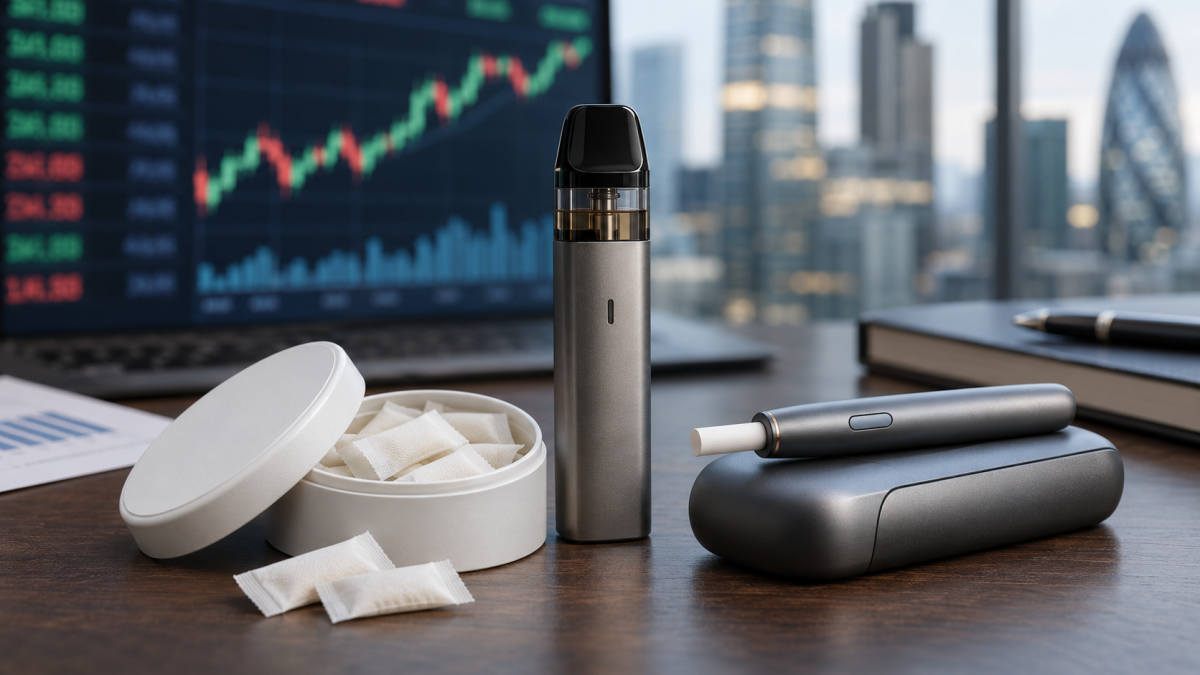
How are investors reassessing the global tobacco industry as nicotine markets evolve? In an interview with 2Firsts, Charlie Chen, Head of Research at CCB International Securities, forecasts annual growth of 30–50% for nicotine pouches, outpacing vaping and heated tobacco. He examines how regulatory enforcement, shifting market shares and new business models are influencing company valuations. The report also explores differences between multinational tobacco groups and Chinese companies, drawing on insights from the New Approaches Summit on profitability, investment strategies and industry consolidation.
Nov.11
Philippines Mandates Safety Certification for Nicotine Pouches, Gives Industry 12 Months to Comply
The Philippines Department of Trade and Industry has placed nicotine pouches under mandatory product certification through Department Administrative Order No. 26-07, Series of 2026. Nicotine pouches must obtain a Philippine Standard, or PS, license before they can be manufactured, imported, packed, distributed or sold in the country. The regime requires testing for nicotine content, pH and water activity, while packaging must disclose nicotine strength, ingredients, allergens, batch information, the PS certification mark and prescribed health warnings. Existing market participants have a 12-month transition period to comply.
Regulations
Oct.12
Global Nicotine-Pouch E-Commerce Group Haypp Shuts Sweden’s Snusnetto Over Age Verification as Identity Checks Become Industry Infrastructure for New Nicotine Products
Sweden's Supreme Administrative Court has declined to hear an appeal over age verification for tobacco and nicotine products collected from parcel lockers, leaving in place a lower-court ruling that geo-located BankID verification is insufficient to securely verify the actual recipient. Haypp Group has stopped tobacco and nicotine sales through Snusnetto and is deploying a new system across its other Swedish e-commerce sites to verify the age of the person who actually opens the locker and receives the shipment. The change comes as age verification across next-generation nicotine products expands from purchase checks into retail, delivery and, for some e-cigarettes, device access itself.
Regulations
Oct.20
Pennsylvania Vape Directory Enforcement Starts Oct. 19, Barring Retail Sales of Unlisted Products
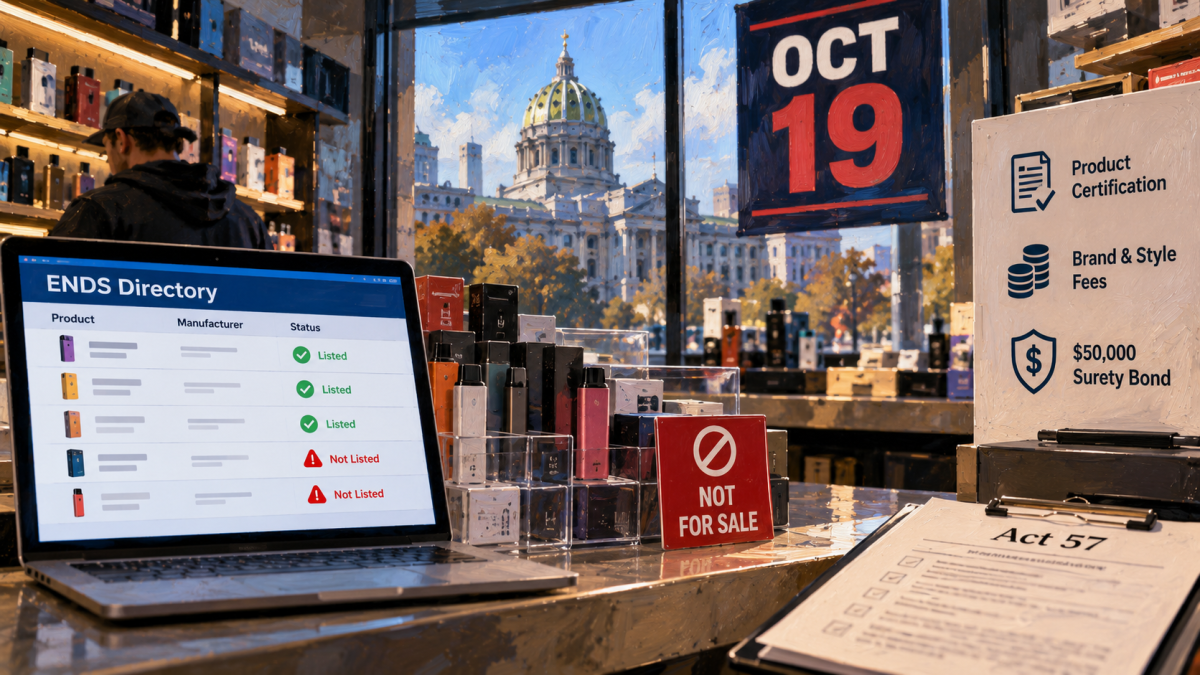
Pennsylvania's Act 57 vape directory regime will reach the end of its 120-day inventory transition period on Oct. 19. Nicotine-containing e-cigarettes intended for retail sale in the state that are not listed on the Attorney General's ENDS directory will then be barred from retail sale and treated as contraband subject to seizure, forfeiture and destruction. Manufacturers face annual product certification, brand- and style-based fees and a minimum $50,000 surety bond, while retailers and wholesalers must source through licensed channels and monitor the directory.
Regulations
Oct.08
Special Report | Can Nicotine Be Replaced? 6-MN Is Already on the Market While Key Human Evidence Is Still Missing
Nicotine analogues such as 6-methylnicotine are already appearing in e-cigarettes and oral pouches, even as key human evidence remains limited. A new Nixodine-S study adds nonclinical data showing differences from nicotine in cytotoxicity and receptor activity, while independent studies point to a more complex toxicological picture. With supply-chain activity growing and FDA seeking clearer authority over nicotine analogues, the industry now faces a larger question: what evidence is needed before these substances can credibly replace nicotine?
SCIENCE
Sep.23
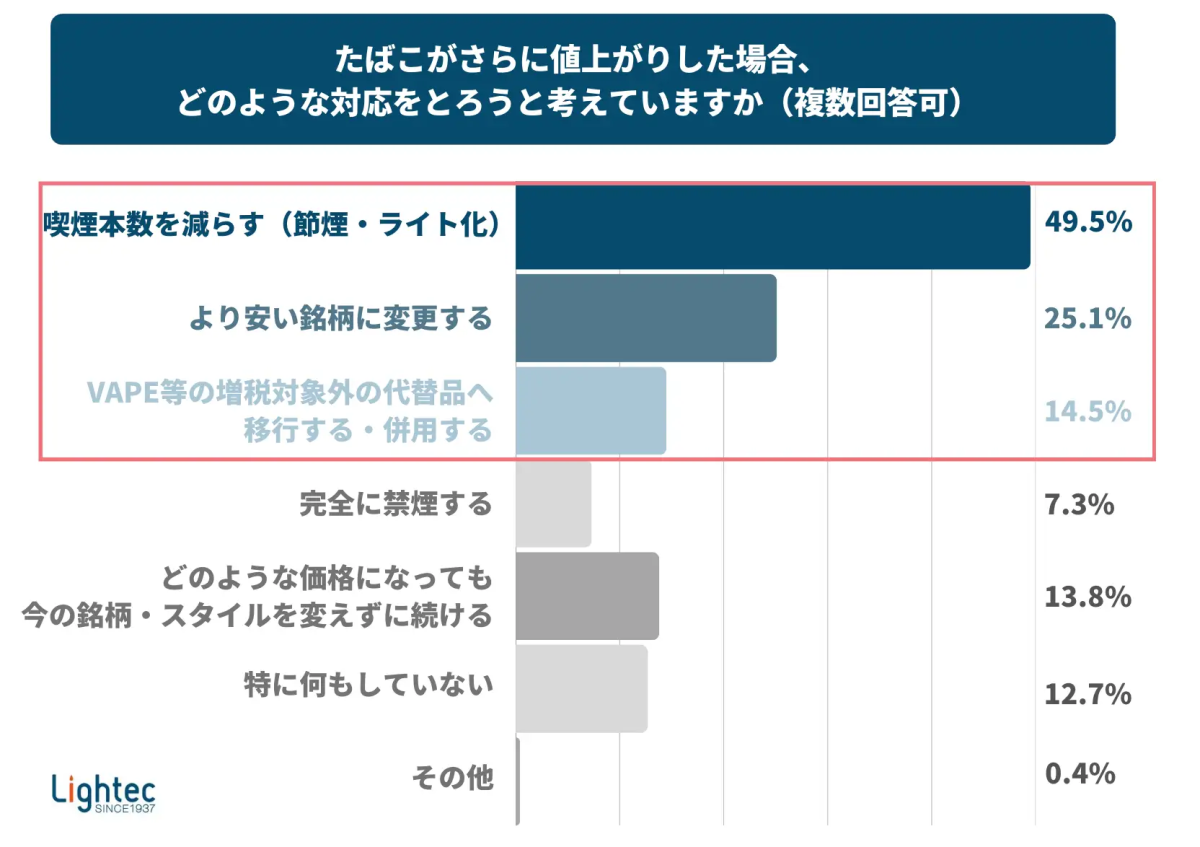
Japan Survey Finds 49.5% Would Cut Tobacco Use if Prices Rise, 64.6% Show Interest in Nicotine-Free Alternatives
A September online survey commissioned by Japanese smoking-accessories company Lightec found that 49.5% of respondents would consider reducing tobacco use if prices rose further, while 25.1% would consider switching to cheaper brands and 14.5% would consider using or combining alternatives such as vapes and nicotine-free herbal sticks. Another 64.6% expressed some level of interest in such alternatives. The survey covered 1,088 respondents aged 20 to 70 and was conducted by a company that sells NICOLESS nicotine-free vaping and herbal-stick products, meaning its findings should not be treated as representative of Japan's smoking population.
DATA
Oct.12