Basic Information Overview:
1.Case Summary:
·Parties involved: PAX Labs (appellant) suing STIIIZY and ALD (ALD, the defendant).
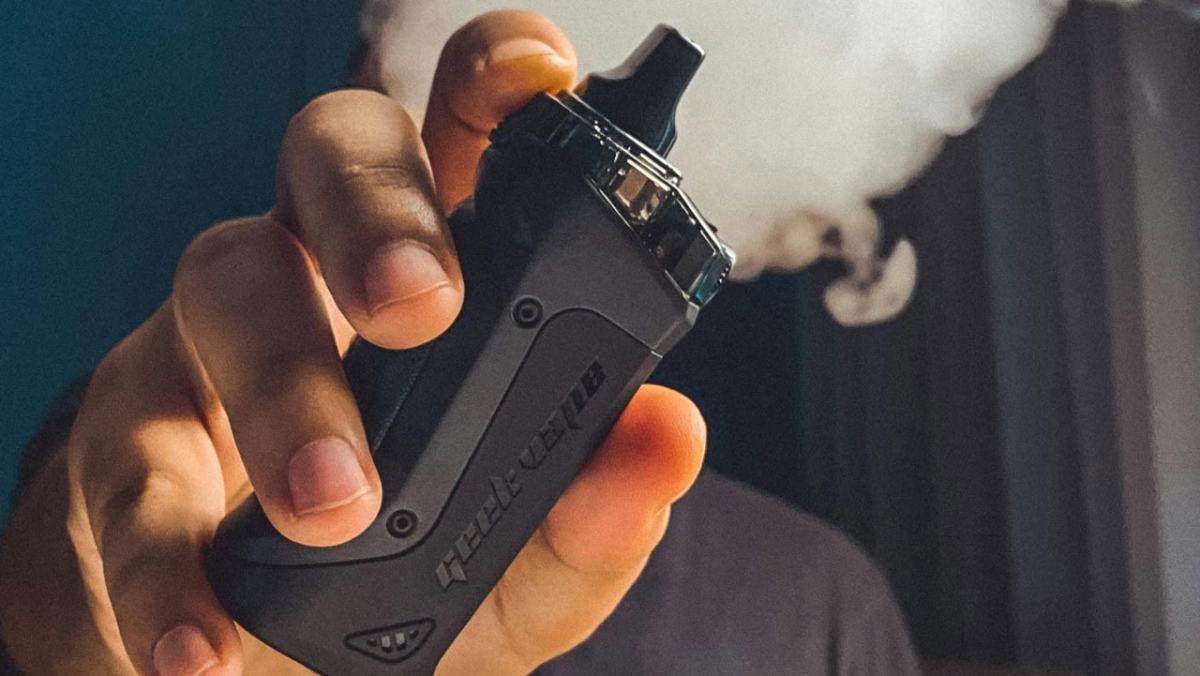
·Products involved in the case: oil steaming vaporization device (e-cigarette, battery, pod, etc.).
·Jurisdiction: United States International Trade Commission (ITC).
·Involved patents: U.S. Patent Numbers 11,369,756, 11,369,757, 11,766,527, and 11,759,580, relating to leak-proof pod and related equipment technology.
2.The core accusation:
·Patent infringement: PAX Labs alleges that STIIIZY and its manufacturer ALD have violated its four technology patents.
·Patent Scope: These patents concern the design of leak-proof structures and atomization system components for e-cigarette devices.
·Domestic industry clause controversy: According to Section 337 of the Tariff Act of 1930, the ITC must determine if the complainant constitutes a "domestic industry" in the United States. A previous ruling by an administrative judge found that PAX Labs did not meet this economic requirement, resulting in a judgment that no infringement had occurred.
3.Progress of the case
·March 6, 2025: An Administrative Law Judge (ALJ) issued a final initial determination (FID) in the case, finding that the accused products did in fact infringe the patent and that the patent was valid. However, it was determined that PAX Labs did not meet the "domestic industry economic requirement," so no violation was found.
·May 2025: ITC announces a partial review of the ruling, focusing specifically on the determination of "economic elements" in the domestic industry clause. ITC points out that the administrative judge mistakenly applied a restrictive view that investments made before patent authorization do not qualify as recognizable investments in the domestic industry. The ruling is overturned and the case is remanded for further review.
·Further review plan: The ITC will wait for clarification on domestic industry issues before deciding on whether the accused products infringe on the '580 patent and if redesigning the products constitutes infringement.
·Case background: In January 2024, PAX Labs initiated a lawsuit accusing STIIIZY and ALD of selling e-cigarette devices in the U.S. using manufacturing methods similar to their patents.
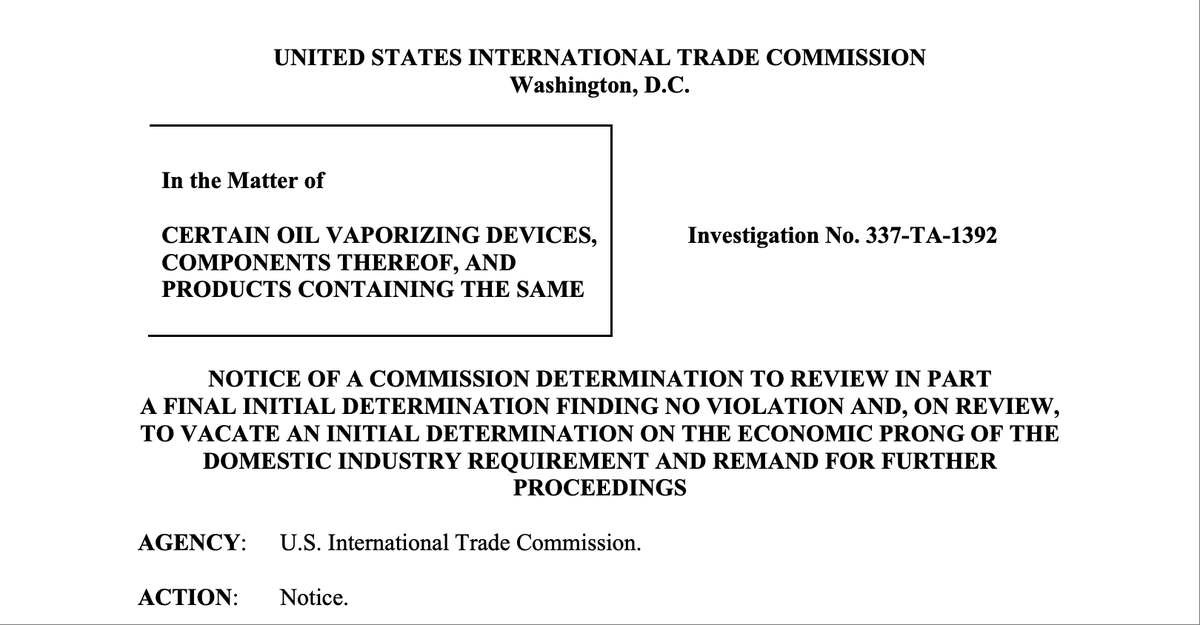
Recently, the United States International Trade Commission (ITC) announced that it will partially review the preliminary ruling made by an Administrative Law Judge (ALJ) in a patent infringement case involving vaporization devices (commonly referred to as e-cigarettes), and has decided to remand the key determination regarding "domestic industry economic factors" for further review. The case was initiated by PAX Labs (the complainant), alleging that STIIIZY and ALD (the respondents) infringed on multiple patents.
Previously, in a final initial determination (FID) issued by an administrative judge on March 6, 2025, it was determined that the accused products infringed on some of PAX Labs' patent rights, and the patents in question were found to be valid. However, the judge also ruled that PAX Labs did not meet the economic element of "domestic industry" as required by Section 337 of the Tariff Act of 1930, therefore no violation was found.
The core of ITC's reconsideration this time is whether PAX Labs has made sufficient economic investments in the United States to constitute a "domestic industry." The committee pointed out in its notice that the administrative law judge incorrectly applied the "clear demarcation rule" that investments made before patent authorization do not constitute recognizable investments under elements A and B of domestic industry. ITC believes this viewpoint is erroneous, thus overturning the ruling and remanding it for further review.
In addition to reevaluating the domestic industry economic factors, the ITC will also review the determination in the FID regarding whether certain accused products infringe the '580 patent, as well as whether certain redesigned products infringe the '580 patent. These reviews will be decided after further scrutiny of the domestic industry issues.
In January 2024, e-cigarette manufacturer Pax Labs filed a lawsuit against Stiiizy and its producer ALD (ALD) for allegedly infringing on its four patents. Pax Labs claims that Stiiizy and ALD, based in Hong Kong, China, have been manufacturing and selling vaporizing devices, including batteries and pods, in a manner similar to Pax Labs' patents.
Pax Labs has obtained U.S. patents 11,369,756, 11,369,757, 11,766,527, and 11,759,580, which relate to methods for anti-leak pods and related devices. Pax Labs claims that these two companies have infringed on the mentioned patents.
According to public records, Pax Labs was founded in 2007 and specializes in the Pax series vaporizers. The company developed the Juul e-cigarette, with Juul Labs being spun off as an independent company in 2017.
We welcome news tips, article submissions, interview requests, or comments on this piece.
Please contact us at info@2firsts.com, or reach out to Alan Zhao, CEO of 2Firsts, on LinkedIn
Notice
1. This article is intended solely for professional research purposes related to industry, technology, and policy. Any references to brands or products are made purely for objective description and do not constitute any form of endorsement, recommendation, or promotion by 2Firsts.
2. The use of nicotine-containing products — including, but not limited to, cigarettes, e-cigarettes, nicotine pouchand heated tobacco products — carries significant health risks. Users are responsible for complying with all applicable laws and regulations in their respective jurisdictions.
3. This article is not intended to serve as the basis for any investment decisions or financial advice. 2Firsts assumes no direct or indirect liability for any inaccuracies or errors in the content.
4. Access to this article is strictly prohibited for individuals below the legal age in their jurisdiction.
Copyright
This article is either an original work created by 2Firsts or a reproduction from third-party sources with proper attribution. All copyrights and usage rights belong to 2Firsts or the original content provider. Unauthorized reproduction, distribution, or any other form of unauthorized use by any individual or organization is strictly prohibited. Violators will be held legally accountable.
For copyright-related inquiries, please contact: info@2firsts.com
AI Assistance Disclaimer
This article may have been enhanced using AI tools to improve translation and editorial efficiency. However, due to technical limitations, inaccuracies may occur. Readers are encouraged to refer to the cited sources for the most accurate information.
We welcome any corrections or feedback. Please contact us at: info@2firsts.com