
According to a recent report by Vaping Post, the Jordanian government issued Resolution No. 62 on September 12, 2024, deciding to adjust (increase) tariffs and taxes on e-cigarette products. This adjustment also includes traditional cigarettes, hookah (Arabian water pipe), and HNB tobacco products.
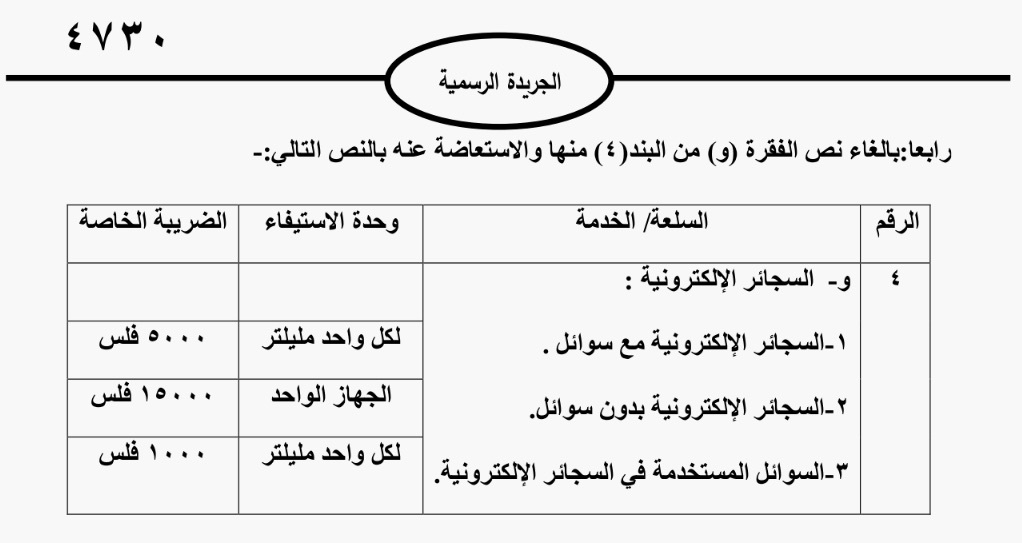
E-liquid for e-cigarettes is subject to a tax of 1000 fils (approximately $1.50) per milliliter. Therefore, the customs duty for a 10 milliliter bottle of e-liquid would be $15.
Disposable e-cigarette devices: A tax of 5000 fils (approximately $7.50) is levied per milliliter of e-cigarette liquid in the device. Therefore, a device containing 10 milliliters of liquid would have a tax of about $75. These devices typically provide 7000 to 9000 puffs of smoking experience.
E-cigarette devices without liquid (device only): A tax of 15 Jordanian Dinars (approximately 21 US dollars) is applied to each device.
The increase in taxes has led to a significant rise in the prices of e-cigarette products, impacting the local market and putting immense pressure on both consumers and e-cigarette supply companies. Haze Vape is considered one of the most important companies in the Middle Eastern e-cigarette industry. It specializes in importing and distributing e-cigarette products in many Arab countries, such as Iraq, Jordan, Egypt, and many others in the region. In response to this, Haze Vape CEO Mohamed Moin gave a media interview to elaborate on the impact of changes in Jordan's tax policies.
Mohammed Mouin stated that the impact of the tax reform was immediate and very negative. The sudden increase in taxes without any prior warning led to direct financial losses. Their business operations in Jordan have been stable and successful, but this unexpected decision has greatly affected their ability to continue investing in the market. Jordan was once seen as a promising investment destination, but the situation has now changed.
Mohammed Muin further pointed out that the increase in taxes has added an additional burden to their operations, making it difficult to meet market demands and consumer expectations. The sudden increase in taxes without prior warning is not easy, as they rely on cost stability to make long-term plans. With this tax reform, it is difficult to provide affordable products for consumers in Jordan.
The specific economic impact of this tax reform is clearly evident, says Mohamed Mouin. Their income has significantly decreased because the tax reform has forced them to raise prices, leading to customers being unable to accept the price increase and a subsequent decrease in demand. The economic impact is not just a future concern, they have already experienced it firsthand.
When asked about the possibility of Haze Vape Company withdrawing from the Jordanian market, Mohammad Mouin revealed that they are seriously considering the possibility of divestment. The decision to withdraw investment is not an easy one, especially since Jordan was once a very promising market for them. However, the current tax environment has made it difficult for them to continue operations.
If these tax policies are not adjusted, we may consider shifting our investments to markets with more stable tax and regulatory environments, such as the United Arab Emirates, Egypt, Iraq, Saudi Arabia, and the United States. These markets offer us opportunities for long-term stable growth.
Mohammed Muin hopes that they can engage in dialogue with the Jordanian government. The goal is not only to improve the investment environment but also to protect public health. E-cigarettes are seen as a less harmful alternative to traditional smoking, and they believe that dialogue with the government can help to find solutions that meet the needs of all parties, from investors to consumers.
When asked about how these taxation policies will impact the future of Jordan's e-cigarette market, Mohammad Mu'in believes that if these policies continue, the market will see a significant decline.
Many companies may consider withdrawing as price increases lead to a sharp decline in demand for e-cigarettes, which could cause smokers to revert back to traditional cigarettes, contradicting the goal of improving public health.
In the final interview, Muhammad Muin suggested that the government should reconsider its tax policies to strike a balance between encouraging investment and protecting public health. He emphasized the importance for investors to pay attention to regulatory changes and adjust accordingly, while also working together to ensure a stable and sustainable environment.
We welcome news tips, article submissions, interview requests, or comments on this piece.
Please contact us at info@2firsts.com, or reach out to Alan Zhao, CEO of 2Firsts, on LinkedIn
Notice
1. This article is intended solely for professional research purposes related to industry, technology, and policy. Any references to brands or products are made purely for objective description and do not constitute any form of endorsement, recommendation, or promotion by 2Firsts.
2. The use of nicotine-containing products — including, but not limited to, cigarettes, e-cigarettes, nicotine pouchand heated tobacco products — carries significant health risks. Users are responsible for complying with all applicable laws and regulations in their respective jurisdictions.
3. This article is not intended to serve as the basis for any investment decisions or financial advice. 2Firsts assumes no direct or indirect liability for any inaccuracies or errors in the content.
4. Access to this article is strictly prohibited for individuals below the legal age in their jurisdiction.
Copyright
This article is either an original work created by 2Firsts or a reproduction from third-party sources with proper attribution. All copyrights and usage rights belong to 2Firsts or the original content provider. Unauthorized reproduction, distribution, or any other form of unauthorized use by any individual or organization is strictly prohibited. Violators will be held legally accountable.
For copyright-related inquiries, please contact: info@2firsts.com
AI Assistance Disclaimer
This article may have been enhanced using AI tools to improve translation and editorial efficiency. However, due to technical limitations, inaccuracies may occur. Readers are encouraged to refer to the cited sources for the most accurate information.
We welcome any corrections or feedback. Please contact us at: info@2firsts.com