Malaysia’s Home Ministry Urges Study of IQOS Tobacco Device Ahead of Potential Legislation

Nov.27.2025
Malaysia’s Home Ministry Urges Study of IQOS Tobacco Device Ahead of Potential Legislation
Malaysia’s Home Ministry has recommended that the National Poison Centre conduct a study on the IQOS heated tobacco device, developed by a leading global tobacco company. Minister Datuk Seri Saifuddin Nasution Ismail said the research would help the government prepare future legislation addressing emerging nicotine technologies. While health risks remain uncertain, officials stress the need for proactive, adaptable legal frameworks.

Key Points


  • Institution & Lead:Malaysia’s Home Ministry, led by Datuk Seri Saifuddin Nasution Ismail, is calling for early research into IQOS, a device that heats rather than burns tobacco.
  • Purpose of the Study:The ministry seeks to equip the government with scientific data and regulatory readiness before IQOS and similar devices gain widespread use.
  • Health and Policy Concerns:Saifuddin acknowledged that the health effects are still unknown, but warned that waiting for conclusive evidence could delay protective action.
  • Legal Adaptation:The minister emphasized that drug and poison laws must remain dynamic, urging the adoption of flexible, generically worded legislation capable of addressing future innovations in nicotine delivery.


2Firsts, November 27, 2025 — According to Bernama,Malaysia’s Home Ministry has recommended that the National Poison Centre undertake a scientific study on the IQOS tobacco heating device, developed by one of the world’s leading cigarette manufacturers.


Home Minister Datuk Seri Saifuddin Nasution Ismail said the study would allow the government to better prepare for potential future legislation governing new tobacco technologies.


“Even before the vape issue has subsided, another device has already been created by the tobacco industry,” Saifuddin said during a seminar organized by the National Anti-Drug Agency (NADA). “Perhaps the National Poison Centre can start detecting IQOS as well.”


He explained that the device differs from conventional cigarettes in that it heats rather than burns tobacco, and noted that the company’s marketing campaign advises non-smokers not to start and encourages smokers to quit or switch to IQOS.


“Whether it has any health effects or not, we don’t know yet,” Saifuddin said, adding that such innovations present both regulatory and public health challenges for Malaysia.


He stressed that laws related to drug control and toxic substances cannot remain static but must evolve to keep up with emerging substances and technologies.


“If we wait for new poisons to be officially listed before taking action, nothing will happen,” he warned.

“We must craft laws that are flexible yet comprehensive enough to cover new threats.”


Separately, Saifuddin announced that the government had approved RM500 million in funding for NADA to bolster nationwide anti-drug programs, calling on both the public and private sectors to share responsibility in curbing substance abuse.


Photo credit: Malaysian National News Agency (Bernama)


We welcome news tips, article submissions, interview requests, or comments on this piece.

Please contact us at info@2firsts.com, or reach out to Alan Zhao, CEO of 2Firsts, on LinkedIn


Notice

1.  This article is intended solely for professional research purposes related to industry, technology, and policy. Any references to brands or products are made purely for objective description and do not constitute any form of endorsement, recommendation, or promotion by 2Firsts.

2.  The use of nicotine-containing products — including, but not limited to, cigarettes, e-cigarettes, nicotine pouchand heated tobacco products — carries significant health risks. Users are responsible for complying with all applicable laws and regulations in their respective jurisdictions.

3.  This article is not intended to serve as the basis for any investment decisions or financial advice. 2Firsts assumes no direct or indirect liability for any inaccuracies or errors in the content.

4.  Access to this article is strictly prohibited for individuals below the legal age in their jurisdiction.


Copyright


This article is either an original work created by 2Firsts or a reproduction from third-party sources with proper attribution. All copyrights and usage rights belong to 2Firsts or the original content provider. Unauthorized reproduction, distribution, or any other form of unauthorized use by any individual or organization is strictly prohibited. Violators will be held legally accountable.

For copyright-related inquiries, please contact: info@2firsts.com


AI Assistance Disclaimer


This article may have been enhanced using AI tools to improve translation and editorial efficiency. However, due to technical limitations, inaccuracies may occur. Readers are encouraged to refer to the cited sources for the most accurate information.

We welcome any corrections or feedback. Please contact us at: info@2firsts.com

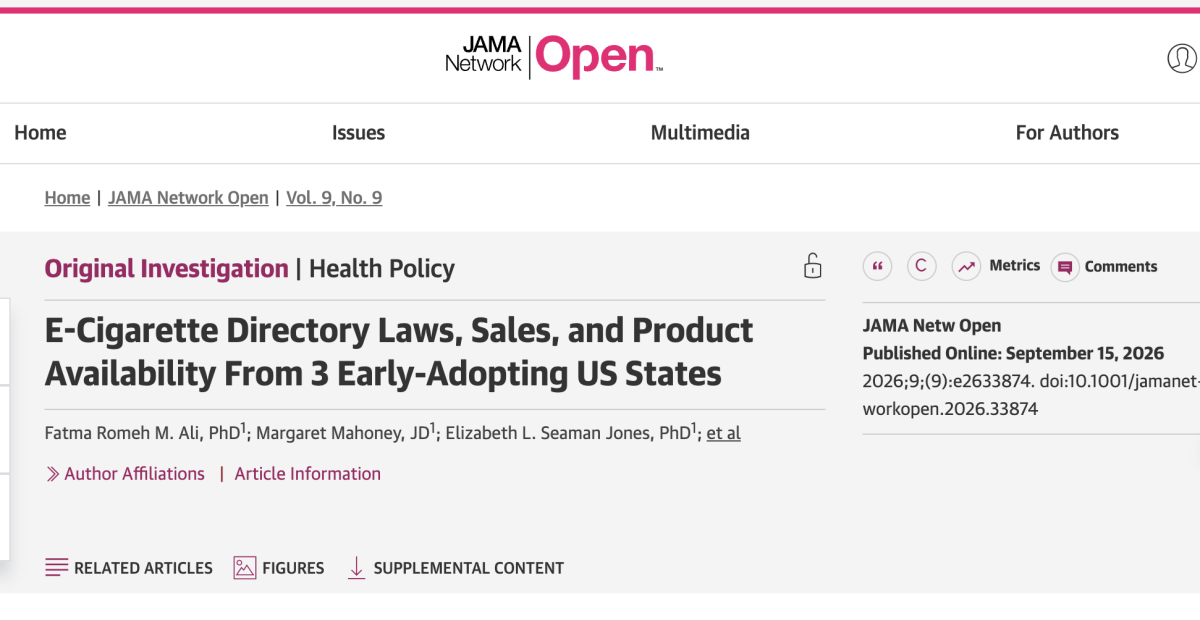
JAMA Study: U.S. Vape Directories Fail to Sustainably Curb Unlisted Sales as Product Shifts May Redistribute Brand Share 2Firsts Recommended
A study by CDC Foundation researchers found no sustained decline in e-cigarette sales across Alabama, Oklahoma and Louisiana, the first three U.S. states to implement e-cigarette directory laws. Louisiana initially saw a significant sales decline, followed by a rebound and a persistent reduction in product availability. Sales also shifted from nontobacco-flavored disposables toward prefilled cartridges, with Vuse Alto driving much of the increase in menthol cartridges. By April 2025, unlisted products still accounted for more than half of e-cigarette nicotine sales in all three states.
Sep.18
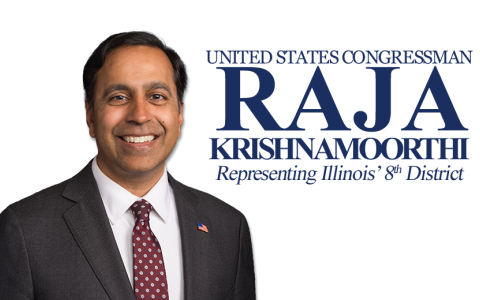
U.S. Rep. Krishnamoorthi Questions FDA Over Planned PMTA Rewrite, Seeks Communications With Altria and Reynolds
U.S. Rep. Raja Krishnamoorthi on Oct. 6 questioned the FDA over its plan to reassess and potentially replace the 2021 PMTA regulatory framework, asking the agency to identify provisions it may change or eliminate, state whether current scientific evidentiary standards will be maintained, and disclose communications with Altria, Reynolds and other parties challenging the rule. Krishnamoorthi led a congressional investigation into JUUL and youth vaping in 2019 and has since remained active on e-cigarette regulation and enforcement.
Regulations
Oct.08
Special Report | From New York to Washington: How FDA’s Tobacco Center Is Reworking Product Review
FDA’s Center for Tobacco Products is reshaping how it approaches tobacco product review. Based on 2Firsts’ on-site reporting in New York and Washington, this report traces CTP’s emerging direction: stronger links between PMTA and tobacco harm reduction, more category-specific review, greater emphasis on decision-relevant science, more predictable timelines and expanded use of sPMTA for product modifications. CTP also acknowledged major constraints, including just nine PMTA review teams, persistent backlogs and limits on hiring capacity.
Regulations
Oct.08
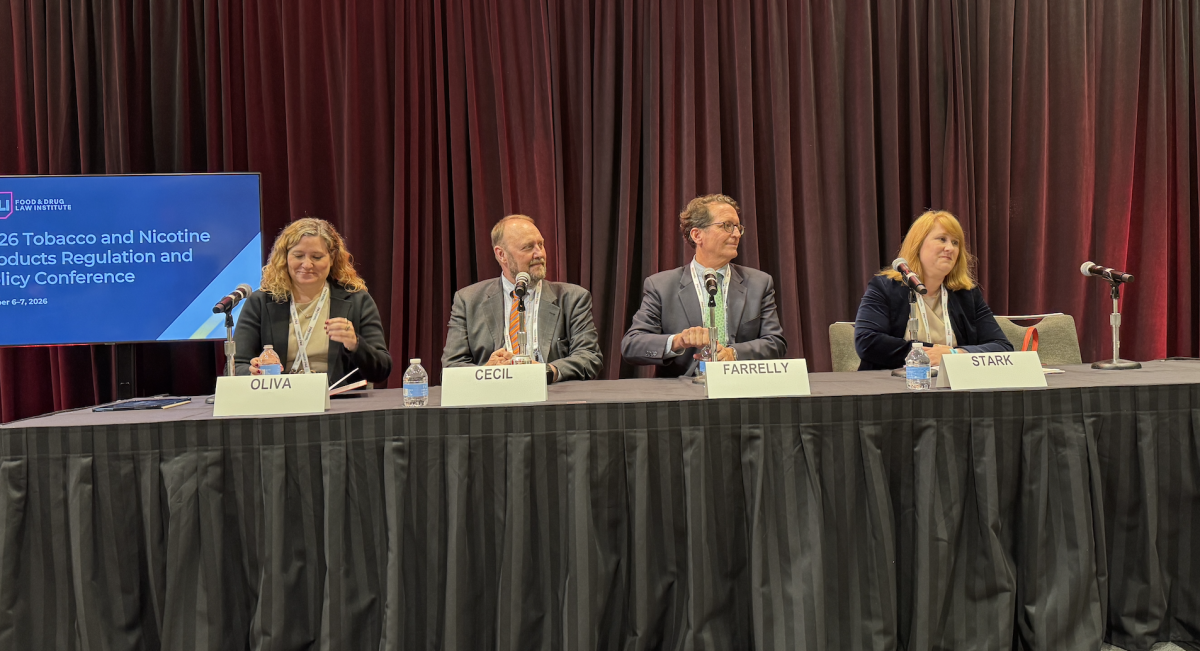
On-Site Report | CTP Details PMTA Backlog, 180-Day Review Goal and sPMTA Process
FDA’s Center for Tobacco Products detailed new PMTA review data and process changes at the 2026 FDLI conference. Pending PMTAs fell from about 450,000 at the start of 2025 to 135,000 by September 2026. CTP also discussed its 180-day review goal, current sPMTA pilot, alternate-supplier planning, more than 50,300 pending SE reports, and lessons from the nicotine pouch pilot already being applied to ENDS review.
Regulations
Oct.07
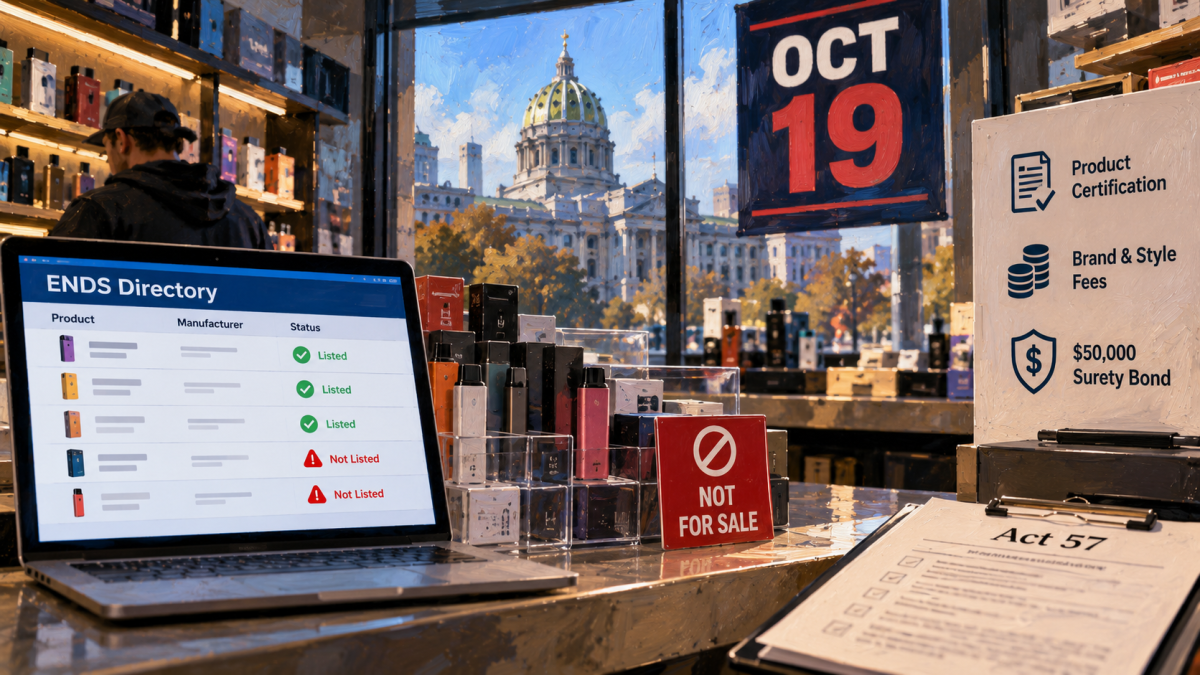
Pennsylvania Vape Directory Enforcement Starts Oct. 19, Barring Retail Sales of Unlisted Products
Pennsylvania's Act 57 vape directory regime will reach the end of its 120-day inventory transition period on Oct. 19. Nicotine-containing e-cigarettes intended for retail sale in the state that are not listed on the Attorney General's ENDS directory will then be barred from retail sale and treated as contraband subject to seizure, forfeiture and destruction. Manufacturers face annual product certification, brand- and style-based fees and a minimum $50,000 surety bond, while retailers and wholesalers must source through licensed channels and monitor the directory.
Regulations
Oct.08
Special Report|Japan Tobacco Buys CLEW: Can Its 160,000-Store Cigarette Network Help It Vie for U.S. Nicotine Pouch Share Against PMI and BAT?
Japan Tobacco Inc. (JT) announced on November 12, 2026, that it had acquired the U.S. assets of nicotine pouch brand CLEW from Nevcore Innovations Inc., including trademarks, intellectual property, product formulations and a Premarket Tobacco Product Application (PMTA). CLEW, currently distributed through selected outlets in 13 U.S. states, will immediately join the JTI LIGGETT portfolio. The transaction follows JT's approximately $2.4 billion acquisition of U.S. cigarette maker Vector Group in 2024. JTI LIGGETT says its existing cigarette brands reach more than 160,000 U.S. retail stores. During the 2026 NACS Show in October, JTI LIGGETT booth staff told 2Firsts that the company had not yet launched nicotine pouches in the United States. Although Nevcore previously announced FDA acceptance of CLEW's PMTA, the brand is absent from the agency's current list of authorized nicotine pouch products. JT has not disclosed a retail expansion plan for CLEW.
Business
Nov.12