New Zealand bans disposable vapes, tightens retail display rules

Nov.05.2024
New Zealand bans disposable vapes, tightens retail display rules
New Zealand is set to amend its tobacco laws with stricter regulations on vaping: new restrictions will limit vape sales near schools, increase fines for selling to minors, and impose a ban on disposable vapes. The updated rules are expected to take effect in November 2024.

On November 4, as announced on the official website of the New Zealand Ministry of Health, the government is amending the Smoke-free Environments and Regulated Products Act 1990 to reduce the appeal and accessibility of e-cigarette products to those under 18 years old.


These changes will be implemented through the Bill on Smoke-Free Environments and Regulated Products (Amendment) Act (No. 2). The Bill is still in the legislative process and is expected to come into effect in November 2024.


Key changes in the bill include:


  • Specialist Vape Retailers (SVRs)  must be at least 100 meters away from Early Childhood Education Centers (ECEs). This restriction applies to new SVR stores. Additionally, the existing rule that SVRs must be more than 300 meters from schools or gathering centers remains unchanged.


  •  Increased penalties for violations.  Fines for selling vapes to minors (for businesses) will increase to NZD 100,000 (USD 60,000), with fines in other cases rising to NZD 10,000 (USD 6,000). Minor offenses for selling to underage customers may incur a penalty without prosecution, with fines for retailers, manufacturers, importers, or distributors increasing to NZD 2,000 (USD 1,200), and NZD 1,000 (USD 600) in other cases. Fines for prohibited vape or heated tobacco product advertisements remain at NZD 200,000 (USD 120,000) for manufacturers, importers, or distributors, NZD 70,000 (USD 40,000) for large retailers, and NZD 50,000 (USD 30,000) for smaller retailers.


  • Restrictions on displaying vape and heated tobacco products in retail spaces. Vape products may not be displayed in general retail stores, including visible areas outside specialty stores and online stores. Detailed industry guidance will be released by the Ministry of Health in early 2025.


  • Ban on disposable vapes. This prohibition will take effect six months after the bill becomes law.


  •  Updated information requirements for regulated product sellers (RPS). Applicants must now provide the trading name and address of their store, in addition to the entity or corporate name and address. This applies to general retailers, importers, and manufacturers of vapes and notified products, as well as tobacco product distributors. Existing RPS registrants will be required to update their information in HARP and will be contacted directly. Failure to file RPS details on HARP, or letting them expire without renewal, constitutes a violation, with fines of NZD 500 or up to NZD 5,000 if prosecuted.


 Location changes and enhanced penalties will take effect immediately** once the bill becomes law. The ban on disposable vapes and restrictions on retail displays will come into force six months post-legislation to allow industry adjustments.


We welcome news tips, article submissions, interview requests, or comments on this piece.

Please contact us at info@2firsts.com, or reach out to Alan Zhao, CEO of 2Firsts, on LinkedIn


Notice

1.  This article is intended solely for professional research purposes related to industry, technology, and policy. Any references to brands or products are made purely for objective description and do not constitute any form of endorsement, recommendation, or promotion by 2Firsts.

2.  The use of nicotine-containing products — including, but not limited to, cigarettes, e-cigarettes, nicotine pouchand heated tobacco products — carries significant health risks. Users are responsible for complying with all applicable laws and regulations in their respective jurisdictions.

3.  This article is not intended to serve as the basis for any investment decisions or financial advice. 2Firsts assumes no direct or indirect liability for any inaccuracies or errors in the content.

4.  Access to this article is strictly prohibited for individuals below the legal age in their jurisdiction.


Copyright


This article is either an original work created by 2Firsts or a reproduction from third-party sources with proper attribution. All copyrights and usage rights belong to 2Firsts or the original content provider. Unauthorized reproduction, distribution, or any other form of unauthorized use by any individual or organization is strictly prohibited. Violators will be held legally accountable.

For copyright-related inquiries, please contact: info@2firsts.com


AI Assistance Disclaimer


This article may have been enhanced using AI tools to improve translation and editorial efficiency. However, due to technical limitations, inaccuracies may occur. Readers are encouraged to refer to the cited sources for the most accurate information.

We welcome any corrections or feedback. Please contact us at: info@2firsts.com

South Korea Constitutional Court Upholds Volume-Based E-Liquid Tax, With Challenged Rates at KRW 370 and KRW 628 per Milliliter
South Korea's Constitutional Court has upheld fixed taxes on nicotine-containing e-cigarette liquids based on solution volume, ruling that challenged provisions imposing KRW 370 per milliliter in individual consumption tax and KRW 628 per milliliter in tobacco consumption tax do not violate the Constitution. The cases stemmed from historical disputes involving importers that reported nicotine as being extracted from tobacco stems rather than leaves. South Korea has since broadened its tobacco definition to include synthetic nicotine, while current tax laws provide reduced rates for certain products not derived from tobacco.
Sep.18
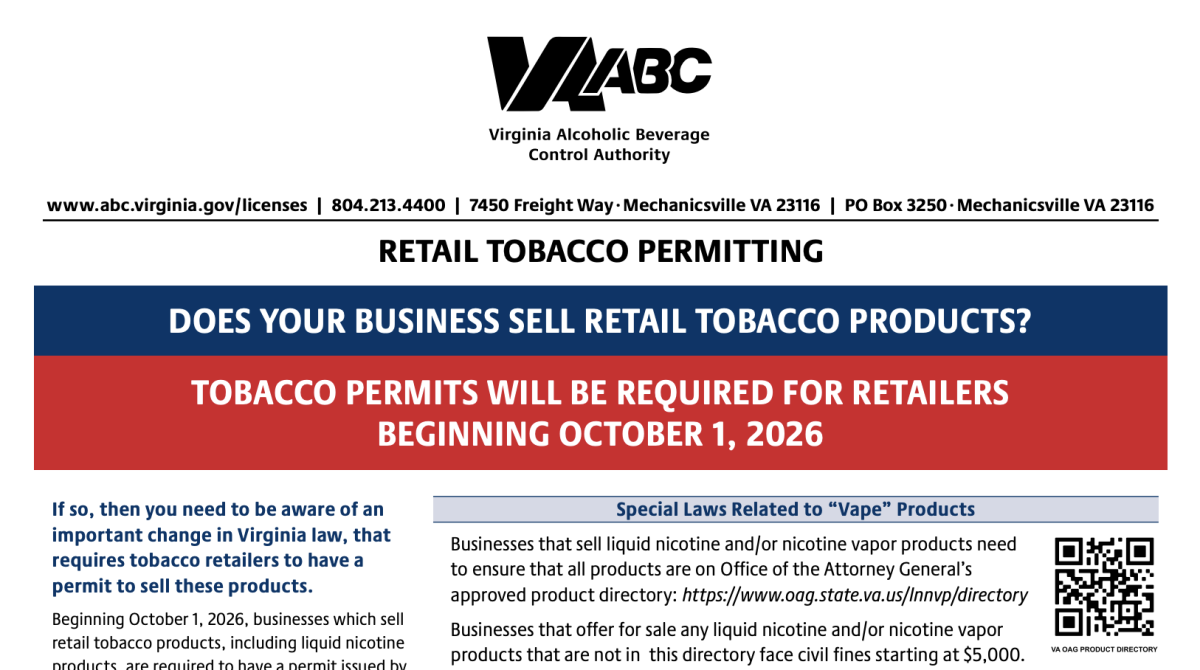
Virginia Tobacco Retail Permit Takes Effect October 1, Covering Vapes as More Than 3,000 Businesses Apply in September
Virginia's new retail tobacco permit system took effect October 1, requiring sellers of vapes, nicotine products and related devices and accessories to obtain a Retail Tobacco Permit for each business location. Virginia ABC said more than 3,000 businesses applied in September alone, creating a processing backlog. Qualifying applicants that filed before October 1 may temporarily operate under a Letter of Authorization. The new store-level permit also sits alongside Virginia's existing vape product directory, where sales of unlisted liquid nicotine or nicotine vapor products can trigger civil penalties starting at $5,000.
Regulations
Oct.03
Kelly White Bets on Female Consumers as Nicotine Pouch Competition Intensifies | 2Firsts Interview
Swedish nicotine pouch brand Kelly White is building its strategy around adult female consumers. Founder and CEO Sophia Wilsby told 2Firsts that women accounted for around 70% of the brand’s repeat customers on HAYPP in Sweden in 2025. The interview explores female consumer segmentation, product and design differentiation, gender stereotypes, packaging regulation, and how independent brands can compete with global players such as ZYN and VELO while considering funding, partnerships and future ownership options.
Business
Sep.24
Philip Morris Malaysia Again Meets Religious Authority Over Cigarette Alternatives as Perlis Mufti Responds on Halal Criteria
Philip Morris Malaysia Managing Director Naeem Shahab Khan met Perlis Mufti Mohd Asri Zainul Abidin on September 17 and presented the company's shift from conventional cigarettes toward alternative products. The mufti said a product could be considered halal if it is clean, its side effects are not harmful or can be controlled, and it does not involve excessive waste. His remarks did not mention IQOS or any other specific PMI product and did not amount to a new product-specific religious ruling. It was at least the second publicly reported engagement between Philip Morris Malaysia and a Malaysian religious institution over cigarette alternatives within six months.
Regulations
Sep.18 by 2Firsts Perspectives
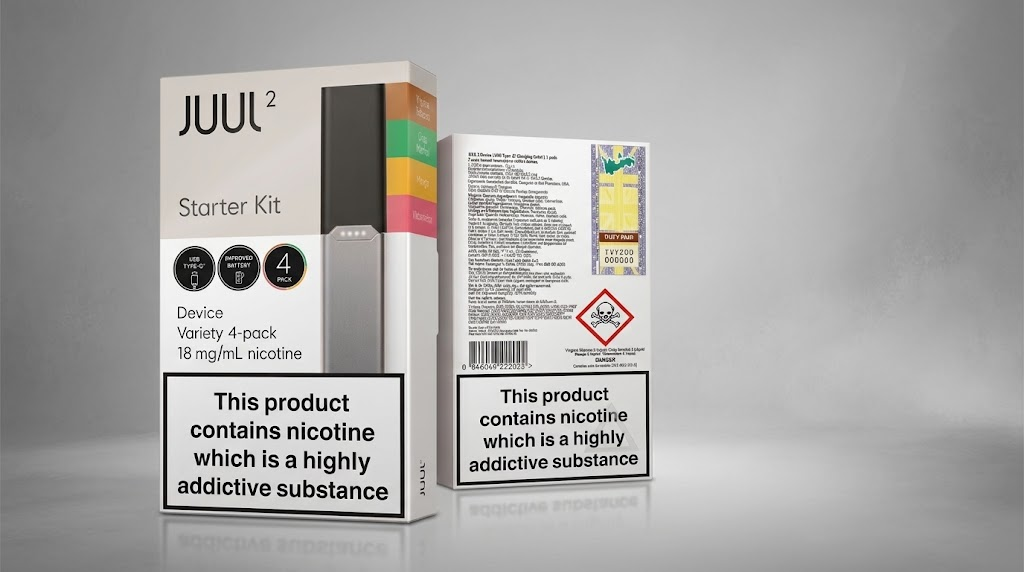
Product | Juul Labs Launches Upgraded JUUL2 Kit in UK With Four Pods at £9.99 and USB-C Charging
Juul Labs UK has introduced an upgraded JUUL2 Starter Kit for the UK market in October 2026, retaining a recommended retail price of £9.99 while doubling the number of included pods from two to four. The kit contains Crisp Menthol, Virginia Tobacco, Mango and Watermelon pods. The updated device replaces the previous proprietary charging dock with a USB-C port and offers longer battery life. The kit also features reduced packaging and retains a two-year limited warranty. Distribution is scheduled through major UK retailers, wholesalers, convenience stores and the JUUL UK website.
product
Oct.15
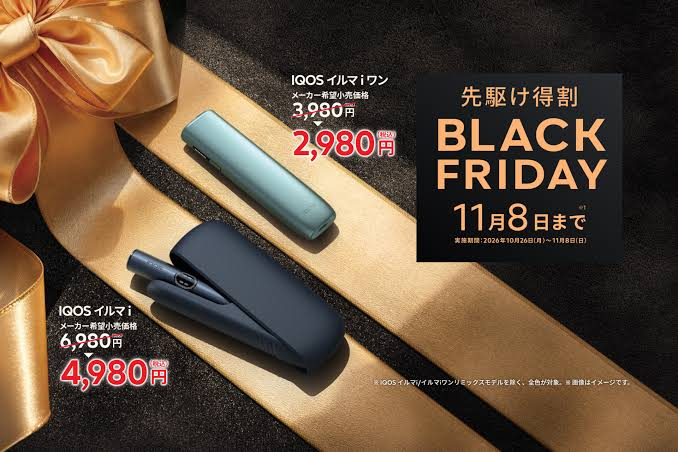
PMI Launches Fourth IQOS Convenience-Store Discount of 2026 for Black Friday in Japan, Cutting ILUMA i ONE to About $19 After Ploom AURA Fell to About $9
Philip Morris Japan launched its fourth confirmed nationwide convenience-store discount campaign for IQOS ILUMA i devices in 2026 on October 26, cutting three models by as much as ¥2,000, or about $12.70. The campaign began one day after JT ended a promotion that reduced Ploom AURA to ¥1,480, or about $9.40. JT says Ploom's share of Japan's heated-products category rose from 10.9% in January 2024 to 18.3% in June 2026, a gain of 7.4 percentage points, while PMI says IQOS still held about 68% category share in the third quarter. At the same time, Japan's two-stage heated-tobacco tax adjustment has pushed stick prices higher, leaving device discounts as an increasingly important tool for lowering the upfront cost of customer acquisition.
Market
Oct.28