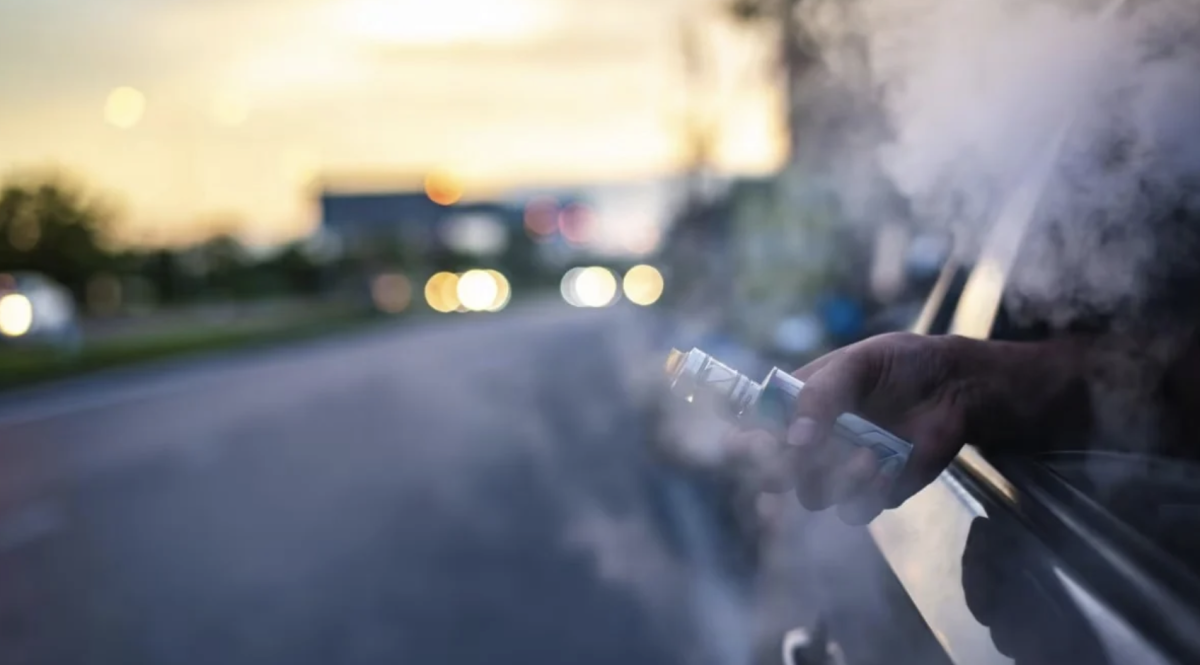
According to a report by Vietnamese CNA Radio on August 12, in recent times, many taxi and ride-sharing drivers have reported incidents of passengers using e-cigarettes in their vehicles. 48-year-old driver Michael stated that from the beginning of this year until now, he has encountered around 20 passengers using e-cigarettes. He said, "Some people try to sneak in a last puff before getting into the car, some choose to discreetly vape, and only a few ask openly if they can smoke in the vehicle.
Similarly, 52-year-old driver Cheng stated that he has had to remind passengers to stop using e-cigarettes while riding in taxis. Some drivers have even found passengers forgetting their e-cigarette devices.
According to a report by CNA, the sale and use of e-cigarettes in Singapore are subject to severe penalties. Individuals found to possess or use e-cigarettes may face fines of up to nearly $1,500; those caught exporting or selling e-cigarettes, shisha, or smokeless tobacco products can be fined $10,000 Singapore dollars and face 6 months of imprisonment; repeat offenders will face double the punishment.
However, despite this, statistical data shows that last year saw over 8,000 cases of violations, a 43% increase from the 5,600 cases in 2022. Currently, authorities are considering a significant increase in fines for individuals using e-cigarettes.
Singapore Community Health Advancement Committee consultant Syed Ali stated: "There are many reasons why young people choose to use e-cigarettes, such as curiosity, peer encouragement, or growing up in environments where many family members smoke, leading them to believe that smoking is normal. But the main reason is stress.
Returning to drivers' feedback, many expressed concern about what could happen if they do not prevent passengers from smoking e-cigarettes in their vehicles. They worry that if a passenger leaves an e-cigarette behind in the car and it causes legal issues, they could face repercussions. Like Michael, who hesitates to stop passengers from smoking because it could result in a one-star rating on the ride-sharing app and impact his income.
According to Cheng, technology rideshare platforms should clearly establish and publish rules regarding passenger behavior such as smoking in the vehicle. Cheng is unsure if passengers caught smoking in a vehicle will be held accountable by relevant authorities.
This is not just a question for taxi drivers in Singapore, but many drivers in countries such as the United States and the United Kingdom also have similar questions. An Uber driver named Joe shared, "Public places, including taxis, prohibit smoking or e-cigarettes. But I have encountered many passengers asking if they can vape e-cigarettes in the car. When I refuse, they will complain to customer service, even though they know their behavior violates regulations.
In response to this, a representative from the ride-hailing platform stated that when a driver discovers an e-cigarette device left behind by a passenger, they should report it to the authorities. A spokesperson for Grab said that drivers should file a report with the police and send a copy to them. Additionally, Grab also advised drivers not to immediately discard these devices as it could impede the investigation process.
At the same time, a representative from Gojek stated that the company has informed and guided drivers on the necessary steps to take when encountering e-cigarettes. The representative also mentioned that the company has collaborated with relevant authorities to address numerous instances of violations. The spokesperson for Gojek shared, "We will take immediate and strict actions to address any illegal activities, including permanently banning the use of the application.
So, does the driver have an obligation to report passengers using e-cigarettes to the police? According to Alexander Woon, Director of the Law Department at the Singapore University of Social Sciences, the short answer is no. Woon explains that in Singapore, the public does not have a general obligation to report criminal behavior unless it falls under certain serious crime categories, such as violent or sexual crimes. Overall, not reporting passengers using e-cigarettes is not seen as condoning improper behavior.
Regarding the situation where a passenger left an e-cigarette device in the car and the driver was later found with it, Woon expressed that it was a difficult situation. The driver had no choice but to persuade and prove to the relevant authorities that they were not the owners.
In Vietnam, according to Article 11 of the Tobacco Control and Anti-Smoking Law of 2012, smoking in designated non-smoking areas, public places, including public buses, taxis, and other public transportation vehicles, is illegal.
However, according to lawyer Pham Thanh Tai, e-cigarettes are currently not covered by tobacco control and anti-tobacco laws.
In 2012, the Tobacco Control and Anti-Smoking Law Article 2 stipulates that tobacco is a product made wholly or partly from tobacco raw materials, processed into cigarettes, cigars, pipe tobacco, loose tobacco, tobacco leaves, or other forms. Tobacco raw materials include leaves, tobacco flakes, or preliminarily processed, separated tobacco strands, tobacco stems, and other alternative materials used for tobacco production. Therefore, e-cigarettes and some other new generation tobacco products do not meet the definition of tobacco and tobacco raw materials mentioned above. Therefore, in my opinion, e-cigarettes are not subject to the regulation of the current Tobacco Control and Anti-Smoking Law.
E-cigarettes are currently seen as harmful to health, so it is necessary to include them in the current tobacco control and anti-tobacco laws for regulation. This way, relevant authorities will have a legal basis to conduct appropriate management activities or impose appropriate penalties on violations related to e-cigarettes.
We welcome news tips, article submissions, interview requests, or comments on this piece.
Please contact us at info@2firsts.com, or reach out to Alan Zhao, CEO of 2Firsts, on LinkedIn
Notice
1. This article is intended solely for professional research purposes related to industry, technology, and policy. Any references to brands or products are made purely for objective description and do not constitute any form of endorsement, recommendation, or promotion by 2Firsts.
2. The use of nicotine-containing products — including, but not limited to, cigarettes, e-cigarettes, nicotine pouchand heated tobacco products — carries significant health risks. Users are responsible for complying with all applicable laws and regulations in their respective jurisdictions.
3. This article is not intended to serve as the basis for any investment decisions or financial advice. 2Firsts assumes no direct or indirect liability for any inaccuracies or errors in the content.
4. Access to this article is strictly prohibited for individuals below the legal age in their jurisdiction.
Copyright
This article is either an original work created by 2Firsts or a reproduction from third-party sources with proper attribution. All copyrights and usage rights belong to 2Firsts or the original content provider. Unauthorized reproduction, distribution, or any other form of unauthorized use by any individual or organization is strictly prohibited. Violators will be held legally accountable.
For copyright-related inquiries, please contact: info@2firsts.com
AI Assistance Disclaimer
This article may have been enhanced using AI tools to improve translation and editorial efficiency. However, due to technical limitations, inaccuracies may occur. Readers are encouraged to refer to the cited sources for the most accurate information.
We welcome any corrections or feedback. Please contact us at: info@2firsts.com