Swiss Valais to Ban Disposable Vapes Amid Ongoing National Debate

Nov.28.2024
Swiss Valais to Ban Disposable Vapes Amid Ongoing National Debate
Switzerland's Valais canton has announced a ban on the sale of disposable vapes, citing concerns over youth protection and environmental impact. A nationwide ban on such products is still under discussion.

According to a report by 20min on November 27, the Swiss canton of Vaud has decided to ban the sale of disposable e-cigarettes due to concerns about youth and environmental protection. This ban follows a similar measure taken by the canton of Vaud earlier.


The ban in Valais applies to all disposable e-cigarettes. Since the summer, it has been prohibited nationwide in Switzerland to sell disposable e-cigarettes to minors under the age of 18. However, as they are still considered regular goods, they are not subject to tobacco product laws.


One of the main reasons for this ban in Valais state is to protect adolescents, followed by environmental protection. According to research from health organizations in Valais and Vaud states, 60% of young people aged 14 to 25 have tried e-cigarettes at least once. Among them, 12% of people use e-cigarettes regularly, with nearly 10% of individuals aged 14 to 17 using e-cigarettes.


Currently, regulations on e-cigarettes vary among different cantons in Switzerland. In Valais and Jura, e-cigarettes are already banned, while they remain allowed in Vaud. A proposal to ban disposable e-cigarettes nationwide is still under discussion, with the national parliament approving it and the Senate expected to make a decision in the spring.


We welcome news tips, article submissions, interview requests, or comments on this piece.

Please contact us at info@2firsts.com, or reach out to Alan Zhao, CEO of 2Firsts, on LinkedIn


Notice

1.  This article is intended solely for professional research purposes related to industry, technology, and policy. Any references to brands or products are made purely for objective description and do not constitute any form of endorsement, recommendation, or promotion by 2Firsts.

2.  The use of nicotine-containing products — including, but not limited to, cigarettes, e-cigarettes, nicotine pouchand heated tobacco products — carries significant health risks. Users are responsible for complying with all applicable laws and regulations in their respective jurisdictions.

3.  This article is not intended to serve as the basis for any investment decisions or financial advice. 2Firsts assumes no direct or indirect liability for any inaccuracies or errors in the content.

4.  Access to this article is strictly prohibited for individuals below the legal age in their jurisdiction.


Copyright


This article is either an original work created by 2Firsts or a reproduction from third-party sources with proper attribution. All copyrights and usage rights belong to 2Firsts or the original content provider. Unauthorized reproduction, distribution, or any other form of unauthorized use by any individual or organization is strictly prohibited. Violators will be held legally accountable.

For copyright-related inquiries, please contact: info@2firsts.com


AI Assistance Disclaimer


This article may have been enhanced using AI tools to improve translation and editorial efficiency. However, due to technical limitations, inaccuracies may occur. Readers are encouraged to refer to the cited sources for the most accurate information.

We welcome any corrections or feedback. Please contact us at: info@2firsts.com

On-Site Report | CTP Details PMTA Backlog, 180-Day Review Goal and sPMTA Process
FDA’s Center for Tobacco Products detailed new PMTA review data and process changes at the 2026 FDLI conference. Pending PMTAs fell from about 450,000 at the start of 2025 to 135,000 by September 2026. CTP also discussed its 180-day review goal, current sPMTA pilot, alternate-supplier planning, more than 50,300 pending SE reports, and lessons from the nicotine pouch pilot already being applied to ENDS review.
Regulations
Oct.07
Product | BAT Revises Japan's VELO Convenience Store Lineup, Adding ¥380 Mango Pouches as Selected SKUs Exit
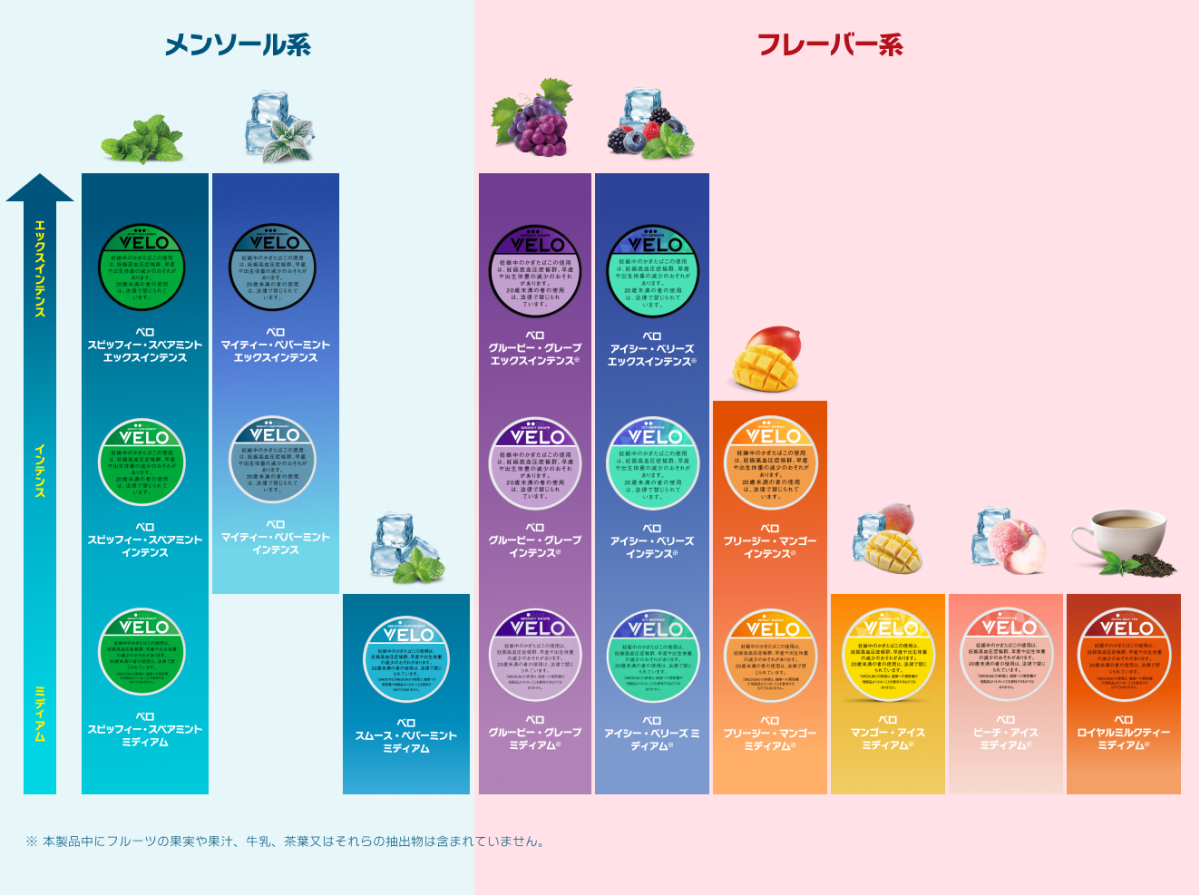
British American Tobacco's Japanese subsidiary, BAT Japan, launched VELO Mango Ice Medium on November 2, 2026, with distribution expanding to selected 7-Eleven, FamilyMart, NewDays and Seicomart stores from November 3. The new oral tobacco product contains 15 pouches per can and retails for ¥380, featuring a mango and cooling flavor profile at Medium intensity. At the same time, BAT Japan raised prices on multiple existing VELO products from ¥360 to ¥380 per can and withdrew selected SKUs from convenience store distribution without discontinuing them entirely. The changes affect product assortment, pricing and retail channel allocation.
product
Nov.04
Indiana Halts Sales of Elf Bar, Lost Mary, MR FOG and iJOY Vapes Under Foreign-Adversary Rules; Some Products Return After Compliance Filings
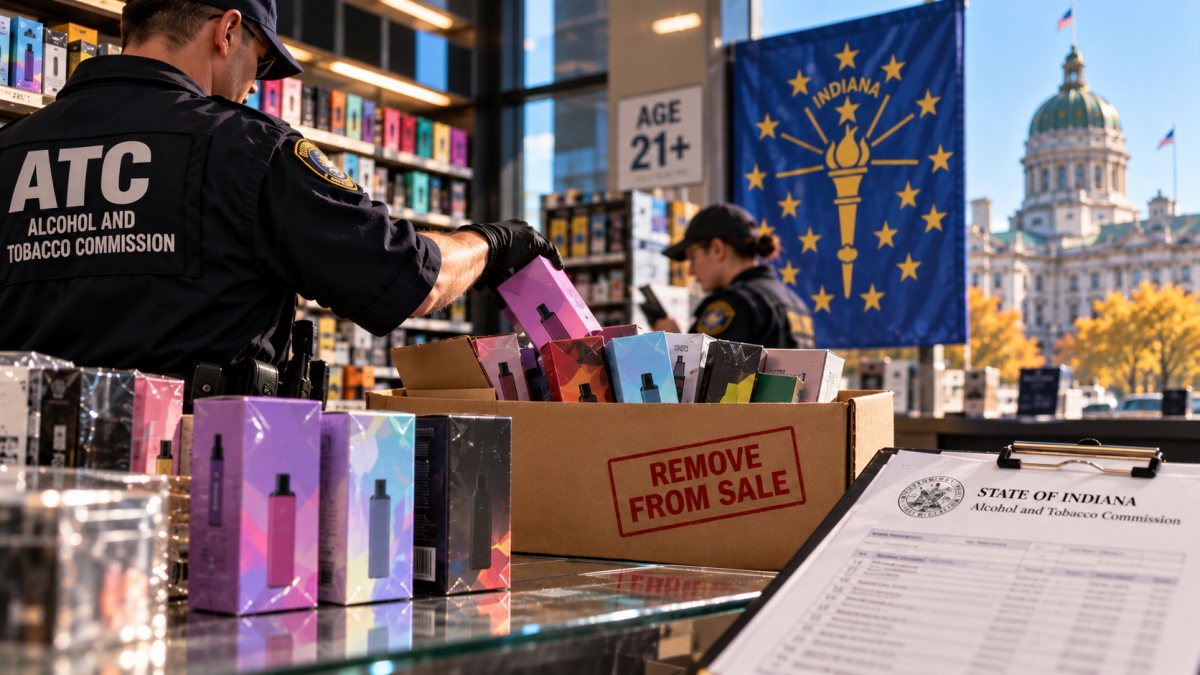
Indiana's Alcohol and Tobacco Commission (ATC) ordered tobacco certificate holders in September to remove certain vaping products marketed under Elf Bar, Lost Mary, MR FOG, iJOY and other brands from inventory under the state's foreign-adversary product law. The agency later listed 257 MR FOG products and 77 Lost Mary product entries as lawful for sale. The Lost Mary revision expressly stated that compliance evidence had been received for 20 additional products. 2Firsts compliance expert Kurt said potential filings could include e-liquid and ingredient-origin records, U.S. nicotine-analog supply-chain documentation and FDA premarket application status.
Regulations
Oct.08
Turning Point Brands Q3 Modern Oral Net Sales Rise 103% to $74.4 Million as Attributable Profit Falls 81%
Turning Point Brands (TPB) reported third-quarter 2026 Modern Oral net sales of $74.4 million on November 9, up 102.9% year over year and representing 49.2% of consolidated net sales. Total company net sales rose 27.0% to $151.1 million, while net income attributable to TPB declined 81.4% to $3.93 million. The company is expanding the US retail presence of its FRE and ALP nicotine pouch brands and expects its Modern Oral chain-store footprint to grow by more than 70% during 2026. Selling, general and administrative expenses increased 69.1% to $75.3 million, while PMTA-related expenses reached approximately $3.15 million and manufacturing start-up costs totaled about $593,000. ALP plans to open a branded pop-up in New York City's SoHo neighborhood on November 13, alongside a marketing campaign extending into January 2027. TPB owns 50% of ALP but consolidates the venture in its financial statements.
company
Nov.11
EU Tobacco Tax Reform Targets November Push as Sweden Holds Nicotine-Pouch Minimum at €20 per Kilogram
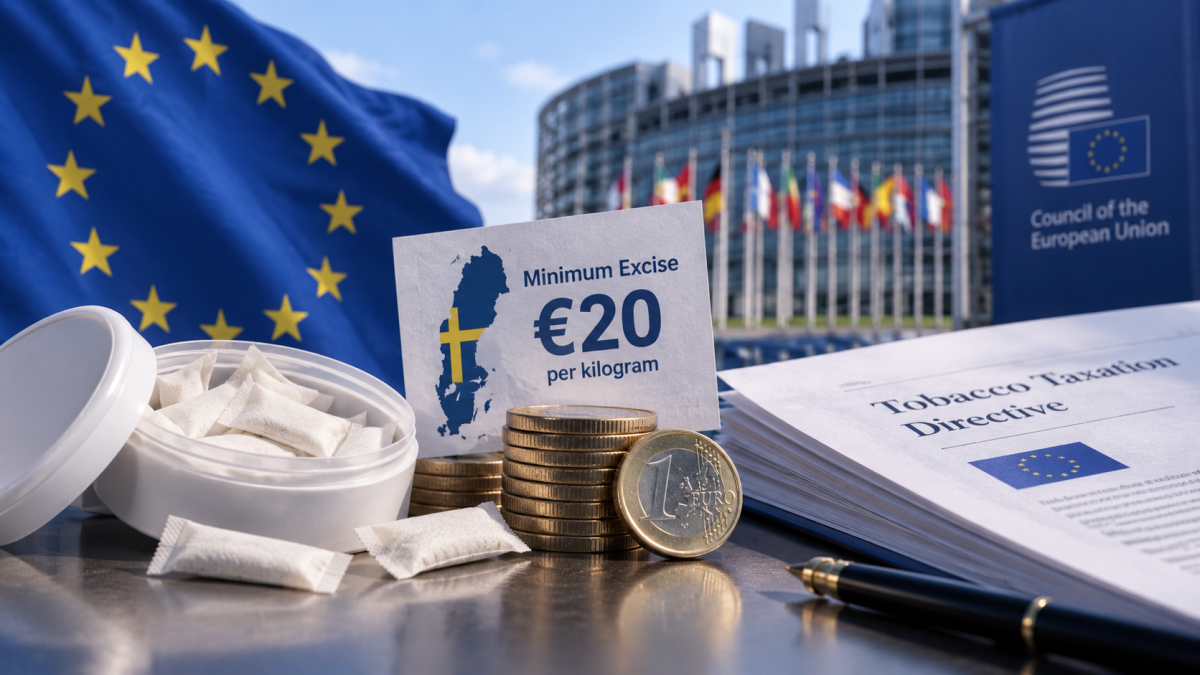
The Irish presidency of the Council of the European Union is using bilateral talks to push the bloc’s Tobacco Taxation Directive toward a political agreement in November. According to Law360, citing an EU official, Sweden is unwilling to accept a minimum excise threshold above €20 per kilogram for nicotine pouches. Council negotiations have already lowered the European Commission’s original proposal, but a May 2026 presidency compromise still set the minimum at 10% of the tax-inclusive retail price or €30 per kilogram in 2028-29, with higher levels later.
Market
Sep.17 by 2Firsts Perspectives
Special Report | Vape bans and tougher rules: the South Caucasus takes different paths
Azerbaijan's sweeping e-cigarette ban has raised concerns over enforcement errors and the emergence of illicit sales, while neighboring Armenia is tightening technical rules and preparing higher excise taxes. Georgia, meanwhile, has resisted calls for broader vape restrictions and introduced preferential taxes for some domestically produced cigarettes. The divergent approaches across the South Caucasus highlight a regional policy dilemma: how to curb nicotine use and protect public health without encouraging black markets or creating unintended economic consequences for businesses and consumers.
Nov.03