Teenage Smoking Rate Decreased, but E-cigarette Use Increased

Aug.21.2023
Teenage Smoking Rate Decreased, but E-cigarette Use Increased
Teenage smoking rates decline during COVID-19, but e-cigarette use increases, alcohol consumption remains stable, and mental health deteriorates.

According to a recent survey conducted by the Korea Centers for Disease Control and Prevention (KCDC), the overall smoking rate among teenagers has decreased in the past two years since the outbreak of COVID-19. The survey, titled the "17th Youth Health Behavior Survey," collected data from approximately 60,000 students from middle school first grade to high school third grade between August and November last year.


The statistics revealed that the smoking and drinking habits of teenagers remained stable in 2020, after experiencing a significant drop compared to 2019, the year before the COVID-19 pandemic. The percentage of teenagers who reported smoking cigarettes for more than one day in the past month was 4.5%, a similar level to the previous year (4.4%), and lower than the pre-pandemic rate of 6.7% in 2019.


The KCDC attributed this trend to the increase in remote learning and the decrease in peer gatherings during the pandemic period. However, the use of e-cigarettes increased, with the usage rates of liquid-type e-cigarettes rising from 1.9% to 2.9% in a year, and cartridge-type e-cigarettes increasing from 1.1% to 1.4%.


In terms of alcohol consumption, the percentage of teenagers who reported drinking at least one glass in the past 30 days remained the same at 10.7%. The "current drinking rate" also showed no significant increase since it dropped from 15.0% in 2019 to 10.7% in 2020.


While the average alcohol consumption rate in the past month decreased slightly from 5.2% in 2020 to 4.9% in 2021, indicating a decline in risky drinking behaviors, the accessibility to purchase tobacco and alcohol increased. The percentage of teenagers who reported that they could easily buy cigarettes or alcohol from convenience stores or shops increased significantly compared to the previous year, with the accessibility rate for cigarette purchases rising from 67.0% to 74.8% and for alcohol purchases from 63.5% to 71.3%.


While the percentage of teenagers engaging in regular physical activities increased slightly to 14.6% who participated in at least 60 minutes of physical activity for five or more days a week, the dietary habits did not improve. The percentage of teenagers skipping breakfast for five or more days a week continued to rise, reaching 38.0% in 2021, compared to 27.9% in 2015. Additionally, the percentage of teenagers consuming fruits decreased for the fifth consecutive year, recording 18.1% in 2021.


Mental health indicators also worsened in 2021 compared to the previous year. The prevalence of depression increased from 25.2% in 2020 to 26.8%, and the perceived stress rate rose from 34.2% to 38.8%. Females showed higher rates of depression (31.4%) and stress (45.6%) compared to males (22.4% and 32.3% respectively).


In conclusion, while the smoking rate among teenagers has decreased during the COVID-19 pandemic, the use of e-cigarettes has increased. Additionally, there has been no significant change in alcohol consumption, but the accessibility to purchase tobacco and alcohol has increased. Furthermore, despite a slight increase in regular physical activity, detrimental dietary habits and worsening mental health indicators are concerning issues among teenagers.


Disclaimer

This article is provided solely for professional research, industry discussion, and informational purposes. Any references to brands, companies, products, technologies, or policies are made for factual reporting and analytical purposes only, and do not constitute endorsement, recommendation, promotion, or advertising by 2Firsts.

Nicotine-containing products, including but not limited to cigarettes, e-cigarettes, heated tobacco products, and nicotine pouches, carry significant health risks. Readers are responsible for complying with all applicable laws and regulations in their respective jurisdictions, including age restrictions and access limitations.

The information contained in this article should not be regarded as investment, legal, medical, regulatory, or commercial advice. While 2Firsts strives to ensure the accuracy and reliability of its content, it does not assume liability for any direct or indirect loss arising from errors, omissions, inaccuracies, or reliance on the information contained herein.

This article is not intended for individuals below the legal age for accessing tobacco or nicotine-related information in their jurisdiction.


Copyright Notice

This article is either original content produced by 2Firsts or content reproduced, translated, summarized, or adapted from third-party sources with attribution where applicable. The intellectual property rights of the original content remain with 2Firsts or the respective original rights holders.

No individual or organization may copy, reproduce, distribute, republish, modify, translate, or otherwise use this content without prior authorization. Any unauthorized use may result in legal action.

For copyright-related inquiries, corrections, or removal requests, please contact: info@2firsts.com.


AI-Assisted Translation and Editing Notice

Portions of this article may have been translated, edited, or reviewed with the assistance of artificial intelligence tools to improve efficiency and readability. Due to the limitations of AI-assisted translation and editing, discrepancies, omissions, or inaccuracies may exist when compared with the original source.

Where applicable, readers are advised to refer to the original source for the most complete and accurate information. If you identify any errors or believe that any content infringes upon your rights, please contact us at info@2firsts.com, and we will review and address the matter promptly.

EU Tobacco Tax Reform Stalls as Malta Withholds Support Despite Backing From 26 States
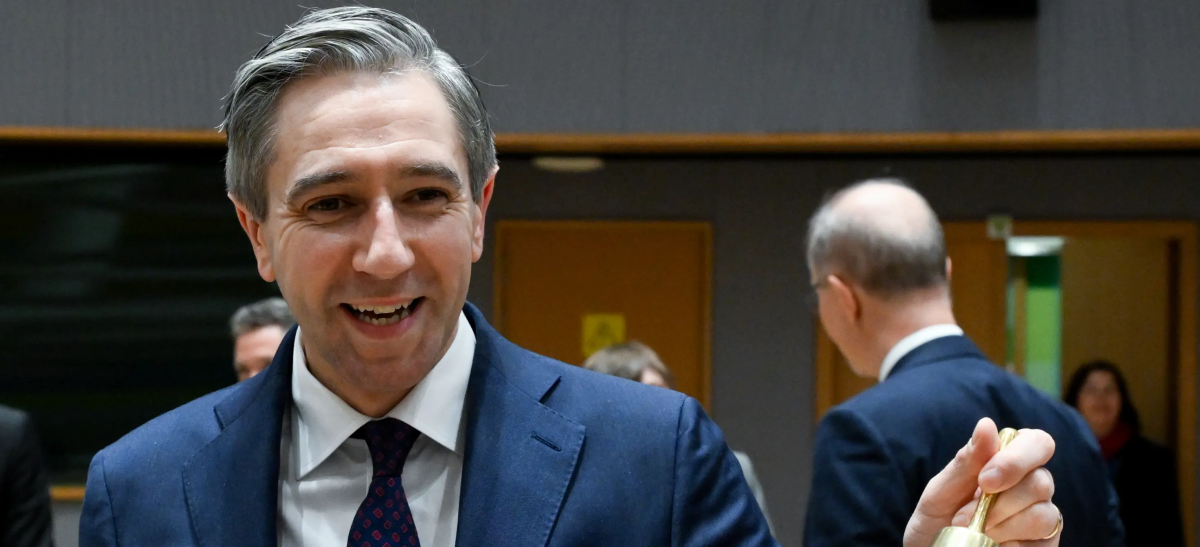
EU finance ministers failed to reach agreement on tobacco excise reform at the November 9, 2026 Economic and Financial Affairs Council (ECOFIN) meeting in Brussels. The Irish Council presidency's compromise secured support from 26 of the EU's 27 member states, but Malta withheld consent, preventing the Council from reaching a general approach requiring unanimity. The reform would raise minimum taxes on conventional tobacco and bring e-cigarette liquids, heated tobacco and nicotine pouches into a common EU minimum excise framework. Finland and Estonia accepted further concessions during the meeting, while the presidency proposed separating the inclusion of nicotine pouches in the framework from setting their precise minimum tax rates. Another compromise would allow ten qualifying member states until 2036 to meet certain tobacco excise requirements. Ireland intends to continue negotiations in December.
Regulations
Nov.11
Wisconsin Vape Directory One Year On: Retailer Reports Four Store Closures and 70% Staff Cuts
Wisconsin's electronic vaping device directory has been fully enforced for more than a year, and local vape retailers say the reduced range of eligible products has contributed to declining sales, store closures and layoffs. Johnny Vapes owner Ben Hall said he has closed four of seven locations and cut about 70% of his staff. State law bars the sale of vaping devices not listed on the Wisconsin Department of Revenue directory and allows penalties of $1,000 per day for each unlisted device sold or offered for sale. In April 2026, the U.S. Court of Appeals for the Seventh Circuit allowed enforcement of the law to continue.
Regulations
Oct.10
Beyond IQOS ILUMA, PMI Expands Lower-Priced BONDS Heated Tobacco Platform: Seven Markets Added in Q3, With Rollouts in Japan, Europe and North Africa
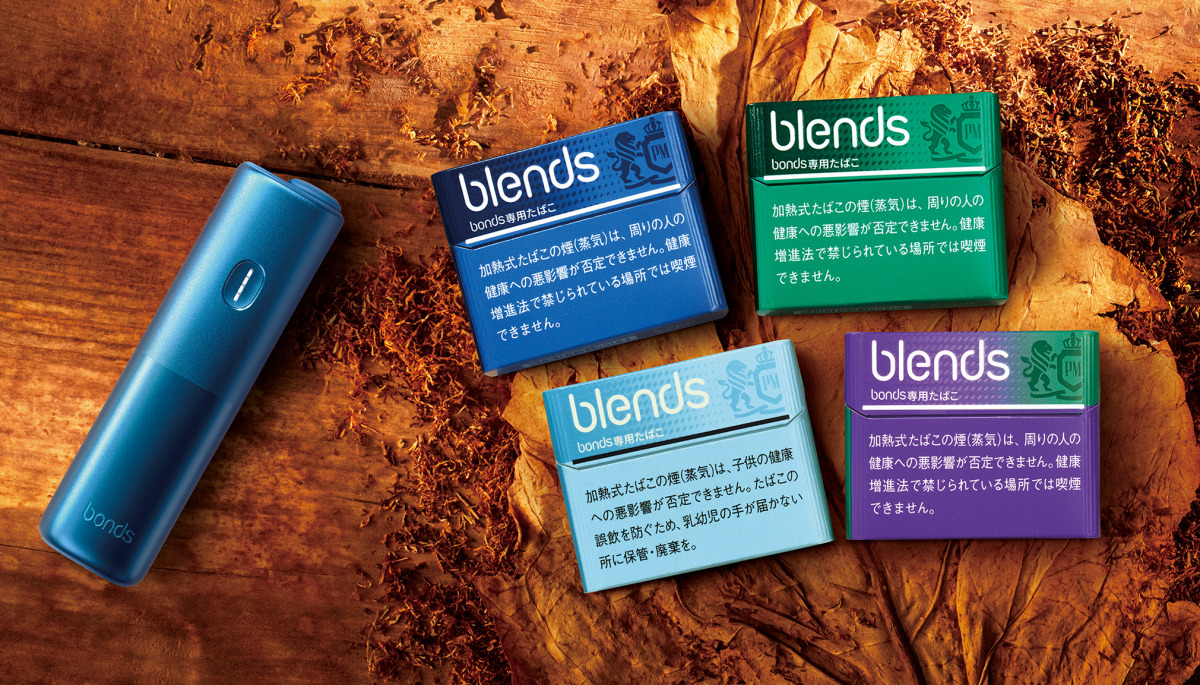
Philip Morris International (PMI) is expanding the international footprint of BONDS by IQOS, its lower-priced heated tobacco platform. The company's third-quarter 2026 SEC filing shows that BONDS devices and BLENDS tobacco sticks were available in 15 markets at the end of September, up from eight at the end of June. In November, PMI announced plans to extend sales from three to 17 Japanese prefectures and introduced BONDS in Spain and Morocco. The platform uses ROUNDHEAT external heating technology and proprietary tobacco sticks, separate from the IQOS ILUMA system. In Japan, BONDS retails for ¥2,980, approximately 25% below ILUMA i ONE, while BLENDS costs ¥570 per pack. PMI management says BONDS targets cigarette smokers who have not adopted heated tobacco. Separate sales and revenue figures remain undisclosed.
company
Nov.06
UK HMRC Launches Vape Duty Stamps on October 1, Ushering in Supply-Chain Traceability as Chinese Exporters Face New Compliance Hurdles
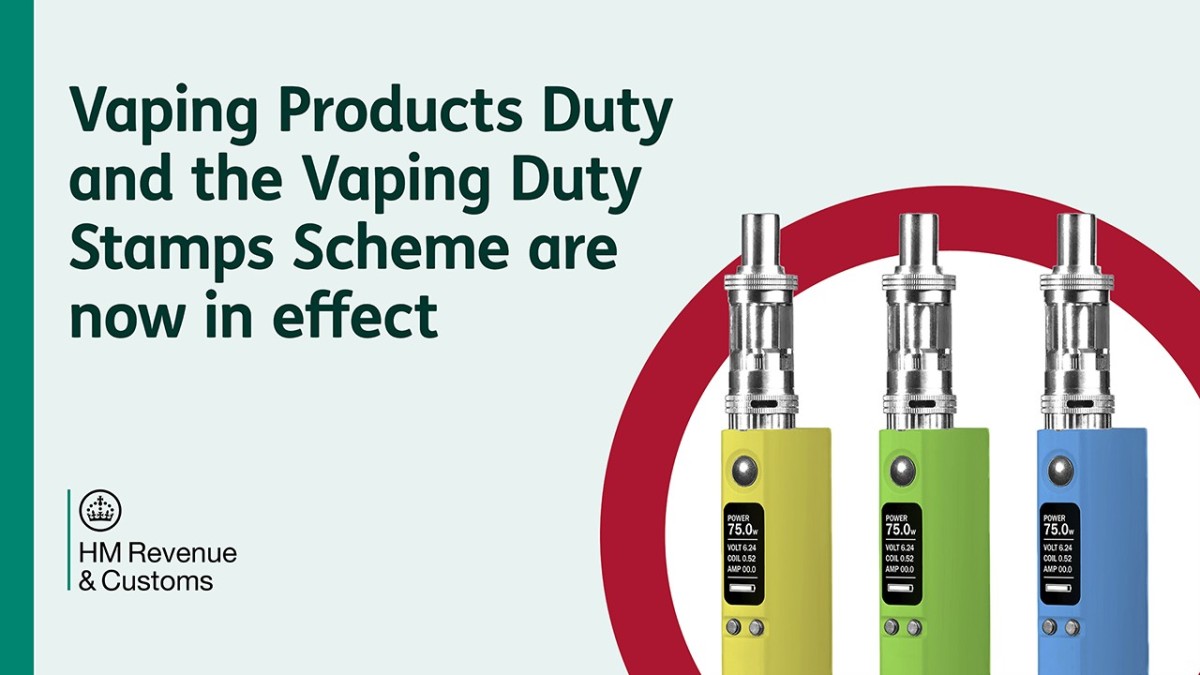
HM Revenue & Customs put the UK's Vaping Products Duty and Vaping Duty Stamps Scheme into effect on October 1. All vaping liquids manufactured in or imported into the UK are now subject to duty at £2.20 per 10ml, regardless of nicotine content. The stamp regime will introduce digital functionality designed to provide traceability throughout the supply chain, with approved manufacturers, importers and warehousekeepers required to report product movements and retailers and consumers eventually able to scan stamps to verify authenticity. China exported $177 million of vape-related products to the UK in August, up 51.4% year over year, increasing the significance of the new compliance regime for China's Shenzhen-centered vape supply chain.
Regulations
Oct.04
Canada Health Minister Says She Is Not Considering Looser Nicotine Pouch Retail Rules as PMI-Linked Group Pushes for Wider Access
Canadian Health Minister Marjorie Michel says she is not considering loosening retail restrictions on nicotine pouches. Canada regulates pouches containing 4 mg or less of nicotine per unit as non-prescription nicotine replacement therapy and requires newer NRT formats such as pouches to be sold from behind pharmacy counters. Meanwhile, Unsmoke Canada, linked to Philip Morris International's Canadian business, is pushing to allow pouches in convenience stores and other general retail outlets. Health Canada also acknowledges continued unauthorized sales, while recent research shows rising pouch use among Canadian youth aged 16 to 19.
Sep.24
EU Vape, Heated Tobacco and Nicotine Pouch Tax Reform Reaches Ministerial Talks: Sweden Opposes Proposed 2032 Minimum of 50% of Retail Price or €50/kg for Nicotine Pouches
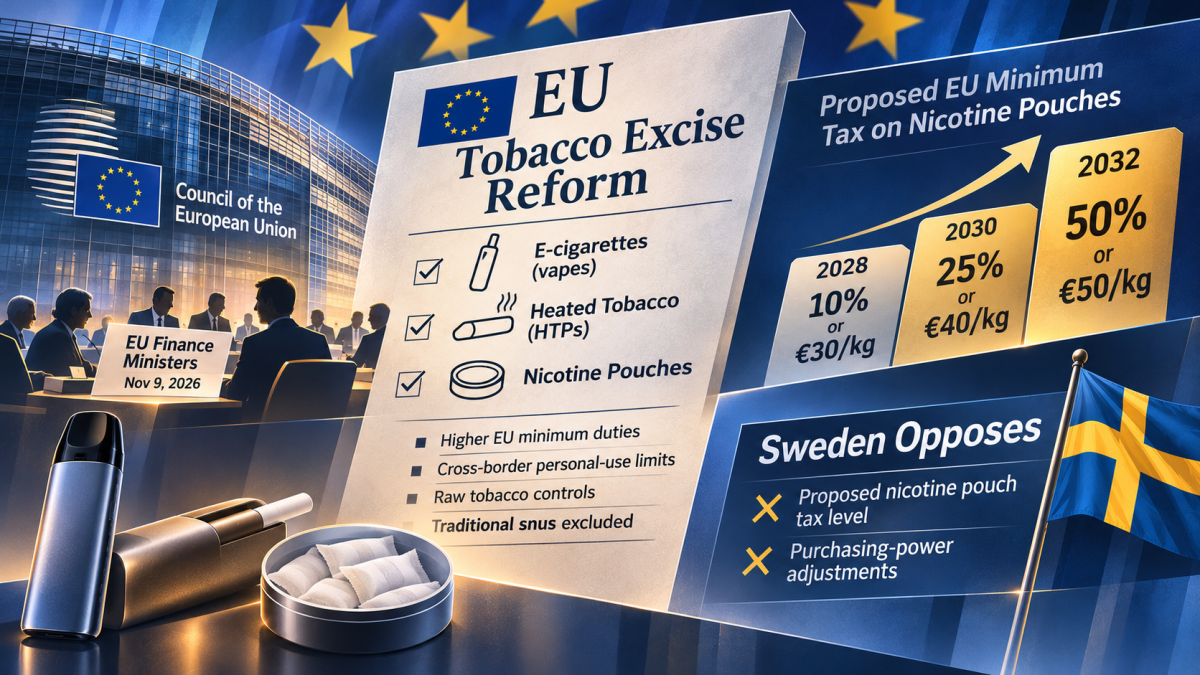
EU finance ministers are scheduled to discuss tobacco excise reform on November 9, 2026, seeking agreement on higher minimum duties for conventional tobacco and a common EU minimum tax framework covering e-cigarettes, heated tobacco and nicotine pouches. A November 5 Council document identifies nicotine pouch taxation as the main outstanding issue. The Irish Council presidency proposes phased increases, reaching 50% of retail selling price or €50 per kilogram in 2032. Sweden has formally said it cannot support the current compromise, objecting to both the proposed nicotine pouch tax burden and the adjustment of minimum rates based on national purchasing power. The package also addresses cross-border personal-use reference quantities, raw tobacco controls and the continued exclusion of traditional tobacco snus.
Regulations
Nov.10