Thailand's Education Ministry Enforces School E-Cigarette Ban Amid Rising Youth Vaping Concerns

May.09.2025
Thailand's Education Ministry Enforces School E-Cigarette Ban Amid Rising Youth Vaping Concerns
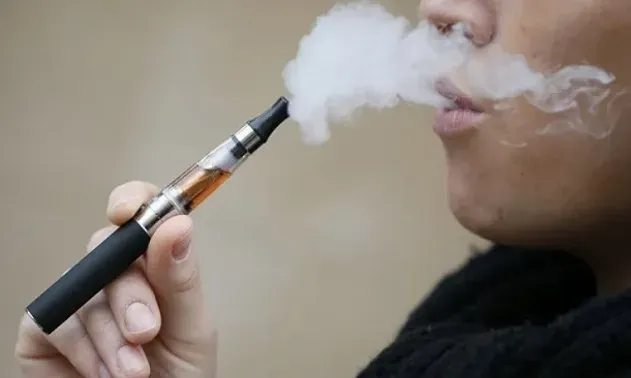
Thailand's Ministry of Education has announced a comprehensive ban on e-cigarettes within all educational institutions and government agencies, responding to a significant increase in youth vaping rates. The measures include the establishment of "No E-Cigarette Zones," enhanced enforcement protocols, and educational campaigns to raise awareness about the health risks associated with e-cigarette use.

Key points:


1.The Thai Ministry of Education has announced a nationwide ban on the use and distribution of e-cigarettes in schools and government agencies.


2.The driving force behind the policy is the significant increase in the use of e-cigarettes among teenagers, driven by online advertising and easy access.


3.The measures being implemented include setting up signage for "no e-cigarette zones," strengthening law enforcement supervision, and conducting health risk awareness campaigns.


4.Those who violate the regulations will face disciplinary action, the government emphasizes that law enforcement will be strictly enforced.


According to E.vnexpress.net, on May 8, in response to the continuing increase in e-cigarette use among adolescents, the Thai Ministry of Education announced on May 7 that the use and distribution of e-cigarette products are banned in all schools and government offices nationwide.


Karom Polpornklang, Deputy Government Spokesperson of Thailand, stated that the decision was made in response to the increasing consumption of e-cigarettes among student groups. The growing popularity of e-cigarettes among young people is a cause for concern, as it is primarily driven by targeted online advertising and easy access to products.


The Ministry of Education has established a comprehensive implementation mechanism, which includes prominently displaying "No e-cigarette" signs in all schools and public offices, clearly defining these areas as non-smoking zones; strengthening supervision and enforcement to ensure timely detection and handling of violations, with offenders facing disciplinary action; launching a wide-ranging health promotion project, which will include educational courses and public outreach activities targeting students, teachers, and school administrators.


We welcome news tips, article submissions, interview requests, or comments on this piece.

Please contact us at info@2firsts.com, or reach out to Alan Zhao, CEO of 2Firsts, on LinkedIn


Notice

1.  This article is intended solely for professional research purposes related to industry, technology, and policy. Any references to brands or products are made purely for objective description and do not constitute any form of endorsement, recommendation, or promotion by 2Firsts.

2.  The use of nicotine-containing products — including, but not limited to, cigarettes, e-cigarettes, nicotine pouchand heated tobacco products — carries significant health risks. Users are responsible for complying with all applicable laws and regulations in their respective jurisdictions.

3.  This article is not intended to serve as the basis for any investment decisions or financial advice. 2Firsts assumes no direct or indirect liability for any inaccuracies or errors in the content.

4.  Access to this article is strictly prohibited for individuals below the legal age in their jurisdiction.


Copyright


This article is either an original work created by 2Firsts or a reproduction from third-party sources with proper attribution. All copyrights and usage rights belong to 2Firsts or the original content provider. Unauthorized reproduction, distribution, or any other form of unauthorized use by any individual or organization is strictly prohibited. Violators will be held legally accountable.

For copyright-related inquiries, please contact: info@2firsts.com


AI Assistance Disclaimer


This article may have been enhanced using AI tools to improve translation and editorial efficiency. However, due to technical limitations, inaccuracies may occur. Readers are encouraged to refer to the cited sources for the most accurate information.

We welcome any corrections or feedback. Please contact us at: info@2firsts.com

Indonesia's Influential Islamic Body MUI Urges Vape Permit Freeze, Raising Uncertainty for 200 Manufacturers
Indonesia's Ulema Council (MUI) published Fatwa No. 131/2026 on November 9, declaring electronic cigarette use, production and trade haram under Islamic religious rules. The council urged the Industry Ministry to prohibit the issuance of vape industry permits and review licensing policies, while calling on the president and parliament to enact a comprehensive ban. On November 10, the Constitutional Court heard a challenge to provisions of the 2023 Health Law seeking a prohibition on vape production, importation, distribution and use. The Health Ministry said on November 11 it was studying stronger restrictions, including a possible ban on circulation, while industry association APVI called for tighter oversight rather than a total ban. Indonesia's Industry Ministry previously estimated the sector comprises about 200 companies, Rp31 trillion ($1.7 billion) in cumulative investment and approximately 100,000 supply-chain jobs. No nationwide statutory ban has been enacted.
Regulations
Nov.12
South Korea Constitutional Court Upholds Volume-Based E-Liquid Tax, With Challenged Rates at KRW 370 and KRW 628 per Milliliter
South Korea's Constitutional Court has upheld fixed taxes on nicotine-containing e-cigarette liquids based on solution volume, ruling that challenged provisions imposing KRW 370 per milliliter in individual consumption tax and KRW 628 per milliliter in tobacco consumption tax do not violate the Constitution. The cases stemmed from historical disputes involving importers that reported nicotine as being extracted from tobacco stems rather than leaves. South Korea has since broadened its tobacco definition to include synthetic nicotine, while current tax laws provide reduced rates for certain products not derived from tobacco.
Sep.18
India Steps Up Nicotine Pouch Enforcement as ZYN, White Fox Circulate and Drug Panel Urges Halt to New Nicotine Formulations
India's Ministry of Health and Family Welfare has directed states to step up enforcement against nicotine pouch sales, citing increased availability through online and offline channels and concern about nicotine exposure among children. Reuters reported that international brands including ZYN and White Fox are being sold in India. A study led by ICMR-NICPR found pouches in seven of 10 surveyed locations and identified 68 brands and 445 flavors online. Separately, India's Drugs Technical Advisory Board recommended in August that no new nicotine formulation be approved.
Regulations
Sep.28 by 2Firsts Perspectives
STIIIZY Redesign Fails to Escape PAX Labs Patent Import Ban as Section 337 Case Also Involves China ALD
U.S. Customs and Border Protection ruled that STIIIZY had not shown that the redesigned cannabis-vape products covered by its latest request fall outside an ITC limited exclusion order tied to PAX Labs patents. CBP accepted some of STIIIZY’s claim-construction and non-infringement arguments, but the company did not address two additional claims in the same patent. Earlier STIIIZY redesigned cartridges and certain associated components imported with them had received separate CBP clearance.
Sep.16
Product | PMI Launches TEREA Black Mint Pearl in Japan, Adding First Capsule Variant to Black Range With Nationwide Rollout From October 19
Philip Morris Japan (PMJ) launched TEREA Black Mint Pearl on October 15, 2026, introducing the first capsule-equipped heated tobacco stick in the TEREA Black range for IQOS ILUMA devices. The product combines a strong menthol profile with a crushable mint capsule and is priced at ¥640 per 20-stick pack, including tax. Sales began at four IQOS stores and selected retail partners on October 15, with distribution expanding to convenience stores and other tobacco retailers nationwide from October 19. The launch brings Japan's TEREA portfolio to 28 variants, including 21 menthol-related products, or 75% of the range.
product
Oct.16 by 2Firsts Perspectives
FRE and ALP Push Modern Oral to 48% of Q2 Sales as Turning Point Brands Changes CEO and Lowers Profit-Guidance Ceiling
Turning Point Brands said Executive Chairman David E. Glazek will become CEO on October 1, replacing Graham Purdy, who is stepping down for personal reasons. The company narrowed its 2026 adjusted EBITDA outlook to $70 million-$80 million from $70 million-$90 million while maintaining Modern Oral gross sales guidance of $330 million-$350 million and net sales guidance of $260 million-$270 million. In the second quarter, Modern Oral net sales rose 128% to $68.4 million and accounted for 48% of company-wide net sales. Adjusted EBITDA fell 50% year over year. TPB shares closed about 10% lower on September 21.
Market
Sep.22 by 2Firsts Perspectives