The Potential Health Impacts of Indoor E-cigarette Exposure on Children

Regulations by 2FIRSTS.ai
Jul.12.2024
The Potential Health Impacts of Indoor E-cigarette Exposure on Children
Dr. Harry Tattan-Birch of UCL published a study in JAMA Network on children's exposure to e-cigarettes and secondhand smoke.

According to a report by Naver on July 11th, Dr. Harry Tattan-Birch from University College London (UCL) recently published an important research study in the medical journal "JAMA Network." The study compared the nicotine absorption levels of over 1700 American children and delved into the potential impact of indoor e-cigarette use and secondhand smoke on children's health.


This study analyzed data from 1777 families with children aged 3 to 11 (average age 7.4) who participated in the National Health and Nutrition Examination Survey (NHANES) from 2017 to 2020. The study focused on children's exposure to indoor secondhand smoke and e-cigarettes within a week and measured their blood cotinine levels - a chemical produced after nicotine metabolism, which can effectively reflect nicotine intake.


A study has found that children exposed to secondhand cigarette smoke have an average blood cotinine level of 0.494 μg/L, while those who only have indoor exposure to e-cigarettes have significantly lower levels, at 0.081 μg/L, roughly one-sixth of the former. However, even children who have had indirect exposure to e-cigarettes have seen their nicotine levels increase nearly five times compared to those who have not been exposed to any smoke at all (blood cotinine level of 0.016 μg/L).


Dr. Harry Titan Burche pointed out, "Using real-world data rather than laboratory conditions, we have clearly found that children inhale significantly lower levels of nicotine from secondhand e-cigarettes compared to secondhand smoke. However, this finding does not mean that the health risks of e-cigarettes for children can be ignored." He emphasized that any form of indoor smoking or e-cigarette use should be strictly prohibited in children's environments, as even though e-cigarettes have lower nicotine exposure, they may still expose children to other harmful substances.


Additionally, the study also revealed an interesting phenomenon about the vaping habits of e-cigarette users: in the UK, as many as 90% of e-cigarette users prefer to use them indoors, while only half of cigarette smokers do the same. This difference suggests that further research is needed to explore the prevalence of indoor e-cigarette use and its potential health impacts on surrounding individuals, especially children.


Our research results provide important evidence for understanding the different impacts of e-cigarettes and traditional cigarettes on the health of bystanders," the researchers stated. "Although the amount of nicotine exposure from e-cigarettes is relatively low, once indoor use becomes more common, the prevention of health risks for children will become more complex." They urge that these factors must be taken into consideration when discussing whether indoor e-cigarette use should be banned.


We welcome news tips, article submissions, interview requests, or comments on this piece.

Please contact us at info@2firsts.com, or reach out to Alan Zhao, CEO of 2Firsts, on LinkedIn


Notice

1.  This article is intended solely for professional research purposes related to industry, technology, and policy. Any references to brands or products are made purely for objective description and do not constitute any form of endorsement, recommendation, or promotion by 2Firsts.

2.  The use of nicotine-containing products — including, but not limited to, cigarettes, e-cigarettes, nicotine pouchand heated tobacco products — carries significant health risks. Users are responsible for complying with all applicable laws and regulations in their respective jurisdictions.

3.  This article is not intended to serve as the basis for any investment decisions or financial advice. 2Firsts assumes no direct or indirect liability for any inaccuracies or errors in the content.

4.  Access to this article is strictly prohibited for individuals below the legal age in their jurisdiction.


Copyright


This article is either an original work created by 2Firsts or a reproduction from third-party sources with proper attribution. All copyrights and usage rights belong to 2Firsts or the original content provider. Unauthorized reproduction, distribution, or any other form of unauthorized use by any individual or organization is strictly prohibited. Violators will be held legally accountable.

For copyright-related inquiries, please contact: info@2firsts.com


AI Assistance Disclaimer


This article may have been enhanced using AI tools to improve translation and editorial efficiency. However, due to technical limitations, inaccuracies may occur. Readers are encouraged to refer to the cited sources for the most accurate information.

We welcome any corrections or feedback. Please contact us at: info@2firsts.com

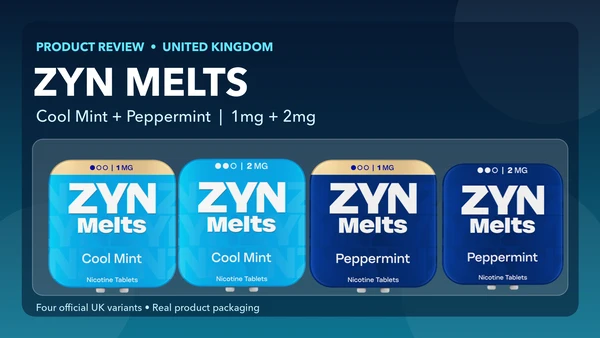
Product | PMI Launches ZYN Melts in UK, Extending ZYN Beyond Nicotine Pouches Into Dissolvable Tablets
Philip Morris International (PMI) has launched ZYN Melts in the UK, introducing a fully dissolvable oral nicotine tablet format alongside the brand's existing nicotine pouches. The range includes Cool Mint and Peppermint, each offered at 1mg and 2mg of nicotine per tablet, creating four SKUs. Each can contains 20 tablets and is priced at £6.50 in the UK. Unlike ZYN nicotine pouches, Melts are placed between the upper lip and gum and dissolve completely during use.
News
Sep.29 by 2Firsts Perspectives
On-Site Report | CTP Details PMTA Backlog, 180-Day Review Goal and sPMTA Process
FDA’s Center for Tobacco Products detailed new PMTA review data and process changes at the 2026 FDLI conference. Pending PMTAs fell from about 450,000 at the start of 2025 to 135,000 by September 2026. CTP also discussed its 180-day review goal, current sPMTA pilot, alternate-supplier planning, more than 50,300 pending SE reports, and lessons from the nicotine pouch pilot already being applied to ENDS review.
Regulations
Oct.07
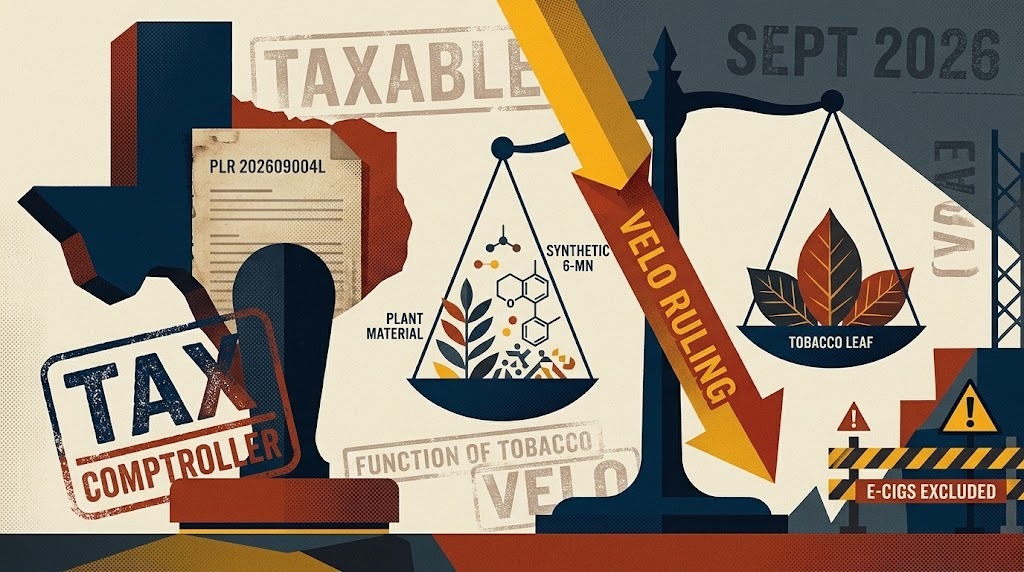
Texas Extends Tobacco Tax Interpretation to a 6-Methylnicotine Product, Citing VELO Ruling
The Texas Comptroller of Public Accounts ruled in September 2026 that a combustible product made with non-tobacco plant material and 6-methylnicotine (6-MN), a synthetic nicotine analog, qualifies as a taxable tobacco product. The applicant said the product contained neither tobacco leaf nor measurable conventional nicotine. The determination applies reasoning from a May Texas Supreme Court decision involving VELO nicotine pouches, finding that the plant material and 6-MN together perform the functions of tobacco in a conventional smoking product. The ruling carries applicable tax, licensing and reporting obligations but is limited to the facts submitted by the taxpayer. It does not establish a blanket tax classification for all 6-MN products or extend the same conclusion to e-cigarettes.
Regulations
Nov.06
Turning Point Brands Q3 Modern Oral Net Sales Rise 103% to $74.4 Million as Attributable Profit Falls 81%
Turning Point Brands (TPB) reported third-quarter 2026 Modern Oral net sales of $74.4 million on November 9, up 102.9% year over year and representing 49.2% of consolidated net sales. Total company net sales rose 27.0% to $151.1 million, while net income attributable to TPB declined 81.4% to $3.93 million. The company is expanding the US retail presence of its FRE and ALP nicotine pouch brands and expects its Modern Oral chain-store footprint to grow by more than 70% during 2026. Selling, general and administrative expenses increased 69.1% to $75.3 million, while PMTA-related expenses reached approximately $3.15 million and manufacturing start-up costs totaled about $593,000. ALP plans to open a branded pop-up in New York City's SoHo neighborhood on November 13, alongside a marketing campaign extending into January 2027. TPB owns 50% of ALP but consolidates the venture in its financial statements.
company
Nov.11
Imperial Brands Sees Double-Digit NGP Growth as Sixth Year of Tobacco Revenue Gains Backs £1.5 Billion Buyback
Imperial Brands reaffirmed its FY26 guidance in its October 8 pre-close trading update, forecasting double-digit net revenue growth in next-generation products and share gains across heated tobacco, vape and modern oral. Tobacco net revenue is expected to grow at a low-single-digit rate, marking a sixth consecutive year of growth. The company has completed its £1.45 billion FY26 share repurchase and announced a £1.5 billion buyback for FY27. Group adjusted operating profit is expected to increase 3% to 5%, while free cash flow is forecast to exceed £2.2 billion.
Oct.09
Wall Street Journal: U.S. FDA Plans Faster Vape and Nicotine Pouch Reviews, Revisit of 2021 PMTA Rule
The Trump administration is preparing changes intended to accelerate FDA market authorization reviews for e-cigarettes and nicotine pouches, according to The Wall Street Journal. The FDA is expected to revisit its 2021 PMTA rule and may simplify some scientific study requirements and shorten review times. The agency has not formally announced the changes. Over the past year, the FDA has already accelerated nicotine-pouch reviews, expanded ENDS authorizations and upgraded its CTP Portal NextGen application system. As of August 2026, 43 nicotine pouch products and 48 e-cigarette products had received FDA marketing authorization.
Sep.24