The Truth Behind Illegal e-cigarette Sales in the UK

Jan.15.2025
The Truth Behind Illegal e-cigarette Sales in the UK
Recent tests on e-cigarette samples in the UK reveal presence of illegal substances, sparking concerns over public safety.

According to a report by Clearing the Air on January 14th, a researcher from ITV News in the UK recently contacted several labs in the country to request testing of e-cigarette samples to detect the presence of synthetic cannabis compounds (Spice). In their email, they specifically stated that this was in preparation for a report on the illegal sale of e-cigarettes and e-cigarette liquid in the UK. The email mentioned a desire to sample and test e-cigarettes and their e-liquids.


Although "Spice" is classified as an illegal substance in the UK, a recent investigation by the BBC found that a significant amount of illegal e-cigarettes contain the substance.


According to a study conducted by the University of Bath for the BBC, synthetic cannabinoids such as "Spice" have different severe effects than tetrahydrocannabinol (THC) and are associated with around half of prison deaths. The study also found that e-cigarettes containing "Spice" are being sold as cannabis e-cigarettes in British schools and are very common. All of these products are currently illegal and sold by drug dealers.


At this time, the Tobacco and e-cigarette Act is being debated in Parliament, which could give the UK government the power to ban flavors in legal e-cigarettes, but it does not cover e-cigarettes containing "Spice." An industry insider, in an interview with Clearing the Air, expressed concern that such reports may be used to scare legislators into supporting crackdowns on legal products, rather than helping to prevent drug dealers from selling already illegal products.


In 2019, American media reported that e-cigarettes were causing young people to develop acute respiratory illnesses, suggesting a link to legal nicotine e-cigarettes. Despite later findings that these cases were actually caused by illegal cannabis e-cigarettes containing vitamin E, prohibitionists continue to use this as an argument for banning legal e-cigarette products.


John Dunne, General Secretary of the UK Vaping Industry Association (UKVIA), warned that...


Consumers can confidently purchase compliant nicotine e-cigarettes from any reputable e-cigarette supplier, as these products are designed to help them transition from traditional cigarettes. The media has been circulating alarmist reports such as "confiscated e-cigarettes from schools contain zombie flavoring," leading people to mistakenly believe that the nicotine e-cigarette industry is responsible for this new trend.


Unless the regulated e-cigarette market (which provides products that are at least 95% less harmful than traditional cigarettes to adult smokers) is clearly distinguished from the illegal products supplied unofficially, people may remain wary of all e-cigarettes and smoking rates could potentially increase again.


We welcome news tips, article submissions, interview requests, or comments on this piece.

Please contact us at info@2firsts.com, or reach out to Alan Zhao, CEO of 2Firsts, on LinkedIn


Notice

1.  This article is intended solely for professional research purposes related to industry, technology, and policy. Any references to brands or products are made purely for objective description and do not constitute any form of endorsement, recommendation, or promotion by 2Firsts.

2.  The use of nicotine-containing products — including, but not limited to, cigarettes, e-cigarettes, nicotine pouchand heated tobacco products — carries significant health risks. Users are responsible for complying with all applicable laws and regulations in their respective jurisdictions.

3.  This article is not intended to serve as the basis for any investment decisions or financial advice. 2Firsts assumes no direct or indirect liability for any inaccuracies or errors in the content.

4.  Access to this article is strictly prohibited for individuals below the legal age in their jurisdiction.


Copyright


This article is either an original work created by 2Firsts or a reproduction from third-party sources with proper attribution. All copyrights and usage rights belong to 2Firsts or the original content provider. Unauthorized reproduction, distribution, or any other form of unauthorized use by any individual or organization is strictly prohibited. Violators will be held legally accountable.

For copyright-related inquiries, please contact: info@2firsts.com


AI Assistance Disclaimer


This article may have been enhanced using AI tools to improve translation and editorial efficiency. However, due to technical limitations, inaccuracies may occur. Readers are encouraged to refer to the cited sources for the most accurate information.

We welcome any corrections or feedback. Please contact us at: info@2firsts.com

Texas Extends Tobacco Tax Interpretation to a 6-Methylnicotine Product, Citing VELO Ruling
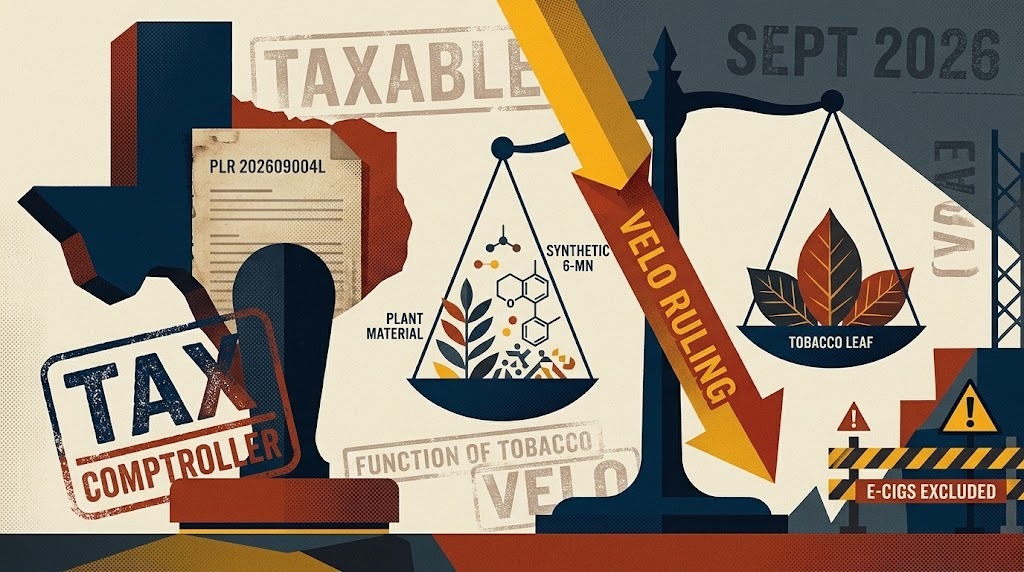
The Texas Comptroller of Public Accounts ruled in September 2026 that a combustible product made with non-tobacco plant material and 6-methylnicotine (6-MN), a synthetic nicotine analog, qualifies as a taxable tobacco product. The applicant said the product contained neither tobacco leaf nor measurable conventional nicotine. The determination applies reasoning from a May Texas Supreme Court decision involving VELO nicotine pouches, finding that the plant material and 6-MN together perform the functions of tobacco in a conventional smoking product. The ruling carries applicable tax, licensing and reporting obligations but is limited to the facts submitted by the taxpayer. It does not establish a blanket tax classification for all 6-MN products or extend the same conclusion to e-cigarettes.
Regulations
Nov.06
Arizona Turns to a 50% Retail Vape Tax as Tobacco Tax Revenue Falls 47% From 2008
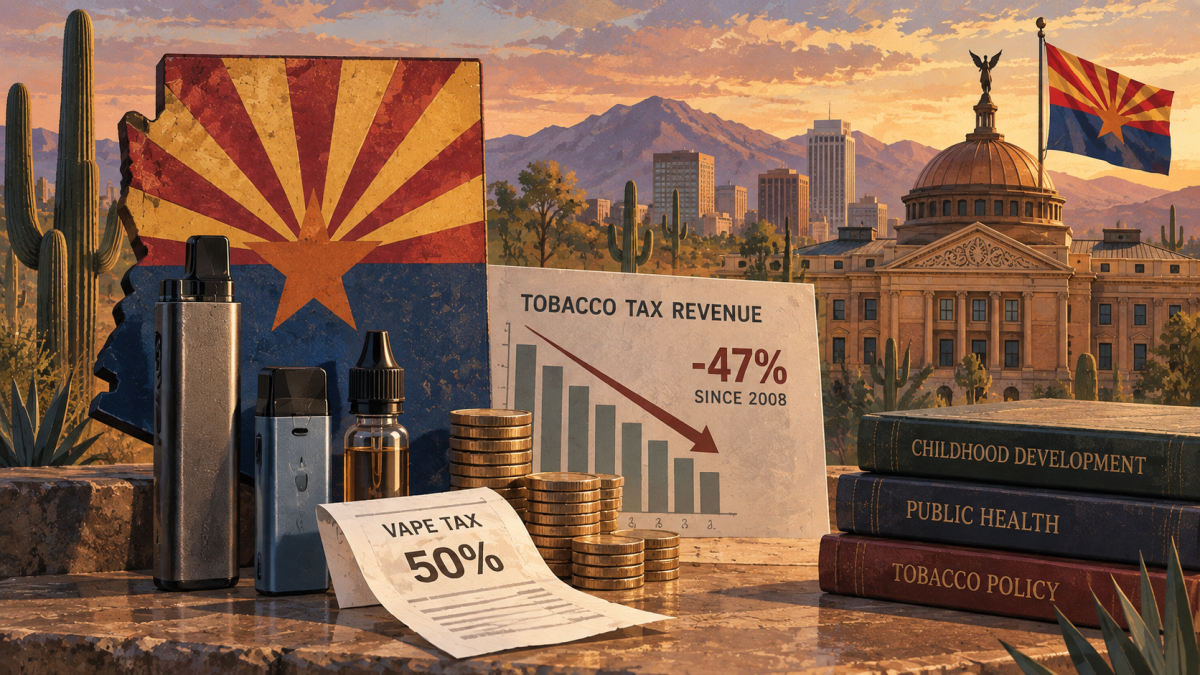
Arizona's First Things First is pushing for an excise tax equal to 50% of the retail price of vaping products, estimating that the measure could generate about $100 million annually. The agency says its tobacco-tax revenue has fallen 47% from 2008 levels. Arizona has attempted to broaden its nicotine tax base in each of the past two years: a 2025 bill proposed a 50% wholesale-price tax, while a 2026 measure shifted to a 50% retail-price tax covering alternative nicotine products and vapor products. Separately, the state enacted HB 4001 this year to establish a new licensing and sales framework for alternative nicotine products.
Sep.21
Kumulus Vape2026 H1 Revenue Falls 8.3% but Profit Rises 24% as B2B Weakens and Consumer Channels Grow
French vaping company Kumulus Vape reported first-half 2026 revenue of €25.5 million, down 8.3% year over year, as its core B2B distribution business fell 11% to €21.6 million. B2C and store-network revenue rose 5.6% and 17.8%, respectively. Commercial margin increased to 26.3% from 21.7%, while net profit rose 24.1% to €0.8 million. The company attributed the profitability improvement to catalog optimization, logistics restructuring and the ramp-up of Labster, its in-house production unit for proprietary brands.
Market
Sep.17 by 2Firsts Perspectives
India Duty-Free Nicotine Pouch Sales Face Regulatory Test as ZYN, FOX Classification Remains Open
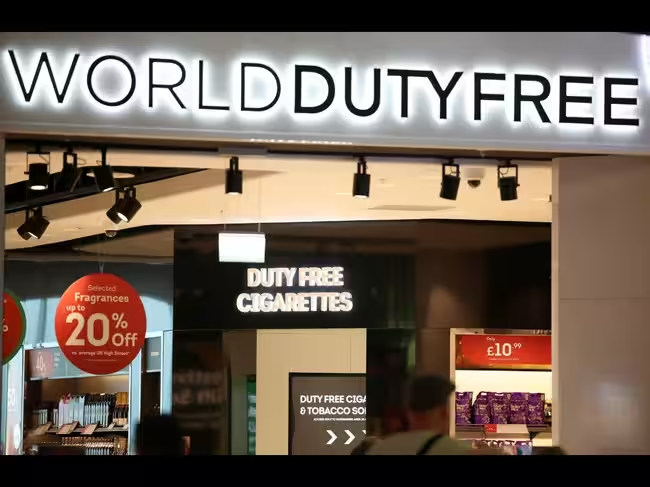
The Bombay High Court has ruled that airport duty-free shops are not exempt from India's domestic regulatory laws merely because they operate beyond the customs barrier, leaving in place a sales halt covering ZYN and FOX nicotine pouches at Mumbai's international airport. The court, however, did not determine that the products necessarily qualify as "drugs" under India's Drugs and Cosmetics Act. The retailers have four weeks to submit product information to the appropriate authorities, including CDSCO, which must complete its review within 30 days of receiving the submissions.
Sep.24
GAO Audit Finds Nearly 132,000 FDA Tobacco Applications Waiting an Average 1,266 Days as Nicotine Pouch Pilot Practices Move Into Vape PMTA Reviews
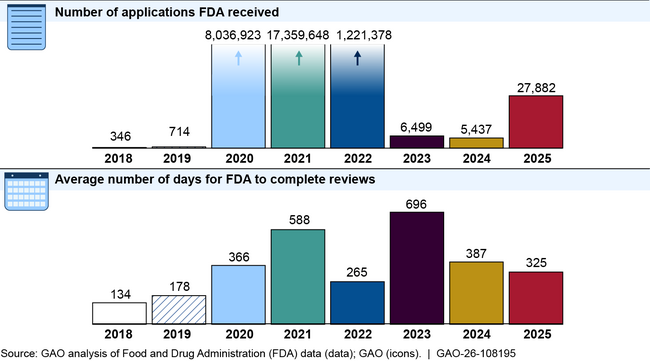
A U.S. Government Accountability Office audit found that 131,915 tobacco product applications submitted to the FDA since 2018 remained without a final review as of December 31, 2025, with pending applications waiting an average of 1,266 days. GAO also found FDA lacks the data needed to systematically determine whether scientific reviews meet applicable timelines. HHS agreed to upgrade the agency's tracking systems. At the same time, FDA has begun applying lessons from its nicotine pouch PMTA pilot to e-cigarette reviews, while changes to enforcement policy and electronic submissions are making the specific stage of a PMTA increasingly relevant to market access.
FDA
Oct.03
JTI Invests ₱2.1 Billion to Upgrade Batangas Manufacturing Hub, Adds First Southeast Asia DIET Facility
JTI Asia Manufacturing Corp. has invested ₱2.1 billion, or about $37 million, in its manufacturing site in Malvar, Batangas, Philippines, to expand tobacco-processing capabilities. About ₱1.9 billion is allocated to JTI's first Dry Ice Expanded Tobacco, or DIET, facility in Southeast Asia, while more than ₱177 million has been spent on expanding its Controlled Atmosphere treatment facility. The Batangas plant supplies the Philippine market and exports to 22 overseas markets, making it one of JTI's key manufacturing hubs in Asia.
Sep.24