Key Points
- The UK vape duty starts in October.
- Revenue is forecast at £565 million by 2030/31.
- Great Britain arrivals get a 50ml allowance.
- Northern Ireland will apply different rules.
2Firsts
June 18, 2026
According to TRBusiness, the UK will implement Vaping Products Duty (VPD) from October 1, 2026, applying a new excise duty to all vaping liquids, regardless of whether they contain nicotine.
UK government documents show that VPD will apply to vaping products manufactured in or imported into the UK, specifically the liquid intended for vaping. The duty was announced at the Spring Budget 2024 and confirmed at the Autumn Budget 2024. Following consultation, a proposed tiered rate structure was replaced with a single rate to simplify administration. The current rate is £2.20 per 10ml of vaping liquid.
TRBusiness reported that the introduction of VPD will bring a new duty-free allowance for vaping products for travellers entering Great Britain. In an email sent to stakeholders, HM Revenue & Customs (HMRC) said passengers aged 17 or over will be able to bring up to 50ml of vaping liquid into Great Britain for personal use without paying VPD.
HMRC said that if an individual brings more than 50ml of vaping liquid into Great Britain, they must declare the goods and pay VPD on the full quantity, not just the amount above the allowance. Passengers can declare goods online before arriving or at ports and airports where declaration facilities are available.
TRBusiness said the new allowance will affect duty-free retailers selling vaping products to UK-bound passengers. Reduced permissible quantities could lead to smaller basket sizes and may prompt retailers to adjust SKUs and product ranges.
UK revenue forecasts show VPD increasing government revenue from vaping products from £135 million, or about US$181 million, in 2026/27 to £565 million, or about US$759 million, by 2030/31. UK parliamentary discussion has also cited expected revenue of about £565 million by 2030.
Different rules apply in Northern Ireland. TRBusiness noted that Northern Ireland is part of the UK but, because of its location on the island of Ireland and its special access to the EU goods market, its rules differ from those applying in the rest of the UK.
For travellers arriving in Northern Ireland from non-EU countries, vaping products will continue to fall within the “other goods” allowance of £390, or about US$524, or £270, or about US$363, if the passenger arrives by private plane or private boat.
For travellers arriving directly in Northern Ireland from the EU, any amount of vaping liquid may be brought into the UK without declaration or payment of duty, provided it is for personal use and not for sale. TRBusiness said this could make the new VPD guidance more complex and may create a route for vaping products to enter the UK through Northern Ireland.
HMRC said in its email that clear passenger messaging would help reduce avoidable non-compliance at the border. The tax authority also said goods brought into the UK for sale or business use must be declared because personal allowances do not apply to commercial goods.
The UK is also moving ahead with the Vaping Duty Stamps Scheme. HMRC guidance says that from April 1, 2026, businesses that make or intend to make vaping products in the UK must apply for approval for VPD and the duty stamps scheme. Overseas manufacturers must appoint a UK representative to apply for approval. From October 1, 2026, businesses must pay VPD on vaping products and attach vaping duty stamps to retail packaging.
From a policy perspective, the UK government has said VPD is intended to tax vaping products in a way that reduces the incentive for non-smokers and young people to vape while maintaining a financial incentive for adult smokers to switch from cigarettes to vaping. The government also plans a one-off increase in tobacco duty to prevent smoking from becoming relatively more attractive after vape duty is introduced.
For the UK vaping industry, VPD means vaping liquids will enter a more complete excise-control system. Manufacturers, importers, warehousekeepers, wholesalers, retailers and travel retail operators will need to reassess compliance costs, packaging arrangements, inventory management, pricing and cross-border sales processes.
For the global travel retail industry, the 50ml personal allowance and Northern Ireland’s different rules will become new operating variables. Duty-free retailers will need to provide clear guidance to UK-bound passengers on carrying limits and declaration obligations, especially for multipack e-liquids, prefilled pods and products sold in different volume combinations.
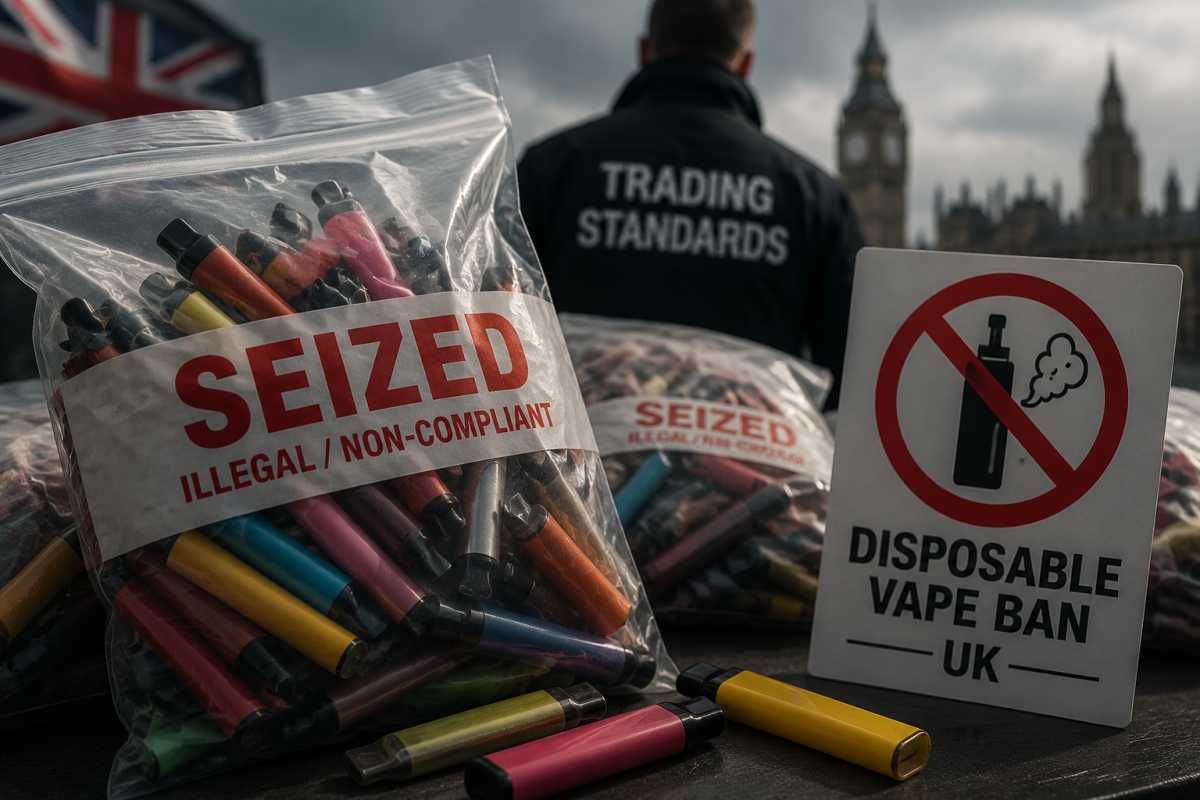
The policy also shows UK vape regulation moving beyond disposable vape bans, product sales restrictions and youth protection into taxation, border declaration, product tracking and retail compliance. Its long-term impact will depend on price pass-through, consumer purchasing behaviour, cross-border compliance and whether Northern Ireland’s rules create space for regulatory arbitrage.
Cover image:TRBusiness
Disclaimer
This article is provided solely for professional research, industry discussion, and informational purposes. Any references to brands, companies, products, technologies, or policies are made for factual reporting and analytical purposes only, and do not constitute endorsement, recommendation, promotion, or advertising by 2Firsts.
Nicotine-containing products, including but not limited to cigarettes, e-cigarettes, heated tobacco products, and nicotine pouches, carry significant health risks. Readers are responsible for complying with all applicable laws and regulations in their respective jurisdictions, including age restrictions and access limitations.
The information contained in this article should not be regarded as investment, legal, medical, regulatory, or commercial advice. While 2Firsts strives to ensure the accuracy and reliability of its content, it does not assume liability for any direct or indirect loss arising from errors, omissions, inaccuracies, or reliance on the information contained herein.
This article is not intended for individuals below the legal age for accessing tobacco or nicotine-related information in their jurisdiction.
Copyright Notice
This article is either original content produced by 2Firsts or content reproduced, translated, summarized, or adapted from third-party sources with attribution where applicable. The intellectual property rights of the original content remain with 2Firsts or the respective original rights holders.
No individual or organization may copy, reproduce, distribute, republish, modify, translate, or otherwise use this content without prior authorization. Any unauthorized use may result in legal action.
For copyright-related inquiries, corrections, or removal requests, please contact: info@2firsts.com.
AI-Assisted Translation and Editing Notice
Portions of this article may have been translated, edited, or reviewed with the assistance of artificial intelligence tools to improve efficiency and readability. Due to the limitations of AI-assisted translation and editing, discrepancies, omissions, or inaccuracies may exist when compared with the original source.
Where applicable, readers are advised to refer to the original source for the most complete and accurate information. If you identify any errors or believe that any content infringes upon your rights, please contact us at info@2firsts.com, and we will review and address the matter promptly.