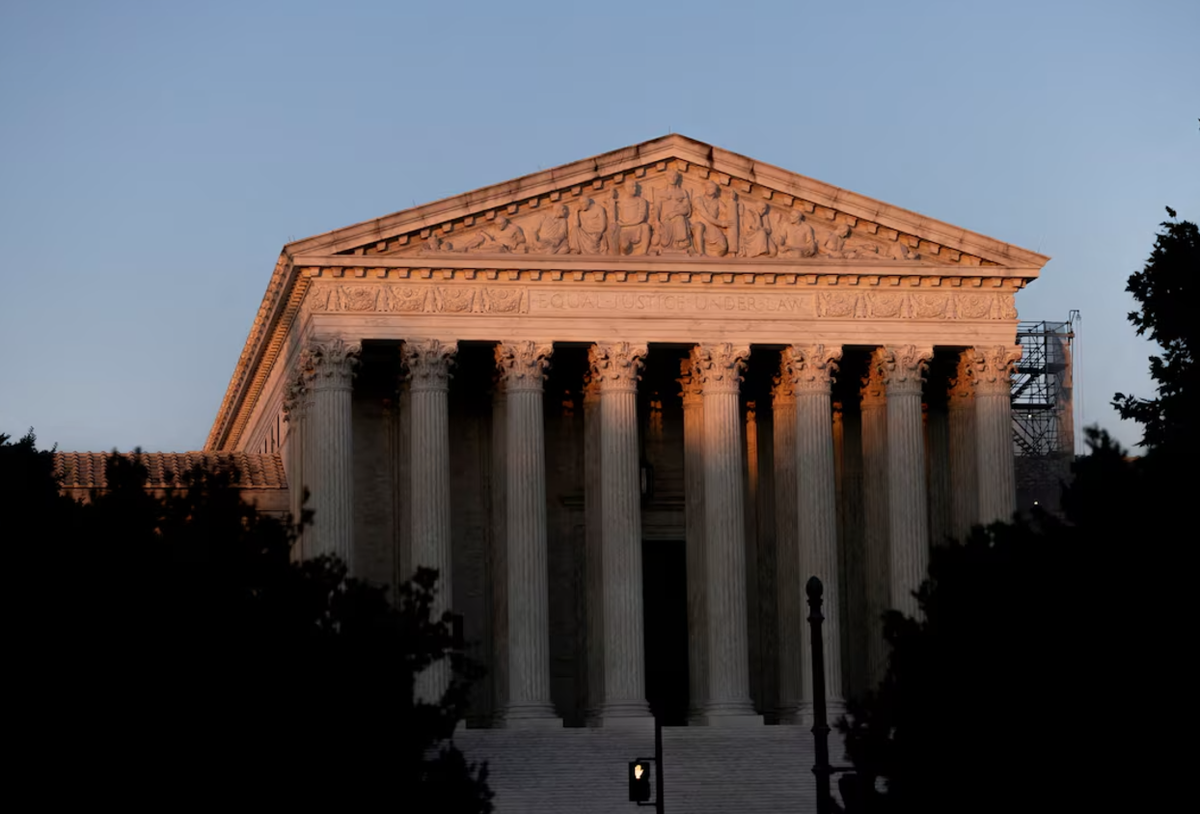
According to Reuters on December 3rd, the United States Supreme Court heard arguments on Monday (the 2nd) regarding the FDA's refusal to allow two e-cigarette companies to sell flavored e-cigarette products. The lawyers for these two companies suggested that President Donald Trump may take a different approach.
As Democratic President Joe Biden's term comes to an end, the FDA is appealing a ruling by a lower court that found the agency did not follow proper legal procedures when rejecting sales applications for nicotine-containing products. This is the latest case of the Supreme Court reviewing actions by U.S. regulatory agencies, against the backdrop of Trump's upcoming inauguration on January 20 and his promise to significantly relax regulations.
The attorney for e-cigarette liquid manufacturers Triton Distribution and Vapetasia, Eric Heyer, stated that the return of Trump to office could lead to a shift in the US government's policy on regulating flavored e-cigarette products. He referenced Trump's campaign promise to "save e-cigarettes.
We are about to welcome a new government. The president-elect has publicly stated, 'I will save the flavored e-cigarette.' We do not know exactly what this will look like.
Triton Distribution and Vapetasia submitted pre-market tobacco product applications (PMTAs) in 2020, involving flavors such as sour grape, pink lemonade, and caramel pudding. Product names included "Jimmy The Juice Man Strawberry Astronaut" and "Suicide Bunny Bunny Season." The FDA rejected the applications from these two companies, as well as over one million other products, which critics believe are specifically designed to appeal to minors.
The FDA has only approved 34 flavors of e-cigarettes, all of which are tobacco or mint flavors. The agency insists that it has not explicitly banned flavored e-cigarette products. However, due to the FDA's finding that flavored e-cigarettes pose a "known and significant risk" to youth, companies are facing stringent legal tests on the health benefits and risks of these products.
In 2021, Triton and Vapetasia requested the Fifth Circuit Court of Appeals in New Orleans to review the FDA's decision to reject their applications. In January of this year, the Fifth Circuit Court ruled that the FDA had not considered the companies' plans to prevent underage access and use when rejecting the applications, violating the Administrative Procedure Act and constituting arbitrary and capricious action. In similar cases, seven other federal appellate courts have upheld the FDA's position.
Some Supreme Court justices have expressed skepticism about claims made by Triton and Vapetasia that the FDA used different regulatory standards when evaluating their applications than those published in its guidelines. Liberal Justice Elena Kagan told attorneys for both sides that the FDA was "completely upfront" in its regulatory guidelines.
"So I guess I'm not really seeing what the surprise is here, or what the change is here," Kagan said. "Everybody basically knows that flavors are particularly dangerous in terms of kids starting the use of smoking products."
Conservative Supreme Court Justice Amy Coney Barrett expressed concern that her stance may require the court to adhere to applicants' interpretations of FDA guidance.
Conservative Supreme Court Justice Clarence Thomas has asked Justice Department lawyer Curtis Gannon, representing the FDA, to respond to the companies' claims that the FDA's requirements are actually a "moving target.
"They knew throughout that FDA was concerned about the fact that flavors are attractive to youth," Gannon said.
"The concern would be that they're getting addicted to ... nicotine at a time when nicotine is dangerous to their developing brains and may be, you know, sentencing them to a long life of needing to satisfy that addiction," Gannon added later in the arguments.
It is anticipated that the Supreme Court will make a ruling by the end of June.
We welcome news tips, article submissions, interview requests, or comments on this piece.
Please contact us at info@2firsts.com, or reach out to Alan Zhao, CEO of 2Firsts, on LinkedIn
Notice
1. This article is intended solely for professional research purposes related to industry, technology, and policy. Any references to brands or products are made purely for objective description and do not constitute any form of endorsement, recommendation, or promotion by 2Firsts.
2. The use of nicotine-containing products — including, but not limited to, cigarettes, e-cigarettes, nicotine pouchand heated tobacco products — carries significant health risks. Users are responsible for complying with all applicable laws and regulations in their respective jurisdictions.
3. This article is not intended to serve as the basis for any investment decisions or financial advice. 2Firsts assumes no direct or indirect liability for any inaccuracies or errors in the content.
4. Access to this article is strictly prohibited for individuals below the legal age in their jurisdiction.
Copyright
This article is either an original work created by 2Firsts or a reproduction from third-party sources with proper attribution. All copyrights and usage rights belong to 2Firsts or the original content provider. Unauthorized reproduction, distribution, or any other form of unauthorized use by any individual or organization is strictly prohibited. Violators will be held legally accountable.
For copyright-related inquiries, please contact: info@2firsts.com
AI Assistance Disclaimer
This article may have been enhanced using AI tools to improve translation and editorial efficiency. However, due to technical limitations, inaccuracies may occur. Readers are encouraged to refer to the cited sources for the most accurate information.
We welcome any corrections or feedback. Please contact us at: info@2firsts.com