Key Points
- The White House withdrew Overton's nomination on November 17, ahead of a scheduled November 18 Senate committee vote.
- Overton faced bipartisan scrutiny over vaccine policy, abortion medication and flavored nicotine regulation.
- On May 5, the FDA authorized four Glas e-liquid pods, including its first non-tobacco, non-menthol e-cigarette flavors.
- Senator Susan Collins questioned recent flavored-vape and nicotine pouch authorizations, citing concerns about youth nicotine use.
- Kyle Diamantas remains acting FDA commissioner, and the White House has not announced another nominee.
2Firsts
November 18, 2026
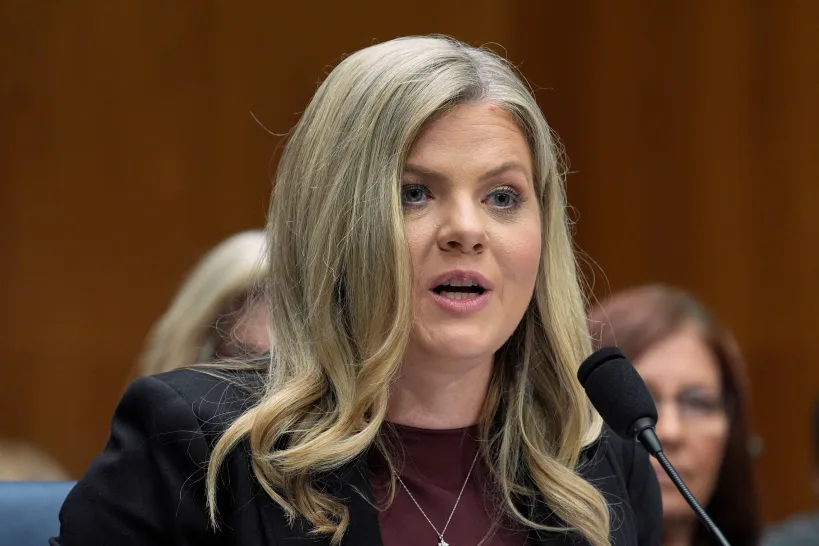
The White House withdrew Heidi Overton's nomination to lead the U.S. Food and Drug Administration (FDA) on November 17, after her confirmation prospects weakened amid Republican and Democratic scrutiny over vaccine policy, abortion medication and flavored vaping products.
The decision came one day before the Senate Health, Education, Labor and Pensions (HELP) Committee was scheduled to vote on her nomination.
According to the Associated Press, doubts had emerged about whether Overton could secure sufficient Republican support to advance through the committee and win confirmation in the full Senate.
The FDA's authorization of the first non-tobacco, non-menthol e-cigarette flavors earlier this year had become one of several issues raised during her confirmation hearing.
White House Withdraws Nomination Ahead of Senate Committee Vote
Overton, a physician and former deputy director of the White House Domestic Policy Council, was nominated by President Donald Trump in August 2026. Her nomination was formally submitted to the Senate on September 14, followed by a confirmation hearing on September 24.
Her candidacy faced questions from senators in both parties about whether she would exercise independent scientific judgment when the FDA's conclusions differed from positions taken by the White House or the Department of Health and Human Services.
Senate HELP Committee Chairman Bill Cassidy, a Louisiana Republican and physician, had previously questioned Overton's support for the administration's approach to separating certain childhood combination vaccines.
The committee had 12 Republicans and 11 Democrats. Without Democratic support, Overton would have needed every Republican committee member to back her nomination.
Following the withdrawal, Cassidy said he believed Overton could have secured approval in committee and the full Senate. He attributed the final disagreement to demands by some anti-abortion Republicans for additional White House commitments on abortion-related policy issues.
The White House has not provided a comprehensive explanation for its decision or announced another nominee.
FDA's First Fruit-Flavored Vape Authorizations Draw Senate Scrutiny
On May 5, 2026, the FDA granted marketing authorizations to four e-liquid pods manufactured by Glas Inc. through the premarket tobacco product application (PMTA) pathway.
The authorized products were Classic Menthol, Fresh Menthol, Gold and Sapphire, each containing 50 mg/mL, or 5%, tobacco-derived nicotine.
Gold is mango-flavored, while Sapphire is blueberry-flavored. The decision marked the FDA's first marketing authorization for non-tobacco, non-menthol electronic nicotine delivery system (ENDS) products.
The FDA said its review weighed potential benefits for adults who smoke against the risks of youth nicotine use. Glas's device incorporates age and identity verification using government-issued identification and Bluetooth pairing with a smartphone.
The device cannot operate when separated from the paired phone. Its accompanying application also conducts periodic biometric checks to verify that the registered user remains in control of the device.
The FDA cited these restrictions as important factors in determining that the products met the statutory standard of being appropriate for the protection of public health.
During Overton's September 24 confirmation hearing, Republican Senator Susan Collins of Maine challenged recent FDA marketing authorizations for flavored nicotine pouches and e-cigarettes.
Collins cited flavors including blueberry, mango and citrus, arguing that additional flavored nicotine products could undermine progress in reducing youth vaping.
Overton responded that FDA tobacco product reviews must follow the public-health standard established by federal law. She said career FDA reviewers had recommended the relevant authorizations.
She also identified the large number of unauthorized vaping products on the U.S. market as an enforcement concern and pledged to work with lawmakers to strengthen action against those products.
Democratic Senator Christopher Murphy separately questioned whether political donations could have influenced the administration's decisions on flavored vaping products. Overton did not endorse that allegation and emphasized the agency's established review procedures.
The Glas authorizations were issued before Overton assumed any leadership role at the FDA. Marketing authorization permits specified tobacco products to be sold under applicable conditions; it does not mean the FDA considers those products safe.
Vaccine, Abortion Medication and Industry-Influence Disputes Complicate Confirmation
Overton also faced questions about vaccines and abortion medication.
Cassidy pressed her about the safety of the combined measles, mumps and rubella (MMR) vaccine and whether she would defend the FDA's scientific conclusions when they conflicted with statements from senior administration officials.
Overton said the existing MMR vaccine was safe and effective and committed to following scientific evidence and statutory requirements.
Questions also focused on mifepristone, a medication used in abortion care. Overton had previously advocated tighter restrictions but told senators that, under current FDA labeling and risk-management requirements, the drug was considered safe and effective.
Some advocates associated with the Make America Healthy Again (MAHA) movement also criticized Overton and other White House officials, alleging that they had influenced the administration's health agenda in ways that favored corporate interests.
Those criticisms concerned several policy areas, not only vaping regulation.
Separately, on May 8, the FDA announced revised enforcement priorities for certain unauthorized e-cigarettes and nicotine pouch products.
Under the guidance, some products with applications meeting specified review conditions may receive lower enforcement priority. The policy does not remove the legal requirement for premarket authorization, and a pending PMTA does not itself permit lawful marketing.
FDA Remains Under Acting Commissioner Kyle Diamantas
Former FDA Commissioner Marty Makary left the agency in May 2026. Kyle Diamantas subsequently became acting commissioner.
The Associated Press reported that the FDA had experienced scientific disputes, management turnover and significant workforce reductions. Approximately 20% of the agency's workforce has departed through layoffs, buyouts, retirements or resignations since Trump returned to office.
Overton's withdrawal leaves the FDA without a permanent commissioner while the administration considers its next nominee.
Federal law limits how long officials can hold certain positions in an acting capacity.
As of November 18, 2026, the White House had not announced a replacement nominee. The FDA had also announced no changes to its tobacco-product marketing authorization procedures or enforcement priorities specifically resulting from the withdrawal.
Follow 2Firsts for coverage of U.S. tobacco regulation, FDA marketing authorizations and global nicotine-industry policy developments.
Cover Image:Associated Press