Belgium to Ban Sale of Disposable E-Cigarettes in 2025

Dec.20.2024
Belgium to Ban Sale of Disposable E-Cigarettes in 2025
Belgium launches nationwide campaign to crack down on smoking, targeting e-cigarettes as entry point for young smokers.

According to a report by Reuters on December 19th, the Belgian government has recently launched a nationwide campaign to combat smoking. Government data shows that the majority of young smokers in Belgium are starting with e-cigarettes rather than traditional cigarettes.


According to reports, Belgium will become the first European Union country to ban the sale of disposable e-cigarettes starting in January 2025.


Belgian Health Minister Frank Vandenbroucke told Reuters that...


The design of disposable e-cigarettes is intended to attract young people and entice new users who may have never smoked before. E-cigarettes are appealing to a new generation of smokers.


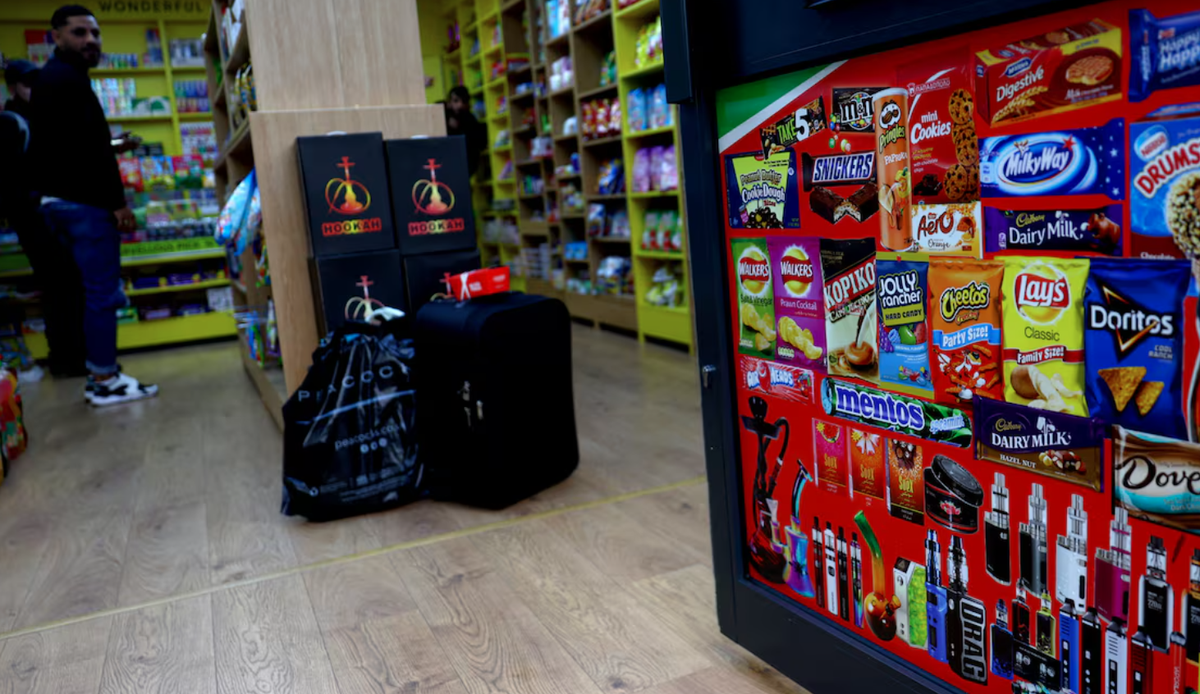
While supporters of e-cigarettes believe they can help people quit traditional cigarettes, health authorities are concerned about their colorful designs and appealing flavors that attract children. Belgian law prohibits the sale of e-cigarettes to individuals under the age of 18.


According to a survey conducted by the World Health Organization in 2022, which involved 20,000 Belgian teenagers aged 11 to 18, the results showed that 12% of respondents had used an e-cigarette in the 30 days prior to the survey. This proportion is double that of 2018.


Germany and France are in the process of drafting similar laws, while the UK, which is no longer a member of the EU, has announced a ban on the sale of e-cigarettes starting in June 2025. Belgium hopes that its ban will also reduce the environmental impact of disposing of disposable e-cigarettes containing plastics, chemicals, and non-rechargeable batteries.


We welcome news tips, article submissions, interview requests, or comments on this piece.

Please contact us at info@2firsts.com, or reach out to Alan Zhao, CEO of 2Firsts, on LinkedIn


Notice

1.  This article is intended solely for professional research purposes related to industry, technology, and policy. Any references to brands or products are made purely for objective description and do not constitute any form of endorsement, recommendation, or promotion by 2Firsts.

2.  The use of nicotine-containing products — including, but not limited to, cigarettes, e-cigarettes, nicotine pouchand heated tobacco products — carries significant health risks. Users are responsible for complying with all applicable laws and regulations in their respective jurisdictions.

3.  This article is not intended to serve as the basis for any investment decisions or financial advice. 2Firsts assumes no direct or indirect liability for any inaccuracies or errors in the content.

4.  Access to this article is strictly prohibited for individuals below the legal age in their jurisdiction.


Copyright


This article is either an original work created by 2Firsts or a reproduction from third-party sources with proper attribution. All copyrights and usage rights belong to 2Firsts or the original content provider. Unauthorized reproduction, distribution, or any other form of unauthorized use by any individual or organization is strictly prohibited. Violators will be held legally accountable.

For copyright-related inquiries, please contact: info@2firsts.com


AI Assistance Disclaimer


This article may have been enhanced using AI tools to improve translation and editorial efficiency. However, due to technical limitations, inaccuracies may occur. Readers are encouraged to refer to the cited sources for the most accurate information.

We welcome any corrections or feedback. Please contact us at: info@2firsts.com

Australia Adds 6-Methylnicotine to Schedule 9 Prohibited Substances, Effective October 1
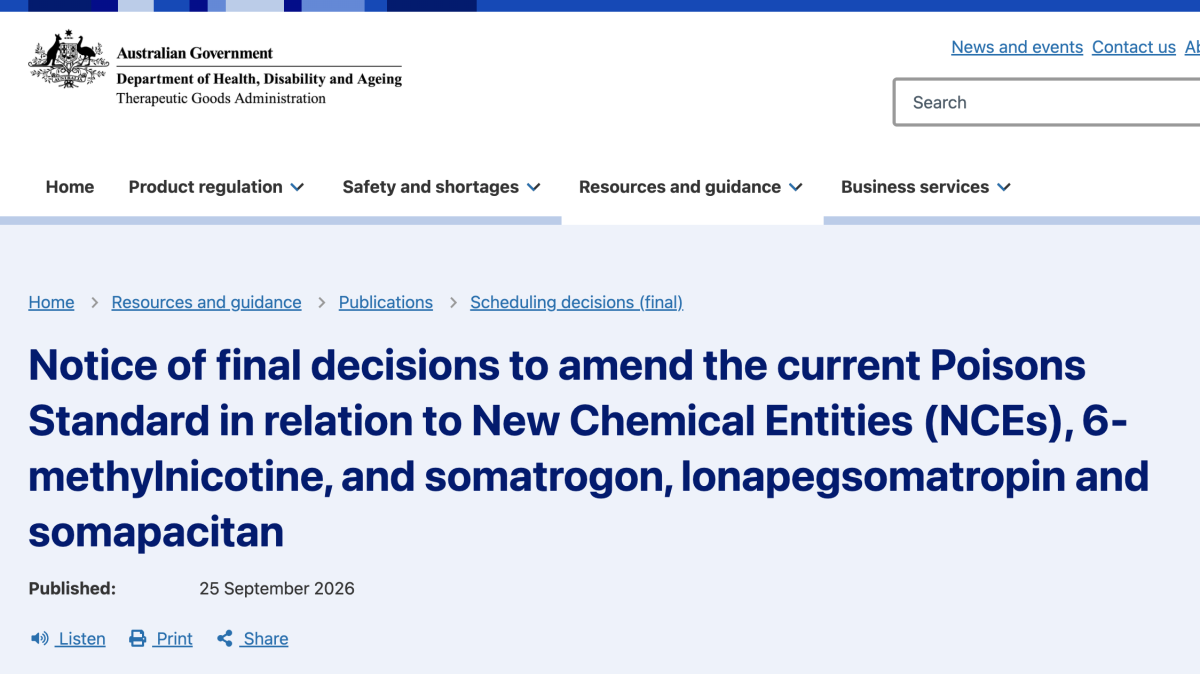
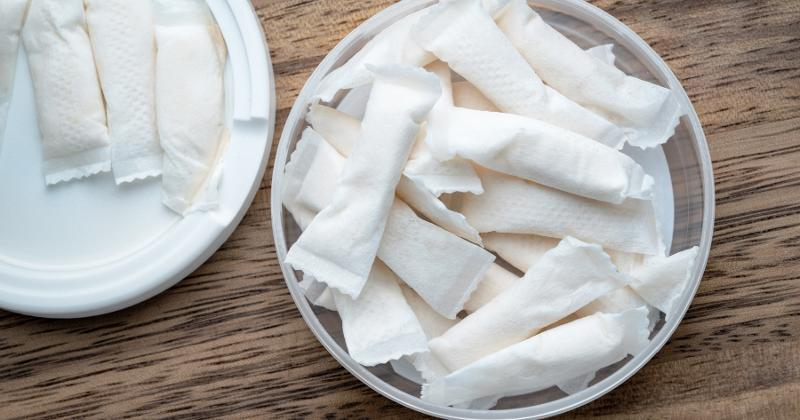
Australia's Therapeutic Goods Administration published a final decision on September 25 to classify 6-methylnicotine as a Schedule 9 prohibited substance under the Poisons Standard, effective October 1, 2026. TGA said the chemical has been reported in e-cigarette liquids sold in Australia and marketed as nicotine-free or nicotine alternatives, while evidence also indicates its use in preparations such as oral pouches. The government originally proposed a Schedule 7 classification but ultimately adopted the stricter Schedule 9 designation, citing acute toxicity, dependence risk, use in unapproved consumer products and misleading marketing.
News
Sep.29 by 2Firsts Perspectives
Couche-Tard Posts Double-Digit U.S. Same-Store Growth in Other Nicotine Products, Led by Pouches
Alimentation Couche-Tard said U.S. same-store sales in its “other nicotine products” category grew at a double-digit rate in the first quarter of fiscal 2027, led by nicotine pouches, while overall U.S. same-store merchandise revenues increased 1.7%. The company also said its Canadian nicotine business continued to face regulatory pressure and illicit-market headwinds. The U.S. performance coincides with Couche-Tard's participation in efforts to reopen Canadian convenience-store access to authorized nicotine pouches, though the company has not established a direct causal link between the two.
Sep.14
Texas Extends Tobacco Tax Interpretation to a 6-Methylnicotine Product, Citing VELO Ruling
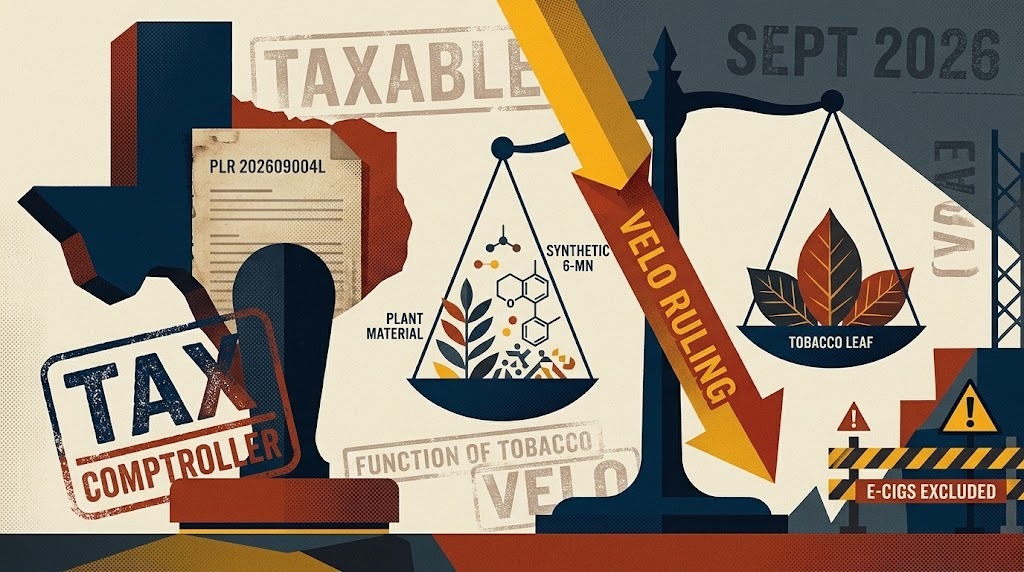
The Texas Comptroller of Public Accounts ruled in September 2026 that a combustible product made with non-tobacco plant material and 6-methylnicotine (6-MN), a synthetic nicotine analog, qualifies as a taxable tobacco product. The applicant said the product contained neither tobacco leaf nor measurable conventional nicotine. The determination applies reasoning from a May Texas Supreme Court decision involving VELO nicotine pouches, finding that the plant material and 6-MN together perform the functions of tobacco in a conventional smoking product. The ruling carries applicable tax, licensing and reporting obligations but is limited to the facts submitted by the taxpayer. It does not establish a blanket tax classification for all 6-MN products or extend the same conclusion to e-cigarettes.
Regulations
Nov.06
Product | KT&G Launches lil HYBRID 3.0 Misty Rosé Edition II in South Korea With Two Pink Finishes at 88,000 Won
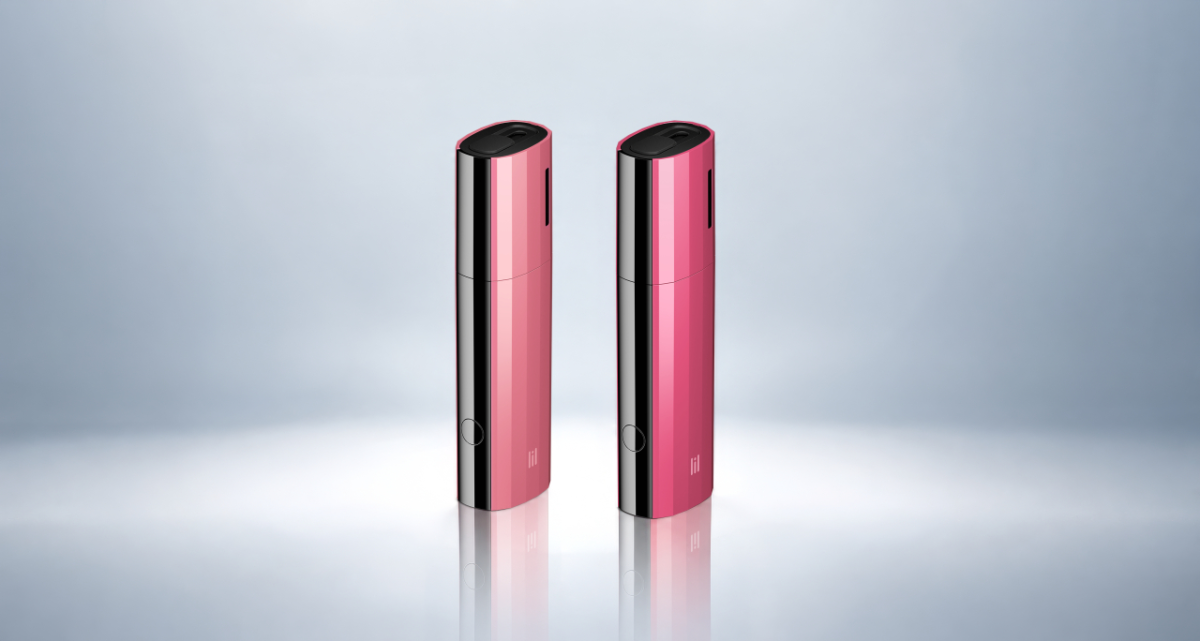
South Korean tobacco company KT&G launched the limited-edition lil HYBRID 3.0 Misty Rosé Edition II on September 30, 2026, following the original Misty Rosé Edition introduced in November 2025. The new release comes in two pink finishes, Bloom Rosé and Viva Rosé, each priced at 88,000 won. Both versions initially went on sale through the lil Store online shop and lil MINIMALIUM flagship stores. From October 7, Bloom Rosé became available at approximately 1,500 lil Station retail outlets nationwide. The release retains the existing lil HYBRID 3.0 hybrid heated tobacco platform, with changes focused on exterior design and distribution.
product
Oct.10
Special Report | From New York to Washington: How FDA’s Tobacco Center Is Reworking Product Review
FDA’s Center for Tobacco Products is reshaping how it approaches tobacco product review. Based on 2Firsts’ on-site reporting in New York and Washington, this report traces CTP’s emerging direction: stronger links between PMTA and tobacco harm reduction, more category-specific review, greater emphasis on decision-relevant science, more predictable timelines and expanded use of sPMTA for product modifications. CTP also acknowledged major constraints, including just nine PMTA review teams, persistent backlogs and limits on hiring capacity.
Regulations
Oct.08
EU Commission Clarifies Vaping, Smokeless Nicotine Use in Proposed Cardiovascular Checks
The European Commission has clarified to 2Firsts that its proposed cardiovascular health checks would assess smoking, vaping and the use of smokeless nicotine products as part of patients’ medical histories. The Commission also said Member States may organise additional checks within their healthcare systems. In the same response, it pointed to JRC research on e-cigarettes, heated tobacco products and nicotine pouches that has fed into the evaluation of EU tobacco legislation.
Nov.09