Costa Rica Implements Ban on E-Cigarettes and Related Products

May.31.2024
Costa Rica Implements Ban on E-Cigarettes and Related Products
Costa Rica's Health Ministry issued Resolution MS-DM-RC-2381-2024 banning e-cigarettes and related products with synthetic nicotine or cannabis.

According to a report from Benzinga on May 30th, the Health Department of Costa Rica has issued resolution number MS-DM-RC-2381-2024, which prohibits the import, sale, and commercialization of e-cigarettes and related products, specifically e-liquid products containing synthetic nicotine or cannabinoids.


This preventive measure has sparked discussions and reactions within the affected industry. The ban went into effect immediately after its announcement and will remain in place until the Ministry of Health releases technical regulations regarding the use and commercialization of these products.


In 2022, Bill 10.113 was passed, allowing for the import and use of cannabis products for medical and therapeutic purposes, as well as for the use of cannabis in food and industrial applications.


According to reports, the e-cigarette market in Costa Rica is still in its developmental stage. The ban has changed the business and entrepreneurial landscape for the industry, potentially causing losses for those involved and requiring the Ministry of Health to introduce clear new guidelines.


According to industry experts in Costa Rica, the decision requires additional technical regulation beyond what is established in Law No. 10.113. This means that while the importation of marijuana products is allowed, the use of consumption devices is not permitted until new standards are set.


We welcome news tips, article submissions, interview requests, or comments on this piece.

Please contact us at info@2firsts.com, or reach out to Alan Zhao, CEO of 2Firsts, on LinkedIn


Notice

1.  This article is intended solely for professional research purposes related to industry, technology, and policy. Any references to brands or products are made purely for objective description and do not constitute any form of endorsement, recommendation, or promotion by 2Firsts.

2.  The use of nicotine-containing products — including, but not limited to, cigarettes, e-cigarettes, nicotine pouchand heated tobacco products — carries significant health risks. Users are responsible for complying with all applicable laws and regulations in their respective jurisdictions.

3.  This article is not intended to serve as the basis for any investment decisions or financial advice. 2Firsts assumes no direct or indirect liability for any inaccuracies or errors in the content.

4.  Access to this article is strictly prohibited for individuals below the legal age in their jurisdiction.


Copyright


This article is either an original work created by 2Firsts or a reproduction from third-party sources with proper attribution. All copyrights and usage rights belong to 2Firsts or the original content provider. Unauthorized reproduction, distribution, or any other form of unauthorized use by any individual or organization is strictly prohibited. Violators will be held legally accountable.

For copyright-related inquiries, please contact: info@2firsts.com


AI Assistance Disclaimer


This article may have been enhanced using AI tools to improve translation and editorial efficiency. However, due to technical limitations, inaccuracies may occur. Readers are encouraged to refer to the cited sources for the most accurate information.

We welcome any corrections or feedback. Please contact us at: info@2firsts.com

South Korea Imports 12,126 Kg of Nicotine Analogues From April to August After Bringing Synthetic Nicotine Under Tobacco Law
South Korea's liquid-vape market is showing changes across raw-material imports, product types and sales channels after synthetic nicotine came under the Tobacco Business Act on April 24. Customs data show nicotine-analogue imports totaled 12,126 kilograms from April through August, while synthetic-nicotine imports over the same five months totaled 231,663 kilograms, just 39.3% of the amount imported in March alone. Physical liquid-vape stores tracked in Seoul and Gyeonggi Province fell 9.9%, unmanned outlets edged higher and online sales listings increased from 27,774 to 42,437. Government testing of 105 liquid inhalation products promoted as nicotine-free separately found nicotine in 13 and 6-methylnicotine in 12.
Sep.22
GAO Audit Finds Nearly 132,000 FDA Tobacco Applications Waiting an Average 1,266 Days as Nicotine Pouch Pilot Practices Move Into Vape PMTA Reviews
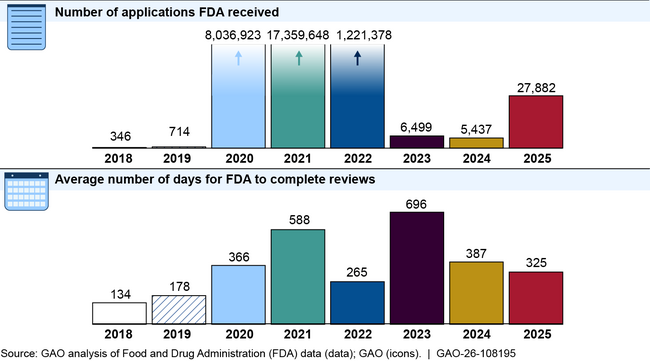
A U.S. Government Accountability Office audit found that 131,915 tobacco product applications submitted to the FDA since 2018 remained without a final review as of December 31, 2025, with pending applications waiting an average of 1,266 days. GAO also found FDA lacks the data needed to systematically determine whether scientific reviews meet applicable timelines. HHS agreed to upgrade the agency's tracking systems. At the same time, FDA has begun applying lessons from its nicotine pouch PMTA pilot to e-cigarette reviews, while changes to enforcement policy and electronic submissions are making the specific stage of a PMTA increasingly relevant to market access.
FDA
Oct.03
Special Report | How Capital Is Reassessing the Global Tobacco and Modern Nicotine Industry: Lessons from a New York Forum
Capital is reassessing the global tobacco and modern nicotine industry as heated tobacco, vaping and nicotine pouches reshape demand, profitability and regulation. At the 2026 New Approaches Summit in New York, investors and analysts examined whether smoke-free growth can sustain earnings, how regulation shapes startup value, and whether shareholder engagement can be more effective than divestment. The debate points to a broader shift: tobacco transition is increasingly becoming a capital-allocation, governance and valuation question.
Capital Markets
Oct.05
Snowplus Enters Japan’s FamilyMart Network With Zero-Nicotine NEO Line and Kishidan Campaign
Snowplus distributor H&S said the zero-nicotine, zero-tar NEO vaping line will begin rolling out across FamilyMart stores in Japan from September 14, 2026, excluding some locations. The DASH line will also be sold at selected FamilyMart stores in southern Kyushu and Okinawa. Snowplus simultaneously named Japanese rock band Kishidan as a brand ambassador, combining convenience-store distribution with a broader consumer marketing push in Japan.
Sep.15
Product | Japan Tobacco Expands Nordic Spirit Nicotine Pouch Range to Eight SKUs in Japan, Launches Melon Variant and Broadens Mint Retail Distribution
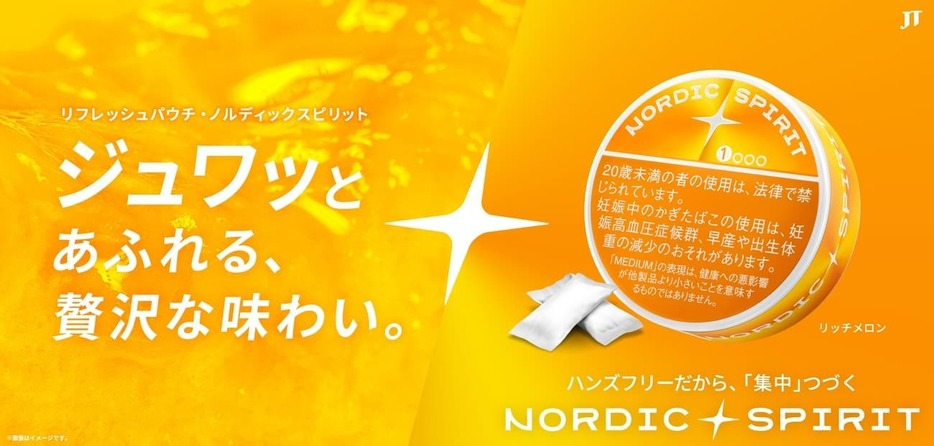
Japan Tobacco Inc. (JT) launched Nordic Spirit Rich Melon Medium through selected tobacco retailers in Japan on November 2, 2026, while expanding physical retail distribution for three existing mint products previously sold through the CLUB JT online store. The melon launch brings Nordic Spirit's Japanese portfolio to eight SKUs. All four products are manufactured in Sweden, contain a standard 14 pouches per can and retail for ¥500 including tax. Since introducing Nordic Spirit in Japan in March, JT has expanded the brand's product lineup and distribution through its online store, convenience stores and selected tobacco retailers.
product
Nov.04
Russia's State Duma Passes Tobacco and Nicotine Ingredient Disclosure Bill, Targeting 2027 End to Trade-Secret Protection for Certain Harmful Ingredient Data
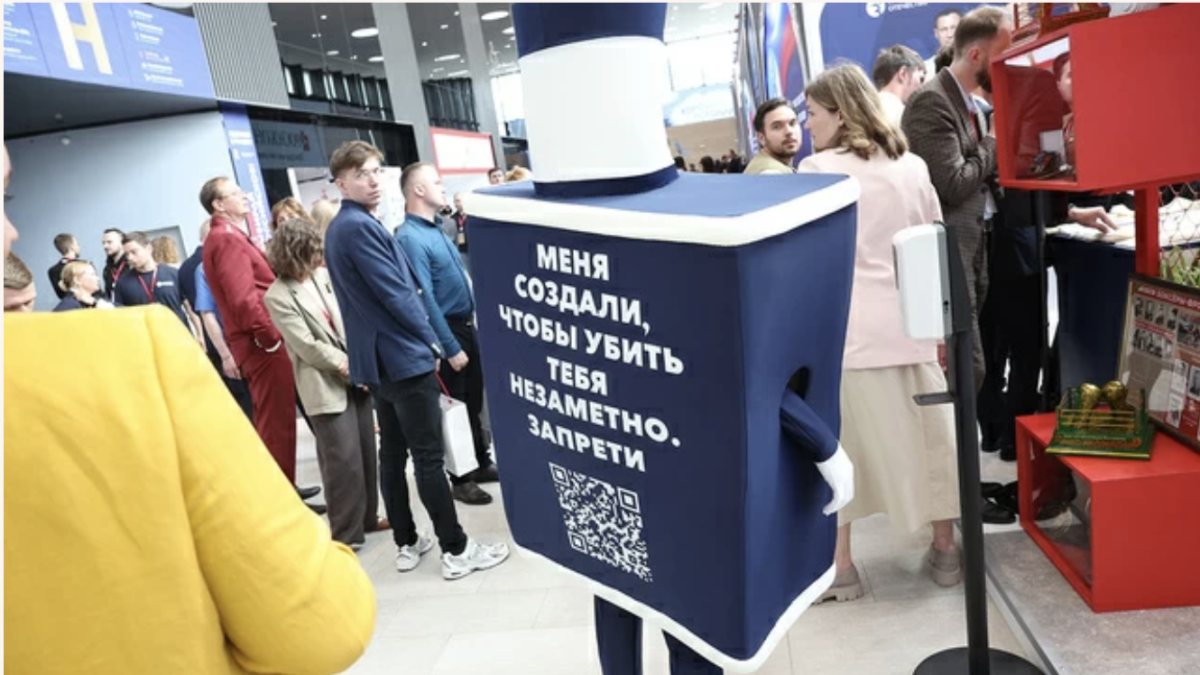
Russia's State Duma passed a government-sponsored amendment on November 11, 2026, by 414 votes to none, seeking to prevent businesses from classifying information on the presence and number of types of certain harmful ingredients in tobacco and nicotine-containing products as trade secrets. The measure covers ingredients capable of increasing nicotine dependence or exhibiting toxic, carcinogenic, mutagenic or reproductive toxicity, including substances that acquire such properties during heating or smoldering. Bill No. 1286415-8 would amend Article 5 of Federal Law No. 98-FZ on Commercial Secrets and is scheduled to take effect on January 1, 2027. The bill has cleared all three readings in the State Duma but has not completed the remaining legislative procedures.
Regulations
Nov.12 by 2Firsts Perspectives