German Environment Minister Plans Bill to Ban Disposable E-Cigarettes This Year

May.09
German Environment Minister Plans Bill to Ban Disposable E-Cigarettes This Year
German Federal Environment Minister Carsten Schneider said he is preparing legislation to ban disposable e-cigarettes and will present a bill this year. Industry data estimated that legal e-cigarette sales in Germany rose by about one quarter in 2025 to €2.4 billion. Refillable devices are not expected to be affected by the ban.

Key Takeaways

  • German Federal Environment Minister Carsten Schneider said he will present a disposable e-cigarette ban bill this year.
  • The proposed ban would stop disposable e-cigarettes from being sold in Germany.
  • Schneider said disposable vapes thrown into household waste or yellow bags can cause fires in waste disposal facilities.
  • Refillable devices are not expected to be covered by the proposed ban.
  • Industry data estimated that legal e-cigarette sales in Germany rose by about one quarter in 2025 to €2.4 billion, or about $2.82 billion.

2Firsts, May 9,2026 


According to n-tv, German Federal Environment Minister Carsten Schneider is preparing legislation to ban disposable e-cigarettes. He said after a meeting with state environment ministers in Leipzig that he will present a corresponding law this year.
 

Germany plans to ban disposable e-cigarette sales


Schneider said disposable e-cigarettes should no longer be allowed to be sold in Germany. 


The Bundesrat had already previously supported a ban on disposable e-cigarettes, and the federal government had agreed to move forward with a ban. Schneider has now made clear that it should come soon.


The report said refillable devices would not be affected by the ban.


Environment minister cited fire risks


Schneider justified the proposed ban by citing fire risks from disposable vapes. He said users often dispose of them through household waste or yellow bags, where they then lead to fires in waste disposal facilities.


Schneider said the products pose a danger to the life and health of employees and also a risk to Germany as a recycling location. The report said the actual frequency with which the devices are responsible for fires is still being quantified.


Disposable devices cannot be refilled or recharged


The report said e-cigarettes generate vapor that is inhaled and may taste like fruit or menthol. It said the vapor contains significantly fewer harmful substances than tobacco cigarette smoke, but doctors still warn of health risks and the addictive effects of nicotine.


Disposable devices last for several hundred or at most about 1,000 puffs, after which they are empty and must be thrown away. The small tank containing the liquid cannot be refilled, and the built-in battery cannot be recharged.


German legal e-cigarette sales reached about €2.4 billion in 2025


According to industry data, legal e-cigarette sales in Germany were estimated to have risen by about one quarter in 2025 to €2.4 billion.


The report said that from July, consumers in Germany will be able to return e-cigarettes wherever they are sold.


Image source: n-tv


We welcome news tips, article submissions, interview requests, or comments on this piece.

Please contact us at info@2firsts.com, or reach out to Alan Zhao, CEO of 2Firsts, on LinkedIn


Notice

1.  This article is intended solely for professional research purposes related to industry, technology, and policy. Any references to brands or products are made purely for objective description and do not constitute any form of endorsement, recommendation, or promotion by 2Firsts.

2.  The use of nicotine-containing products — including, but not limited to, cigarettes, e-cigarettes, nicotine pouchand heated tobacco products — carries significant health risks. Users are responsible for complying with all applicable laws and regulations in their respective jurisdictions.

3.  This article is not intended to serve as the basis for any investment decisions or financial advice. 2Firsts assumes no direct or indirect liability for any inaccuracies or errors in the content.

4.  Access to this article is strictly prohibited for individuals below the legal age in their jurisdiction.


Copyright


This article is either an original work created by 2Firsts or a reproduction from third-party sources with proper attribution. All copyrights and usage rights belong to 2Firsts or the original content provider. Unauthorized reproduction, distribution, or any other form of unauthorized use by any individual or organization is strictly prohibited. Violators will be held legally accountable.

For copyright-related inquiries, please contact: info@2firsts.com


AI Assistance Disclaimer


This article may have been enhanced using AI tools to improve translation and editorial efficiency. However, due to technical limitations, inaccuracies may occur. Readers are encouraged to refer to the cited sources for the most accurate information.

We welcome any corrections or feedback. Please contact us at: info@2firsts.com

FDA Appoints Former Tobacco Enforcement Deputy Jessica Zeller as Director as Agency Weighs PMTA Framework Changes
The U.S. Food and Drug Administration (FDA) has named Jessica Zeller director of the Center for Tobacco Products' (CTP) Office of Compliance and Enforcement (OCE), effective November 1, 2026. Zeller, the office's inaugural deputy director, returns from medical device manufacturer Edwards Lifesciences with more than 20 years of regulatory and legal experience. The appointment follows CTP leadership changes and adjustments to tobacco regulation. Bret Koplow became permanent CTP director in September; the FDA revised enforcement priorities for unauthorized e-cigarettes and nicotine pouches in May and announced faster PMTA review procedures. On September 28, the agency said it would evaluate changes to the existing PMTA regulatory framework, including potential rulemaking to replace it.
FDA
Oct.20 by 2Firsts Perspectives
Australia Adds 6-Methylnicotine to Schedule 9 Prohibited Substances, Effective October 1
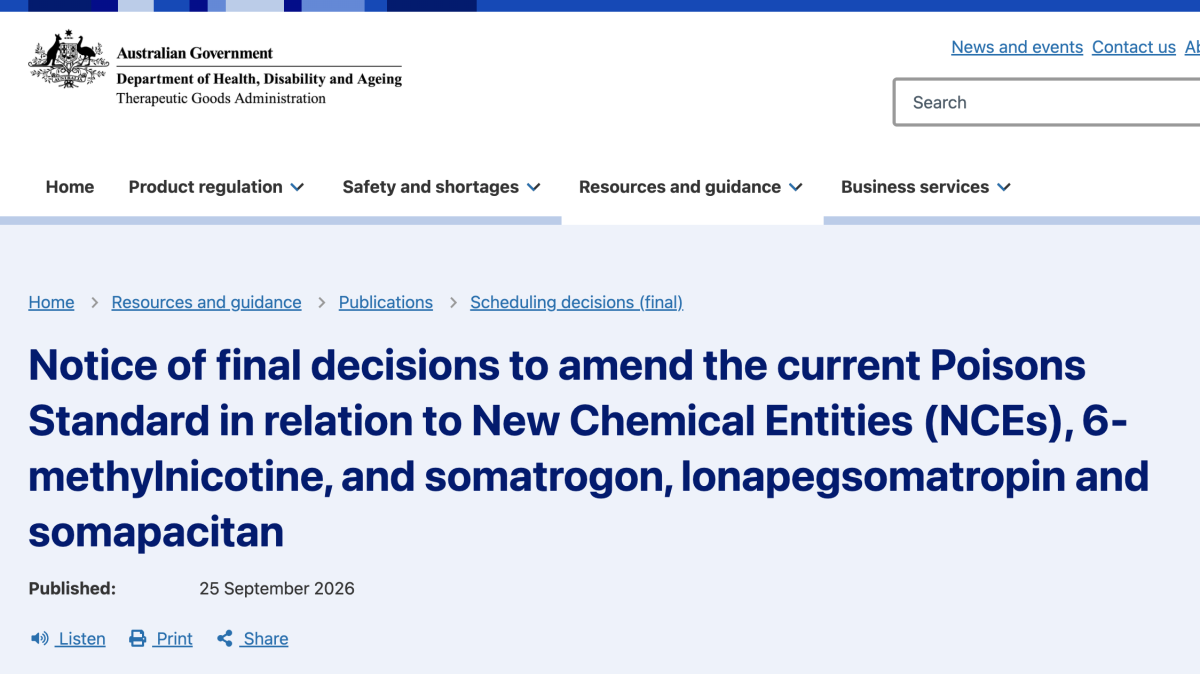
Australia's Therapeutic Goods Administration published a final decision on September 25 to classify 6-methylnicotine as a Schedule 9 prohibited substance under the Poisons Standard, effective October 1, 2026. TGA said the chemical has been reported in e-cigarette liquids sold in Australia and marketed as nicotine-free or nicotine alternatives, while evidence also indicates its use in preparations such as oral pouches. The government originally proposed a Schedule 7 classification but ultimately adopted the stricter Schedule 9 designation, citing acute toxicity, dependence risk, use in unapproved consumer products and misleading marketing.
News
Sep.29 by 2Firsts Perspectives
North Carolina Tightens Vape Product Directory Enforcement, Expands State and Local Powers as Violators Face Fines, Product Seizures and License Suspension or Revocation
North Carolina has expanded enforcement of its vapor product directory rules, authorizing more state and local law enforcement participation and establishing a task force led by the State Bureau of Investigation. The legislation requires at least one unannounced compliance inspection annually for retailers, distributors and wholesalers handling covered products. Penalties effective October 1, 2026, include civil fines of $500–$750 for a first violation and $1,000–$1,500 for repeated violations within 12 months, along with potential license suspension or revocation. Manufacturers may face penalties of $10,000 per unlisted product. The measures strengthen the product directory system established in 2024.
Regulations
Oct.28
Product | BAT Expands VELO Peach Ice Medium to FamilyMart Stores Nationwide in Japan
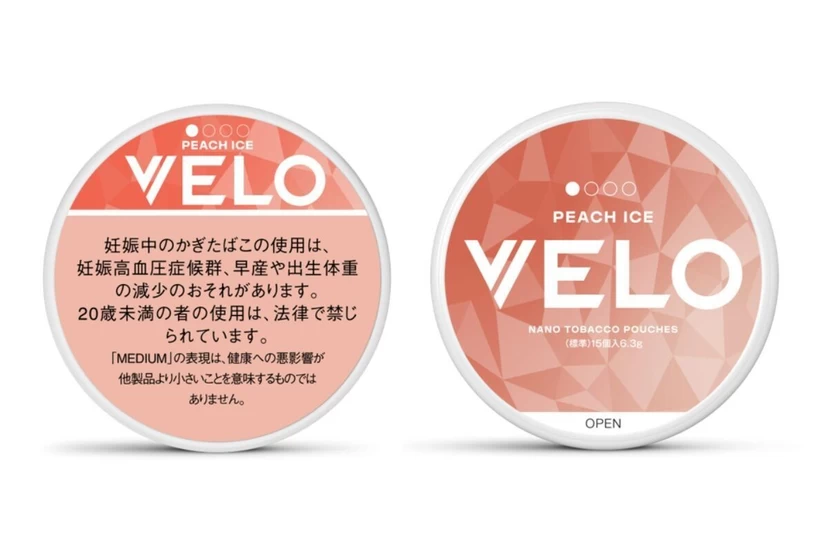
British American Tobacco Japan (BAT Japan) expanded VELO Peach Ice Medium to FamilyMart stores nationwide in Japan from September 7, 2026. The oral tobacco product first launched on July 6 and had previously been sold through VELO's official online store, glo Store Ginza and tobacco retailers. It combines peach flavor with menthol cooling at a Medium strength level and is priced at JPY 360. Japanese tobacco retailers list 15 pouches per pack. The move adds the new SKU to an existing nationwide FamilyMart distribution network for VELO rather than marking the brand's first entry into the convenience-store chain.
Sep.15
Special Report | How Capital Is Reassessing the Global Tobacco and Modern Nicotine Industry: Lessons from a New York Forum
Capital is reassessing the global tobacco and modern nicotine industry as heated tobacco, vaping and nicotine pouches reshape demand, profitability and regulation. At the 2026 New Approaches Summit in New York, investors and analysts examined whether smoke-free growth can sustain earnings, how regulation shapes startup value, and whether shareholder engagement can be more effective than divestment. The debate points to a broader shift: tobacco transition is increasingly becoming a capital-allocation, governance and valuation question.
Capital Markets
Oct.05
Latest UK ONS Data: Vaping Rate Edges Down to 9.9% in 2025, a Year After Overtaking Cigarette Smoking
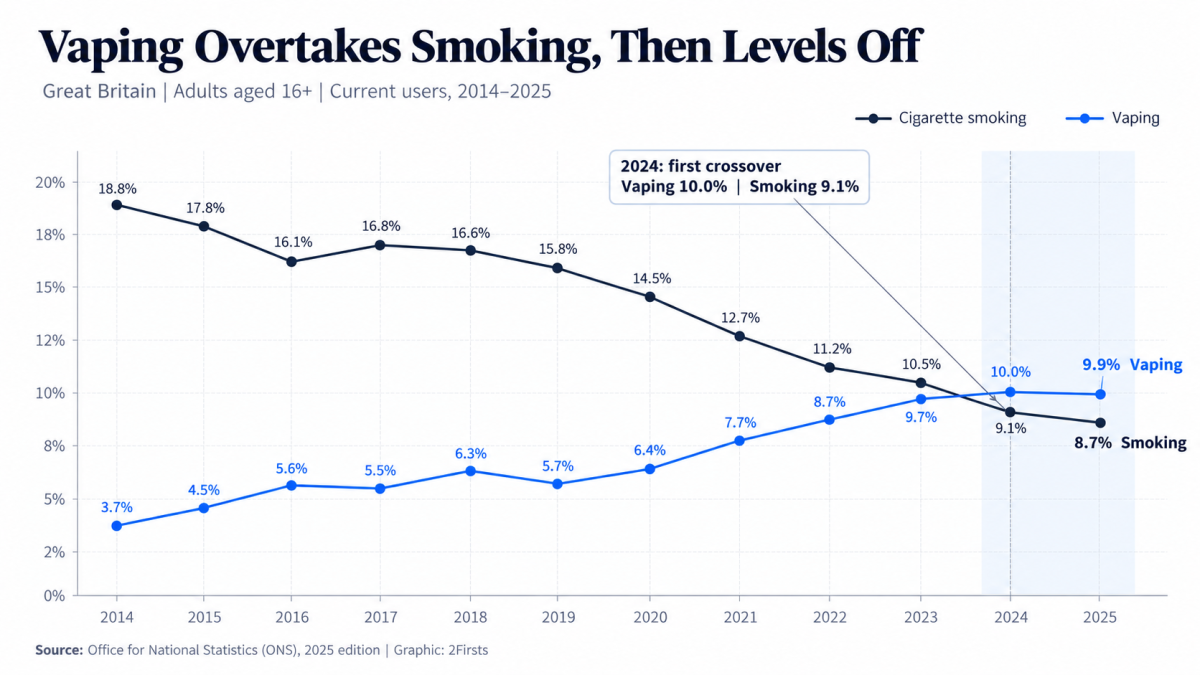
Vaping prevalence in Great Britain edged down to 9.9% in 2025 from 10.0% in 2024, with the number of adult users holding at approximately 5.4 million for a second consecutive year, according to the Office for National Statistics (ONS). E-cigarette use had risen from 6.4% in 2020 to 10.0% in 2024, when it exceeded cigarette smoking prevalence for the first time. Cigarette smoking continued to decline to 8.7% in 2025, widening the gap to 1.2 percentage points. Daily vaping declined slightly, while usage among adults aged 25–34 increased despite falling rates in other age groups.
DATA
Oct.14