Russia Moves Toward Full Ban on E-Cigarettes and Vapes, With Scope Still Under Discussion

Mar.26
Russia Moves Toward Full Ban on E-Cigarettes and Vapes, With Scope Still Under Discussion
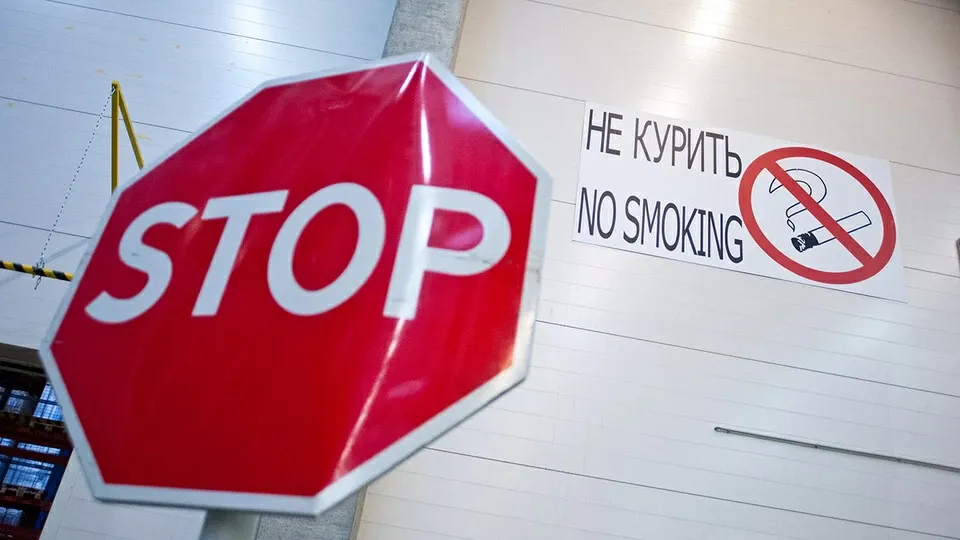
Russia’s State Commission for Countering Illegal Trafficking in Industrial Products on March 25 supported an initiative to fully ban the production, import and circulation of electronic cigarettes, vapes and refill liquids in Russia.

Key Takeaways


  • Russia’s State Commission for Countering Illegal Trafficking in Industrial Products on March 25 supported a full ban on electronic cigarettes, vapes and refill liquids.
  • The commission is headed by First Deputy Prime Minister Denis Manturov.
  • Sources said a draft law will be prepared following the commission’s decision.
  • The original agenda had focused on stronger inspections of electronic nicotine delivery system market participants, especially retailers.
  • The specific list of devices covered by the ban will be determined after broader discussion.


2Firsts, March 26, 2026


According to Vedomosti, Russia’s State Commission for Countering Illegal Trafficking in Industrial Products on March 25 supported an initiative to fully ban the production, import and circulation of electronic cigarettes, vapes and refill liquids in Russia.


State commission supported a full ban on e-cigarettes, vapes and refill liquids


The report, citing three sources, said the initiative was supported at the commission meeting, including two sources familiar with the course of the meeting and one source in the Health Ministry. The commission is headed by First Deputy Prime Minister Denis Manturov.


One source said that following the commission’s decision, a corresponding draft law would be prepared. The report also said that initiatives agreed by the commission are often adopted because it is an interagency body that includes heads of federal and regional executive authorities.


The original agenda focused on stronger inspections, but the meeting shifted to support a full ban


Another source familiar with the meeting said the original plan had been to discuss stronger inspections of participants in the electronic nicotine delivery system market, especially retail outlets.


However, the report said that during the meeting, all participants ultimately reached a consolidated decision in favor of a full ban on the sale of electronic nicotine delivery systems and refill liquids.


The list of covered devices and the law’s drafter will be determined later


A source said the specific list of devices that would be covered by the ban will be approved after broader discussion of the initiative. According to the report, in addition to vapes and electronic cigarettes, electronic hookahs and electronic pipes may also fall within the electronic nicotine delivery system category.


The report also said the eventual drafter of the bill will be determined later. Possible authors could include lawmakers who are members of the commission or an interested ministry or agency such as the Health Ministry, the Industry and Trade Ministry, or Rospotrebnadzor.


In early December 2025, a group of six State Duma deputies also prepared amendments for second reading of a bill on licensing the circulation of tobacco and nicotine-containing products, including provisions limiting vape sales, though no date has yet been set for that second reading.


Image source: Vedomosti


We welcome news tips, article submissions, interview requests, or comments on this piece.

Please contact us at info@2firsts.com, or reach out to Alan Zhao, CEO of 2Firsts, on LinkedIn


Notice

1.  This article is intended solely for professional research purposes related to industry, technology, and policy. Any references to brands or products are made purely for objective description and do not constitute any form of endorsement, recommendation, or promotion by 2Firsts.

2.  The use of nicotine-containing products — including, but not limited to, cigarettes, e-cigarettes, nicotine pouchand heated tobacco products — carries significant health risks. Users are responsible for complying with all applicable laws and regulations in their respective jurisdictions.

3.  This article is not intended to serve as the basis for any investment decisions or financial advice. 2Firsts assumes no direct or indirect liability for any inaccuracies or errors in the content.

4.  Access to this article is strictly prohibited for individuals below the legal age in their jurisdiction.


Copyright


This article is either an original work created by 2Firsts or a reproduction from third-party sources with proper attribution. All copyrights and usage rights belong to 2Firsts or the original content provider. Unauthorized reproduction, distribution, or any other form of unauthorized use by any individual or organization is strictly prohibited. Violators will be held legally accountable.

For copyright-related inquiries, please contact: info@2firsts.com


AI Assistance Disclaimer


This article may have been enhanced using AI tools to improve translation and editorial efficiency. However, due to technical limitations, inaccuracies may occur. Readers are encouraged to refer to the cited sources for the most accurate information.

We welcome any corrections or feedback. Please contact us at: info@2firsts.com

PMI's IQOS Extends ZAMNA Electronic-Music Partnership to Spain as Vogue España Publishes Branded Content
Philip Morris International's IQOS has extended its partnership with electronic-music event brand ZAMNA to Spain, setting up a House of IQOS at ZAMNA Madrid. Vogue España and Time Out Madrid subsequently published branded content clearly labeled as collaborations with IQOS. PMI has also expanded its company-owned IQOS boutique network in Spain to seven cities this year. The company says IQOS's adjusted heated-tobacco market share in Europe reached 12.6% in the first quarter of 2026, with Spain among its stronger-performing European markets.
Sep.20
Product | KT&G Launches lil HYBRID 3.0 Misty Rosé Edition II in South Korea With Two Pink Finishes at 88,000 Won
South Korean tobacco company KT&G launched the limited-edition lil HYBRID 3.0 Misty Rosé Edition II on September 30, 2026, following the original Misty Rosé Edition introduced in November 2025. The new release comes in two pink finishes, Bloom Rosé and Viva Rosé, each priced at 88,000 won. Both versions initially went on sale through the lil Store online shop and lil MINIMALIUM flagship stores. From October 7, Bloom Rosé became available at approximately 1,500 lil Station retail outlets nationwide. The release retains the existing lil HYBRID 3.0 hybrid heated tobacco platform, with changes focused on exterior design and distribution.
product
Oct.10
STIIIZY Redesign Fails to Escape PAX Labs Patent Import Ban as Section 337 Case Also Involves China ALD
U.S. Customs and Border Protection ruled that STIIIZY had not shown that the redesigned cannabis-vape products covered by its latest request fall outside an ITC limited exclusion order tied to PAX Labs patents. CBP accepted some of STIIIZY’s claim-construction and non-infringement arguments, but the company did not address two additional claims in the same patent. Earlier STIIIZY redesigned cartridges and certain associated components imported with them had received separate CBP clearance.
Sep.16
Special report|Indonesia's Vape Industry Has 200 Manufacturers and $1.7 Billion in Investment. Could a Regulatory Divide Derail Its Rise as the World's No. 2 Manufacturing Hub After Shenzhen?
Indonesia's Ministry of Industry said at a November 3, 2026, policy forum that the country has about 200 electronic cigarette companies, Rp31 trillion (approximately $1.71 billion) in cumulative industry investment and around 100,000 jobs across the supply chain. The National Narcotics Agency is seeking a comprehensive ban on vape use and circulation, while the industry ministry favors tighter import, product-standard and distribution controls. Indonesia exported approximately $518 million in vaping products in 2025, and Chinese manufacturers including Smoore, GEEKVAPE and Jinjia Group have established local operations. An international logistics specialist interviewed by 2Firsts said more Chinese vape companies began production in Indonesia from the second half of 2025, accompanied by increased shipments of manufacturing equipment and investment in logistics facilities. The regulatory debate comes as Indonesia expands its role in international vaping manufacturing.
Special Report
Nov.05
Japanese Addiction Psychiatrist Says Complete Abstinence Is Not Always the Goal of Harm Reduction | 2Firsts Interview
Complete abstinence is not always the goal of addiction treatment under a harm-reduction approach, Japanese psychiatrist Tomohiro Shirasaka told 2Firsts in Manila. In the interview, he discussed patients' quality of life, Japan's shift towards heated tobacco products, and the challenges of quitting smoking for people with mental illness. Drawing on addiction treatment work in the Philippines, he advocated support rather than punishment and questioned whether fear-based health warnings effectively address the reasons people continue smoking.
Nov.10
Smoore Seeks to Toss CCELL Price-Fixing Claim as Court Weighs Vertical Distribution Versus Horizontal Conspiracy
Smoore and four authorized U.S. CCELL distributors are asking a California federal court to permanently dismiss a core antitrust claim brought by direct purchasers. Plaintiffs allege that Smoore coordinated minimum wholesale prices, customer allocation and limits on price competition among distributors, amounting to a per se unlawful horizontal conspiracy. The defendants say the alleged conduct reflects ordinary vertical relationships between a manufacturer and its distributors. The court previously dismissed a similar claim, and the latest dispute centers on whether the second amended complaint adds sufficient facts to establish a horizontal agreement.
Sep.14