Key Points
- Iowa has started enforcing its vape registry law.
- The Eighth Circuit Court of Appeals previously lifted an injunction blocking implementation.
- The law requires vape products to be registered before being sold in the state.
- Retailers warn that fewer available products could increase operational pressure.
- One retailer said a six-product limit could severely affect vape shop operations.
2Firsts
August 6, 2026
According to U.S. media outlet KYMA on Aug. 4, 2026, Iowa has begun enforcing its Vape Registry Law after the U.S. Court of Appeals for the Eighth Circuit lifted an injunction that had prevented the law from taking effect.
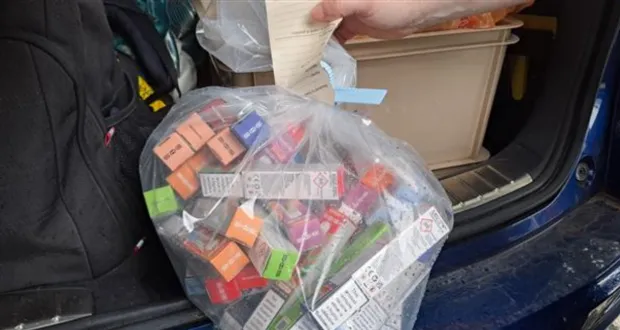
The law requires vape products to be registered with the state before they can legally be sold in Iowa. As enforcement begins, regulatory requirements are extending from product access rules to retail operations.
Some retailers have warned that fewer available products could increase pressure on vape shops.
Iowa Begins Enforcement of Vape Registry Law
Iowa’s Vape Registry Law requires vape manufacturers to submit products for state registration, with only registered products allowed for sale.
Implementation of the law had previously been delayed due to legal proceedings.
According to reports, the Eighth Circuit’s decision lifting the injunction allowed Iowa to move forward with enforcement.
The law focuses on:
- establishing a vape product registration system;
- determining products eligible for legal sale;
- strengthening market oversight.
The measure represents state-level market access regulation rather than a federal ban on vape products.
Retailers Warn Product Limits Could Pressure Businesses
As the registry system takes effect, retailers are watching potential changes in available product selection.
Brandon Gaines, owner of Uptown Vapors, said that if only six vape products remain available, retailers could face severe business challenges.
He said:
“If nothing changes, we'll be out of business. We'll be closing all our Iowa locations, I'd assume 95% of vape shops, probably 99% will all close their doors if we can only sell six products.”
The estimate reflects the view of one retailer and does not represent an official assessment of the overall Iowa vape market.
Retailers’ concerns focus on:
- reduced product selection;
- inventory adjustments;
- potential effects on store revenue.
Regulators and Retailers See Different Impacts
Supporters of the law argue that a vape registry can help ensure products sold in the state meet regulatory requirements.
Some retailers, however, argue that strict product access rules could reduce legal market supply and increase operational challenges.
The Iowa registry system reflects a broader trend of U.S. states moving from general sales restrictions toward product-listing and registration-based approaches.
State Registries Become a Growing Vape Regulatory Tool
In recent years, U.S. states have adopted different approaches to vape regulation.
Some states have used:
- product registration;
- sales restrictions;
- approved product lists;
to strengthen oversight.
The Iowa case shows that state-level regulation can affect not only manufacturers but also wholesalers and retailers throughout the supply chain.
For vape companies, operating across multiple states may increasingly require navigating different registration systems and compliance requirements.
Follow 2Firsts for the latest updates on global tobacco and nicotine regulation, industry developments and market trends.
Cover Image source: KYMA
Disclaimer
This article is provided solely for professional research, industry discussion, and informational purposes. Any references to brands, companies, products, technologies, or policies are made for factual reporting and analytical purposes only, and do not constitute endorsement, recommendation, promotion, or advertising by 2Firsts.
Nicotine-containing products, including but not limited to cigarettes, e-cigarettes, heated tobacco products, and nicotine pouches, carry significant health risks. Readers are responsible for complying with all applicable laws and regulations in their respective jurisdictions, including age restrictions and access limitations.
The information contained in this article should not be regarded as investment, legal, medical, regulatory, or commercial advice. While 2Firsts strives to ensure the accuracy and reliability of its content, it does not assume liability for any direct or indirect loss arising from errors, omissions, inaccuracies, or reliance on the information contained herein.
This article is not intended for individuals below the legal age for accessing tobacco or nicotine-related information in their jurisdiction.
Copyright Notice
This article is either original content produced by 2Firsts or content reproduced, translated, summarized, or adapted from third-party sources with attribution where applicable. The intellectual property rights of the original content remain with 2Firsts or the respective original rights holders.
No individual or organization may copy, reproduce, distribute, republish, modify, translate, or otherwise use this content without prior authorization. Any unauthorized use may result in legal action.
For copyright-related inquiries, corrections, or removal requests, please contact: info@2firsts.com.
AI-Assisted Translation and Editing Notice
Portions of this article may have been translated, edited, or reviewed with the assistance of artificial intelligence tools to improve efficiency and readability. Due to the limitations of AI-assisted translation and editing, discrepancies, omissions, or inaccuracies may exist when compared with the original source.
Where applicable, readers are advised to refer to the original source for the most complete and accurate information. If you identify any errors or believe that any content infringes upon your rights, please contact us at info@2firsts.com, and we will review and address the matter promptly.