Kazakhstan Citizens Petition Against National E-Cigarette Ban

Regulations by 2FIRSTS.ai
May.21.2024
Kazakhstan Citizens Petition Against National E-Cigarette Ban
A new petition in Kazakhstan opposes the upcoming nationwide e-cigarette ban, attracting nearly 19,000 viewers and 895 signatures.

According to a report from SeeSmo on May 21st, recently, Kazakh citizens have launched a new petition on the Epetition website opposing the upcoming nationwide ban on e-cigarettes.


As of now, the petition has attracted nearly 19,000 viewers and has successfully collected 895 signatures and 67 comments. As early as August 2023, the people of Kazakhstan launched a similar petition, collecting over 100,000 signatures, demonstrating strong public opposition to the ban.


In this petition, the initiators are calling on the government not to deprive them of their right to use e-cigarettes as an alternative smoking method because they do not use traditional cigarettes or heated tobacco products.


In April of this year, President Kassym-Jomart Tokayev of Kazakhstan signed a law officially banning the sale and advertising of e-cigarettes and electronic shisha nationwide. According to current laws, Kazakhstan will completely ban the sale, distribution, and import of e-cigarettes one month later.


This ban was advocated by the Department of Health and several public organizations, sparking widespread discussion and controversy over the past year.


We welcome news tips, article submissions, interview requests, or comments on this piece.

Please contact us at info@2firsts.com, or reach out to Alan Zhao, CEO of 2Firsts, on LinkedIn


Notice

1.  This article is intended solely for professional research purposes related to industry, technology, and policy. Any references to brands or products are made purely for objective description and do not constitute any form of endorsement, recommendation, or promotion by 2Firsts.

2.  The use of nicotine-containing products — including, but not limited to, cigarettes, e-cigarettes, nicotine pouchand heated tobacco products — carries significant health risks. Users are responsible for complying with all applicable laws and regulations in their respective jurisdictions.

3.  This article is not intended to serve as the basis for any investment decisions or financial advice. 2Firsts assumes no direct or indirect liability for any inaccuracies or errors in the content.

4.  Access to this article is strictly prohibited for individuals below the legal age in their jurisdiction.


Copyright


This article is either an original work created by 2Firsts or a reproduction from third-party sources with proper attribution. All copyrights and usage rights belong to 2Firsts or the original content provider. Unauthorized reproduction, distribution, or any other form of unauthorized use by any individual or organization is strictly prohibited. Violators will be held legally accountable.

For copyright-related inquiries, please contact: info@2firsts.com


AI Assistance Disclaimer


This article may have been enhanced using AI tools to improve translation and editorial efficiency. However, due to technical limitations, inaccuracies may occur. Readers are encouraged to refer to the cited sources for the most accurate information.

We welcome any corrections or feedback. Please contact us at: info@2firsts.com

NAS 2026 | Cliff Douglas: Risk Continuum Should Play a Central Role in Tobacco Policy
Cliff Douglas, a veteran U.S. tobacco-control and public health policy figure, told NAS 2026 that the “continuum of risk” should play a central role in tobacco policy. He called for clearer market pathways, stronger risk communication, differentiated regulation and enforcement, and said possible FDA reforms to PMTA reviews could be a “welcome correction” if they create a more efficient, predictable route for scientifically substantiated lower-risk products. Read 2Firsts’ on-site coverage.
Sep.26
Special Report | Vape bans and tougher rules: the South Caucasus takes different paths
Azerbaijan's sweeping e-cigarette ban has raised concerns over enforcement errors and the emergence of illicit sales, while neighboring Armenia is tightening technical rules and preparing higher excise taxes. Georgia, meanwhile, has resisted calls for broader vape restrictions and introduced preferential taxes for some domestically produced cigarettes. The divergent approaches across the South Caucasus highlight a regional policy dilemma: how to curb nicotine use and protect public health without encouraging black markets or creating unintended economic consequences for businesses and consumers.
Nov.03
Italian Financial Police Seize 4.3 Million E-Cigarettes and Smoking Accessories; 28 Reported to Judicial Authorities Across Operations
Italy's Guardia di Finanza announced on October 28 that officers in Latina province had seized approximately 4.3 million e-cigarettes and smoking accessories at an unauthorized warehouse in an operation involving restrictions on the possession and sale of tobacco-related products. Another 300,000 suspected counterfeit or unsafe items were confiscated during separate inspections, bringing total seizures across the operations to more than 4.6 million products. Twenty-eight people were reported to judicial authorities over suspected smuggling and counterfeiting offenses. Officials did not disclose separate vape quantities, the value of the merchandise or alleged violations associated with individual brands.
Enforcement
Oct.29
Spain Cigarette Volumes Fall 5.2% in August, BAT Drops 14.5%, JTI Gains Share; France Down 8.3% on Adjusted Basis
Spain's cigarette volumes declined 5.2% year over year in August 2026, according to government data cited by UBS and reported by Investing.com on October 7. British American Tobacco's volumes fell 14.5%, followed by Imperial Brands at 8.8%, Philip Morris International at 6.6% and Japan Tobacco at 4.6%. JTI was the only one of the four companies to gain cigarette market share, rising six basis points to 26.7%. In France, official customs data showed an unadjusted 3.7% decline in cigarette deliveries. Adjusting for the difference in delivery days produces a decline of approximately 8.3%, consistent with the UBS figure. The bank also estimated the earnings exposure of major tobacco companies to both markets.
Market
Oct.13
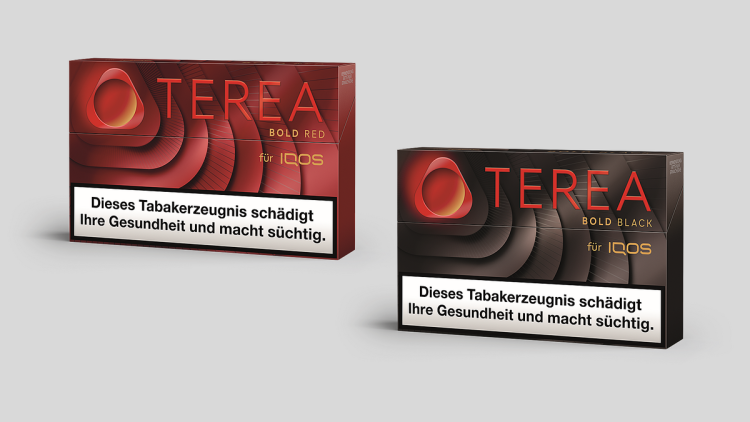
Product | Philip Morris Launches TEREA Bold Red and Bold Black in Germany With Level-10 Tobacco Intensity at €8 per Pack
Philip Morris International (PMI) introduced TEREA Bold Red and Bold Black heated tobacco sticks in Germany in October 2026, both carrying a brand-rated tobacco-flavor intensity of 10, the highest level in the country's TEREA portfolio. Bold Red features leather and warm woody notes, while Bold Black combines woody and subtle floral notes. Both are sold in 20-stick packs at €8, approximately 2.6% above standard TEREA products. Germany's TEREA range now includes 11 flavor variants, alongside a separate 26-stick XL format priced at €10. IQOS Germany announced the new products on October 12, followed by a phased retail rollout from late October and an IQOS Club campaign running through December.
product
Nov.02
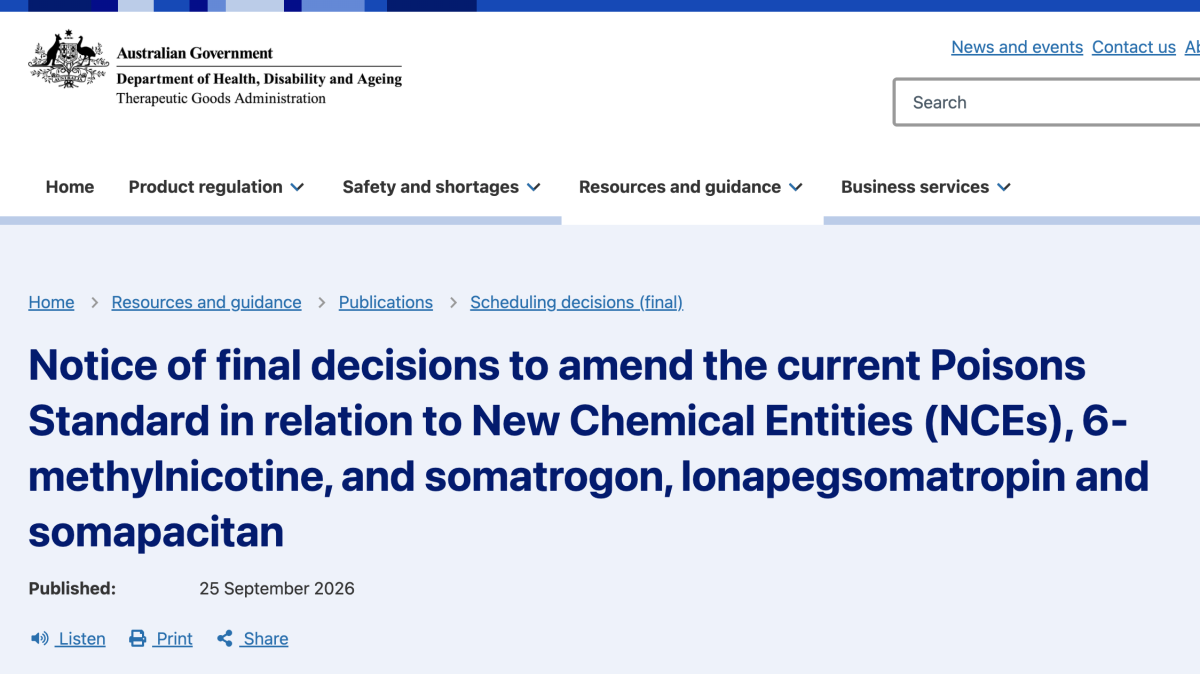
Australia Adds 6-Methylnicotine to Schedule 9 Prohibited Substances, Effective October 1
Australia's Therapeutic Goods Administration published a final decision on September 25 to classify 6-methylnicotine as a Schedule 9 prohibited substance under the Poisons Standard, effective October 1, 2026. TGA said the chemical has been reported in e-cigarette liquids sold in Australia and marketed as nicotine-free or nicotine alternatives, while evidence also indicates its use in preparations such as oral pouches. The government originally proposed a Schedule 7 classification but ultimately adopted the stricter Schedule 9 designation, citing acute toxicity, dependence risk, use in unapproved consumer products and misleading marketing.
News
Sep.29 by 2Firsts Perspectives