Rampant Illegal Tobacco and E-Cigarette Products Affecting Filipino Farmers

Regulations by 2FIRSTS.ai
Apr.15.2024
Rampant Illegal Tobacco and E-Cigarette Products Affecting Filipino Farmers
Filipino tobacco growers urge the government to crack down on illegal cigarettes and e-cigarette products, blaming them for tax revenue decline.

According to a report from the Manila Times on April 15th, tobacco farmers in the Philippines have stated that the rise in illegal cigarettes and e-cigarette products is the main culprit behind the increase in tobacco consumption tax. They are urging the government to implement Republic Act (RA) No. 11900.


RA 11900" is the "Regulation of Vaporized Nicotine and Non-Nicotine Products Act." The Philippine Tobacco Growers Association (PTGA) and the National Federation of Tobacco Farmers Associations and Cooperatives (Naftac) have expressed concerns that illegal disposable e-cigarette products are affecting the livelihoods of tobacco farmers and their families. PTGA Chairman Ka Turning Distor stated, "The proliferation of illegal cigarettes has already decreased the demand for locally grown tobacco leaves by domestic manufacturers. Illegal e-cigarettes only benefit smugglers and unscrupulous retailers, as they do not even pay taxes. We need the government's help to stop this 'e-cigarette epidemic' and save the local tobacco industry."


These organizations also believe that the popularity of illegal cigarettes and e-cigarette products has led to a decrease in tobacco consumption tax. It decreased from 1.76 billion Philippine pesos in 2021 to 1.6 billion pesos in 2022, then further decreased by 16% in 2023 to 1.35 billion pesos, falling short of the expected target of 1.7 billion pesos.


According to Republic Act 11346, 40% of tobacco consumption tax is allocated to the Philippine Health Insurance Corporation, 10% is allocated to the Department of Health for the enhancement of health facilities, and the remaining percentage is allocated to the national budget and tobacco-producing provinces to support tobacco farmers.


Therefore, PTGA, Naftac, and other farmer organizations urge the national government to strictly enforce "RA 11900". Naftac President Bernard Vicente stated that they support the e-cigarette ban to regulate tobacco alternatives such as e-cigarette products and heated tobacco products. He said, "Unfortunately, this new law is now being abused by unscrupulous businessmen who openly smuggle and distribute illegal e-cigarettes."


According to data from the Philippines' Tobacco Regulation Authority, there are currently approximately 2.2 million Filipinos who rely on the tobacco industry for their livelihoods, including over 430,000 farmers, plantation workers, and their family members.


We welcome news tips, article submissions, interview requests, or comments on this piece.

Please contact us at info@2firsts.com, or reach out to Alan Zhao, CEO of 2Firsts, on LinkedIn


Notice

1.  This article is intended solely for professional research purposes related to industry, technology, and policy. Any references to brands or products are made purely for objective description and do not constitute any form of endorsement, recommendation, or promotion by 2Firsts.

2.  The use of nicotine-containing products — including, but not limited to, cigarettes, e-cigarettes, nicotine pouchand heated tobacco products — carries significant health risks. Users are responsible for complying with all applicable laws and regulations in their respective jurisdictions.

3.  This article is not intended to serve as the basis for any investment decisions or financial advice. 2Firsts assumes no direct or indirect liability for any inaccuracies or errors in the content.

4.  Access to this article is strictly prohibited for individuals below the legal age in their jurisdiction.


Copyright


This article is either an original work created by 2Firsts or a reproduction from third-party sources with proper attribution. All copyrights and usage rights belong to 2Firsts or the original content provider. Unauthorized reproduction, distribution, or any other form of unauthorized use by any individual or organization is strictly prohibited. Violators will be held legally accountable.

For copyright-related inquiries, please contact: info@2firsts.com


AI Assistance Disclaimer


This article may have been enhanced using AI tools to improve translation and editorial efficiency. However, due to technical limitations, inaccuracies may occur. Readers are encouraged to refer to the cited sources for the most accurate information.

We welcome any corrections or feedback. Please contact us at: info@2firsts.com

Special Report|Japan Tobacco Buys CLEW: Can Its 160,000-Store Cigarette Network Help It Vie for U.S. Nicotine Pouch Share Against PMI and BAT?
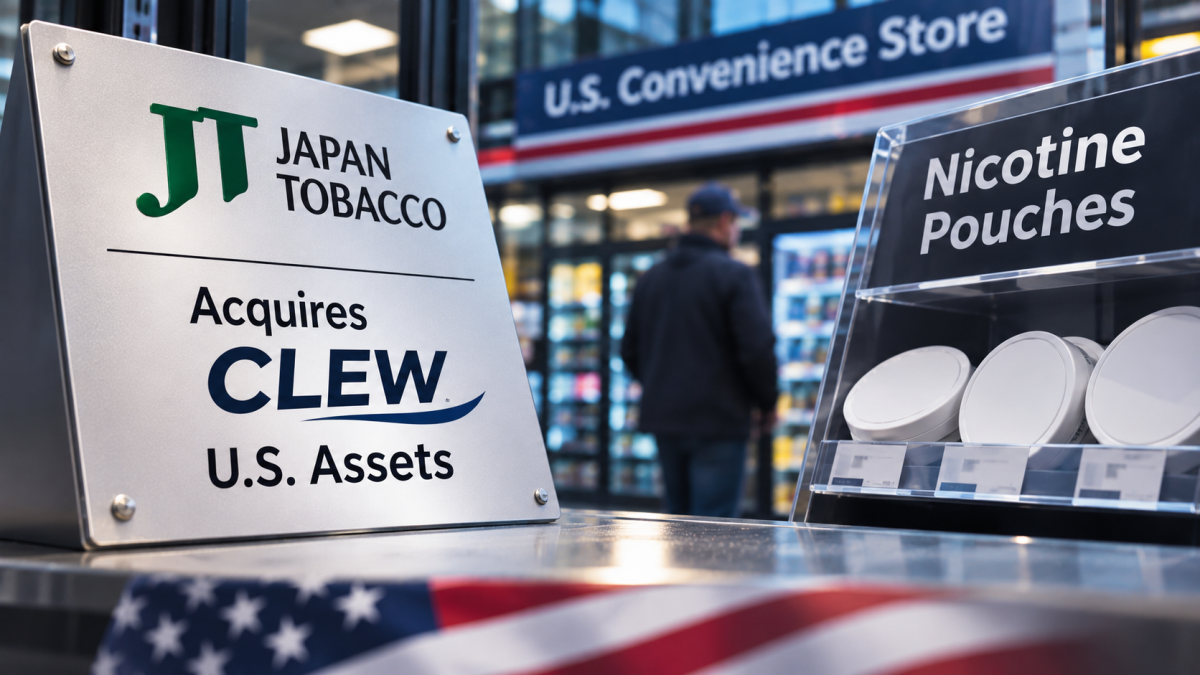
Japan Tobacco Inc. (JT) announced on November 12, 2026, that it had acquired the U.S. assets of nicotine pouch brand CLEW from Nevcore Innovations Inc., including trademarks, intellectual property, product formulations and a Premarket Tobacco Product Application (PMTA). CLEW, currently distributed through selected outlets in 13 U.S. states, will immediately join the JTI LIGGETT portfolio. The transaction follows JT's approximately $2.4 billion acquisition of U.S. cigarette maker Vector Group in 2024. JTI LIGGETT says its existing cigarette brands reach more than 160,000 U.S. retail stores. During the 2026 NACS Show in October, JTI LIGGETT booth staff told 2Firsts that the company had not yet launched nicotine pouches in the United States. Although Nevcore previously announced FDA acceptance of CLEW's PMTA, the brand is absent from the agency's current list of authorized nicotine pouch products. JT has not disclosed a retail expansion plan for CLEW.
Business
Nov.12
2Firsts Interview | Cigarette Sales Fall as Smokeless Alternatives Gain in U.S. Convenience Stores, NACS Says
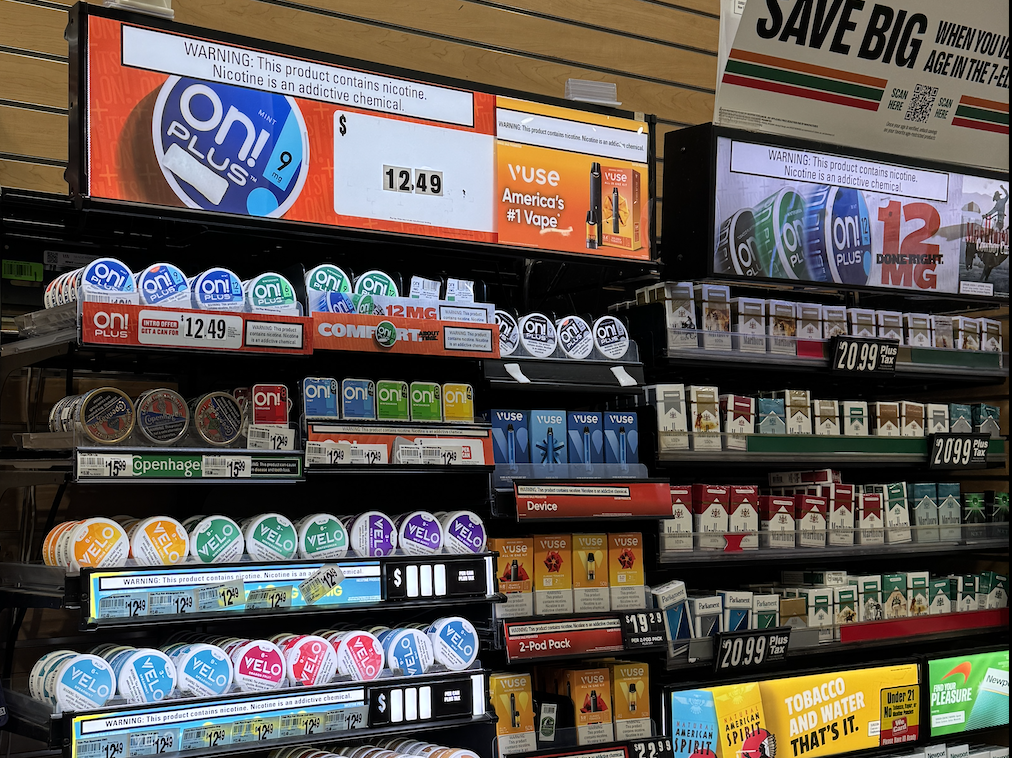
Ahead of the 2026 NACS Show, 2Firsts interviewed Chris Rapanick, NACS managing director of research, on changes reshaping the U.S. convenience-store tobacco and nicotine market. NACS data show cigarette sales declining while smokeless alternatives, including nicotine pouches, continue to grow. The interview also examines higher OTP margins, shifting backbar space, weaker store traffic, regulatory uncertainty and NACS’ outlook for 2027, offering a retailer-side view of one of the world’s largest nicotine markets.
Interview
Oct.03
U.S. Rep. Krishnamoorthi Questions FDA Over Planned PMTA Rewrite, Seeks Communications With Altria and Reynolds
U.S. Rep. Raja Krishnamoorthi on Oct. 6 questioned the FDA over its plan to reassess and potentially replace the 2021 PMTA regulatory framework, asking the agency to identify provisions it may change or eliminate, state whether current scientific evidentiary standards will be maintained, and disclose communications with Altria, Reynolds and other parties challenging the rule. Krishnamoorthi led a congressional investigation into JUUL and youth vaping in 2019 and has since remained active on e-cigarette regulation and enforcement.
Regulations
Oct.08
U.S. Expands Illicit Vape Enforcement as ATF Brings PACT Act Powers Into Trade Fraud Task Force
The U.S. Bureau of Alcohol, Tobacco, Firearms and Explosives said on September 23 that it has joined the interagency Trade Fraud Task Force to strengthen enforcement against illegal, misdeclared and smuggled vape and tobacco products. ATF will bring its authority under the Prevent All Cigarette Trafficking Act into the task force, including registration, reporting, shipping and record-inspection requirements covering interstate sales of electronic nicotine delivery systems. ATF said the move will strengthen its ability to trace illicit products from U.S. points of entry through domestic trafficking and distribution networks.
News
Sep.28 by 2Firsts Perspectives
Special Report | From Oversupply to Supply Gaps: Global Tobacco Leaf Markets Diverge Ahead of 2027
Global tobacco leaf markets diverged sharply in 2026, with India cutting authorised FCV production amid oversupply while Malawi faced a supply shortfall. U.S. demand improved in some leaf categories, but growers in Brazil, Colombia, Tanzania and Zimbabwe faced pressure from prices, buyer access, costs and weather. With nicotine consumption patterns also shifting, 2027 will test whether supply, demand and grower profitability can move back toward balance.
Oct.26
On-Site Report | CTP Details PMTA Backlog, 180-Day Review Goal and sPMTA Process
FDA’s Center for Tobacco Products detailed new PMTA review data and process changes at the 2026 FDLI conference. Pending PMTAs fell from about 450,000 at the start of 2025 to 135,000 by September 2026. CTP also discussed its 180-day review goal, current sPMTA pilot, alternate-supplier planning, more than 50,300 pending SE reports, and lessons from the nicotine pouch pilot already being applied to ENDS review.
Regulations
Oct.07