Reynolds Tobacco and ITG Brands Challenge FDA Warning Labels

Regulations by 2FIRSTS.ai
Aug.23.2024
Reynolds Tobacco and ITG Brands Challenge FDA Warning Labels
Reynolds Tobacco and ITG Brands challenge FDA graphic warning labels in Supreme Court, citing freedom of speech concerns.

According to a recent report from Law360, Reynolds Tobacco Company (R.J. Reynolds Tobacco Co.) and ITG Brands LLC are petitioning the United States Supreme Court to challenge the FDA's regulation requiring graphic warning labels on traditional cigarette packaging and advertisements under the First Amendment.


The FDA initially stipulated that as of June 18, 2021, new cigarette health warning labels must appear prominently on packaging and advertisements. The warning labels must cover at least 50% of the front and back panels of the packaging, and at least 20% of the top of advertisements.


However, some manufacturers and including other tobacco retailers have successfully persuaded a federal judge in Texas to postpone this regulation 10 times.


Previously, the regional court had ruled that the new label contained provocative and value-oriented information, infringing on the tobacco company's freedom of speech.


However, the Fifth Circuit Court of Appeals disagreed with this viewpoint, stating that these warnings were undeniably factual and that the images were "no different than what medical students would see in textbooks.


In March of this year, the United States Fifth Circuit Court of Appeals rejected the industry's argument concerning the FDA's plan to infringe on companies' freedom of speech. The industry believed that the requirement was oppressive to brand information on packaging and advertisements due to the size of images and text.


On August 19, Reynolds Tobacco Company, ITG Brands, and other tobacco companies urged the Supreme Court of the United States to review a lower court's ruling, arguing that the proposed warning labels are "excessive, provocative, and misleading.


They also pointed out that the ruling of the Fifth Circuit Court of Appeals is at odds with rulings from other courts, which found that "lesser warnings are overly burdensome.


This petition mentions that...


If the opinion of the Fifth Circuit Court of Appeals is allowed to stand, the government would be authorized to require similar large and unsightly warnings on virtually any unpopular consumer product - from fast food, candy, and wine to plastic straws, firearms, and gas stoves.


Therefore, the tobacco manufacturers submitted an appeal on Monday (19th).


We welcome news tips, article submissions, interview requests, or comments on this piece.

Please contact us at info@2firsts.com, or reach out to Alan Zhao, CEO of 2Firsts, on LinkedIn


Notice

1.  This article is intended solely for professional research purposes related to industry, technology, and policy. Any references to brands or products are made purely for objective description and do not constitute any form of endorsement, recommendation, or promotion by 2Firsts.

2.  The use of nicotine-containing products — including, but not limited to, cigarettes, e-cigarettes, nicotine pouchand heated tobacco products — carries significant health risks. Users are responsible for complying with all applicable laws and regulations in their respective jurisdictions.

3.  This article is not intended to serve as the basis for any investment decisions or financial advice. 2Firsts assumes no direct or indirect liability for any inaccuracies or errors in the content.

4.  Access to this article is strictly prohibited for individuals below the legal age in their jurisdiction.


Copyright


This article is either an original work created by 2Firsts or a reproduction from third-party sources with proper attribution. All copyrights and usage rights belong to 2Firsts or the original content provider. Unauthorized reproduction, distribution, or any other form of unauthorized use by any individual or organization is strictly prohibited. Violators will be held legally accountable.

For copyright-related inquiries, please contact: info@2firsts.com


AI Assistance Disclaimer


This article may have been enhanced using AI tools to improve translation and editorial efficiency. However, due to technical limitations, inaccuracies may occur. Readers are encouraged to refer to the cited sources for the most accurate information.

We welcome any corrections or feedback. Please contact us at: info@2firsts.com

India Duty-Free Nicotine Pouch Sales Face Regulatory Test as ZYN, FOX Classification Remains Open
The Bombay High Court has ruled that airport duty-free shops are not exempt from India's domestic regulatory laws merely because they operate beyond the customs barrier, leaving in place a sales halt covering ZYN and FOX nicotine pouches at Mumbai's international airport. The court, however, did not determine that the products necessarily qualify as "drugs" under India's Drugs and Cosmetics Act. The retailers have four weeks to submit product information to the appropriate authorities, including CDSCO, which must complete its review within 30 days of receiving the submissions.
Sep.24
New York City Opens Lottery for 55 Vape Retail License Slots Across 23 Community Districts, Including 28 in Brooklyn
New York City's Department of Consumer and Worker Protection (DCWP) opened applications on November 2, 2026, for a lottery covering tobacco and electronic cigarette retail dealer licenses, with a deadline of 5 p.m. New York local time on November 30. According to the city's October 1 notice, 55 electronic cigarette retail license slots are available across 23 community districts, including 28 in Brooklyn, alongside 322 tobacco retail license slots across 41 districts. Businesses must enter the lottery and, if invited, complete licensing requirements within 65 days. New York City continues to restrict e-cigarette retail sales to tobacco-flavored or unflavored products, while city retail licenses do not replace FDA product marketing authorization.
Market
Nov.04
Athletes Back Skoka's $21.5 Million Nicotine Pouch Venture: Can Its Consumer Health Founder Make an FDA-Focused Strategy Pay Off?
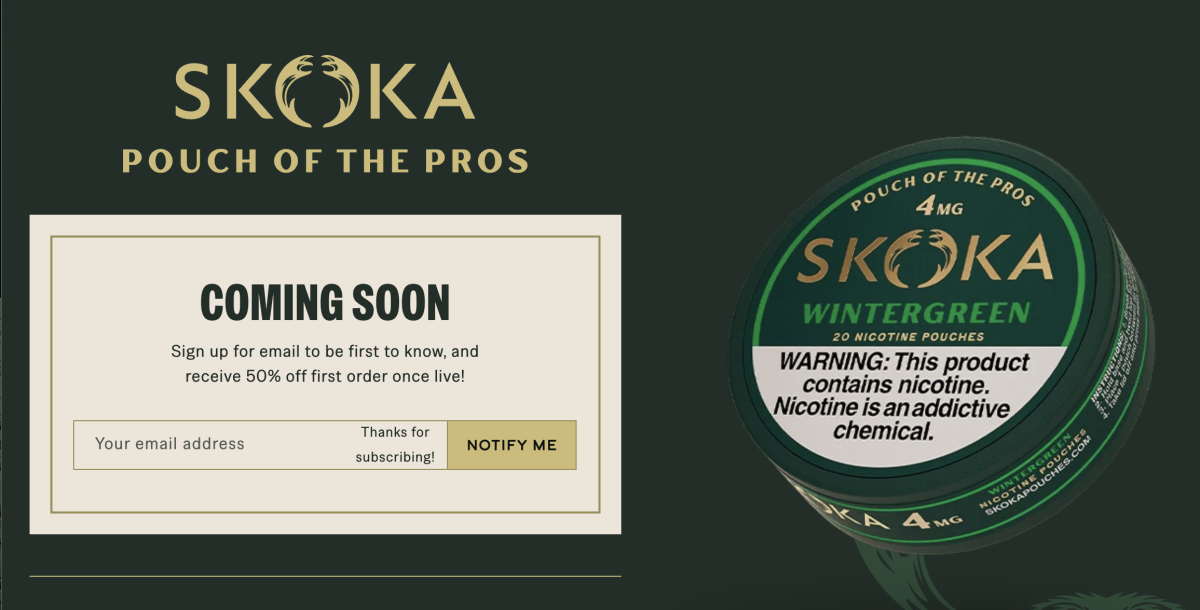
U.S. nicotine pouch startup Skoka Inc. has raised $21.5 million and committed $15 million to an FDA regulatory and scientific research program. Founder Dan Aziz previously built dietary supplement brand Premama, which was acquired by Dr. Reddy's Laboratories in 2023. Skoka is combining proprietary formulations, ingredient transparency and equity investment from professional athletes. The company submitted a bundled PMTA covering 55 products on October 1, 2026. Aziz said Skoka declined an opportunity to enter retail in 2025, prioritizing product research and regulatory submissions instead. It now targets a U.S. retail launch in 2027, subject to FDA requirements. Its products have not received marketing authorization.
Business
Nov.04
GAO Audit Finds Nearly 132,000 FDA Tobacco Applications Waiting an Average 1,266 Days as Nicotine Pouch Pilot Practices Move Into Vape PMTA Reviews
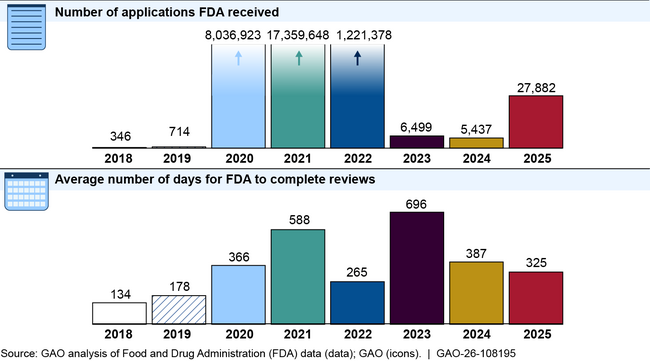
A U.S. Government Accountability Office audit found that 131,915 tobacco product applications submitted to the FDA since 2018 remained without a final review as of December 31, 2025, with pending applications waiting an average of 1,266 days. GAO also found FDA lacks the data needed to systematically determine whether scientific reviews meet applicable timelines. HHS agreed to upgrade the agency's tracking systems. At the same time, FDA has begun applying lessons from its nicotine pouch PMTA pilot to e-cigarette reviews, while changes to enforcement policy and electronic submissions are making the specific stage of a PMTA increasingly relevant to market access.
FDA
Oct.03
US ITC Judge Finds Glas Infringed Two JUUL Vape Patents, Recommends Restrictions on Related Imports——Glas Received FDA Marketing Authorization for Four Vape Pods in May 2026; Proposed Restrictions Remain Under Commission Review
A U.S. International Trade Commission (USITC) administrative law judge issued an initial determination on October 20, 2026, finding that certain Glas vaping devices, cartridges and components infringed 12 claims across two patents asserted by JUUL, constituting a violation of Section 337 of the Tariff Act of 1930. The judge recommended a limited exclusion order and a cease and desist order against the Glas respondents. Five months earlier, the FDA authorized four Glas e-cigarette pods, including mango, blueberry and two menthol variants. The patent investigation concerns device and cartridge structures and is separate from FDA premarket review. The proposed import restrictions have not become final, and their product-level scope remains unresolved.
company
Nov.05
North Carolina Tightens Vape Product Directory Enforcement, Expands State and Local Powers as Violators Face Fines, Product Seizures and License Suspension or Revocation
North Carolina has expanded enforcement of its vapor product directory rules, authorizing more state and local law enforcement participation and establishing a task force led by the State Bureau of Investigation. The legislation requires at least one unannounced compliance inspection annually for retailers, distributors and wholesalers handling covered products. Penalties effective October 1, 2026, include civil fines of $500–$750 for a first violation and $1,000–$1,500 for repeated violations within 12 months, along with potential license suspension or revocation. Manufacturers may face penalties of $10,000 per unlisted product. The measures strengthen the product directory system established in 2024.
Regulations
Oct.28