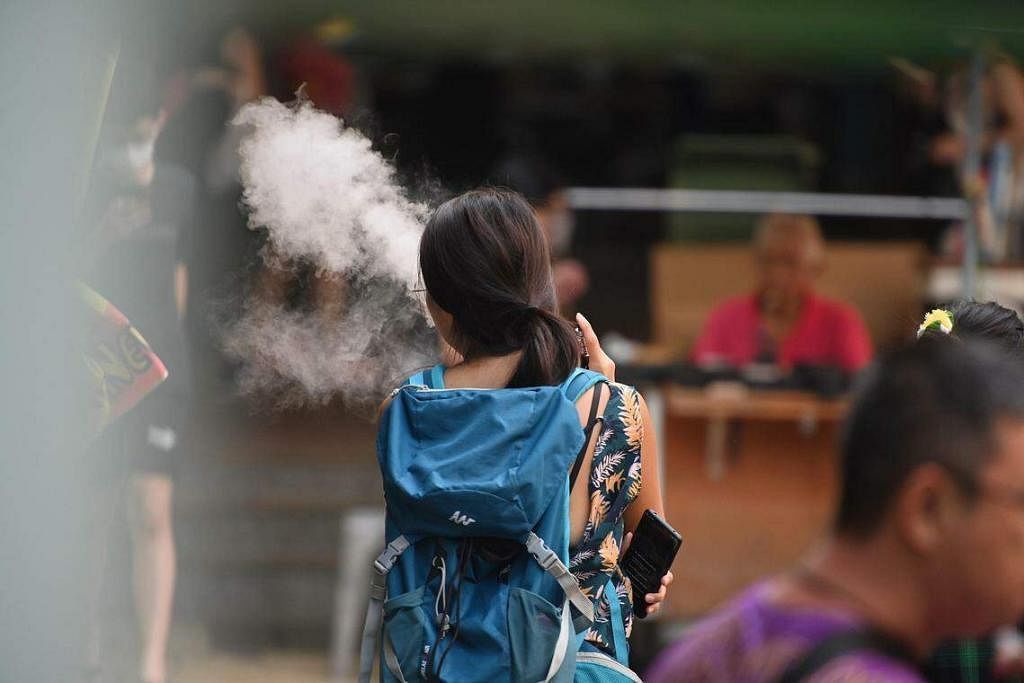
Strict Scrutiny on E-cigs at Singapore Changi Airport, 177 Carriers Detected in 4 Days

Regulations by 2FIRSTS.ai
Jan.05.2024
Strict Scrutiny on E-cigs at Singapore Changi Airport, 177 Carriers Detected in 4 Days
According to Beritaharian, Singapore authorities have detected 177 individuals carrying e-cigarettes or vaporizers in just four days at Changi Airport.

According to a report by Beritaharian on January 4th, Singapore's Ministry of Health (MOH), Health Sciences Authority (HSA), and Immigration and Checkpoints Authority (ICA) issued a joint statement stating that 177 individuals were recently found to be carrying e-cigarettes or e-cigarette vaporizers at Changi Airport in Singapore within a span of four days.


A four-day operation took place on December 20, 23, 27, and 30 in order to strengthen community law enforcement and curb the possession and use of e-cigarettes. The operation also aimed to prevent the smuggling of e-cigarettes through airports during the busy travel season. During the operation, 61 individuals were fined for possessing e-cigarettes, while an additional 116 passengers claimed to possess e-cigarettes but disposed of them to avoid penalties.


Based on this initiative, staff from the Home Team Science and Technology Agency (HSA) and the Immigration and Checkpoints Authority (ICA) are now reminding passengers arriving at Changi Airport's four terminals about the prohibition of e-cigarettes in Singapore. Additionally, banners and digital displays have been strategically placed in high-traffic areas of the airport to explicitly indicate this ban. Furthermore, once passengers have collected their luggage, they are advised to proceed through the red channel and inform ICA staff if they have inadvertently brought along e-cigarettes.


On December 21, 2023, during another enforcement operation conducted by the Integrated Inspection Center at Tuas Checkpoint, a total of 25 e-cigarettes and related parts were discovered. These items were concealed under the driver's and passenger's seats of registered vehicles in Singapore. The offenders involved and the confiscated e-cigarettes have been handed over to the Health Sciences Authority (HSA).


According to reports, in the coming months, the Home Team Science and Technology Agency (HSA) and the Immigration and Checkpoints Authority (ICA) will collaborate at the Land and Sea Checkpoints to conduct joint operations. These operations will include conducting security checks and collaborating with relevant agencies to prevent smuggling attempts, ensuring the safety of Singapore.


It is worth noting that e-cigarettes are prohibited by Singaporean law. The number of cases related to e-cigarettes seized at Singaporean checkpoints reached 1,656 in December 2023. Possessing, using, or purchasing e-cigarettes in Singapore is considered illegal and can result in a fine of up to SGD 2,000. Importing, distributing, selling, or promoting e-cigarettes and their components can lead to a maximum fine of SGD 10,000, a maximum of six months' imprisonment, or both. Additionally, the punishment increases with each subsequent offense.


We welcome news tips, article submissions, interview requests, or comments on this piece.

Please contact us at info@2firsts.com, or reach out to Alan Zhao, CEO of 2Firsts, on LinkedIn


Notice

1.  This article is intended solely for professional research purposes related to industry, technology, and policy. Any references to brands or products are made purely for objective description and do not constitute any form of endorsement, recommendation, or promotion by 2Firsts.

2.  The use of nicotine-containing products — including, but not limited to, cigarettes, e-cigarettes, nicotine pouchand heated tobacco products — carries significant health risks. Users are responsible for complying with all applicable laws and regulations in their respective jurisdictions.

3.  This article is not intended to serve as the basis for any investment decisions or financial advice. 2Firsts assumes no direct or indirect liability for any inaccuracies or errors in the content.

4.  Access to this article is strictly prohibited for individuals below the legal age in their jurisdiction.


Copyright


This article is either an original work created by 2Firsts or a reproduction from third-party sources with proper attribution. All copyrights and usage rights belong to 2Firsts or the original content provider. Unauthorized reproduction, distribution, or any other form of unauthorized use by any individual or organization is strictly prohibited. Violators will be held legally accountable.

For copyright-related inquiries, please contact: info@2firsts.com


AI Assistance Disclaimer


This article may have been enhanced using AI tools to improve translation and editorial efficiency. However, due to technical limitations, inaccuracies may occur. Readers are encouraged to refer to the cited sources for the most accurate information.

We welcome any corrections or feedback. Please contact us at: info@2firsts.com

South Korea's Tobacco Plan Excludes 6-Methyl Nicotine as Customs Tightens Import Controls and Analog Liquid Imports Fall 83%
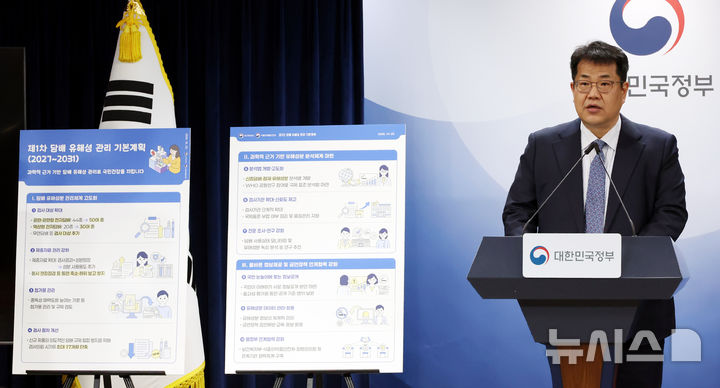
South Korea's government unveiled its first Tobacco Harm Management Basic Plan for 2027–2031 on October 29, 2026, proposing broader testing of vaping and heated tobacco products while excluding nicotine analogs such as 6-methyl nicotine. Synthetic nicotine came under tobacco regulation on April 24, and a June investigation found 6-methyl nicotine in 12 liquid inhalation products marketed as nicotine-free. Customs data released in September showed that imports of nicotine analog solutions fell 83.3%, from 12 metric tons in January–April to 2 metric tons in May–August. By September 20, imports had reached approximately 15 metric tons for the year, with 99.99% originating from China. Customs authorities have tightened pre-clearance testing and supply-chain documentation requirements, while the MFDS expects to complete its assessment of nicotine analog hazards by the end of 2026.
Regulations
Nov.04
Malaysia's Poisons Board Backs New Vape Nicotine Exemption After Unanimously Opposing 2023 Proposal
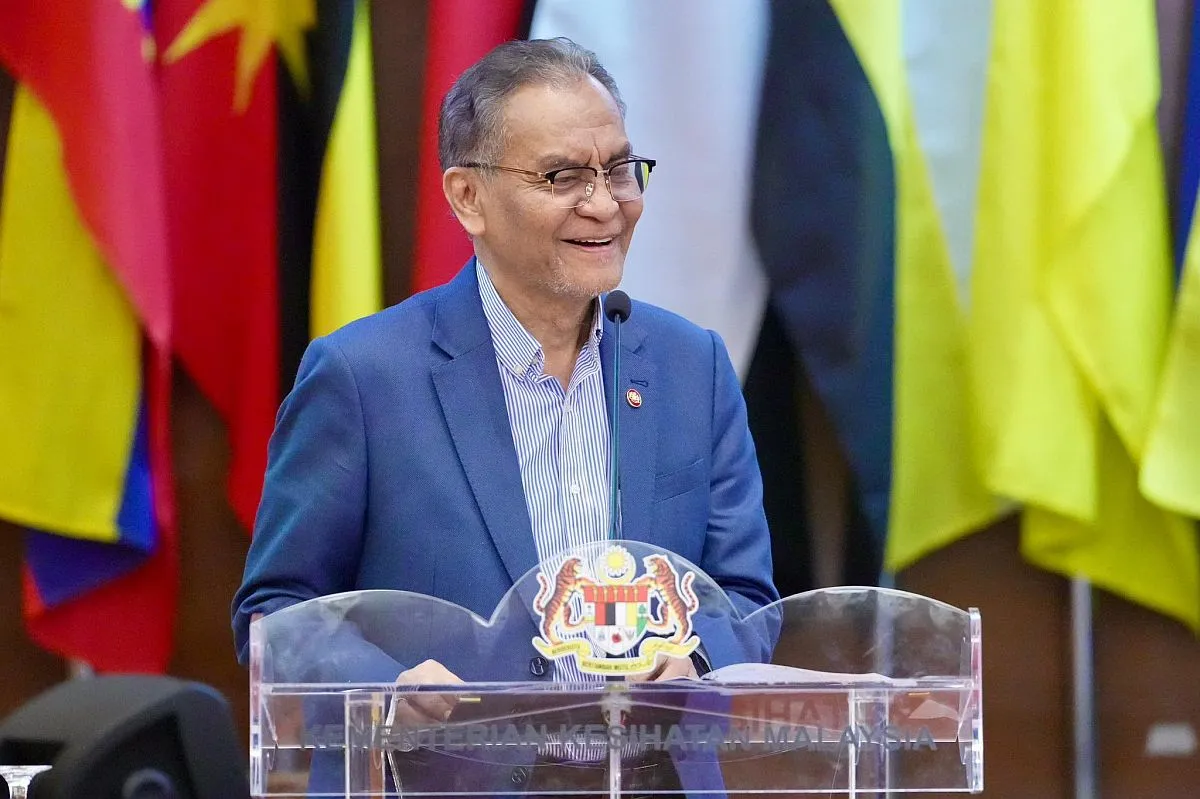
Malaysia's Poisons Board has endorsed Health Minister Dzulkefly Ahmad's proposal to exempt liquid nicotine used in vaping products from the Poisons List, according to a November 2, 2026, report by CodeBlue. The Board unanimously opposed a similar proposal in 2023, but the government proceeded with the exemption. The Kuala Lumpur High Court invalidated the 2023 decision in May 2026, and the government withdrew its appeal in August. No new ministerial order has been published. The development raises questions about the interaction between Malaysia's two regulatory frameworks and the treatment of RM354.51 million in excise duties collected on e-cigarette and vape products between May 2023 and June 11, 2026.
Regulations
Nov.03
NAS 2026 | Cliff Douglas: Risk Continuum Should Play a Central Role in Tobacco Policy
Cliff Douglas, a veteran U.S. tobacco-control and public health policy figure, told NAS 2026 that the “continuum of risk” should play a central role in tobacco policy. He called for clearer market pathways, stronger risk communication, differentiated regulation and enforcement, and said possible FDA reforms to PMTA reviews could be a “welcome correction” if they create a more efficient, predictable route for scientifically substantiated lower-risk products. Read 2Firsts’ on-site coverage.
Sep.26
Reynolds Puts Nearly 183,000 U.S. Contracted Outlets Under Age-Verification Rules, Covering 94% of Volume — Can It Shift an Unauthorized Vape Market?
Reynolds American says nearly 183,000 U.S. retail outlets are under contract, with its Retail Marketing Plan Contract covering about 94% of company volume and requiring point-of-sale age verification. The company combines those contracts with We Card, TruAge, NACS-linked infrastructure and POS integration, while enhanced Vuse Pro retail rules add ID scanning, purchase limits and stronger underage-sales accountability. The initial Vuse Pro rollout targets about 50,000 stores. The system is taking shape as unauthorized vapor products remain dominant in parts of the U.S. market: a 2026 study estimated they accounted for 69.4% of tracked brick-and-mortar e-cigarette dollar sales in December 2025.
Special Report
Oct.15
Special report|Indonesia's Vape Industry Has 200 Manufacturers and $1.7 Billion in Investment. Could a Regulatory Divide Derail Its Rise as the World's No. 2 Manufacturing Hub After Shenzhen?
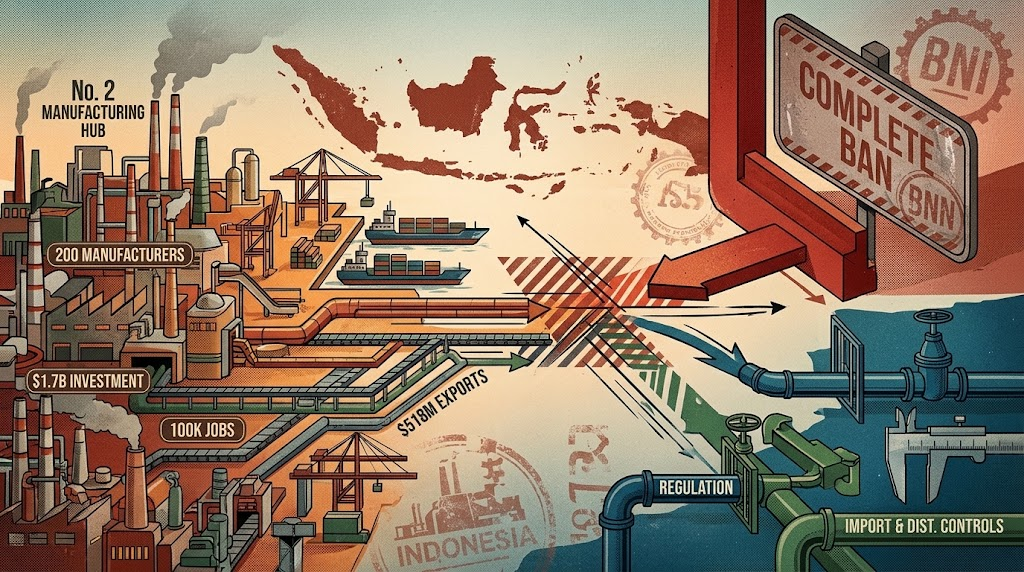
Indonesia's Ministry of Industry said at a November 3, 2026, policy forum that the country has about 200 electronic cigarette companies, Rp31 trillion (approximately $1.71 billion) in cumulative industry investment and around 100,000 jobs across the supply chain. The National Narcotics Agency is seeking a comprehensive ban on vape use and circulation, while the industry ministry favors tighter import, product-standard and distribution controls. Indonesia exported approximately $518 million in vaping products in 2025, and Chinese manufacturers including Smoore, GEEKVAPE and Jinjia Group have established local operations. An international logistics specialist interviewed by 2Firsts said more Chinese vape companies began production in Indonesia from the second half of 2025, accompanied by increased shipments of manufacturing equipment and investment in logistics facilities. The regulatory debate comes as Indonesia expands its role in international vaping manufacturing.
Special Report
Nov.05
Kumulus Vape2026 H1 Revenue Falls 8.3% but Profit Rises 24% as B2B Weakens and Consumer Channels Grow
French vaping company Kumulus Vape reported first-half 2026 revenue of €25.5 million, down 8.3% year over year, as its core B2B distribution business fell 11% to €21.6 million. B2C and store-network revenue rose 5.6% and 17.8%, respectively. Commercial margin increased to 26.3% from 21.7%, while net profit rose 24.1% to €0.8 million. The company attributed the profitability improvement to catalog optimization, logistics restructuring and the ramp-up of Labster, its in-house production unit for proprietary brands.
Market
Sep.17 by 2Firsts Perspectives