UK Disposable Ban: Definition and Penalty Details Disclosed

Regulations by 2FIRSTS.ai
Mar.12.2024
UK Disposable Ban: Definition and Penalty Details Disclosed
UK government plans to ban disposable e-cigarettes starting in April 2025, with penalties up to £200 for violators.

According to a draft regulation introduced by the UK government on March 11, 2024, disposable e-cigarettes will be banned across the UK starting in April 2025. Any retailer found in violation of this regulation will face a £200 fine and potential imprisonment. Once the regulation comes into effect, retailers caught selling disposable e-cigarettes will either be subject to a fixed penalty or receive a compliance/stop-sale notice to ensure they cease selling these products.


Any business that does not comply with the enforcement notice may face further fines or imprisonment. Enforcement officers will also have the power to enter stores, take photos, and seize suspected contraband items. This document is currently in the draft stage, which means that the relevant regulations may still change.


This regulation also provides a definition for disposable e-cigarettes.


  • A disposable e-cigarette refers to an e-cigarette that is designed to not be reused, including any (a) non-refillable, (b) non-rechargeable, or (c) non-refillable and non-rechargeable e-cigarette. 


  • In this regulation, an e-cigarette is considered non-refillable unless its design includes either (a) replaceable disposable containers that can be obtained separately, or (b) refillable containers. 


  • This includes coils that cannot be replaced by individual users during normal use, as well as any coils contained in disposable cigarette boxes or pipes that cannot be provided separately or replaced. 


The government also released an impact report predicting how this ban will affect profits for the entire retail industry. It is estimated that the losses in 2025 and 2026 will reach £648 million and £761 million respectively.


This figure was derived by multiplying the average price of disposable e-cigarettes by the projected annual sales volume. This number was then multiplied by 24%, which is the estimated profit margin, based on data from annual business surveys. However, this draft has faced criticism from the ACS.


The CEO of ACS, James Lowman, stated:


The idea that the government ban on disposable e-cigarettes will simply make them disappear is extremely naive. There are many fundamental issues with the impact assessment, the most significant being a serious underestimation of the financial impact on retailers of the ban on disposable e-cigarettes. Calculating the profit loss from the ban on disposable products using overall retail turnover completely misunderstands this category.


In both regulations and impact assessments, there is nothing to deter criminals and unlicensed vendors. They will continue to operate with impunity. Pretending that such measures can curb illegal transactions is nothing but a policy fantasy.


The government is continuing to accept comments and viewpoints on the draft proposal until March 25th.


We welcome news tips, article submissions, interview requests, or comments on this piece.

Please contact us at info@2firsts.com, or reach out to Alan Zhao, CEO of 2Firsts, on LinkedIn


Notice

1.  This article is intended solely for professional research purposes related to industry, technology, and policy. Any references to brands or products are made purely for objective description and do not constitute any form of endorsement, recommendation, or promotion by 2Firsts.

2.  The use of nicotine-containing products — including, but not limited to, cigarettes, e-cigarettes, nicotine pouchand heated tobacco products — carries significant health risks. Users are responsible for complying with all applicable laws and regulations in their respective jurisdictions.

3.  This article is not intended to serve as the basis for any investment decisions or financial advice. 2Firsts assumes no direct or indirect liability for any inaccuracies or errors in the content.

4.  Access to this article is strictly prohibited for individuals below the legal age in their jurisdiction.


Copyright


This article is either an original work created by 2Firsts or a reproduction from third-party sources with proper attribution. All copyrights and usage rights belong to 2Firsts or the original content provider. Unauthorized reproduction, distribution, or any other form of unauthorized use by any individual or organization is strictly prohibited. Violators will be held legally accountable.

For copyright-related inquiries, please contact: info@2firsts.com


AI Assistance Disclaimer


This article may have been enhanced using AI tools to improve translation and editorial efficiency. However, due to technical limitations, inaccuracies may occur. Readers are encouraged to refer to the cited sources for the most accurate information.

We welcome any corrections or feedback. Please contact us at: info@2firsts.com

Russia’s Vape Device Labeling Regime Enters Force: Registration Starts in September, Mandatory Coding in December
Russia's digital labeling regime for reusable e-cigarettes and similar personal vaping devices entered its first mandatory phase in September 2026. From September 1, manufacturers, importers and other market participants must register with the national Chestny ZNAK tracking system. From December 1, newly manufactured and imported covered devices will be required to carry digital identification codes and be reported as entering circulation. Russia has also issued new operational guidance for imports, marking the transition from a voluntary pilot to phased mandatory implementation.
Sep.15
How Investors Are Repricing the Global Tobacco Industry as Nicotine Markets Shift
How are investors reassessing the global tobacco industry as nicotine markets evolve? In an interview with 2Firsts, Charlie Chen, Head of Research at CCB International Securities, forecasts annual growth of 30–50% for nicotine pouches, outpacing vaping and heated tobacco. He examines how regulatory enforcement, shifting market shares and new business models are influencing company valuations. The report also explores differences between multinational tobacco groups and Chinese companies, drawing on insights from the New Approaches Summit on profitability, investment strategies and industry consolidation.
Nov.11
FDA Appoints Former Tobacco Enforcement Deputy Jessica Zeller as Director as Agency Weighs PMTA Framework Changes
The U.S. Food and Drug Administration (FDA) has named Jessica Zeller director of the Center for Tobacco Products' (CTP) Office of Compliance and Enforcement (OCE), effective November 1, 2026. Zeller, the office's inaugural deputy director, returns from medical device manufacturer Edwards Lifesciences with more than 20 years of regulatory and legal experience. The appointment follows CTP leadership changes and adjustments to tobacco regulation. Bret Koplow became permanent CTP director in September; the FDA revised enforcement priorities for unauthorized e-cigarettes and nicotine pouches in May and announced faster PMTA review procedures. On September 28, the agency said it would evaluate changes to the existing PMTA regulatory framework, including potential rulemaking to replace it.
FDA
Oct.20 by 2Firsts Perspectives
NAS 2026 | Former FDA Tobacco Chief Mitch Zeller Calls for Shift From “End Game” to “End State”
At the 2026 New Approaches Summit in New York, former FDA Center for Tobacco Products Director Mitch Zeller called for the tobacco harm reduction debate to shift from the traditional “end game” toward defining a desired “end state.” He also highlighted unresolved concerns around dual use, argued that biomarkers of exposure may be more meaningful than cigarettes-per-day in assessing risk reduction, and said nicotine misperceptions remain a major barrier to public health progress.
Sep.25
Iowa Sets November 16 Vape Directory Launch: Unlisted Products Face Sales Ban, Manufacturers $1,000 Daily Fines per Product
Iowa plans to publish its first vapor products directory on November 16, 2026, after which products not listed will be prohibited from sale or offer for sale in the state. The Department of Revenue expects to begin penalty enforcement on December 17, following an initial 21-business-day period focused on compliance education. Under House File 2677, retailers, distributors and wholesalers selling unlisted products face civil penalties of $300 per product per day, while manufacturers face $1,000 per product per day. Eligibility extends to FDA-authorized products and certain products meeting historical marketing and pending PMTA requirements. The directory program resumed after a federal appeals court vacated a preliminary injunction in July 2026.
Regulations
Nov.05
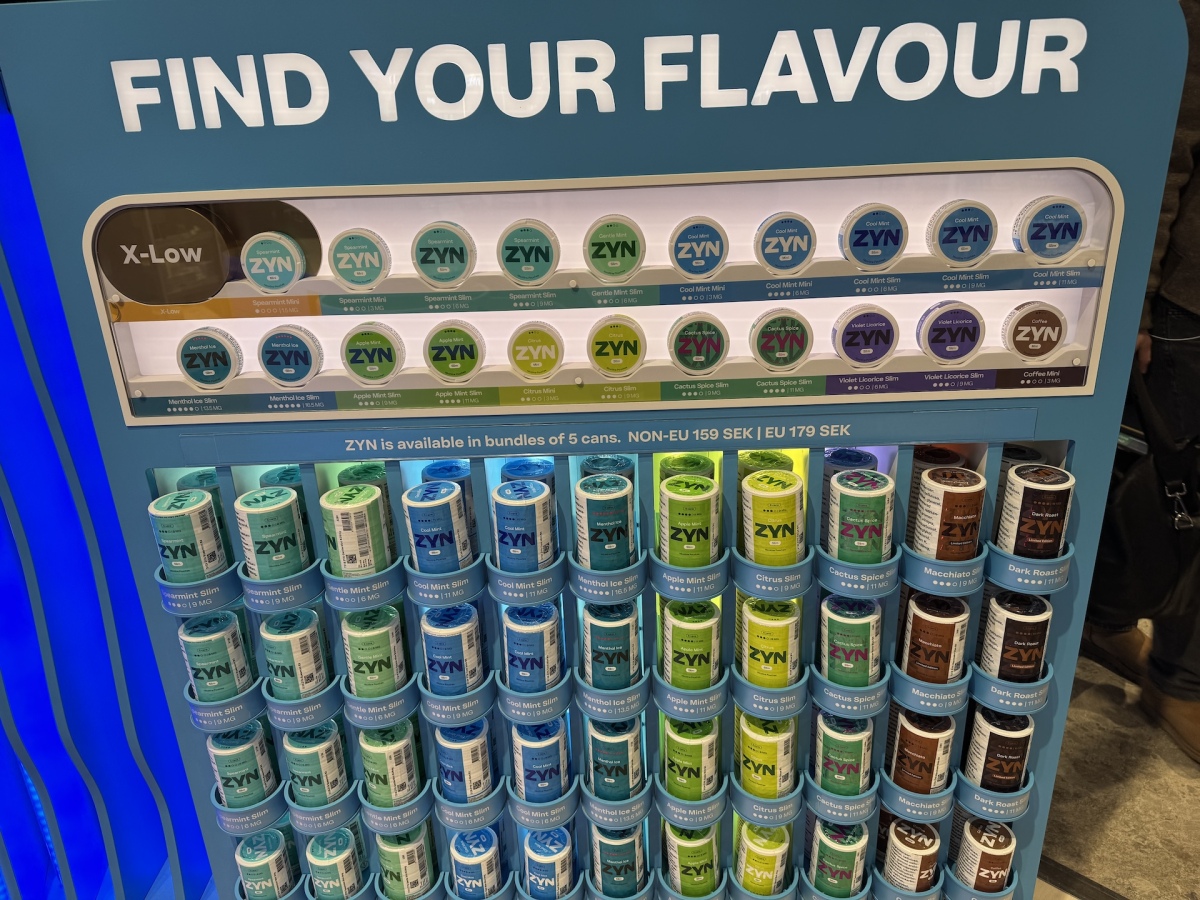
Sweden Finds ZYN Ingredient Labels Noncompliant Over Generic Flavoring Disclosure, Swedish Match Faces SEK 2 Million Monthly Penalty
Sweden's Public Health Agency has found ingredient labels on ZYN nicotine pouches sold by Philip Morris International subsidiary Swedish Match to be noncompliant, according to Dagens industri. The products' packaging listed 10 to 13 ingredients, compared with 11 to 42 in regulatory submissions, with multiple flavoring ingredients grouped under the generic term "aromer." The agency ordered corrective action, warning of a conditional penalty of SEK 2 million per month for noncompliance. The order applies only to products manufactured after the decision becomes legally effective and does not require recalls. Swedish Match disputes the agency's interpretation and plans to appeal.
PMI
Oct.22