Key Points
- PMTA submissions surged early, then collapsed. FDA received about 26.6 million ENDS PMTAs between FY2020 and FY2022, while annual filings dropped sharply in subsequent years.
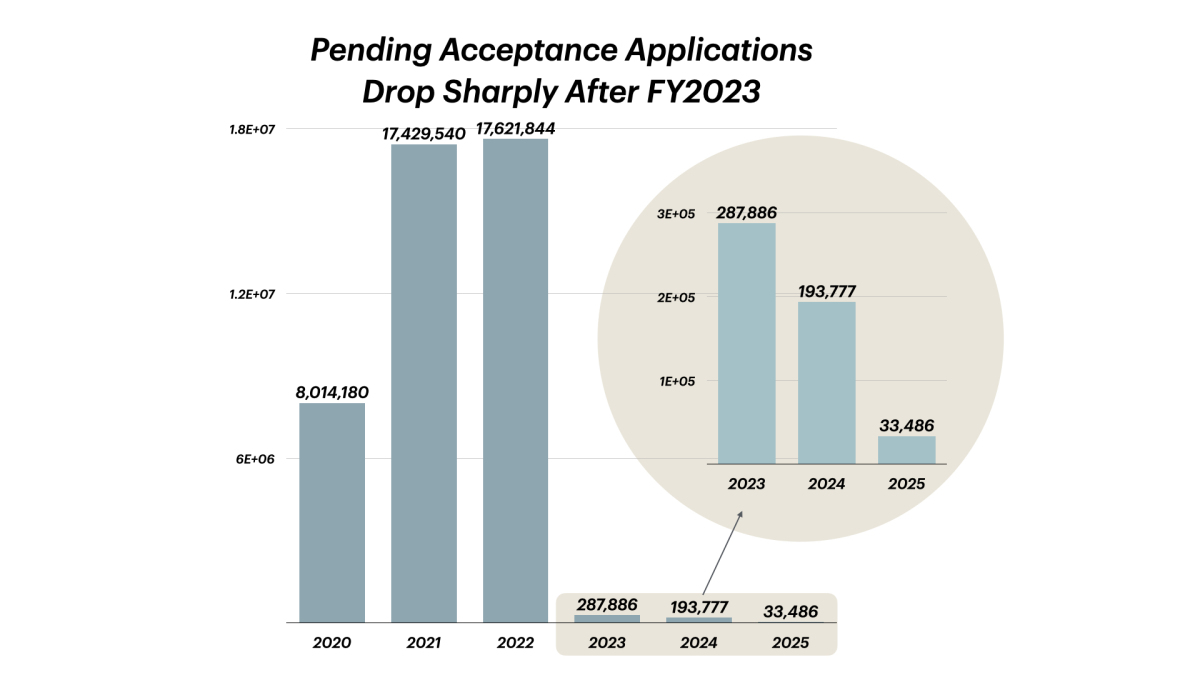
- Backlogs accumulated primarily at the Acceptance stage. During the peak period, millions of applications remained pending acceptance rather than entering substantive scientific review.
- FY2023 was dominated by front-end resolutions. More than 17 million Refuse-to-Accept decisions were issued in FY2023, alongside a limited number of new submissions.
- Pending acceptance volumes have since fallen. FDA data show a much smaller pool of applications awaiting acceptance decisions in FY2024 and FY2025.
2Firsts, Feb 06, 2026
For years, e-cigarette companies seeking access to the U.S. market have shared a common assumption: the FDA’s Premarket Tobacco Product Application (PMTA) process is slow, measured in years rather than months, and highly uncertain in outcome. Many manufacturers have treated PMTA as a three-to-five-year project—or longer, delaying or avoiding meaningful investment in full applications altogether.
Newly released FDA data is beginning to challenge that view.
In December 2025, the U.S. Food and Drug Administration updated its Tobacco Product Applications: Metrics & Reporting, providing a comprehensive look at PMTA activity for e-cigarettes from fiscal year 2020 through fiscal year 2025. The figures show that the agency has now taken regulatory action on the vast majority of applications submitted during the program’s early years, with the long-standing backlog showing clear signs of retreat.
How the Backlog Built—and How It Was Cleared
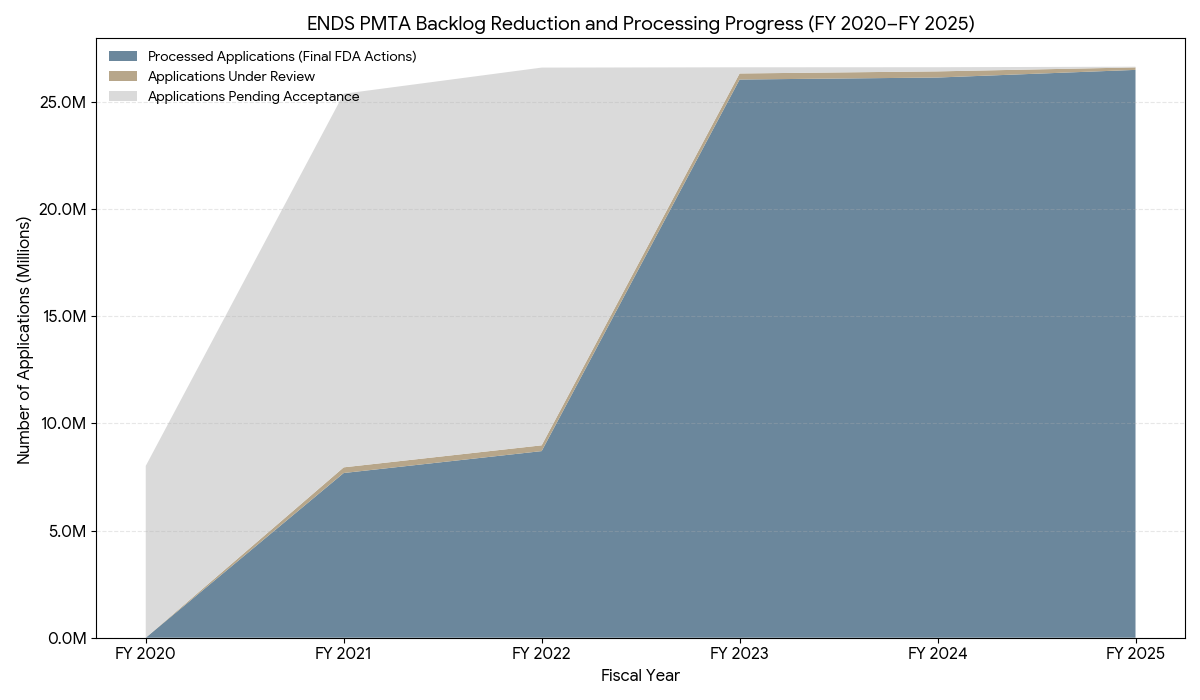
Between fiscal years 2020 and 2022, the FDA received roughly 26.6 million PMTA submissions for e-cigarette products. A large share of those filings arrived in concentrated waves ahead of key regulatory deadlines, rapidly overwhelming the system.
The turning point came in fiscal year 2023.
That year, the FDA issued approximately 17.27 million Refuse-to-Accept (RTA) decisions for e-cigarette applications, while receiving only about 14,000 new submissions. The scale of the disparity makes clear that the agency’s focus had shifted from processing new filings to clearing historical inventory.
The same period marked a peak for disposable flavored e-cigarettes in the U.S. market. Before the PMTA backlog was systematically addressed, uncertainty around regulatory outcomes meant that many market participants did not treat PMTA compliance as an immediate priority.
By fiscal year 2024 (October 2023 through September 2024), annual e-cigarette PMTA submissions had fallen to 3,631, the lowest level in six years, easing pressure at the front end of the review process.
How Acceptance Backlogs Shaped Market Behavior
During the submission surge, millions of e-cigarette PMTAs remained stuck at the Acceptance stage—neither formally accepted for review nor explicitly refused. From a company’s perspective, time passed without clarity, even though many applications had not entered substantive scientific review.
That front-end congestion began to influence market behavior.
Industry participants say that around 2024, some companies submitted PMTAs not to pursue acceptance, but primarily to obtain a Submission Tracking Number (STN)—a filing identifier needed for export documentation and U.S. customs declarations.
At the pace prevailing at the time, it often took six months or longer for an application that was not designed to meet Acceptance standards to receive an RTA. For disposable products with short commercial lifecycles, that window was frequently long enough to cover an entire product run.
As pending applications were subsequently cleared, that procedural window closed.
Timelines Begin to Compress
By fiscal year 2025, FDA data show that the number of e-cigarette PMTAs pending acceptance had dropped to 33,486, down from 193,777 in fiscal year 2024 and 287,886 in fiscal year 2023.
The decline indicates that far fewer applications are now lingering in a pre-decision state.
At the same time, companies report a noticeable acceleration in Acceptance-stage decisions. Since the second half of 2025, the time from submission to an Accepted or RTA determination has typically shortened to around one month, with some cases resolved more quickly.
Technology may be playing a role. In May 2025, the FDA announced it had completed its first AI-assisted scientific review pilotand began deploying artificial intelligence tools across the agency. By year-end, FDA leadership said it had become the first federal regulator to implement AI on an institution-wide basis, using the technology to support document intake, data analysis and reviewer workflows.
While the agency has stressed that AI does not replace scientific judgment, officials have said the tools are intended to reduce administrative burden and repetitive tasks. Industry participants say the shift likely contributed to faster front-end processing of PMTA submissions in late 2025.
Entering the Next Phase
Based on the data, industry expectations around PMTA timelines are beginning to adjust. As historical backlogs are systematically cleared, review processes—particularly at the Acceptance and front-end decision stages—are moving more quickly.
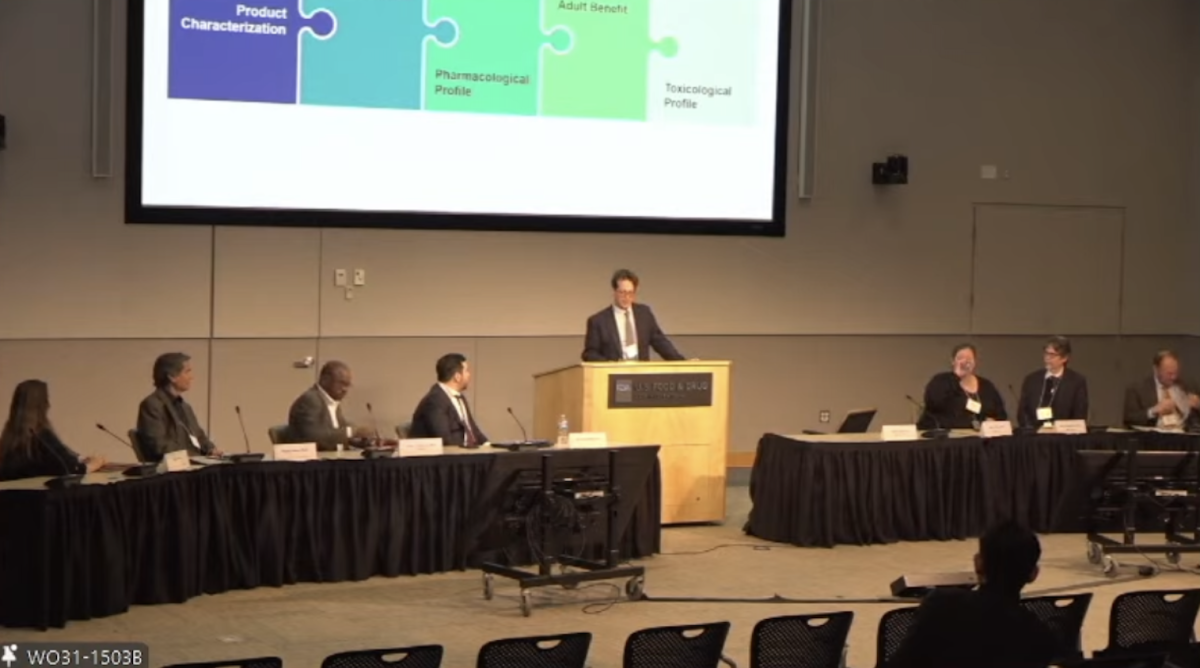
At the same time, the FDA has announced a forthcoming PMTA roundtable focused on small e-cigarette manufacturers, a move widely seen as a signal that, under existing standards, future approvals may not be limited exclusively to a small group of large companies.
For industry participants, two long-held assumptions are now under pressure: PMTA is no longer widely expected to default to multi-year timelines of three years or more, and Marketing Granted Orders may increasingly extend beyond the largest players in the market.
This document has been generated through artificial intelligence translation and is provided solely for the purposes of industry discourse and learning. Please note that the intellectual property rights of the content belong to the original media source or author. Owing to certain limitations in the translation process, there may be discrepancies between the translated text and the original content. We recommend referring to the original source for complete accuracy. In case of any inaccuracies, we invite you to reach out to us with corrections. If you believe any content has infringed upon your rights, please contact us immediately for its removal.