Key Points:
- Leadership change: China’s tobacco regulator has appointed Yao Laiying to its top internal leadership post, with corresponding government appointments expected to follow through separate procedures.
- Fiscal background: Yao spent about 27 years in local public finance, later held local government and state-asset management roles, and most recently served as a deputy head of the State Taxation Administration.
- System structure: China’s tobacco sector operates under an integrated “regulator + operator” model, with STMA serving as the administrative authority and CNTC as the commercial entity under the same management framework.
- Reform focus: Yao’s appointment has renewed attention on three long-running issues: fiscal and tax reform, monopoly structure reform, and the future positioning of emerging tobacco and nicotine products.
2Firsts
Shenzhen, March 20, 2026
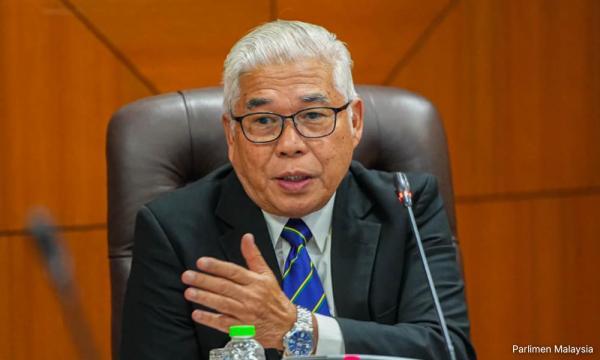
China’s tobacco regulator has undergone a key leadership change, with Yao Laiying appointed to the top internal leadership post at the State Tobacco Monopoly Administration (STMA), replacing Zhang Jianmin, according to an official announcement issued on March 20.

Zhang Jianmin had served as head of the State Tobacco Monopoly Administration and general manager of China National Tobacco Corporation since July 2018.
In China’s institutional appointment system, internal leadership posts and government posts typically proceed through separate procedures. Under established practice, Yao is expected to move through the relevant government appointment process to succeed Zhang Jianmin as head of the State Tobacco Monopoly Administration and general manager of China National Tobacco Corporation. That means the March 20 announcement reflects one key part of the transition, while the corresponding government appointments may be disclosed separately.
The significance of the move extends beyond personnel alone. China’s tobacco system is not simply an industry regulator. It sits at the intersection of administrative oversight, state monopoly management, commercial operations and fiscal contribution. Yao’s arrival is therefore being watched not only as a leadership reshuffle, but also as a development that may sharpen attention on tax management, institutional governance and future product policy.
A Tax and Fiscal Official Takes Charge
Yao’s background helps explain why the appointment has drawn attention.
His career has been concentrated largely in public finance and taxation. He spent about 27 years in local fiscal work, rising from junior roles to senior finance leadership. He then spent roughly five years in various local government posts, including positions related to state-asset management. From May 2021 to March 2026, he served as a deputy head of the State Taxation Administration, where he ranked third in the publicly listed leadership order on the agency’s official website.
That profile is notable because it differs from that of a conventional industry operator. Rather than emerging from a long internal tobacco management track, Yao built his career in fiscal administration, tax governance and state-asset oversight.
Some Chinese self-media accounts have also described Yao as having been the youngest vice mayor in Tianjin when he took that post in 2018, and later the youngest deputy head of the State Taxation Administration when he assumed that role in 2021. Those descriptions come from non-official accounts, but they add to the picture of an official whose rise through fiscal and administrative systems was relatively fast.
The appointment does not establish that any specific reform is imminent. But Yao’s background in finance, taxation and state-asset management is likely to shape how the move is interpreted by industry observers.
How China’s Tobacco System Is Structured
To understand why the appointment matters, it is necessary to understand how China’s tobacco system is organized.
STMA functions as the government administrative authority for the sector. China National Tobacco Corporation (CNTC), by contrast, is the commercial operating entity. The two have different formal roles, but they operate within the same overarching management structure. In practice, the head of STMA also serves as the general manager of CNTC.
That arrangement is rooted in the institutional design China built in the 1980s. In 1981, the State Council decided to place the tobacco industry under state monopoly. In 1982, CNTC was established to oversee unified business operations. In 1984, STMA was created, formalizing what is often described as a “one team, two nameplates” structure. In 1991, the Tobacco Monopoly Law of the People’s Republic of China gave the system a formal legal basis.
Later adjustments changed parts of the operating model without altering the broader framework. In the early 2000s, China’s tobacco sector carried out enterprise reforms that separated industrial companies, responsible for manufacturing and brands, from commercial companies, which control distribution channels. That structure remains in place today.
This institutional design helps explain why debates about the sector’s future often extend beyond product policy or sales trends. China’s tobacco market combines regulatory authority and commercial organization within a single management architecture, making questions of structure, governance and fiscal design central to any discussion of reform.
A Broader Industry Parallel
The appointment also invites comparison with a broader pattern in the global tobacco industry, where several major companies are now led by executives with strong finance credentials.
Philip Morris International Chief Executive Jacek Olczak previously served as chief financial officer. BAT Chief Executive Tadeu Marroco also rose from the finance function, as did Imperial Brands Chief Executive Lukas Paravicini.
The comparison is not exact. China’s tobacco system is a state monopoly rather than a listed multinational corporation, and its leadership combines regulatory and commercial responsibilities in ways international tobacco companies do not. Still, the overlap is notable. In both cases, leadership of complex tobacco organizations appears increasingly associated with experience in finance, resource allocation, institutional coordination and long-cycle management.
For that reason, the issues Yao inherits are likely to extend well beyond tax collection alone.
Three Reform Questions to Watch
Yao’s appointment does not mean reform has begun. But it does bring renewed focus to three long-running questions.
1. Fiscal and Tax Reform
The first is tobacco’s fiscal role.
China’s tobacco industry remains one of the country’s most important sources of public revenue. According to data released by STMA in January 2026, the industry generated RMB 1.657 trillion in combined taxes and profits in 2025, up 3.5% year on year. Total fiscal contributions reached RMB 1.58 trillion, up 2.3%.
Based on Ministry of Finance data showing China’s general public budget revenue at RMB 21.6045 trillion in 2025, the tobacco industry accounted for roughly 7.3% of national fiscal revenue.
Those figures help explain why tobacco tax policy draws attention whenever broader consumption-tax reform returns to the agenda. During China’s 2026 Two Sessions, consumption-tax reform was again raised. In the tobacco sector, fiscal reform is not only about tax rates. It also touches on central-local revenue distribution and on how tax revenue is allocated between tobacco-producing regions and tobacco-consuming regions.
Given Yao’s long experience in public finance and taxation, this is likely to be one of the most closely watched areas of his tenure.
2. Structural Reform
The second question concerns the structure of the tobacco monopoly itself.
For years, one recurring theme in academic discussion has been whether China’s tobacco system should eventually move toward clearer separation between government functions and enterprise operations, similar to reforms seen in other sectors in China that once combined administrative and commercial functions, such as railways and the postal and telecommunications sectors. In those sectors, separating government and enterprise did not weaken regulatory capacity or industrial development. Instead, reform was followed by continued rapid growth in areas such as high-speed rail and telecommunications.
Those experiences have provided scholars with reference points when considering whether a similar path could be applied to China’s tobacco system. That question has remained part of the long-running debate surrounding the tobacco monopoly system.
There is no indication in the March 20 announcement that such restructuring is now under way. Still, Yao’s appointment may renew attention on governance efficiency, administrative coordination and the long-standing question of how the current integrated structure should evolve.
3. The Positioning of Emerging Tobacco Products
The third question concerns emerging tobacco and nicotine categories.
As newer product categories continue to develop globally, China still faces unresolved questions over how some of those products should be positioned in the domestic market. One issue is whether certain categories should remain prohibited, including heated tobacco products and nicotine pouches, or whether some may eventually be incorporated into the domestic system under a defined regulatory and tax framework.
That remains an open policy question rather than a defined reform agenda. There is no clear sign that the leadership change will directly alter the current approach. But as China weighs the relationship between traditional tobacco revenue, emerging product categories and future market structure, the issue is unlikely to fade.
For now, the clearest conclusion is also the most restrained one. China has placed a senior fiscal and tax official at the center of one of its most important state-administered sectors. That does not by itself determine the direction of future reform. It does, however, draw fresh attention to how tax policy, institutional design and product strategy may be debated in the next phase of China’s tobacco governance.
For continuing coverage of China’s tobacco regulation, industry developments and market trends, follow 2Firsts.
Cover image generated by AI
Further reading: