Disclaimer:
This article is published by 2Firsts with the author’s permission. The views expressed are solely those of the author and do not necessarily reflect the views of 2Firsts.
Key Points
In this article, the author presents the following core insights, examining how outdated measurement frameworks are reshaping regulation, taxation, and value creation in the nicotine industry:
• The Breakdown of Volume Metrics: Traditional units such as cigarette sticks, milliliters, and “cigarette equivalents” no longer correspond to real nicotine exposure, user behavior, or economic value in modern nicotine products.
• From Quantity to Rate: In contemporary nicotine systems, dependence, satisfaction, and risk are increasingly driven by delivery speed rather than nominal content, exposing a growing mismatch between biological reality and regulatory logic.
• Nicotine Flux as a Missing Dimension: The concept of nicotine flux offers a more coherent way to compare delivery dynamics across product categories, highlighting why static, volume-based proxies are structurally insufficient.
• The Efficiency Paradox: Advances in delivery efficiency can both enable harm reduction and intensify dependence, creating a central paradox that current measurement and regulatory frameworks are ill-equipped to manage.
• Systemic Consequences: Persisting with volume-based measurement distorts regulation, taxation, and financial interpretation—producing fiscal blind spots, valuation uncertainty, and a growing “volume illusion” in capital markets.

By Alan Zhao
Published: February 2026
I.Introduction: When a Financial Report Exposes a Measurement Fault
On February 6, 2026, Philip Morris International (PMI) released its full-year 2025 financial results. Once again, the headline was clear: smoke-free products had become the company’s primary growth engine, accounting for more than 40% of total net revenues. For a company historically defined by combustible cigarettes, this marked not just a strategic transition, but a structural one.
Yet alongside this transformation, PMI—and much of the global tobacco industry—continues to rely on a familiar narrative device: the cigarette-equivalent volume (CEV). By translating non-combustible products into an equivalent number of cigarette sticks, companies attempt to preserve continuity for investors, regulators, and analysts accustomed to thinking in packs and sticks.
This practice raises an increasingly uncomfortable question. When growth no longer comes from cigarettes, why do we still insist on understanding it through cigarette-based units?
The problem is not that CEV is misleading by design. It exists because the industry, financial markets, and regulatory systems lack a better common language. But as smoke-free products become economically central rather than marginal, the limitations of this language are becoming impossible to ignore. Revenue, profit contribution, user behavior, and health risk no longer move in parallel with “equivalent” units.
At its core, this is not a debate about corporate disclosure. It is a deeper question about how nicotine consumption is measured, regulated, and understood. When the unit of measurement no longer corresponds to biological exposure, consumer experience, or economic value, the result is not merely analytical confusion, but systematic misinterpretation of where the industry is heading.
II. Why Counting Cigarettes Once Made Sense
For more than a century, the cigarette served as the fundamental unit of the nicotine economy. It functioned as a shared statistical “atom” across public health, taxation, regulation, and corporate finance—not by accident, but because product design, user behavior, and institutional needs aligned.
Combustible cigarettes delivered nicotine in a relatively consistent manner. Combustion, inhalation, and rapid pulmonary absorption produced broadly comparable exposure profiles across brands and markets. While yields varied, the overall delivery pattern was stable enough for a cigarette stick to function as a practical proxy for exposure and risk.
This consistency made governance possible at scale. Counting sticks enabled excise taxes to be levied efficiently, epidemiological trends to be tracked over time, and financial performance to be compared across markets. The system worked not because it was perfectly precise, but because deviations between nominal consumption and biological exposure were limited and predictable.
This historical success explains why the framework persists. Institutions tend to retain tools that once minimized complexity and enforcement costs. The challenge facing the nicotine industry today is not that this framework was flawed from the outset, but that it was optimized for a delivery system that no longer defines the market.
III. When the Measurement Framework Breaks Down
The cigarette-based measurement framework did not collapse overnight. It eroded gradually as new nicotine products entered the market with fundamentally different delivery characteristics—yet were still forced into the same accounting logic.
E-liquids measured in milliliters, heated tobacco units counted by sticks, nicotine pouches sold by sachets, and disposable devices marketed by “puff counts” all represent attempts to render heterogeneous products administratively legible. These units satisfy logistical needs, but they are comparable only on paper.
Biologically and behaviorally, they describe entirely different exposure mechanisms. A milliliter of e-liquid does not correspond to a fixed amount of nicotine absorbed. A puff is not a standardized event. A nicotine pouch labeled by milligram content may deliver vastly different systemic exposure depending on formulation and oral chemistry.
The result is institutional incomparability. Products are treated as equivalent because they must be, not because they are. Conversion conventions such as cigarette-equivalent volumes preserve surface continuity, but they were never designed to reflect biological exposure or user experience.
What is failing, therefore, is not a single metric, but the assumption behind it: that nicotine consumption can still be meaningfully understood through static physical units. In a market defined by engineered delivery systems and adaptive user behavior, that assumption no longer holds.
IV.Regulation Did Not Fail—It Measured the Wrong Thing
Most contemporary nicotine regulation still rests on an assumption inherited from the cigarette era: that nominal quantity—milligrams of nicotine, milliliters of liquid, or number of units sold—serves as a reasonable proxy for exposure and risk.
This assumption has become increasingly fragile. Nicotine exposure is shaped by the interaction between formulation, device characteristics, and user behavior. A low-concentration product used at high power may deliver more nicotine per unit time than a higher-concentration product used conservatively. When users switch to lower nominal strength products, they often attempt to compensate by increasing frequency or intensity—but such compensation is typically incomplete, altering satisfaction and usage patterns.
These dynamics reveal a structural flaw in volume- and concentration-based regulation. Rules designed to reduce harm by limiting nominal content may incentivize engineering and behavioral workarounds, shifting risk rather than reducing it. The regulatory system remains active, but the variables it controls no longer map cleanly onto the outcomes it seeks to influence.
This is not a failure of intent. It is a failure of dimensionality. Regulators are attempting to govern a dynamic, rate-based phenomenon using static, quantity-based tools.
V. From “How Much” to “How Fast”: Nicotine as a Rate-Based Commodity
For much of the twentieth century, nicotine was treated as a quantity-based commodity. That world no longer exists.
What increasingly determines dependence, satisfaction, and potential harm is not merely how much nicotine is present, but how quickly and repeatedly it is delivered. Nicotine has become a rate-based commodity, shaped by timing, intensity, and rhythm rather than volume alone.
Different products now operate on fundamentally different delivery schedules. Combustible cigarettes produce sharp spikes followed by rapid decline. Electronic nicotine products allow delivery speed to vary with device power, formulation, and user behavior. Oral products such as nicotine pouches deliver slower, sustained exposure, yet their absorption rate can be substantially altered through chemical design.
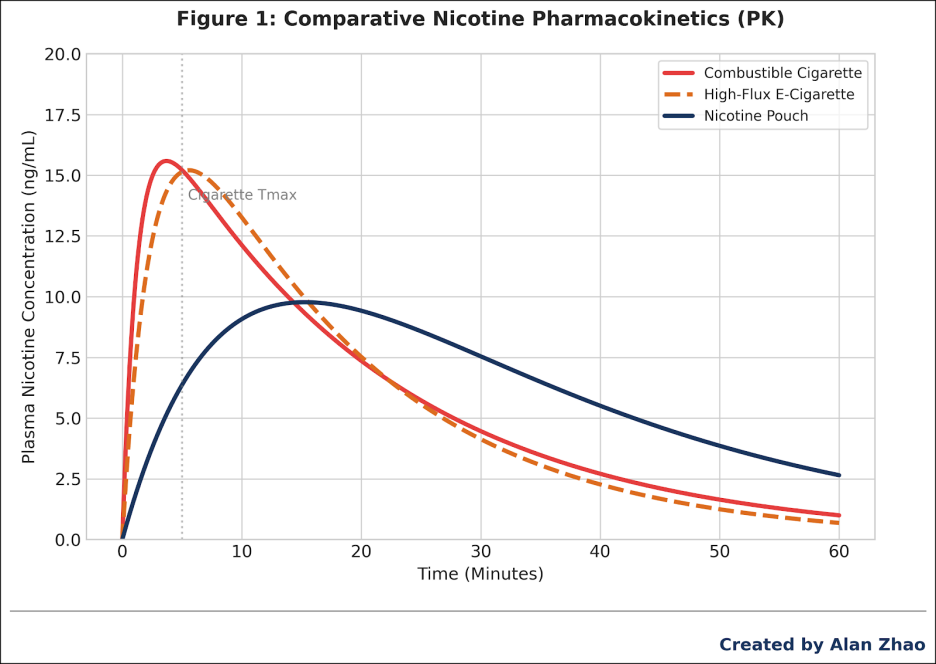
Figure 1: Comparative Nicotine Pharmacokinetics (PK).
Note: A conceptual comparison of plasma nicotine profiles, illustrating typical differences in delivery speed and duration between product categories. Note: Curve shapes are schematic and intended to reflect typical pharmacokinetic patterns reported across clinical studies; they are not derived from a single experimental dataset (3, 4). Created by Alan Zhao.
Source: Pharmacokinetic comparison based on data from Nicotine Consumption Research: Pouches vs. Cigarettes and E-Liquid to Cigarette Equivalence Research.
In scientific literature, this rate dimension is often captured by the concept of nicotine flux—the speed at which nicotine can be delivered under real-world conditions, shaped jointly by formulation and device performance (1,2). Ignoring this dimension is akin to measuring a flood by water level alone while neglecting current velocity.
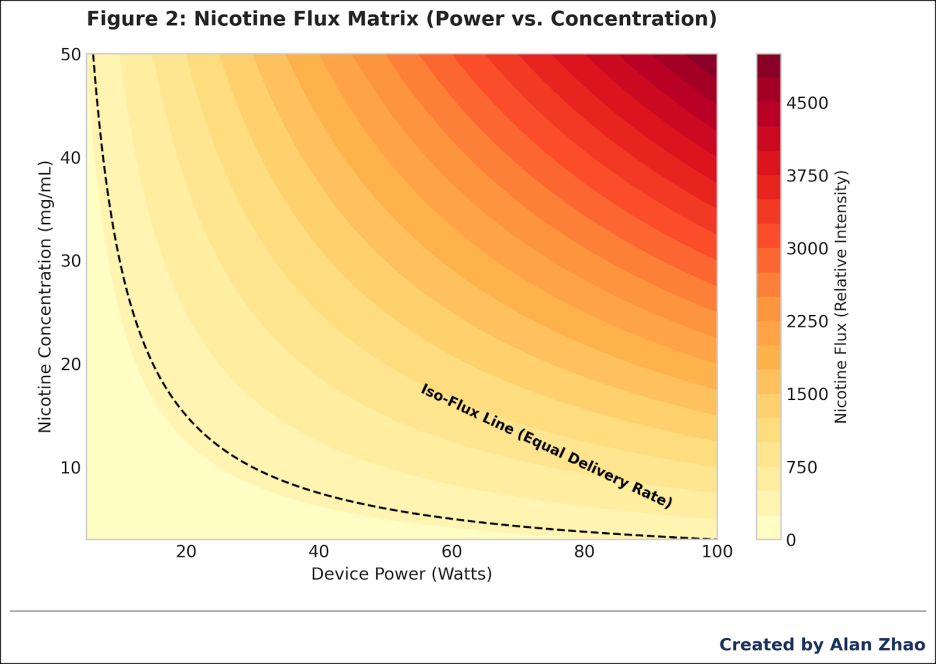
Figure 2: The Nicotine Flux Matrix.
Note: This matrix illustrates how device power and nicotine concentration jointly shape the potential delivery rate (flux). Note: The relationship where Flux ∝ Concentration × Power is a simplified representation for conceptual clarity; actual flux in real-world use is further influenced by atomization efficiency, coil resistance, airflow, and user topography (1, 2). Created by Alan Zhao.
Source: Concept of "Nicotine Flux" adapted from Talih S, et al. (2016) and the Nicotine Conversion Framework Impacts Analysis report.
Delivery speed matters because dependence is highly sensitive to rate. Faster delivery reinforces habitual use more strongly than slower delivery, even when total intake is similar (3). Traditional units capture quantity, but remain largely silent on tempo.
Once nicotine is understood as a rate-governed product, a critical implication follows: any regulatory, fiscal, or financial framework focused exclusively on static quantities is observing the market from the wrong dimension.
VI. Nicotine Pouches: The Final Straw for Volume-Based Measurement
If electronic cigarettes exposed the limits of volume-based thinking, nicotine pouches remove any remaining ambiguity.
Nicotine pouches involve no combustion, no heating, and no inhalation. What remains is chemistry, physiology, and time. Yet they demonstrate that labeled nicotine content alone is a poor predictor of exposure. Products with identical milligram content can produce markedly different systemic nicotine levels depending on formulation and oral absorption dynamics (4,5).
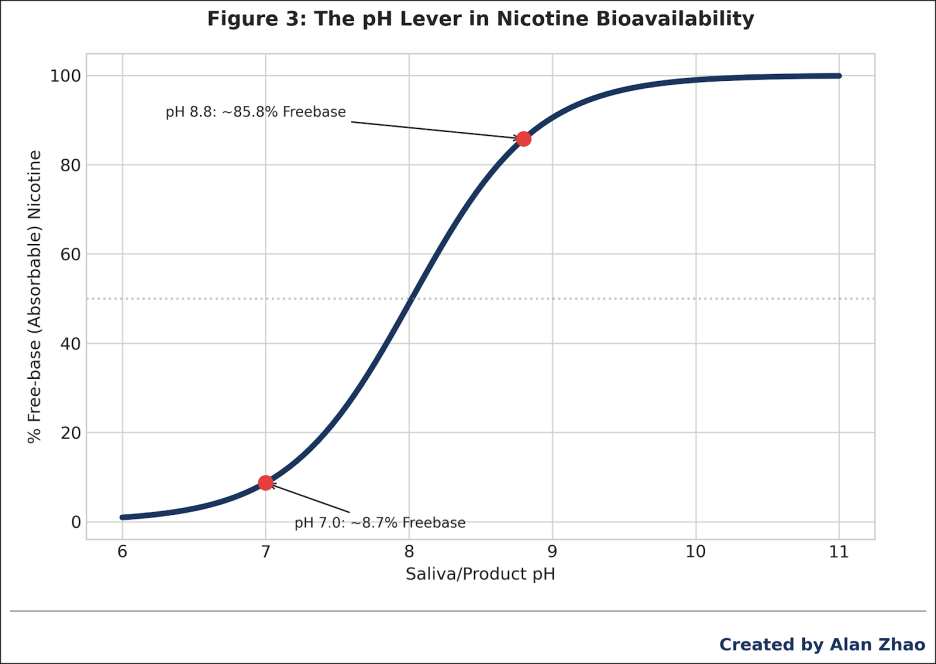
Figure 3: The pH Lever in Nicotine Bioavailability.
Note: Based on the Henderson–Hasselbalch relationship, demonstrating how pH shifts the proportion of unprotonated, absorbable free-base nicotine. Note: Assumes nicotine pKa ≈ 8.02; values are illustrative of mucosal absorption environments (6). Created by Alan Zhao.
Source: Chemical principles derived from the Nicotine Conversion Framework Impacts Analysis and Nicotine Consumption Research reports.
One key factor is pH. Basic acid–base chemistry, commonly described through the Henderson–Hasselbalch relationship, explains how formulation-driven changes in pH alter the proportion of nicotine in its absorbable form, modifying delivery efficiency without changing labeled content (6).
Nicotine pouches therefore expose the logical limit of quantity-based measurement. When chemistry alone can reshape delivery profiles, the premise that risk can be inferred from physical quantity collapses. They make explicit what electronic products already implied: the core variable of interest has shifted from quantity to rate.
VII . The Efficiency Paradox: When “Better Delivery” Is Not Always Better
The engineering transformation of nicotine has produced a central contradiction. We are becoming increasingly capable of delivering nicotine faster, more precisely, and with less friction. Yet whether this rising efficiency ultimately serves public health or amplifies dependence and exposure remains fundamentally unresolved.
1. Efficiency as the Engine of Harm Reduction
From a Tobacco Harm Reduction (THR) perspective, delivery efficiency is not optional—it is a prerequisite. Combustible cigarettes have proven difficult to displace not because of higher nicotine content, but because combustion delivers nicotine with exceptional speed and immediacy. When smoke-free alternatives deliver too slowly, smokers often fail to achieve adequate pharmacological compensation, leading to persistent dual use or eventual relapse. In this context, improved delivery efficiency is a necessary condition for large-scale substitution away from smoking.
2. Efficiency as a Source of Dependence Risk
The challenge lies in the fact that nicotine’s reinforcement potential is strongly influenced by the speed at which it reaches the brain. Steeper exposure curves tend to generate stronger reinforcement signals. As engineering advances compress delivery timelines and stabilize exposure, products may increase switching effectiveness while simultaneously expanding the window of dependence risk. A product that is easier to adopt is not necessarily easier to abandon.
3. The Structural Risk of Exposure Creep
A common assumption is that high-efficiency products reduce total intake by satisfying cravings more quickly. Behavioral and biological dynamics often complicate this view. Faster delivery can accelerate tolerance formation, while low-friction, discreet use removes many of the temporal and spatial constraints associated with traditional tobacco consumption. When satisfaction is reliable and access is continuous, the outcome is not always moderation, but a gradual expansion of total exposure.
4. Blind Engineering in a Measurement Vacuum
The deeper systemic risk is that this efficiency race is unfolding in a measurement environment that remains largely volume-bound. Current regulatory frameworks still emphasize nominal content and physical quantity, offering limited visibility into delivery rate as a governing variable. As a result, engineering competition accelerates in the shadows, while shifts in reinforcement intensity and cumulative exposure remain poorly captured. When “rate” cannot be measured, the boundary of “efficiency” cannot be defined—and better delivery becomes a high-speed contest without brakes.
VIII. The Systemic Cost of Mismeasurement
If the efficiency paradox exposes a technical tension—where faster delivery can enable harm reduction while simultaneously expanding dependence—the institutional consequence is a growing governance vacuum. What happens when a market reshaped by delivery rate continues to be measured, taxed, and regulated through volume-based proxies?
1. Regulatory Mismatch
Systems that prioritize nominal content increasingly govern the wrong behaviors. Engineering choices, formulation tweaks, and usage design become tools of regulatory arbitrage—methods for navigating rules rather than reducing risk. In such an environment, risk is not eliminated; it is displaced or rendered opaque.
2. The Fiscal Blind Spot
This misalignment is most acute in taxation. Traditional excise regimes rely on physical quantity—weight or volume—as a proxy for consumption intensity. That logic fractures once engineering elevates delivery efficiency. A lightweight nicotine pouch, optimized through pH-related mechanisms, can deliver pharmacological satisfaction comparable to products many times its mass. By persisting with volume-based taxation, governments effectively grant an implicit subsidy to delivery efficiency. The result is a fiscal trap: structural revenue leakage for the state and an artificial competitive advantage for high-potency engineering.
3. Financial Divergence and the “Volume Illusion”
What follows is a divergence in financial meaning. Metrics such as Cigarette-Equivalent Volume (CEV) preserve surface-level continuity but increasingly function as a volume illusion. As illustrated in Figure 4, unit growth no longer maps cleanly onto value creation. When fundamentally different delivery profiles are compressed into a single conversion factor, apparent comparability masks profound structural differences in value density.
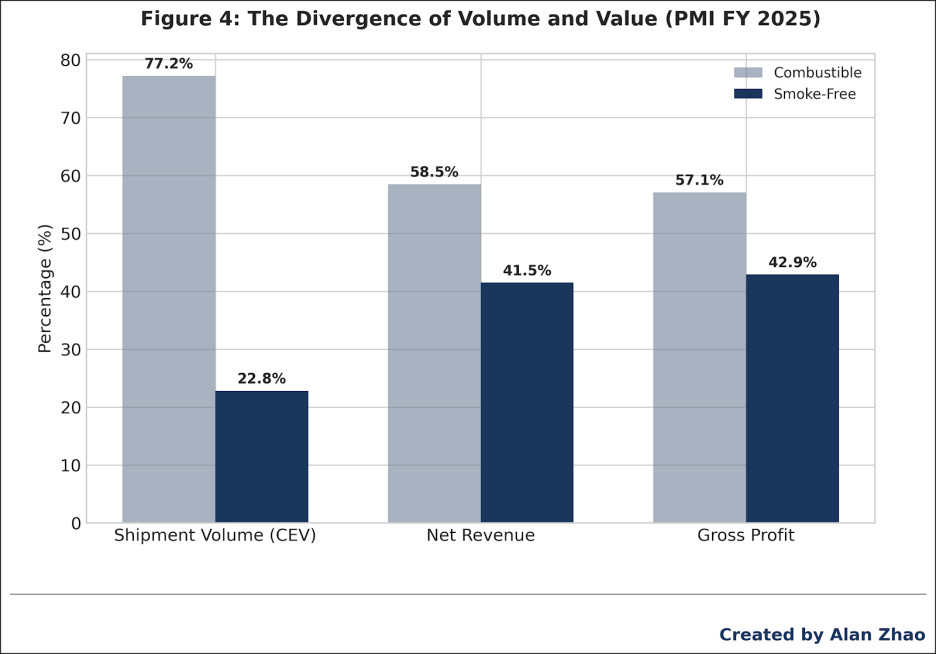
Figure 4: The Divergence of Volume and Value (PMI FY 2025)
Note: Shares computed by the author from PMI FY2025 disclosures. Smoke-free products (SFP) accounted for 22.8% of total shipment volume (179.1 billion units out of 786.5 billion total units), while contributing 41.5% of net revenue and approximately 43% of gross profit. This clearly illustrates the premium value density of the smoke-free portfolio compared to traditional combustibles. Created by Alan Zhao.
4. Amplification in Capital Markets
Ultimately, this ambiguity is amplified in capital markets as valuation uncertainty. Should regulatory systems pivot toward metrics reflecting pharmacokinetic impact or delivery dynamics, compliance will become inherently evidence-intensive. This transition may enhance scientific rigor, but it will also shift industry entry barriers—from manufacturing scale to scientific capability—concentrating advantage among firms able to generate, validate, and defend complex datasets.
Measurement frameworks do not merely describe markets; they shape them. When the unit of analysis diverges from biological reality, the incentive structures governing regulation, taxation, finance, and competition are inevitably distorted.
Ⅸ. Fading Charts, New Frontiers—and a Call for Intellectual Honesty
Against the backdrop of technologies dismantling a four-century paradigm built on combustion, a fundamental truth has reached its breaking point: the tools we use to measure nicotine have become the very obstacles to understanding it.
The industry is undergoing a transition that is hiding in plain sight—massive in scale but obscured by outdated data. Products have outpaced the frameworks designed to contain them; delivery systems have evolved faster than the language of regulation, taxation, and value.
This gap is not a failure of will, but a symptom of institutional inertia. Measurement systems crave simplicity and continuity; they are slow to change precisely because their historical success was so absolute. But when the essence of the commodity shifts, persistence is no longer a virtue—it is a distortion.
This is not a call for a hasty new metric or a "plug-and-play" regulatory fix. To force a universal standard now would be to repeat the original sin: treating a complex, dynamic flow as a static, uniform object.
My argument is more visceral. The nicotine market has outgrown its identity as a volume-based economy. When velocity, rhythm, and precision dictate exposure and value, relying on units from a bygone era is an active choice to remain blind. It warps incentives, masks risk, and leaves the entire system navigating by a broken compass.
The question is no longer whether the old framework is imperfect. The real question is whether it has become obsolete in a world where nicotine is no longer merely consumed, but systematically engineered.
This is a demand for intellectual honesty. Before we draft the next rule or design the next tax, we must confront the uncomfortable reality: we are still attempting to map the frontiers of the future with the fading charts of the past.
Alan Zhao is Co-founder and CEO of 2Firsts, and the initiating convenor of the Nicotine Science Exchange (NSE).
Calculation Note for Figure 4 (Updated for FY 2025)
Percentage shares for Net Revenue (41.5%) and Gross Profit (42.9%) are sourced from PMI’s Full-Year 2025 Results. The shipment volume share (≈22.8%) is calculated as the ratio of total smoke-free shipment units (179.1 billion, including HTUs, oral products, and e-vapor) to PMI’s total shipment volume (786.5 billion units calculated as 179.1 divided by 786.5, resulting in approximately 22.8%. This is consistent with PMI’s disclosed "Cigarette Equivalent Volume" (CEV) reporting methodology. All figures are intended to illustrate relative structural shifts rather than audited financial restatements.
References
(1) Talih S, Balhas Z, Eissenberg T, et al.
Effects of Electronic Cigarette Power on Nicotine Yield and Flux.
Tobacco Control, 2016.
Available at:
https://pmc.ncbi.nlm.nih.gov/articles/PMC4838002/
(2) Hiler M, Spindle T, Breland A, et al.
Electronic Cigarette User Plasma Nicotine Concentration, Puffing Topography, and Flux.
Nicotine & Tobacco Research, 2017.
Available at:
https://tobaccocontrol.bmj.com/content/32/e2/e180
(3) Benowitz NL.
Pharmacology of Nicotine: Addiction, Smoking-Induced Disease, and Therapeutics.
Annual Review of Pharmacology and Toxicology, 2009.
Available at:
https://pmc.ncbi.nlm.nih.gov/articles/PMC7529934/
(4) Lunell E, Fagerström K, Hughes J, et al.
Nicotine Delivery and Pharmacokinetics of Oral Nicotine Products.
European Journal of Clinical Pharmacology, 2020.
Available at:
https://pmc.ncbi.nlm.nih.gov/articles/PMC8917032/
(5) Digard H, Proctor C, Kulasekaran A, et al.
Influence of Formulation on Nicotine Absorption from Oral Nicotine Pouches.
Regulatory Toxicology and Pharmacology, 2021.
Available at:
https://pmc.ncbi.nlm.nih.gov/articles/PMC8917032/
(6) Henderson LJ, Hasselbalch KA.
On the Regulation of Acid–Base Balance in Biological Systems.
Foundational principle underlying the Henderson–Hasselbalch equation; widely applied in pharmacokinetics and drug absorption science.
Conceptual reference and standardization context:
https://standards.iteh.ai/catalog/tc/iso/e537a6a3-43ca-49a9-b928-1b2ebe21389c/iso-tc-126
(7) Philip Morris International.
Form 20-F and 2025 Annual Report.
Available at: