Canberra Government Allocates Funds to Combat E-cigarette Addiction

Regulations by 2FIRSTS.ai
May.07.2024
Canberra Government Allocates Funds to Combat E-cigarette Addiction
Canberra Government to invest over $2 million in community projects, including campaigns to discourage e-cigarette use among youth.

According to Mirage News on May 7th, the Australian Capital Territory Government (Canberra) will invest over 2 million Australian dollars (approximately 1.32 million US dollars) in funding community projects over the next three years, including an initiative to encourage the public to quit e-cigarettes.


According to reports, four organizations have received funding for six projects, with three of the projects funded by the Cancer Council ACT focusing on providing education and support for e-cigarettes in sports organizations, schools, and community services.


Minister of Population Health Emma Davidson stated that the capital government will prioritize minimizing the impact of e-cigarettes on young people as much as possible.


The consumption rate of e-cigarettes, especially among young people, has raised concerns. This funding is a crucial component in reducing the prevalence of e-cigarettes. Furthermore, we also need appropriate services to support those who are not yet at the stage of quitting smoking completely but have developed a dependency on nicotine. That is why the city government is in consultation with harm reduction experts to understand if additional services are needed to support current smoking cessation and prevention programs.


We welcome news tips, article submissions, interview requests, or comments on this piece.

Please contact us at info@2firsts.com, or reach out to Alan Zhao, CEO of 2Firsts, on LinkedIn


Notice

1.  This article is intended solely for professional research purposes related to industry, technology, and policy. Any references to brands or products are made purely for objective description and do not constitute any form of endorsement, recommendation, or promotion by 2Firsts.

2.  The use of nicotine-containing products — including, but not limited to, cigarettes, e-cigarettes, nicotine pouchand heated tobacco products — carries significant health risks. Users are responsible for complying with all applicable laws and regulations in their respective jurisdictions.

3.  This article is not intended to serve as the basis for any investment decisions or financial advice. 2Firsts assumes no direct or indirect liability for any inaccuracies or errors in the content.

4.  Access to this article is strictly prohibited for individuals below the legal age in their jurisdiction.


Copyright


This article is either an original work created by 2Firsts or a reproduction from third-party sources with proper attribution. All copyrights and usage rights belong to 2Firsts or the original content provider. Unauthorized reproduction, distribution, or any other form of unauthorized use by any individual or organization is strictly prohibited. Violators will be held legally accountable.

For copyright-related inquiries, please contact: info@2firsts.com


AI Assistance Disclaimer


This article may have been enhanced using AI tools to improve translation and editorial efficiency. However, due to technical limitations, inaccuracies may occur. Readers are encouraged to refer to the cited sources for the most accurate information.

We welcome any corrections or feedback. Please contact us at: info@2firsts.com

Special Report | How Capital Is Reassessing the Global Tobacco and Modern Nicotine Industry: Lessons from a New York Forum
Capital is reassessing the global tobacco and modern nicotine industry as heated tobacco, vaping and nicotine pouches reshape demand, profitability and regulation. At the 2026 New Approaches Summit in New York, investors and analysts examined whether smoke-free growth can sustain earnings, how regulation shapes startup value, and whether shareholder engagement can be more effective than divestment. The debate points to a broader shift: tobacco transition is increasingly becoming a capital-allocation, governance and valuation question.
Capital Markets
Oct.05
UK HMRC Launches Vape Duty Stamps on October 1, Ushering in Supply-Chain Traceability as Chinese Exporters Face New Compliance Hurdles
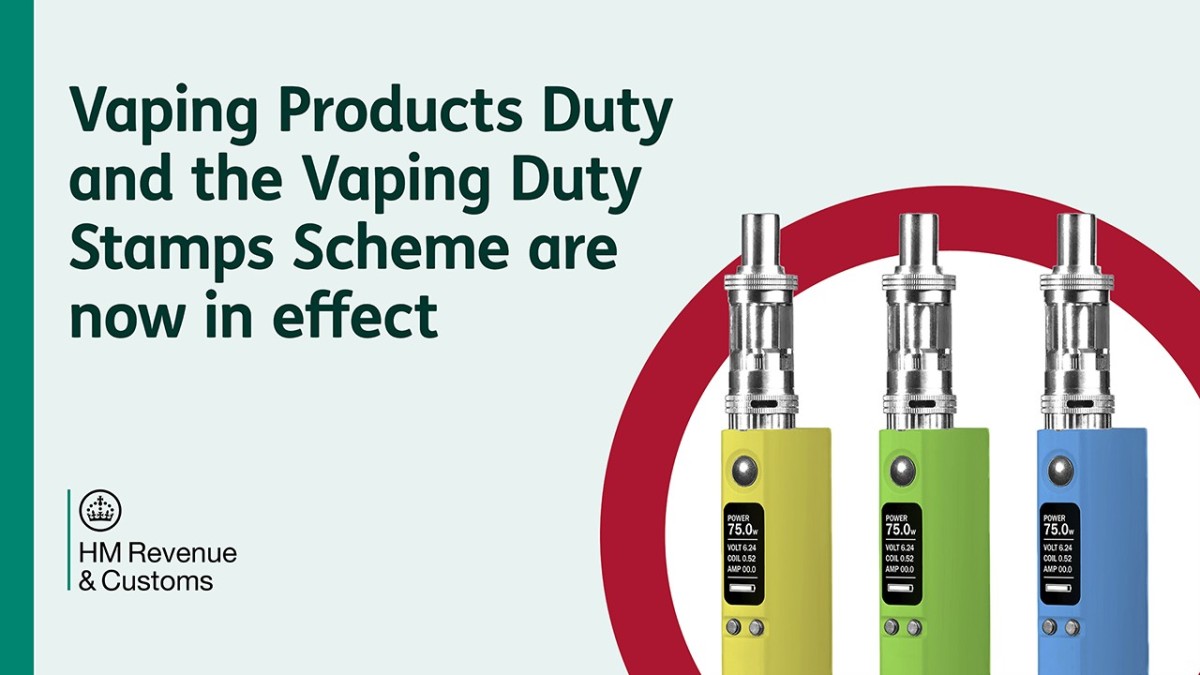
HM Revenue & Customs put the UK's Vaping Products Duty and Vaping Duty Stamps Scheme into effect on October 1. All vaping liquids manufactured in or imported into the UK are now subject to duty at £2.20 per 10ml, regardless of nicotine content. The stamp regime will introduce digital functionality designed to provide traceability throughout the supply chain, with approved manufacturers, importers and warehousekeepers required to report product movements and retailers and consumers eventually able to scan stamps to verify authenticity. China exported $177 million of vape-related products to the UK in August, up 51.4% year over year, increasing the significance of the new compliance regime for China's Shenzhen-centered vape supply chain.
Regulations
Oct.04
Latest UK ONS Data: 54% of Vapers Are Former Cigarette Smokers, 26% Also Smoke and 20% Never Smoked Regularly
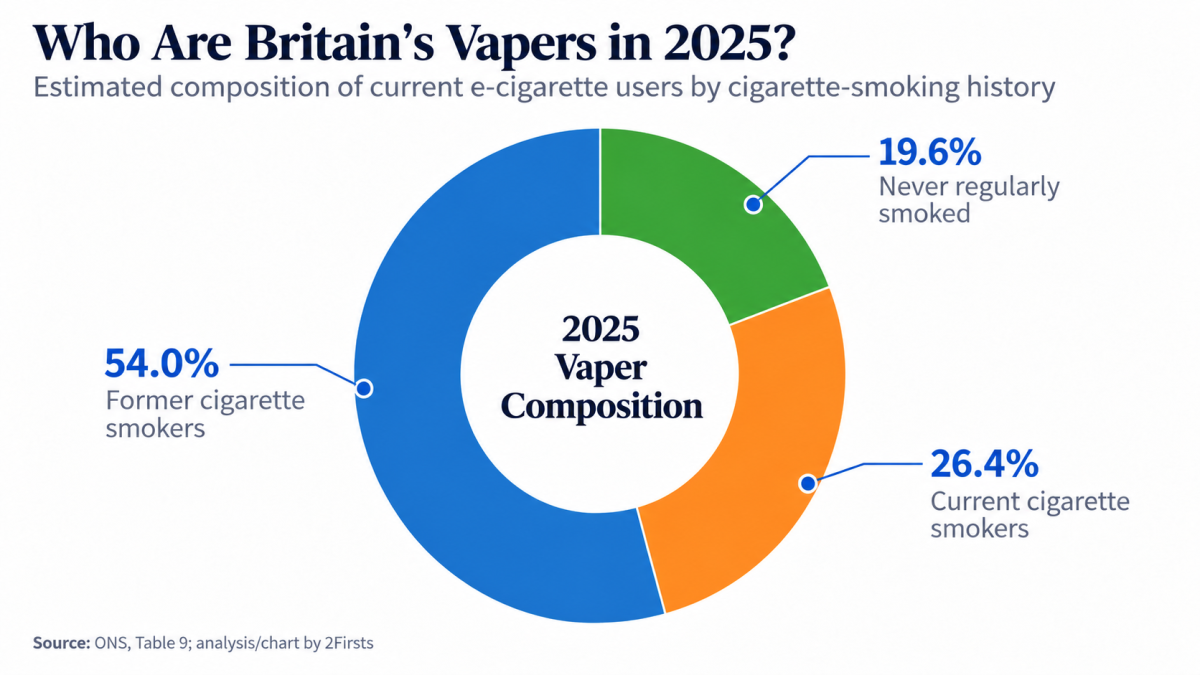
Former cigarette smokers accounted for an estimated 54% of current e-cigarette users in Great Britain in 2025, while 26% also smoked cigarettes and 20% had never regularly smoked, according to a 2Firsts analysis of Office for National Statistics (ONS) data. Among former cigarette smokers who currently vape, approximately 81% used e-cigarettes daily, compared with about 50% of dual users. The ONS found that 33.8% of current cigarette smokers also vaped in 2025, up from 10.6% in 2014. Approximately 1.1 million adults who had never regularly smoked cigarettes used e-cigarettes, representing 2.9% of that population, compared with 0.2% in 2014. The figures highlight differences in the composition, frequency of use and long-term trends across Britain's vaping population.
DATA
Oct.14
EU Vape, Heated Tobacco and Nicotine Pouch Tax Reform Reaches Ministerial Talks: Sweden Opposes Proposed 2032 Minimum of 50% of Retail Price or €50/kg for Nicotine Pouches
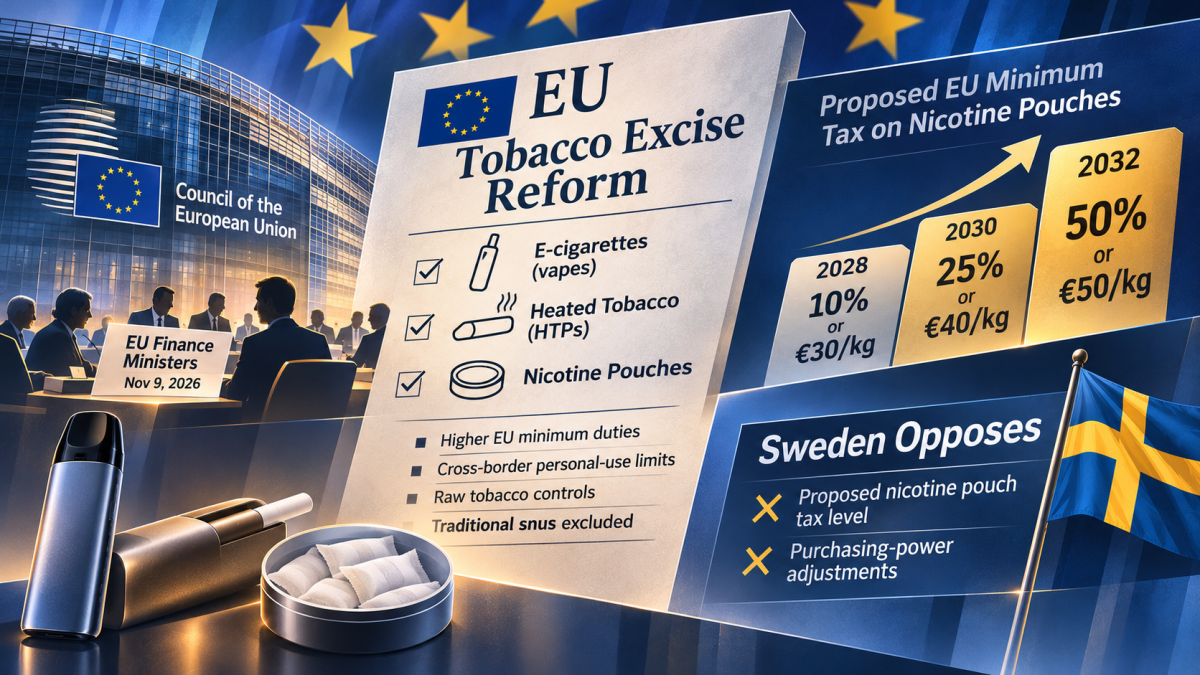
EU finance ministers are scheduled to discuss tobacco excise reform on November 9, 2026, seeking agreement on higher minimum duties for conventional tobacco and a common EU minimum tax framework covering e-cigarettes, heated tobacco and nicotine pouches. A November 5 Council document identifies nicotine pouch taxation as the main outstanding issue. The Irish Council presidency proposes phased increases, reaching 50% of retail selling price or €50 per kilogram in 2032. Sweden has formally said it cannot support the current compromise, objecting to both the proposed nicotine pouch tax burden and the adjustment of minimum rates based on national purchasing power. The package also addresses cross-border personal-use reference quantities, raw tobacco controls and the continued exclusion of traditional tobacco snus.
Regulations
Nov.10
DATA|UK Retail Research Group IGD Says Convenience Tobacco and Vape Sales Fell 10.6%, With 15.4% Market Share Versus Alcohol's 15.1%; Top Rank at Risk in 2027
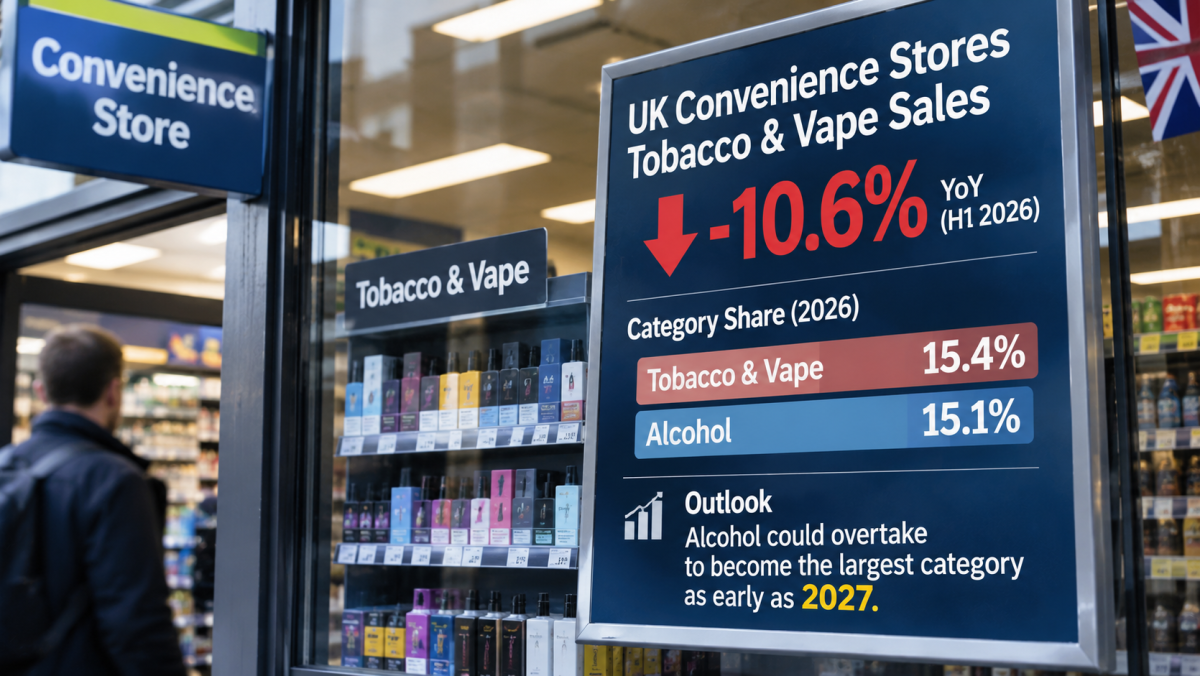
Combined tobacco and vaping sales in UK convenience stores fell 10.6% year over year in the first half of 2026, making the category a major drag on channel performance, according to retail research organization IGD. Total convenience sales declined 1.2%, while sales excluding tobacco and vaping increased 0.7%. IGD's 2026 category-share figures show tobacco and vaping accounting for 15.4% of convenience sales, compared with 15.1% for alcohol. The organization forecasts alcohol could overtake tobacco and vaping as the largest category by sales value as early as 2027 if current trends continue. IGD expects the convenience market to increase from £48.6 billion in 2026 to £54.9 billion in 2031, a 2.5% compound annual growth rate, or 3.4% excluding tobacco and vaping.
DATA
Nov.11
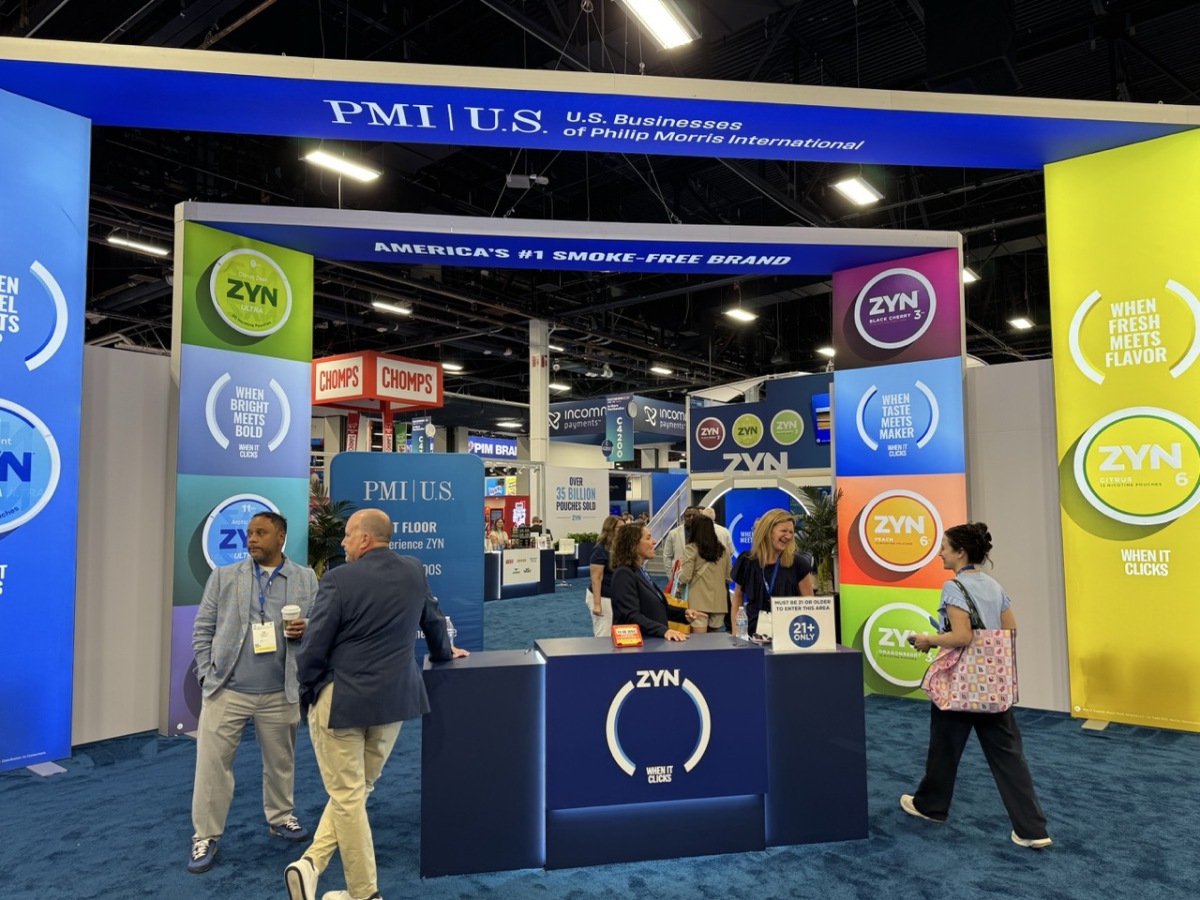
PMI Showcases ZYN, IQOS and U.S. Investments at NACS Show 2026
At the 2026 NACS Show in Las Vegas, Philip Morris International (PMI) showcased its ZYN nicotine pouches, IQOS heated tobacco products and U.S. investments. A 2Firsts review of FDA records found that several ZYN products displayed at the booth were not on the agency's marketing authorization list, including certain nicotine strengths and flavors. A PMI booth representative also confirmed that IQOS is currently sold in three U.S. states, while the newer IQOS ILUMA system remains under FDA review.
EXPO
Oct.10