EU Council to Debate Expansion of Smoke-Free Zones

Dec.03.2024
EU Council to Debate Expansion of Smoke-Free Zones
The European Commission plans to extend the smoking ban to large outdoor areas such as parks, and even to include educational and healthcare institutions. However, a debate over whether to include e-cigarettes and heated tobacco products in the ban has prevented the resolution from being passed. The European Council will hold a meeting on the 4th to discuss this issue.

According to Bezprawnik on December 2nd, the European Commission is pushing for the expansion of smoke-free areas, which means that smoking bans could be implemented in more places. The issue will be discussed by the European Council tomorrow.


The European Commission proposes that the smoking ban should apply not only to restaurants and other indoor spaces (except those specifically allowing smoking, such as certain pubs and bars) but also to large outdoor areas. The smoke-free zones would cover places like parks, amusement parks, bus stops, as well as partially covered or enclosed spaces near restaurants. 


This would also include patios and outdoor seating areas where smoking is often allowed without significant restrictions (although regulations vary by country). Additionally, the Commission advocates for including educational institutions, healthcare facilities, and public buildings in the smoke-free zones.


For Poles, even if the resolution had a binding form for member states, the new recommendations would change little (apart from certain exceptions, like smoking areas in restaurant gardens). 


However, for other EU countries, establishing such broad smoke-free zones could have serious consequences. The impact would be more significant not only due to the smoking ban but also the inclusion of e-cigarettes, heated tobacco devices, and vaporizers, as the resolution proposes banning these products as well. 


This became the sticking point for the resolution's approval. While the European Parliament initially supported it, the final disagreement arose over including tobacco products, e-cigarettes, and other related devices in the ban. This opposition, particularly from the European Conservatives and Reformists, led to the rejection of the resolution.


The European Council will convene a meeting of health ministers in Brussels tomorrow (4th) to discuss the resolution.


We welcome news tips, article submissions, interview requests, or comments on this piece.

Please contact us at info@2firsts.com, or reach out to Alan Zhao, CEO of 2Firsts, on LinkedIn


Notice

1.  This article is intended solely for professional research purposes related to industry, technology, and policy. Any references to brands or products are made purely for objective description and do not constitute any form of endorsement, recommendation, or promotion by 2Firsts.

2.  The use of nicotine-containing products — including, but not limited to, cigarettes, e-cigarettes, nicotine pouchand heated tobacco products — carries significant health risks. Users are responsible for complying with all applicable laws and regulations in their respective jurisdictions.

3.  This article is not intended to serve as the basis for any investment decisions or financial advice. 2Firsts assumes no direct or indirect liability for any inaccuracies or errors in the content.

4.  Access to this article is strictly prohibited for individuals below the legal age in their jurisdiction.


Copyright


This article is either an original work created by 2Firsts or a reproduction from third-party sources with proper attribution. All copyrights and usage rights belong to 2Firsts or the original content provider. Unauthorized reproduction, distribution, or any other form of unauthorized use by any individual or organization is strictly prohibited. Violators will be held legally accountable.

For copyright-related inquiries, please contact: info@2firsts.com


AI Assistance Disclaimer


This article may have been enhanced using AI tools to improve translation and editorial efficiency. However, due to technical limitations, inaccuracies may occur. Readers are encouraged to refer to the cited sources for the most accurate information.

We welcome any corrections or feedback. Please contact us at: info@2firsts.com

Reynolds Puts Nearly 183,000 U.S. Contracted Outlets Under Age-Verification Rules, Covering 94% of Volume — Can It Shift an Unauthorized Vape Market?
Reynolds American says nearly 183,000 U.S. retail outlets are under contract, with its Retail Marketing Plan Contract covering about 94% of company volume and requiring point-of-sale age verification. The company combines those contracts with We Card, TruAge, NACS-linked infrastructure and POS integration, while enhanced Vuse Pro retail rules add ID scanning, purchase limits and stronger underage-sales accountability. The initial Vuse Pro rollout targets about 50,000 stores. The system is taking shape as unauthorized vapor products remain dominant in parts of the U.S. market: a 2026 study estimated they accounted for 69.4% of tracked brick-and-mortar e-cigarette dollar sales in December 2025.
Special Report
Oct.15
RLX Technology Dropped From FTSE All-World as International Business Reaches 68.5% of Q2 Revenue
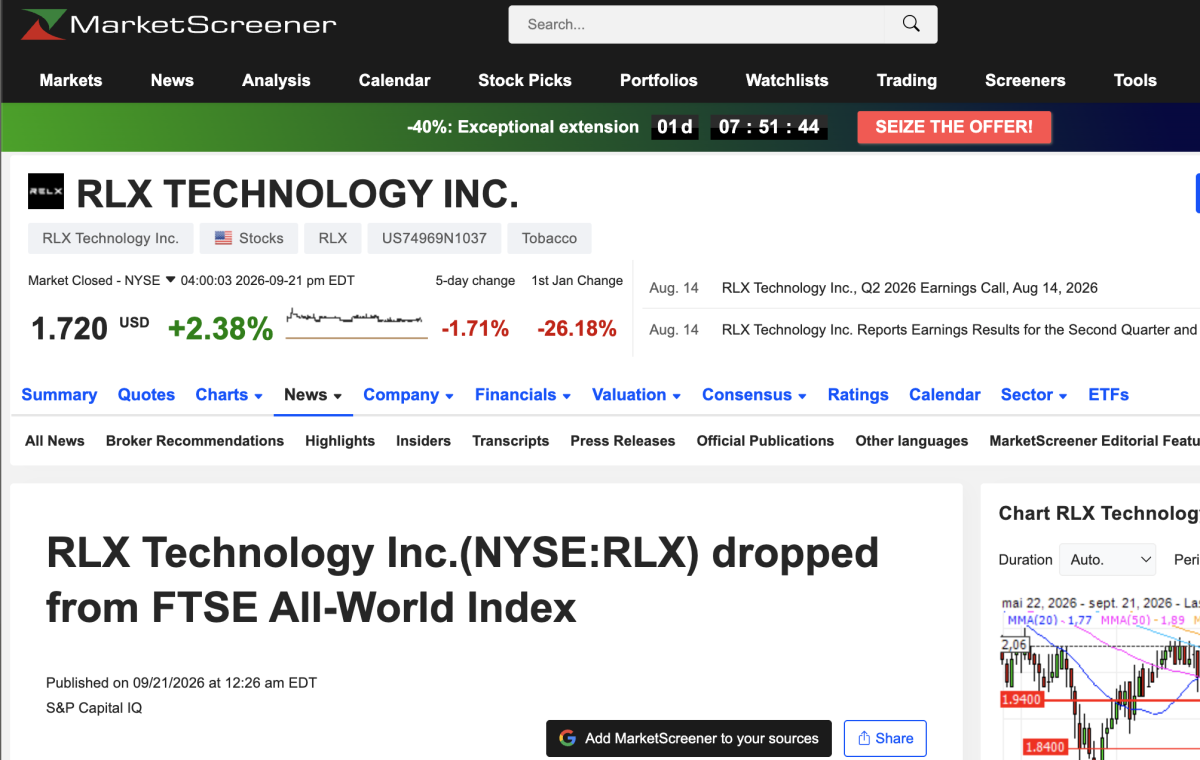
RLX Technology (NYSE: RLX) has been removed from the FTSE All-World Index, effective September 21. FTSE Russell records show RLX was already part of its global equity index universe by 2022, when its American depositary receipts were classified as China Large Cap securities. Trading volume rose to about 44.77 million shares on September 18, roughly 23 times the previous session's volume. RLX reported RMB1.0105 billion in second-quarter revenue, up 14.8% year over year, with international operations contributing 68.5%. The company also acquired a 51% stake in one of Western Europe's largest distributors of next-generation smoke-free and FMCG products in July.
Sep.22
UK ONS Data: Vaping Rate Among Women Aged 25–34 Reaches 18.3%, Compared With 14.4% for Men
The vaping rate among women aged 25 to 34 in Great Britain reached 18.3% in 2025, up from 13.7% in 2024 and 8.3% in 2020, according to data from the Office for National Statistics (ONS). The figure was the highest for this group since records began in 2014 and exceeded the 14.4% recorded among men of the same age. Adults aged 25 to 34 also overtook those aged 16 to 24 as the age group with the highest vaping prevalence. Overall, about 5.4 million adults in Great Britain used e-cigarettes in 2025, broadly unchanged from the previous year.
DATA
Oct.13
Beyond IQOS ILUMA, PMI Expands Lower-Priced BONDS Heated Tobacco Platform: Seven Markets Added in Q3, With Rollouts in Japan, Europe and North Africa
Philip Morris International (PMI) is expanding the international footprint of BONDS by IQOS, its lower-priced heated tobacco platform. The company's third-quarter 2026 SEC filing shows that BONDS devices and BLENDS tobacco sticks were available in 15 markets at the end of September, up from eight at the end of June. In November, PMI announced plans to extend sales from three to 17 Japanese prefectures and introduced BONDS in Spain and Morocco. The platform uses ROUNDHEAT external heating technology and proprietary tobacco sticks, separate from the IQOS ILUMA system. In Japan, BONDS retails for ¥2,980, approximately 25% below ILUMA i ONE, while BLENDS costs ¥570 per pack. PMI management says BONDS targets cigarette smokers who have not adopted heated tobacco. Separate sales and revenue figures remain undisclosed.
company
Nov.06
South Korea's Tobacco Plan Excludes 6-Methyl Nicotine as Customs Tightens Import Controls and Analog Liquid Imports Fall 83%
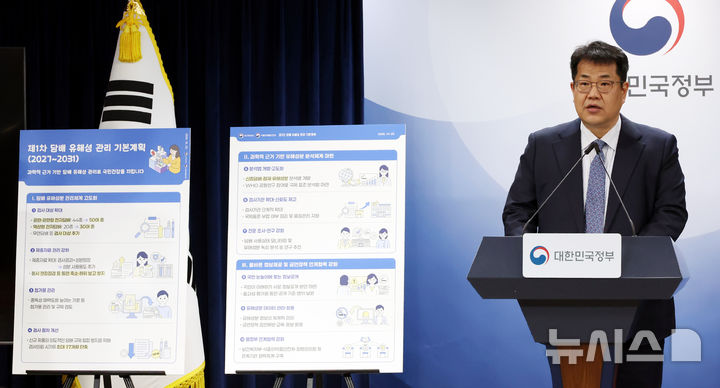
South Korea's government unveiled its first Tobacco Harm Management Basic Plan for 2027–2031 on October 29, 2026, proposing broader testing of vaping and heated tobacco products while excluding nicotine analogs such as 6-methyl nicotine. Synthetic nicotine came under tobacco regulation on April 24, and a June investigation found 6-methyl nicotine in 12 liquid inhalation products marketed as nicotine-free. Customs data released in September showed that imports of nicotine analog solutions fell 83.3%, from 12 metric tons in January–April to 2 metric tons in May–August. By September 20, imports had reached approximately 15 metric tons for the year, with 99.99% originating from China. Customs authorities have tightened pre-clearance testing and supply-chain documentation requirements, while the MFDS expects to complete its assessment of nicotine analog hazards by the end of 2026.
Regulations
Nov.04
Wisconsin Vape Directory One Year On: Retailer Reports Four Store Closures and 70% Staff Cuts
Wisconsin's electronic vaping device directory has been fully enforced for more than a year, and local vape retailers say the reduced range of eligible products has contributed to declining sales, store closures and layoffs. Johnny Vapes owner Ben Hall said he has closed four of seven locations and cut about 70% of his staff. State law bars the sale of vaping devices not listed on the Wisconsin Department of Revenue directory and allows penalties of $1,000 per day for each unlisted device sold or offered for sale. In April 2026, the U.S. Court of Appeals for the Seventh Circuit allowed enforcement of the law to continue.
Regulations
Oct.10