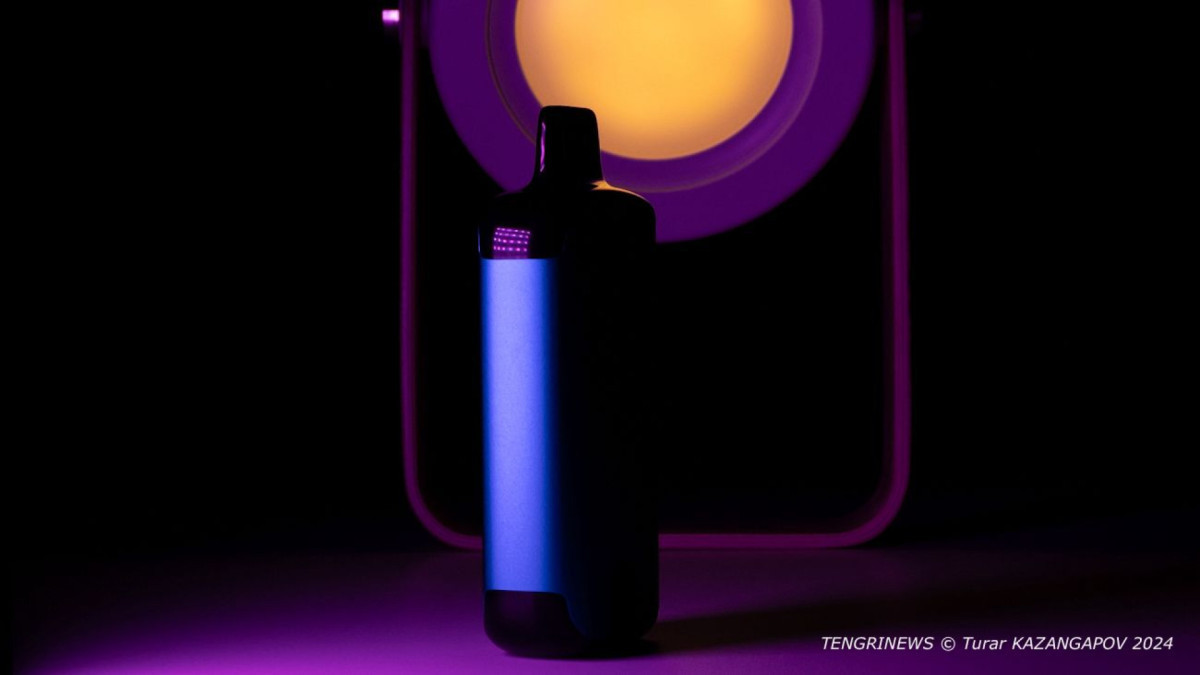
Kazakhstan Implements Ban on E-Cigarettes and Vaping Products

Regulations by 2FIRSTS.ai
Jun.20.2024
Kazakhstan Implements Ban on E-Cigarettes and Vaping Products
Kazakhstan officially bans sales, distribution, and import of e-cigarette products, with severe penalties for violations, effective today.

According to Tengrinews.kz, on June 20th, Kazakhstan officially implemented a new regulation today that aims to prohibit the sale, distribution, and import of e-cigarette products.


According to the recently passed Health Issues Amendment Act, popular e-cigarettes or disposable e-cigarettes are now banned in Kazakhstan. Although using e-cigarettes will not be penalized, selling, promoting, and importing these products will be subject to criminal liability.


According to the revised clauses in the Health Law, adjustments have also been made in the Criminal Law. Now, a new Article 301-1 has been added to the law, governing the circulation of non-tobacco products, electronic consumption systems (e-cigarettes), spices, and their e-liquids. Part 1 sets forth penalties for the sale and dissemination of e-cigarettes: fines of up to 200 MRP (738,400 junko or $1602.67 USD in 2024), or up to 200 hours of community service, or up to 50 days of detention. Part 2 stipulates penalties for the import and production of e-cigarettes: fines of up to 2000 MRP (730,000 junko or $15,844 USD in 2024), or up to 600 hours of community service, or up to 2 years of restriction or deprivation of liberty.


If these actions are repeatedly carried out by criminal groups and involve particularly large amounts of income, the penalties will be more severe: fines up to 5000 MRP (equivalent to 1.84 million Jankos in 2024 [39,936 US dollars]), or up to 1200 hours of community service, or a maximum of 5 years of restriction/deprivation of freedom.


In response to an official inquiry from Tengrinews.kz, the Ministry of Internal Affairs of Kazakhstan stated:


The act of distributing e-cigarettes should be understood as passing on e-cigarettes to others. This behavior will lead to criminal liability, regardless of its form, and regardless of whether there is any material or other benefits.


Smoking e-cigarettes in inappropriate places will result in the same penalties as smoking traditional cigarettes— a fine of 3 MRP (11,076 kongos [24.04 USD]) in 2024.


In addition, the amendment introduced a precise definition of e-cigarettes in the "People's Health and Hygiene System Code.


Electronic consumer systems (e-cigarettes) flavorings; electronic consumer systems (e-cigarettes) and their liquids; non-smoking tobacco products; products imitating tobacco products. Previously, on April 19th, President of Kazakhstan Kassym-Jomart Tokayev signed the "Law amending and supplementing certain laws and regulations regarding health issues in the Republic of Kazakhstan".


We welcome news tips, article submissions, interview requests, or comments on this piece.

Please contact us at info@2firsts.com, or reach out to Alan Zhao, CEO of 2Firsts, on LinkedIn


Notice

1.  This article is intended solely for professional research purposes related to industry, technology, and policy. Any references to brands or products are made purely for objective description and do not constitute any form of endorsement, recommendation, or promotion by 2Firsts.

2.  The use of nicotine-containing products — including, but not limited to, cigarettes, e-cigarettes, nicotine pouchand heated tobacco products — carries significant health risks. Users are responsible for complying with all applicable laws and regulations in their respective jurisdictions.

3.  This article is not intended to serve as the basis for any investment decisions or financial advice. 2Firsts assumes no direct or indirect liability for any inaccuracies or errors in the content.

4.  Access to this article is strictly prohibited for individuals below the legal age in their jurisdiction.


Copyright


This article is either an original work created by 2Firsts or a reproduction from third-party sources with proper attribution. All copyrights and usage rights belong to 2Firsts or the original content provider. Unauthorized reproduction, distribution, or any other form of unauthorized use by any individual or organization is strictly prohibited. Violators will be held legally accountable.

For copyright-related inquiries, please contact: info@2firsts.com


AI Assistance Disclaimer


This article may have been enhanced using AI tools to improve translation and editorial efficiency. However, due to technical limitations, inaccuracies may occur. Readers are encouraged to refer to the cited sources for the most accurate information.

We welcome any corrections or feedback. Please contact us at: info@2firsts.com

North Carolina Tightens Vape Product Directory Enforcement, Expands State and Local Powers as Violators Face Fines, Product Seizures and License Suspension or Revocation
North Carolina has expanded enforcement of its vapor product directory rules, authorizing more state and local law enforcement participation and establishing a task force led by the State Bureau of Investigation. The legislation requires at least one unannounced compliance inspection annually for retailers, distributors and wholesalers handling covered products. Penalties effective October 1, 2026, include civil fines of $500–$750 for a first violation and $1,000–$1,500 for repeated violations within 12 months, along with potential license suspension or revocation. Manufacturers may face penalties of $10,000 per unlisted product. The measures strengthen the product directory system established in 2024.
Regulations
Oct.28
Special report|Indonesia's Vape Industry Has 200 Manufacturers and $1.7 Billion in Investment. Could a Regulatory Divide Derail Its Rise as the World's No. 2 Manufacturing Hub After Shenzhen?
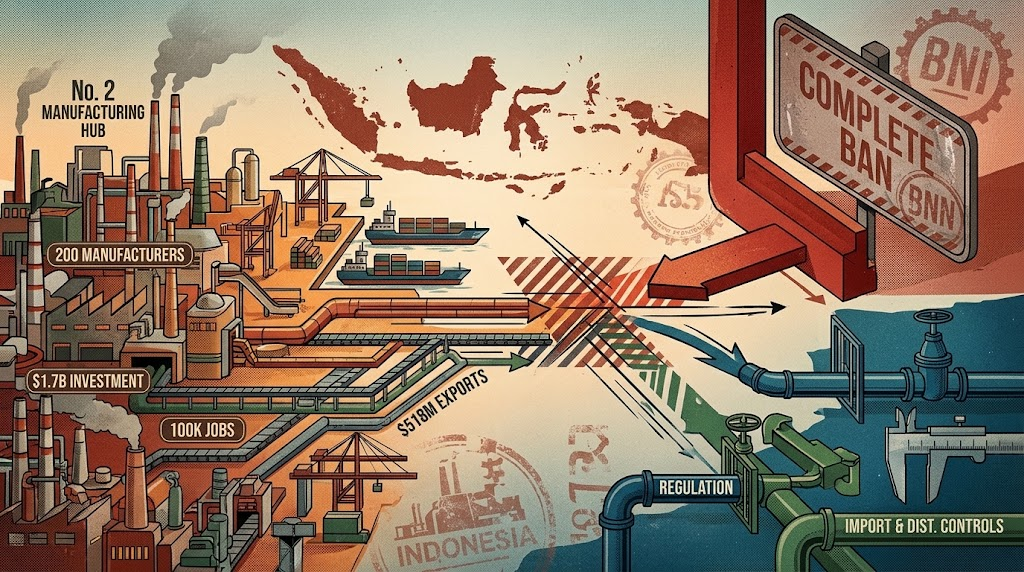
Indonesia's Ministry of Industry said at a November 3, 2026, policy forum that the country has about 200 electronic cigarette companies, Rp31 trillion (approximately $1.71 billion) in cumulative industry investment and around 100,000 jobs across the supply chain. The National Narcotics Agency is seeking a comprehensive ban on vape use and circulation, while the industry ministry favors tighter import, product-standard and distribution controls. Indonesia exported approximately $518 million in vaping products in 2025, and Chinese manufacturers including Smoore, GEEKVAPE and Jinjia Group have established local operations. An international logistics specialist interviewed by 2Firsts said more Chinese vape companies began production in Indonesia from the second half of 2025, accompanied by increased shipments of manufacturing equipment and investment in logistics facilities. The regulatory debate comes as Indonesia expands its role in international vaping manufacturing.
Special Report
Nov.05
Australia Adds 6-Methylnicotine to Schedule 9 Prohibited Substances, Effective October 1
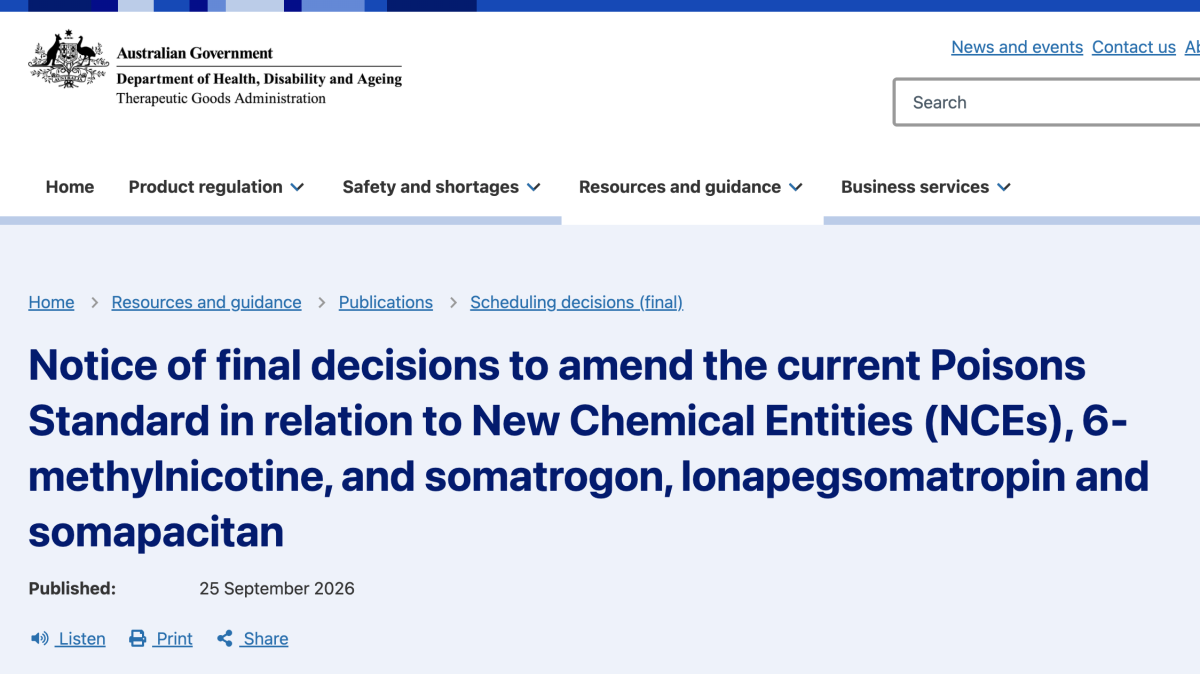
Australia's Therapeutic Goods Administration published a final decision on September 25 to classify 6-methylnicotine as a Schedule 9 prohibited substance under the Poisons Standard, effective October 1, 2026. TGA said the chemical has been reported in e-cigarette liquids sold in Australia and marketed as nicotine-free or nicotine alternatives, while evidence also indicates its use in preparations such as oral pouches. The government originally proposed a Schedule 7 classification but ultimately adopted the stricter Schedule 9 designation, citing acute toxicity, dependence risk, use in unapproved consumer products and misleading marketing.
News
Sep.29 by 2Firsts Perspectives
Smoke-Free Business Hits 42% of Q2 Net Revenue as PMI’s First TNFD Report Covers Single-Use Electronics, Critical Raw Materials and IQOS Repairs
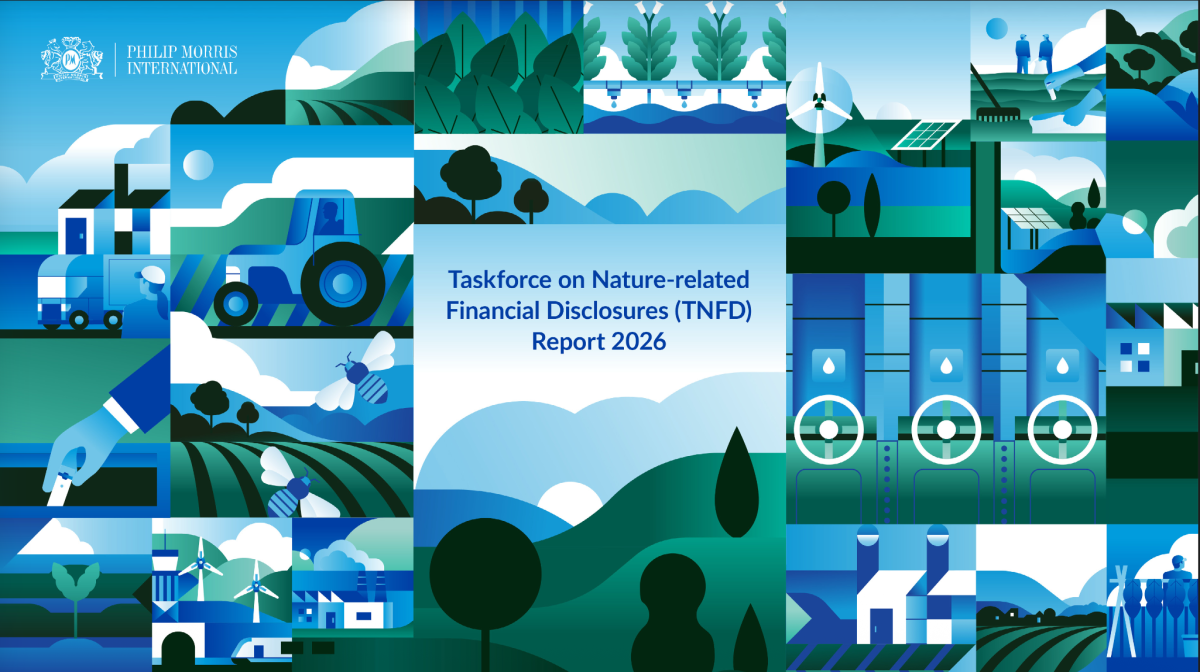
Philip Morris International has published its first report aligned with the Taskforce on Nature-related Financial Disclosures, bringing its electronics supply chain and the use and end-of-life stages of smoke-free devices and consumables into its nature-related assessment. PMI said its smoke-free business accounted for about 42% of total net revenues in the second quarter of 2026. The report says non-circular electronic products, particularly single-use items, can increase consumption of limited natural resources and also details an IQOS repair pilot. A 2040 circularity scenario tests assumptions including a 50% reduction in product waste-related costs, 10% raw-material savings and a 25% substitution rate for refurbished products versus new products.
Sep.23
South Korea's Tobacco Plan Excludes 6-Methyl Nicotine as Customs Tightens Import Controls and Analog Liquid Imports Fall 83%
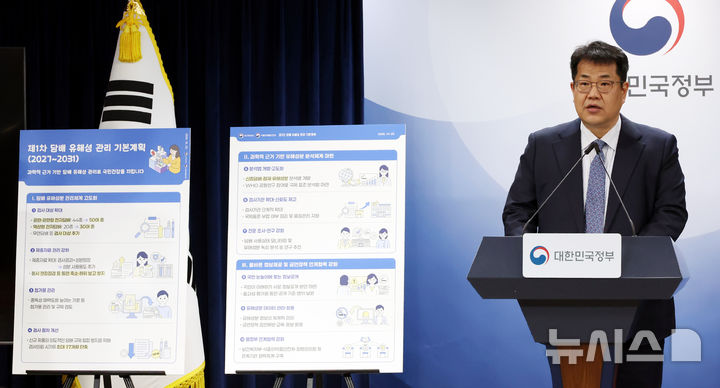
South Korea's government unveiled its first Tobacco Harm Management Basic Plan for 2027–2031 on October 29, 2026, proposing broader testing of vaping and heated tobacco products while excluding nicotine analogs such as 6-methyl nicotine. Synthetic nicotine came under tobacco regulation on April 24, and a June investigation found 6-methyl nicotine in 12 liquid inhalation products marketed as nicotine-free. Customs data released in September showed that imports of nicotine analog solutions fell 83.3%, from 12 metric tons in January–April to 2 metric tons in May–August. By September 20, imports had reached approximately 15 metric tons for the year, with 99.99% originating from China. Customs authorities have tightened pre-clearance testing and supply-chain documentation requirements, while the MFDS expects to complete its assessment of nicotine analog hazards by the end of 2026.
Regulations
Nov.04
Canada Health Minister Says She Is Not Considering Looser Nicotine Pouch Retail Rules as PMI-Linked Group Pushes for Wider Access
Canadian Health Minister Marjorie Michel says she is not considering loosening retail restrictions on nicotine pouches. Canada regulates pouches containing 4 mg or less of nicotine per unit as non-prescription nicotine replacement therapy and requires newer NRT formats such as pouches to be sold from behind pharmacy counters. Meanwhile, Unsmoke Canada, linked to Philip Morris International's Canadian business, is pushing to allow pouches in convenience stores and other general retail outlets. Health Canada also acknowledges continued unauthorized sales, while recent research shows rising pouch use among Canadian youth aged 16 to 19.
Sep.24