This article is for informational purposes only. The English translation is for reference only. Please refer to the official original text for all content.
Chapter I – General Provisions
Article 1
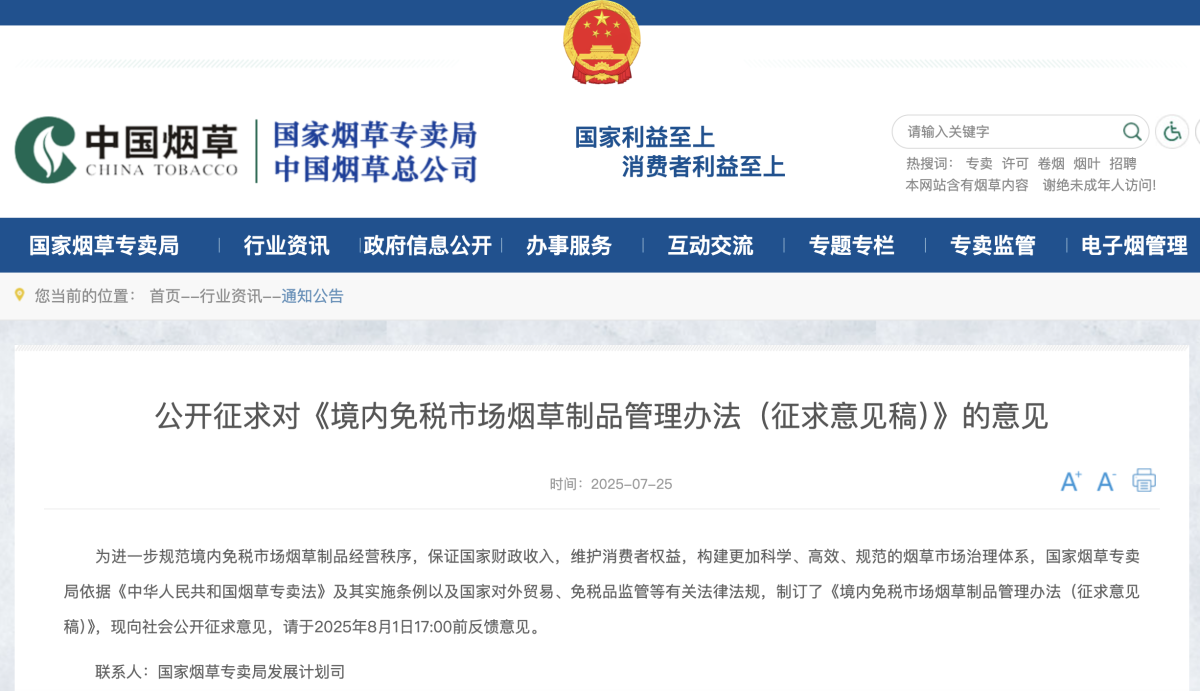
To implement the requirements of the State Council on strengthening the regulation of tobacco products in the domestic duty-free market, further standardize the operation of duty-free tobacco products in the domestic market, ensure national fiscal revenue, and protect consumer rights and interests, these Measures are formulated in accordance with the Tobacco Monopoly Law of the People's Republic of China and its implementing regulations, as well as relevant laws and regulations on foreign trade and duty-free goods supervision.
Article 2
These Measures apply to:
The supply of duty-free tobacco products to the domestic duty-free market in China;
The wholesale and retail operations of duty-free tobacco products in the domestic duty-free market in China;
The supervision and administration of the above-mentioned activities.
Article 3
Duty-free tobacco products as referred to in these Measures refer to tobacco products such as cigarettes (excluding heated cigarettes), cigars, and cut tobacco that are supplied duty-free to designated retail locations and sold to specific groups such as cross-border travelers.
Duty-free tobacco products are categorized by place of production as domestically produced duty-free tobacco products and imported duty-free tobacco products produced outside China.
Article 4
Duty-free tobacco products may only be retailed at the following locations:
Duty-free shops approved to operate tobacco products;
International cruise ships sourcing tobacco products within the territory of China.
Article 5
The administrative department for tobacco monopoly under the State Council shall manage duty-free tobacco products in accordance with the following principles:
Strengthen administrative supervision of the tobacco monopoly, coordinate the taxed and duty-free markets, and protect national tax interests;
Strengthen control over the sources of duty-free tobacco products, ensure stable and reliable product quality, and protect consumer rights;
Standardize enterprise production and business operations, continuously enhance regulatory effectiveness, and foster a sound market environment.
Chapter II – Operation and Management
Article 6
The administrative department for tobacco monopoly under the State Council shall implement unified management of the import and export of duty-free tobacco products under the state trading system.
Enterprises engaged in the retail business of duty-free tobacco products (hereinafter referred to as "retail enterprises") shall, in accordance with these Measures, submit procurement requests to enterprises engaged in the wholesale business of duty-free tobacco products (hereinafter referred to as "wholesale enterprises"). The wholesale enterprises shall procure the products from enterprises engaged in the supply of duty-free tobacco products (hereinafter referred to as "supply enterprises") and, in accordance with state trading management provisions for tobacco products, import or export duty-free tobacco products to the domestic duty-free market.
Article 7
The administrative department for tobacco monopoly under the State Council shall implement quota management on the import and export of duty-free tobacco products in accordance with the law.
Article 8
The administrative department for tobacco monopoly under the State Council shall issue annual sales plans of duty-free tobacco products to wholesale enterprises and annual procurement plans to retail enterprises.
The annual procurement needs of retail enterprises shall be aggregated by wholesale enterprises and submitted for approval to the administrative department for tobacco monopoly under the State Council, which will then issue the annual procurement plan.
Article 9
The total procurement request of duty-free tobacco products submitted by retail enterprises under Article 6 shall not exceed the total quantity of the annual procurement plan.
Wholesale enterprises shall promptly submit procurement orders to supply enterprises based on the procurement requests from retail enterprises that do not exceed the approved annual plan.
Article 10
Enterprises engaged in the supply of duty-free tobacco products shall meet the following conditions:
Comply with laws, regulations, policies, and standards related to the import and export of goods;
Ensure the supplied products meet requirements for quality, safety, and environmental protection;
Possess traceability management capabilities as required by the administrative department for tobacco monopoly under the State Council;
Meet other conditions as specified by the administrative department for tobacco monopoly under the State Council.
Article 11
Enterprises engaged in the wholesale of duty-free tobacco products shall meet the following conditions:
Be included in the list of state trading enterprises for tobacco import and export;
Have obtained an annual sales plan for duty-free tobacco products;
Meet other conditions as specified by the administrative department for tobacco monopoly under the State Council.
Article 12
Enterprises engaged in the retail of duty-free tobacco products shall meet the following conditions:
Hold qualifications for operating duty-free goods as prescribed by the state;
Have obtained an annual procurement plan for duty-free tobacco products;
Possess traceability management capabilities as required by the administrative department for tobacco monopoly under the State Council;
Meet other conditions as specified by the administrative department for tobacco monopoly under the State Council.
Article 13
Retail enterprises introducing new brands or specifications of duty-free tobacco products for the first time shall report product information and supply enterprise information in advance to the administrative department for tobacco monopoly under the State Council through wholesale enterprises.
Duty-free tobacco products already on sale prior to the implementation of these Measures shall be reported in a unified manner by retail enterprises in accordance with the preceding provision.
Article 14
Retail enterprises shall verify and ensure that the declared duty-free tobacco products meet the following requirements:
Comply with relevant mandatory national standards;
Comply with intellectual property protection requirements;
Possess traceability management capabilities as required by the administrative department for tobacco monopoly under the State Council;
The supply enterprise complies with the conditions stipulated in Article 10;
Meet other conditions as specified by the administrative department for tobacco monopoly under the State Council.
Article 15
The administrative department for tobacco monopoly under the State Council shall, upon reviewing the materials submitted by wholesale enterprises under Articles 13 and 14, formulate and publish a product catalog of duty-free tobacco products (hereinafter referred to as the “Product Catalog”).
Article 16
Wholesale and retail enterprises shall not procure or sell duty-free tobacco products not included in the Product Catalog.
Article 17
The administrative department for tobacco monopoly under the State Council shall establish a unified duty-free tobacco product transaction management platform (hereinafter referred to as the “Transaction Management Platform”). All relevant enterprises shall conduct transactions through this platform.
Article 18
Prices of duty-free tobacco products operated by wholesale enterprises shall comply with relevant provisions of the administrative department for tobacco monopoly under the State Council. Prices of duty-free tobacco products shall be determined based on fairness, legality, and good faith. Price collusion, price gouging, price fraud, malicious dumping, and failure to label prices as required are strictly prohibited. Consumers and operators are encouraged to jointly participate in price supervision.
Article 19
Relevant enterprises shall regulate marketing practices and shall not mislead consumers into purchasing duty-free tobacco products through excessive packaging or consumer confusion.
Retail enterprises shall not sell duty-free tobacco products to consumers in quantities exceeding the limits set by relevant state authorities. Sales of reasonable quantities of duty-free tobacco products for personal use to international cruise ship staff and passengers shall follow the Regulations on the Supply of International Cruise Ships Calling at Ports in the People's Republic of China (State Council Decree No. 780).
Article 20
Relevant enterprises that undergo significant changes in name, registered address, or equity structure shall promptly report such changes to the administrative department for tobacco monopoly under the State Council.
Chapter III – Traceability Management
Article 21
The carton and pack of duty-free tobacco products shall bear special markings for duty-free tobacco products and the Chinese characters “专供出口” (“For Export Only”) in accordance with Articles 42 and 43 of the Implementing Regulations of the Tobacco Monopoly Law of the People's Republic of China.
Article 22
The administrative department for tobacco monopoly under the State Council shall implement QR code-based traceability management for duty-free tobacco products.
Article 23
Supply enterprises shall apply for QR codes via the Transaction Management Platform according to orders from wholesale enterprises and complete the printing and affixing of QR codes and associated information linking during the production process.
Wholesale and retail enterprises shall not procure or sell duty-free tobacco products that do not bear the special marking or that have not completed QR code labeling and information association and upload.
Article 24
Supply and retail enterprises shall scan QR codes during warehousing, outbound, and sales operations of duty-free tobacco products to ensure data integrity and upload scan data to the Transaction Management Platform.
Chapter IV – Supervision and Inspection
Article 25
Local tobacco monopoly administrative departments shall establish and improve coordination mechanisms with departments such as public security, customs, taxation, postal services, and the coast guard, and jointly conduct supervision and inspection of duty-free tobacco product operations within their jurisdiction. Suspected smuggling or other illegal acts discovered shall be promptly reported to relevant law enforcement authorities.
Article 26
Supply enterprises operating duty-free tobacco products shall not engage in the following acts:
Intentionally providing false enterprise or product information;
Failing to mark duty-free tobacco products with the required special markings;
Violating QR code traceability management requirements;
Violating price management or marketing behavior regulations for duty-free tobacco products;
Supplying duty-free tobacco products to entities or individuals other than wholesale enterprises;
Conducting duty-free tobacco transactions outside the Transaction Management Platform;
Participating in smuggling or other illegal activities;
Other violations related to duty-free tobacco products.
Article 27
If a supply enterprise commits any of the violations listed in Article 26, the Transaction Management Platform shall, depending on the severity, take measures such as suspending or terminating the transaction rights for the related products.
For violations listed under Items 1 through 4:
One violation within a year: suspend the product’s transaction rights for three months;
Two violations within a year: suspend the product’s transaction rights for six months;
Three or more violations within a year: terminate the product’s transaction rights.
For violations listed under Items 5 through 8:
Upon verification, all transaction rights of the supply enterprise shall be terminated immediately.
Article 28
Wholesale enterprises shall cease procuring any products whose transaction rights have been suspended or terminated under Article 27.
Products that have entered wholesale or retail channels and are not subject to quality issues may continue to be sold with the approval of the administrative department for tobacco monopoly under the State Council.
Article 29
For products with suspended transaction rights under Article 27, the supply enterprise may apply for the restoration of transaction rights upon the end of the suspension period and rectification as required.
For products with terminated transaction rights, no transactions shall be permitted via the platform within two years.
Article 30
Wholesale enterprises operating duty-free tobacco products shall not engage in the following acts:
Purchasing or selling duty-free tobacco products in excess of the annual plan;
Purchasing duty-free tobacco products not listed in the Product Catalog;
Violating price management or marketing behavior regulations for duty-free tobacco products;
Conducting duty-free tobacco transactions outside the Transaction Management Platform;
Other violations related to duty-free tobacco products.
Article 31
If a wholesale enterprise commits any of the violations listed in Article 30, the Transaction Management Platform shall, depending on the severity, take measures such as suspending or terminating the enterprise’s transaction rights.
One violation within a year: suspend transaction rights for three months;
Two violations within a year: suspend transaction rights for six months;
Three or more violations within a year: terminate transaction rights.
Article 32
Wholesale enterprises whose transaction rights have been suspended under Article 31 may apply for restoration after the suspension period ends and rectification is completed.
Wholesale enterprises whose transaction rights have been terminated shall not have such rights restored via the Transaction Management Platform within two years.
During the period of suspension or termination, the administrative department for tobacco monopoly under the State Council shall designate other qualified wholesale enterprises to carry out the affected transactions.
Article 33
Retail enterprises operating duty-free tobacco products shall not engage in the following acts:
Selling duty-free tobacco products to individuals not meeting purchase conditions;
Selling duty-free tobacco products without the required special markings;
Violating QR code traceability management requirements;
Violating price management, marketing behavior, or sales limit regulations for duty-free tobacco products;
Purchasing duty-free tobacco products in excess of the annual procurement plan;
Selling duty-free tobacco products outside the designated retail locations listed in Article 4;
Purchasing tobacco products outside the Transaction Management Platform;
Selling tobacco products not listed in the Product Catalog;
Participating in smuggling or other illegal activities;
Refusing to declare, failing to declare as required, or intentionally providing false supply enterprise or product information;
Refusing to cooperate with supervision and inspection of duty-free tobacco products;
Employees engaging in violations related to duty-free tobacco products;
Other violations related to duty-free tobacco products.
Article 34
If a retail enterprise commits any of the violations listed in Article 33, the administrative department for tobacco monopoly under the State Council shall take measures such as reducing or terminating its procurement plan depending on the severity.
For violations under Items 1–4:
One violation within a year: reduce the next year’s procurement plan by three times the number of seized tobacco products;
Two violations within a year: reduce the next year’s procurement plan by ten times the number of seized tobacco products;
Three or more violations within a year: terminate the next year’s procurement plan.
For violations under Items 5–9:
Upon verification, terminate procurement plan immediately.
For violations under Items 10–13:
One violation within a year: reduce the next year’s procurement plan by 5%;
Two violations within a year: reduce the next year’s procurement plan by 10%;
Three or more violations within a year: terminate the next year’s procurement plan.
Article 35
For retail enterprises whose procurement plans have been terminated under Article 34, the administrative department for tobacco monopoly under the State Council shall not restore the procurement plan within two years. Any portion of the procurement plan not yet executed during the current year shall be canceled.
Article 36
Enterprises committing the violations specified in Item 2 of Article 26 or Item 2 of Article 33 shall also be subject to penalties in accordance with Article 63 of the Implementing Regulations of the Tobacco Monopoly Law of the People's Republic of China.
Chapter V – Supplementary Provisions
Article 37
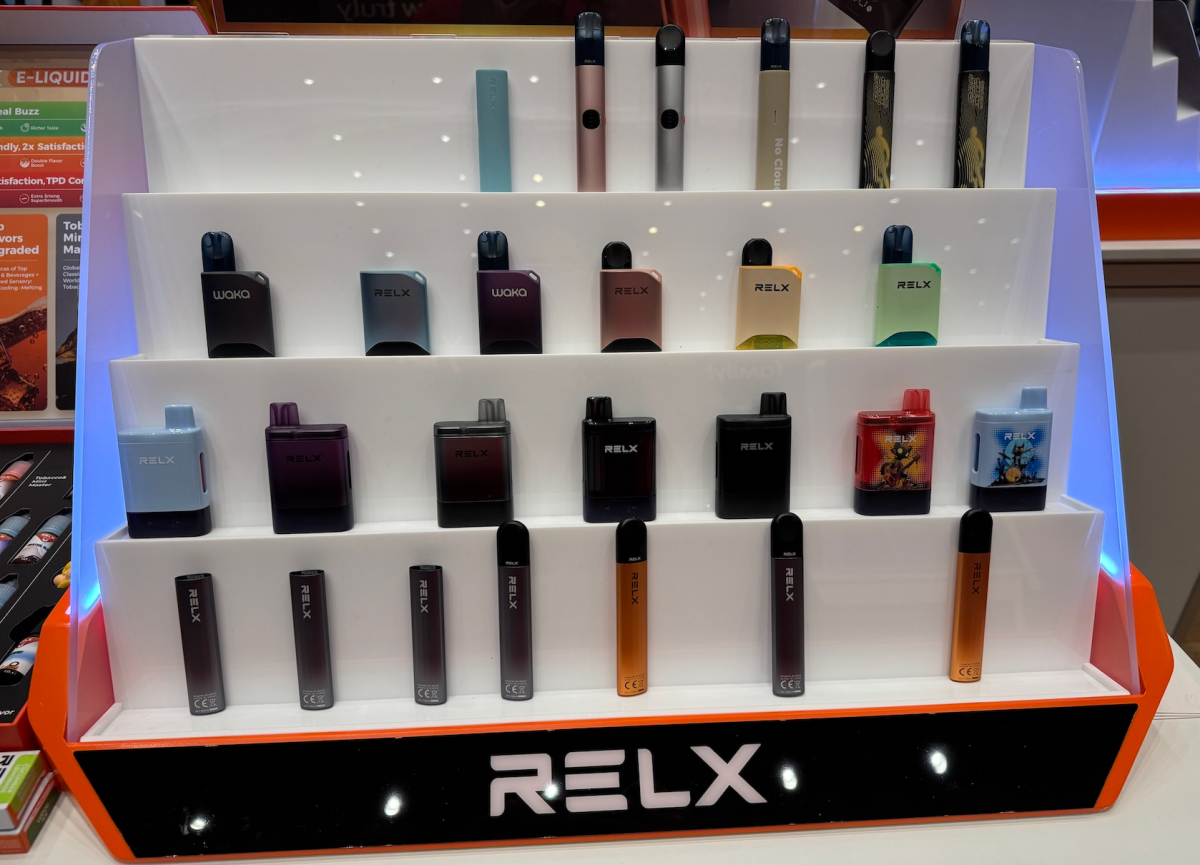
Heated cigarettes and electronic cigarettes, as new types of tobacco products, shall not be sold in the domestic duty-free market.
Article 38
These Measures shall be interpreted by the administrative department for tobacco monopoly under the State Council. In case of inconsistency between these Measures and other existing regulations regarding duty-free tobacco products, these Measures shall prevail.
The Notice of the State Tobacco Monopoly Administration on Issuing the Administrative Measures for Duty-Free Cigarettes and Cigars (Guo Yan Zhuan [2016] No. 81) shall be repealed simultaneously.
Article 39
These Measures shall take effect on January 1, 2026.