Ban on Sale of Flavored Tobacco Products Withdrawn in Guam

Regulations by 2FIRSTS.ai
Jan.09.2024
Ban on Sale of Flavored Tobacco Products Withdrawn in Guam
Guam bill to ban flavored tobacco sales withdrawn after public hearing delay, but will be reintroduced for further modification.

According to a report from American media outlet Postguam, a bill aimed at banning the sale of flavored tobacco products in Guam has been withdrawn after the public hearing was not held as scheduled.


Bill 50-37 attempted to ban the sale of flavored tobacco products in Guam, but was later withdrawn by its sponsor, Senator Thomas Fisher, in the next scheduled public hearing.


Fisher explained that he withdrew Bill 50 after receiving information from the American Cancer Society in order to make revisions. Fisher further plans to resubmit the bill on Friday morning and hopes to hold a public hearing on the bill on January 11th.


However, the lawmaker responsible for this hearing, Sabina Perez, explained that there are certain procedures that need to be followed before organizing a public hearing.


After explaining the possibility of a public hearing on January 11th, but without guaranteeing the date of such a hearing, Beres subsequently suspended the hearing.


Several hours later, a press release issued from Fisher's office stated that the lack of a public hearing was the result of "irresponsible arrangements.


Public hearings are sacred and should never occur, regardless of whether double bookings are due to irresponsible arrangements, misjudgments, or incompetence. The suppression of public opinion should be absolutely avoided," Fisher stated in a press release.


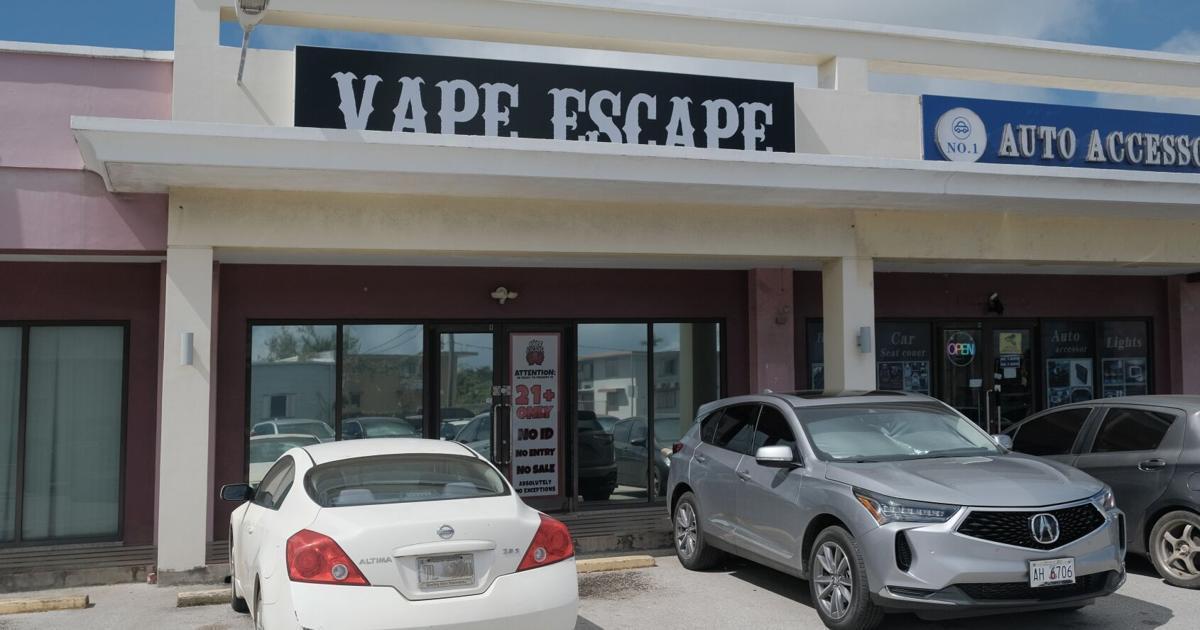
The shop owners closed their doors to ensure that their voices are heard today. Even if they oppose my bill, they should still be listened to, along with the opinions of the wider public," Fisher added in the statement.


We welcome news tips, article submissions, interview requests, or comments on this piece.

Please contact us at info@2firsts.com, or reach out to Alan Zhao, CEO of 2Firsts, on LinkedIn


Notice

1.  This article is intended solely for professional research purposes related to industry, technology, and policy. Any references to brands or products are made purely for objective description and do not constitute any form of endorsement, recommendation, or promotion by 2Firsts.

2.  The use of nicotine-containing products — including, but not limited to, cigarettes, e-cigarettes, nicotine pouchand heated tobacco products — carries significant health risks. Users are responsible for complying with all applicable laws and regulations in their respective jurisdictions.

3.  This article is not intended to serve as the basis for any investment decisions or financial advice. 2Firsts assumes no direct or indirect liability for any inaccuracies or errors in the content.

4.  Access to this article is strictly prohibited for individuals below the legal age in their jurisdiction.


Copyright


This article is either an original work created by 2Firsts or a reproduction from third-party sources with proper attribution. All copyrights and usage rights belong to 2Firsts or the original content provider. Unauthorized reproduction, distribution, or any other form of unauthorized use by any individual or organization is strictly prohibited. Violators will be held legally accountable.

For copyright-related inquiries, please contact: info@2firsts.com


AI Assistance Disclaimer


This article may have been enhanced using AI tools to improve translation and editorial efficiency. However, due to technical limitations, inaccuracies may occur. Readers are encouraged to refer to the cited sources for the most accurate information.

We welcome any corrections or feedback. Please contact us at: info@2firsts.com

Australia Adds 6-Methylnicotine to Schedule 9 Prohibited Substances, Effective October 1
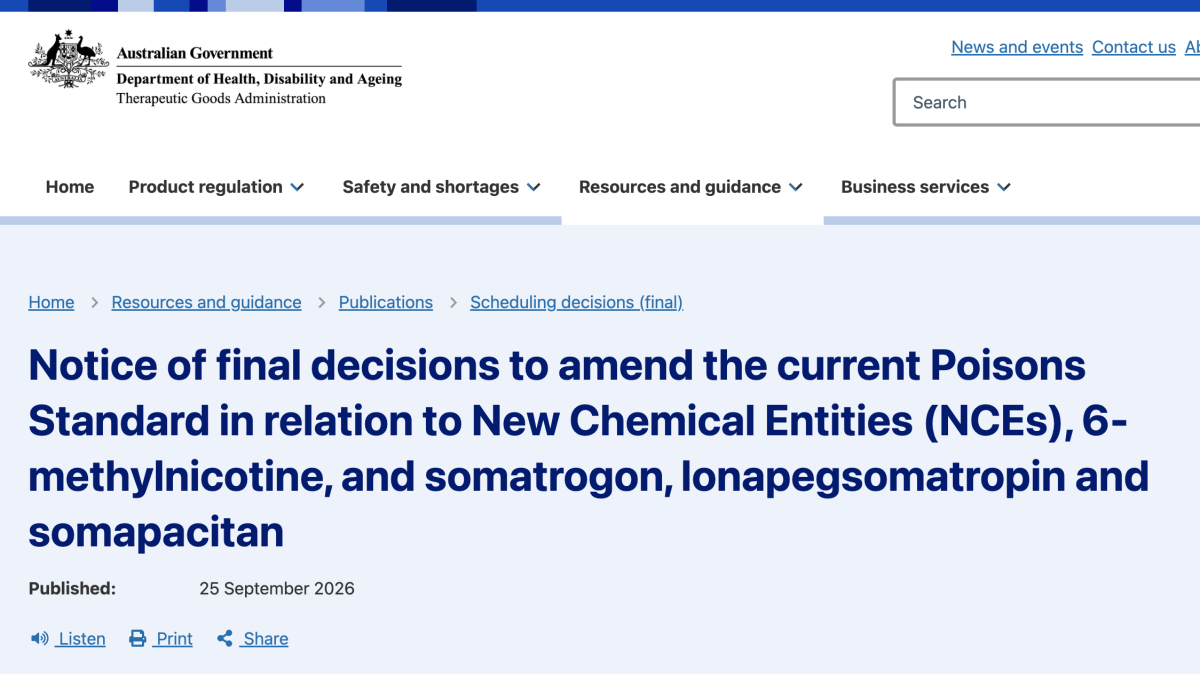
Australia's Therapeutic Goods Administration published a final decision on September 25 to classify 6-methylnicotine as a Schedule 9 prohibited substance under the Poisons Standard, effective October 1, 2026. TGA said the chemical has been reported in e-cigarette liquids sold in Australia and marketed as nicotine-free or nicotine alternatives, while evidence also indicates its use in preparations such as oral pouches. The government originally proposed a Schedule 7 classification but ultimately adopted the stricter Schedule 9 designation, citing acute toxicity, dependence risk, use in unapproved consumer products and misleading marketing.
News
Sep.29 by 2Firsts Perspectives
JTI Research Finds 31% of UK Respondents Offered Illicit Tobacco, While 63% of Ennis Packs Lack Duty Marks
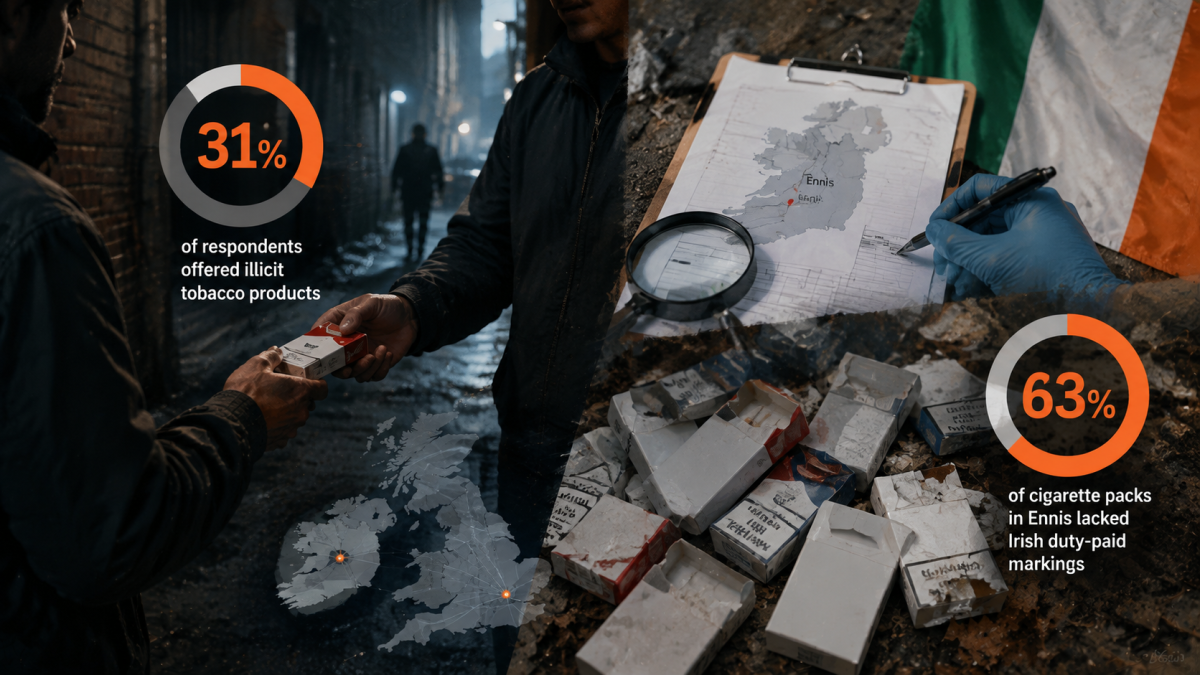
Multiple JTI-backed studies in the UK and Ireland indicate that illicit tobacco remains visible across consumer interactions and local markets. In the UK, JTI research found that 31% of respondents said they had been offered illicit tobacco products. In Ireland’s Ennis area, a JTI-commissioned empty pack survey found that 63% of sampled cigarette packs did not carry Irish duty-paid markings. The findings come from industry research rather than official government estimates of illicit tobacco market size, but highlight continued concerns among regulators, legitimate retailers and tobacco companies over illicit trade.
Aug.19
China’s Jiangsu Tobacco Monopoly Bureau and Drug Regulator Target Illegal Vape Sales Disguised as Medical Devices, Define Six Violations
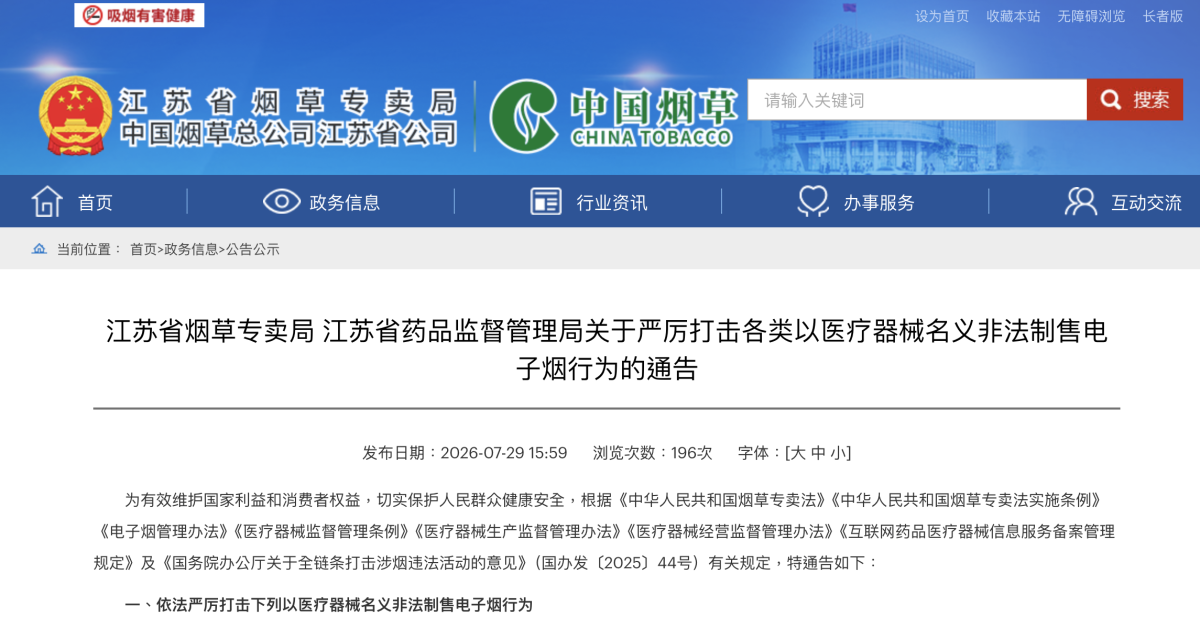
China’s Jiangsu Tobacco Monopoly Bureau and Jiangsu Provincial Medical Products Administration have issued a joint notice targeting illegal production and sales of vape products disguised as medical devices. The notice identifies six categories of violations, including obtaining medical licenses through false materials, misusing medical device credentials, expanding production beyond approved scopes, and using medical device-related online platforms to promote or sell vape products. The action is based on China’s tobacco and medical device regulations and aims to strengthen vape oversight and consumer protection.
Aug.04
South Korea Imports 12,126 Kg of Nicotine Analogues From April to August After Bringing Synthetic Nicotine Under Tobacco Law
South Korea's liquid-vape market is showing changes across raw-material imports, product types and sales channels after synthetic nicotine came under the Tobacco Business Act on April 24. Customs data show nicotine-analogue imports totaled 12,126 kilograms from April through August, while synthetic-nicotine imports over the same five months totaled 231,663 kilograms, just 39.3% of the amount imported in March alone. Physical liquid-vape stores tracked in Seoul and Gyeonggi Province fell 9.9%, unmanned outlets edged higher and online sales listings increased from 27,774 to 42,437. Government testing of 105 liquid inhalation products promoted as nicotine-free separately found nicotine in 13 and 6-methylnicotine in 12.
Sep.22
China Tobacco Yunnan files patent for cellulose-free nicotine pouch scaffold to replace microcrystalline cellulose
China Tobacco Yunnan Industrial Co., Ltd. has filed a patent application for a cellulose-free scaffold material for nicotine pouches, proposing a combination of bioceramic material, polydextrose and sugar alcohols to replace conventional microcrystalline cellulose and cellulose derivatives. The filing aims to address issues including powdery mouthfeel, residue and limited release control, while also reducing reliance on existing cellulose-based patent portfolios. In patent examples, one fast-release formulation reached a nicotine release rate of 50% at 10 minutes and more than 90% at 20 minutes.
Sep.02
Australia Brings in Deloitte to Support Illicit Tobacco and Vape Enforcement Across Data, Processes and Project Delivery
Australia’s Department of Home Affairs has hired Deloitte to provide data analytics, business-process, communications and project-delivery support to the Office of the Illicit Tobacco and E-Cigarette Commissioner. The government says Deloitte personnel do not provide policy advice to the Commissioner or the Australian government, with policy development and decision-making remaining with public officials. The arrangement has nevertheless drawn scrutiny because Deloitte has previously provided professional services to several tobacco and vaping companies.
Sep.03