BAT FY2025 Results: New Categories Contribution Expands as Smokeless Share Reaches 18.2%

Feb.12
BAT FY2025 Results: New Categories Contribution Expands as Smokeless Share Reaches 18.2%
British American Tobacco reported FY2025 revenue of £25.61 billion, down 1.0% on a reported basis but up 2.1% at constant currency. New Categories revenue rose 5.5%, with category contribution increasing 77%. Smokeless products accounted for 18.2% of group revenue.

Key Points


  • Revenue: £25,610m (≈ USD 33.78bn)
  • Reported change: -1.0%
  • Constant currency growth: +2.1%
  • Operating Profit: £9,997m (≈ USD 13.18bn)
  • Adjusted Operating Profit: £11,572m
  • Diluted EPS: 349.1p
  • Dividend per Share: 245.04p (+2.0%)
  • New Categories Revenue: £3,621m (≈ USD 4.78bn)
  • New Categories Category Contribution: £427m
  • Smokeless Revenue Share: 18.2%
  • Smokeless Consumers: 34.1 million


USD conversions are based on the FY2025 average exchange rate disclosed by the company (1 GBP = 1.319 USD).


2Firsts, February 12, 2026


British American Tobacco (BAT) on Thursday afternoon reported full-year 2025 revenue of £25.61 billion, equivalent to approximately USD 33.78 billion based on the company’s disclosed 2025 average exchange rate of 1 GBP = 1.319 USD. Revenue declined 1.0% on a reported basis but increased 2.1% at constant exchange rates.


Profit from operations reached £9.997 billion (approximately USD 13.18 billion). The reported increase reflects the prior-year impairment base effect. Adjusted operating profit rose modestly on a constant currency basis. Adjusted diluted earnings per share increased 0.7% at constant rates, while dividend per share rose 2.0% to 245.04 pence.


New Categories—comprising vapour, heated products and modern oral—generated £3.62 billion (approximately USD 4.78 billion) in revenue, up 5.5% on a reported basis and 7.0% at constant currency. Category contribution increased 77.1% to £427 million, with margin expanding to 11.8%.


Modern Oral revenue reached £1.17 billion, growing 47.4% on a reported basis. Vapour revenue declined 10.4%, while heated products were broadly stable year-on-year on a reported basis and increased slightly at constant currency.

 

BAT FY2025 Results: New Categories Contribution Expands as Smokeless Share Reaches 18.2%
Figure 1: BAT presentation showing Velo’s volume share progression in the U.S. modern oral nicotine category. The slide indicates continued share gains following the launch of Velo Plus in November 2024, with the brand reaching the No.2 volume and value share position in the U.S. in Q4 2025. Operational metrics including price index, trial conversion and state-level share are also highlighted. | Source: BAT, Preliminary Results 2025 Presentation, February 12, 2026.


Smokeless products accounted for 18.2% of group revenue, an increase of 70 basis points. Smokeless consumers totaled 34.1 million, up 4.7 million year-on-year.


Combustibles revenue totaled £20.20 billion, down 2.3% on a reported basis but up 1.0% at constant exchange rates.


BAT stated that New Categories returned to double-digit growth in the second half of the year, supported by performance in modern oral and recent premium launches including Vuse Ultra, glo Hilo and Velo Shift.


Further coverage and analysis will follow from 2Firsts.


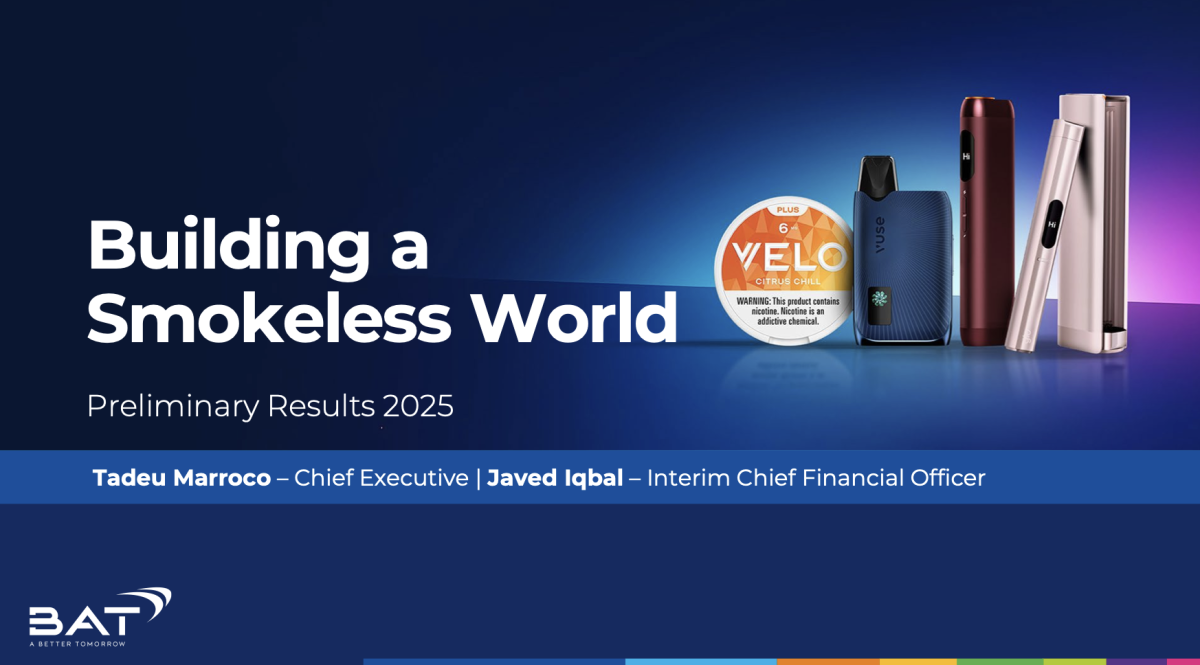
Cover image: BAT, Preliminary Results 2025 Presentation, February 12, 2026.


BAT FY2025 Results: New Categories Contribution Expands as Smokeless Share Reaches 18.2%
Putin Signs Russia’s Tobacco and Nicotine Product Licensing Law, Banning Unlicensed Sales From 2027
Russian President Vladimir Putin has signed a law introducing mandatory licensing for wholesale and retail trade in tobacco and nicotine-containing products, with the system taking effect on October 1, 2026, and unlicensed operations banned from March 1, 2027, while vape and e-liquid retail may also face uncertainty from temporary regional sales-ban powers.
Jul.01
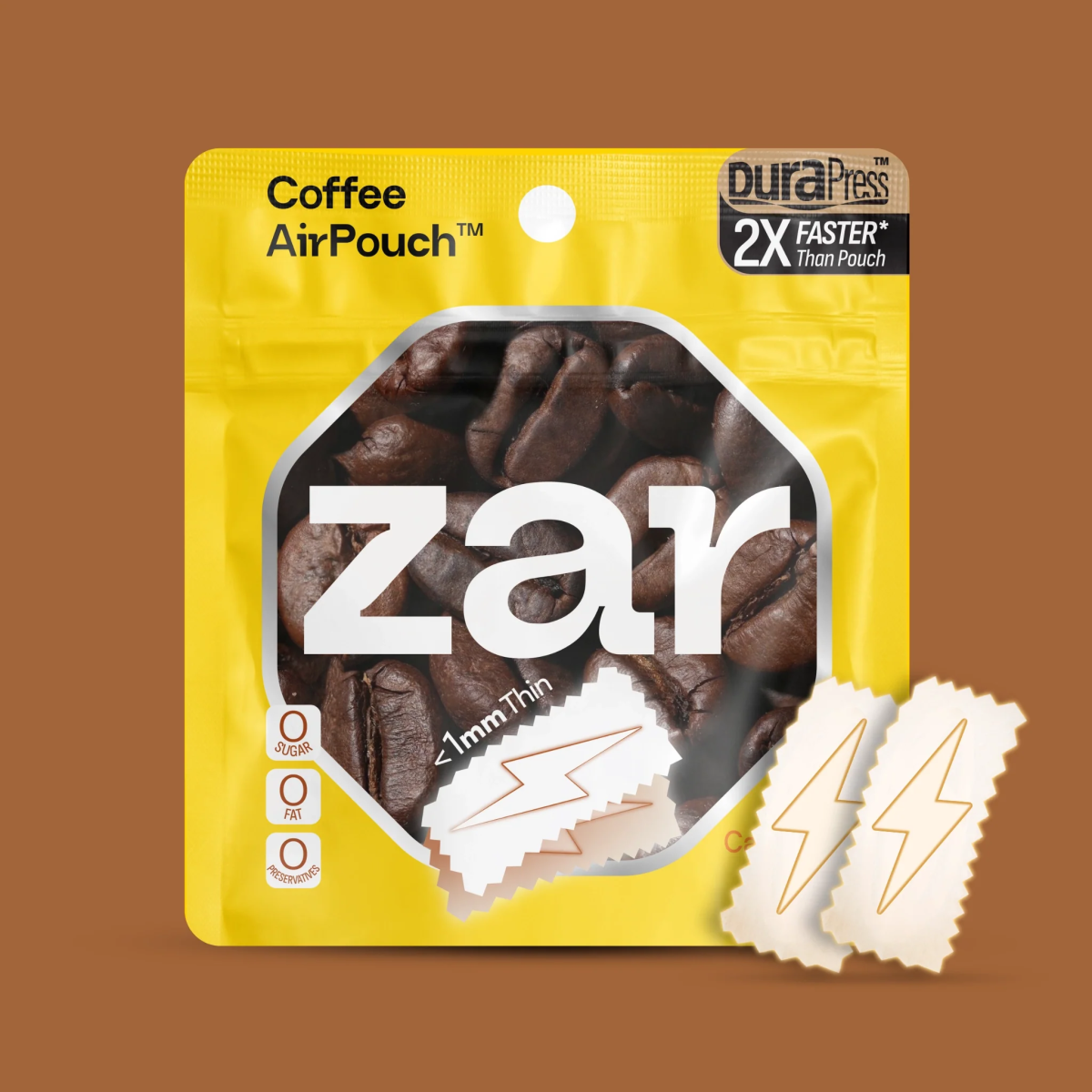
Product | ZAR Launches Coffee AirPouch, Expanding Pouch Format Into Caffeine Products
ZAR has introduced Coffee AirPouch, a nicotine-free caffeine pouch product that extends the brand’s AirPouch format into the functional consumer category. Each pouch contains 50mg of natural caffeine and features a coffee flavor, highlighting how pouch-based products are expanding beyond traditional nicotine applications into broader lifestyle and energy-use scenarios.
Market
Jul.13 by 2Firsts Perspectives
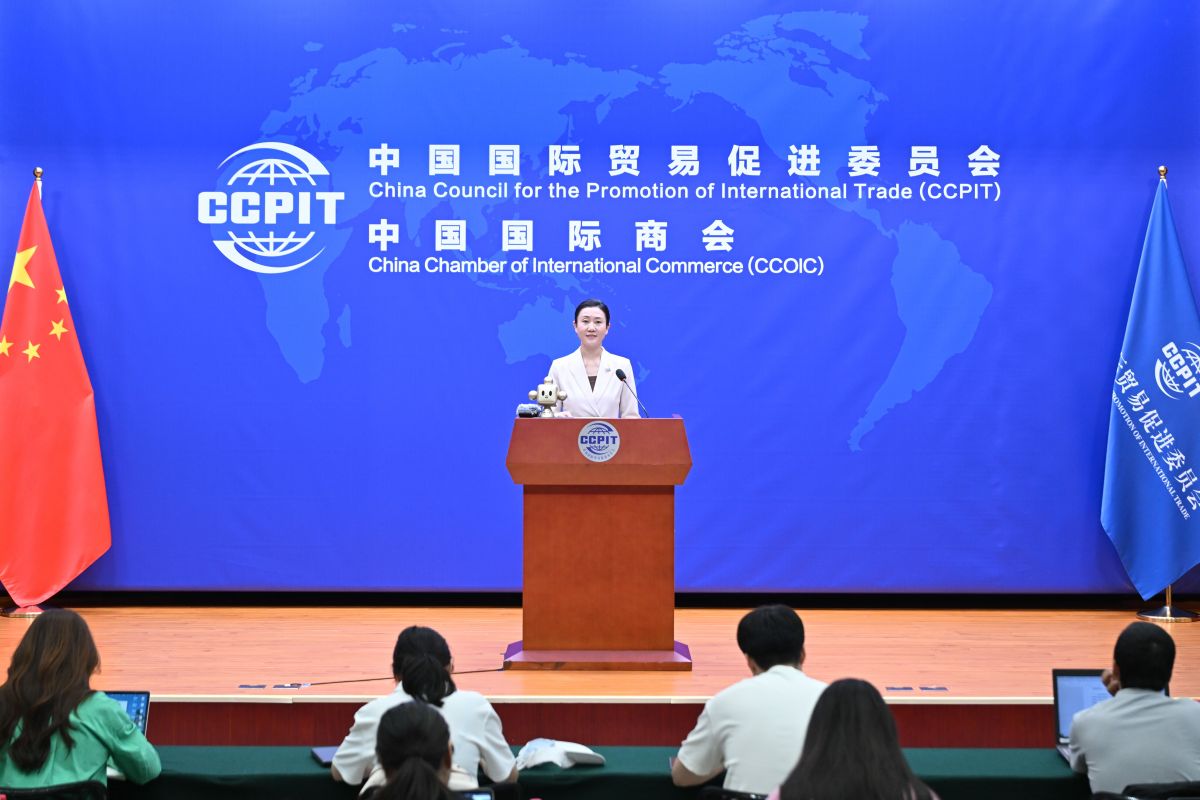
CCPIT Says Trade Friction Index for China-Related Electronics Sector Remains High, With Vape Products Among Areas of Focus
China Council for the Promotion of International Trade (CCPIT) held its July regular press conference on July 31, 2026, releasing the May 2026 Global Economic and Trade Friction Index. CCPIT spokesperson Yang Fan said the global trade friction index stood at 95 in May, remaining at a medium-to-high level. By industry, the electronics sector recorded the highest trade friction index among 13 monitored industries. In China-related trade frictions, the index stood at 93, with electronics products including drones, chips and vape products among areas where friction remained elevated.
Aug.03
UK PM Andy Burnham Shifts Business Rates Policy, Supporting Hospitality While Raising Pressure on Vape Shops
UK Prime Minister Andy Burnham’s government is adjusting business rates policy to support hospitality businesses while some other sectors, including vape retailers, face higher operating cost pressures. According to Streamline Feed, AJ Bell and other reports, the policy shift reflects a redistribution of business rate burdens as the government seeks to support sectors facing economic pressure. For UK vape shops, the change comes amid a broader regulatory environment shaped by the disposable vape ban, the upcoming Vaping Products Duty and increased compliance requirements.
News
Jul.24
South Korea Vape Strategies Diverge as BAT Reconsiders Exit and PMI Takes VEEV to About 14,000 Stores
BAT Rothmans says it previously considered exiting South Korea's vaping market because of competitive pressure from unregulated products, but is now reassessing conditions following changes to the country's nicotine regulatory framework. Vuse and other BAT vaping products remain available through existing distribution channels. The statement followed a South Korean media report that interpreted BAT's broader withdrawal from selected Vapour markets as a full exit from South Korea. Meanwhile, Philip Morris International launched VEEV inPRIME in the country in June and began expanding distribution to around 14,000 convenience stores and other retail channels in July. The contrasting moves highlight differing investment strategies as South Korea's regulated vaping market evolves.
Aug.14
As FDA Reshapes PMTA Reviews and ENDS Enforcement Priorities, CTP Acting Director Bret Koplow to Keynote NATO Event for a Retail Network of 66,000-Plus Stores
Bret Koplow, acting director of the U.S. Food and Drug Administration's Center for Tobacco Products, will deliver a keynote and participate in a fireside chat at the National Association of Tobacco Outlets' Sept. 29-30 conference in Washington. His appearance comes months after the FDA moved to accelerate PMTA reviews and introduced a more differentiated enforcement policy for certain unauthorized ENDS and oral nicotine pouch products. The agency also plans a public list identifying manufacturers and products it does not currently intend to prioritize for enforcement under the May guidance. NATO says its membership includes more than 66,000 retail stores, making product-status transparency and enforcement boundaries directly relevant to the retail sector.
Aug.14