Key Points
- BAT will cut about 5,500 jobs.
- Around 3,500 more roles will be outsourced.
- The restructuring excludes U.S. operations.
- BAT targets £600 million in annual savings by 2028.
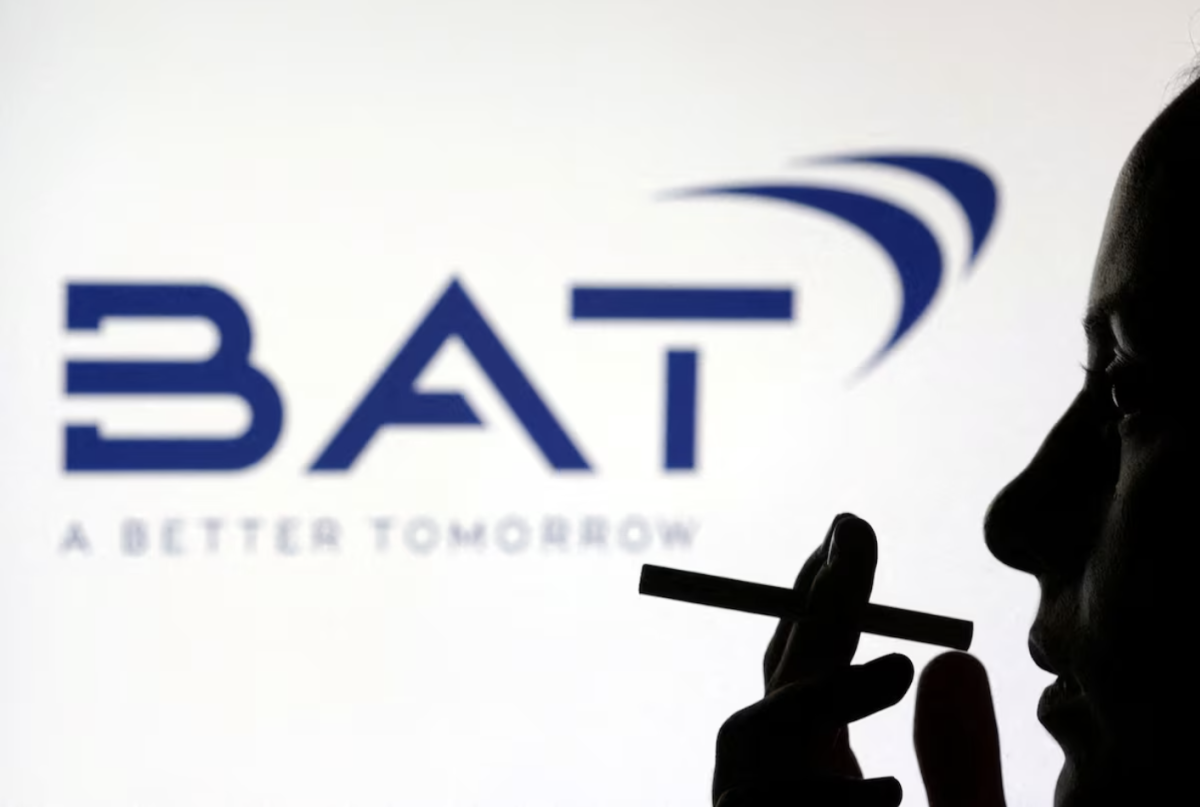
2Firsts, June 29, 2026 — According to Reuters, British American Tobacco (BAT) plans to cut about 5,500 jobs globally by the end of 2026 and transfer about 3,500 roles to strategic partners. The restructuring will affect about 9,000 roles in total, or nearly one-fifth of BAT’s global workforce of around 47,000.
Job Cuts and Outsourcing to Affect 9,000 Roles
BAT’s restructuring has two components: about 5,500 direct job cuts and the transfer of about 3,500 roles to strategic partners. The outsourcing arrangement involves partners including Accenture and is linked mainly to service centres and back-office functions.
The plan does not include BAT’s U.S. operations. The United States is one of BAT’s largest markets, where its business is operated through Reynolds American and includes traditional tobacco, novel nicotine products and related sales networks.
BAT said the restructuring is intended to simplify the organisation, improve technology capabilities and increase operating efficiency. The company aims to achieve £600 million in annual cost savings by 2028, with part of the savings expected to materialise by 2027.
That means the move is not only a job-cutting exercise. It is a broader restructuring of BAT’s organisation, back-office services, automation and digital capabilities. For large multinational tobacco companies, cost efficiency and resource reallocation are becoming key tools to protect margins as traditional tobacco growth slows.
AI and Automation Reshape the Organisation
BAT previously announced an AI-driven productivity programme. The latest workforce changes are one of the clearest signs of that programme being implemented. The company wants to simplify operating processes through automation, data analytics and technology tools while reducing roles that are repetitive or suitable for outsourcing.
From an industry perspective, AI and automation are changing how tobacco companies are organised. Large tobacco groups have traditionally relied on extensive regional management, supply-chain, finance, customer service and market-support structures. As digital tools and outsourced service models mature, those functions are being reassessed.
For BAT, combining AI with outsourcing can reduce fixed labour costs and shift some support functions to external service providers. But it also creates execution risks, including knowledge transfer, system integration, employee morale, service quality and compliance control.
Tobacco compliance is highly complex, covering product authorisation, labelling, taxation, cross-border trade, advertising restrictions, age verification and health warnings. If back-office and data functions are outsourced at scale, BAT will need to ensure that external partners can meet regulatory requirements across different jurisdictions.
Cost Pressure in the Smoke-Free Transition
BAT’s restructuring comes as the global tobacco industry accelerates its shift toward smoke-free products. Conventional cigarette volumes are under pressure in many markets, while regulation, taxation and public-health policy continue to limit growth in combustible tobacco.
BAT’s newer product portfolio includes Vuse e-cigarettes, Velo nicotine pouches and heated tobacco products. The company’s long-term strategy is to expand the revenue contribution of smoke-free products and reduce reliance on conventional cigarettes.
However, the smoke-free transition requires sustained investment. E-cigarette and nicotine pouch markets are competitive, regulatory review can be lengthy, and product development, channel management, compliant marketing and consumer education all require funding. BAT’s job cuts and outsourcing may help release resources for growth categories and digital capability building.
This is not unique to BAT. Major global tobacco companies face the same challenge: they need to maintain cash flow from traditional tobacco while investing in smoke-free products, scientific research, regulatory applications, digital systems and market expansion.
BAT’s workforce reduction is therefore not only an internal management event. It reflects the resource-reallocation logic of tobacco companies during a period of transition. Companies are using cost cuts, technology substitution and organisational simplification to create more room for investment in smoke-free businesses.
Impact on Vuse and Velo
BAT’s key brands in novel nicotine products include Vuse and Velo. Vuse is focused on the e-cigarette market, while Velo is a nicotine pouch brand. Both categories are high-growth but also face significant regulatory pressure.
In e-cigarettes, BAT must manage marketing authorisation, flavour restrictions, disposable-product regulation, youth protection and competition from illicit or unauthorised products in the United States, Europe and other markets. Vuse has a strong brand position in some markets, but regulatory uncertainty remains high.
In nicotine pouches, Velo operates in a fast-growing category where competition is intensifying. Brands such as ZYN have expanded rapidly in the United States and Europe, making nicotine pouches an important smoke-free battleground for international tobacco companies.
The restructuring may help BAT reduce costs and provide more resources for brands such as Vuse and Velo. But if organisational cuts affect market execution, channel management or compliance capacity, they could also weaken competitiveness in key markets.
For the novel tobacco industry, BAT’s move sends a clear message: growth in smoke-free products does not mean traditional tobacco groups can expand their organisations without limits. Instead, companies must rebalance profitability pressure, regulatory costs and innovation investment.
Industry Impact and Next Steps
BAT’s restructuring could have three wider implications for the global tobacco industry.
First, the cost benchmark for large tobacco companies may be reset. If BAT achieves significant savings through AI and outsourcing, other multinational tobacco companies may face investor pressure to pursue similar simplification.
Second, smoke-free competition will increasingly depend on efficiency. Companies will compete not only on products, channels and regulatory capability, but also on back-office systems, data capability, automation and cost per unit of revenue.
Third, the industry’s employment structure may change. Traditional manufacturing, regional support and back-office roles may decline, while data science, digital marketing, regulatory affairs, consumer insights, AI system management and compliance technology become more important.
Key issues to watch include how BAT implements job reductions and outsourcing, whether the measures affect sales and compliance capabilities in important markets, and whether the company can deliver £600 million in annual savings by 2028.
Overall, BAT’s job cuts and outsourcing plan are a concentrated example of the pressure facing the global tobacco industry. Conventional cigarettes still generate cash flow, but future growth increasingly depends on smoke-free products, digital capability and a lower-cost operating structure.
Cover Image source: Reuters



Disclaimer
This article is provided solely for professional research, industry discussion, and informational purposes. Any references to brands, companies, products, technologies, or policies are made for factual reporting and analytical purposes only, and do not constitute endorsement, recommendation, promotion, or advertising by 2Firsts.
Nicotine-containing products, including but not limited to cigarettes, e-cigarettes, heated tobacco products, and nicotine pouches, carry significant health risks. Readers are responsible for complying with all applicable laws and regulations in their respective jurisdictions, including age restrictions and access limitations.
The information contained in this article should not be regarded as investment, legal, medical, regulatory, or commercial advice. While 2Firsts strives to ensure the accuracy and reliability of its content, it does not assume liability for any direct or indirect loss arising from errors, omissions, inaccuracies, or reliance on the information contained herein.
This article is not intended for individuals below the legal age for accessing tobacco or nicotine-related information in their jurisdiction.
Copyright Notice
This article is either original content produced by 2Firsts or content reproduced, translated, summarized, or adapted from third-party sources with attribution where applicable. The intellectual property rights of the original content remain with 2Firsts or the respective original rights holders.
No individual or organization may copy, reproduce, distribute, republish, modify, translate, or otherwise use this content without prior authorization. Any unauthorized use may result in legal action.
For copyright-related inquiries, corrections, or removal requests, please contact: info@2firsts.com.
AI-Assisted Translation and Editing Notice
Portions of this article may have been translated, edited, or reviewed with the assistance of artificial intelligence tools to improve efficiency and readability. Due to the limitations of AI-assisted translation and editing, discrepancies, omissions, or inaccuracies may exist when compared with the original source.
Where applicable, readers are advised to refer to the original source for the most complete and accurate information. If you identify any errors or believe that any content infringes upon your rights, please contact us at info@2firsts.com, and we will review and address the matter promptly.