China Tobacco Regulator Deputy Head Visits Laos as Both Sides Strengthen Cooperation on Illegal Tobacco Trade

News
Aug.05
China Tobacco Regulator Deputy Head Visits Laos as Both Sides Strengthen Cooperation on Illegal Tobacco Trade
China’s official Xinhua News Agency reported that Liu Sanjiang, deputy head and Party group member of China’s tobacco regulator, led a delegation to Laos from July 31 to Aug. 2, 2026, for discussions with Lao authorities on combating cross-border illegal tobacco trade. The two sides discussed areas including law enforcement cooperation, information sharing and efforts to address tobacco-related illegal activities such as counterfeiting and smuggling. The visit highlights cooperation between Chinese and Lao authorities on illicit tobacco control.

Key Points

  •  Liu Sanjiang, deputy head of China’s tobacco regulator, led a delegation visit to Laos.
  •  The visit took place from July 31 to Aug. 2, 2026.
  • Chinese and Lao authorities discussed cross-border illegal tobacco trade control.
  • Cooperation areas included enforcement coordination and information sharing.
  • The discussions involved tobacco regulatory and law enforcement authorities from both countries.

2Firsts

August 3, 2026

China’s official Xinhua News Agency reported on Aug. 4, 2026, that Liu Sanjiang, deputy head and Party group member of China’s tobacco regulator, led a delegation to Laos from July 31 to Aug. 2 for discussions with Lao authorities on combating cross-border illegal tobacco trade.

According to Xinhua, the two sides exchanged views on tobacco-related illegal activity control, enforcement cooperation and improving cross-border regulatory coordination.

The visit was part of broader communication between Chinese and Lao authorities on addressing illicit tobacco trade.

China Tobacco Regulator Delegation Visits Laos

According to Xinhua, Liu Sanjiang led a delegation from China’s tobacco regulator during the visit to Laos and held discussions with Lao Ministry of Public Security officials and other relevant authorities.

The discussions focused on cooperation related to cross-border tobacco-related violations, including improving communication channels and regulatory coordination.

Public information indicates that the visit focused on illicit tobacco control rather than general trade cooperation.

Both Sides Focus on Cross-Border Illegal Tobacco Activities

Illegal tobacco trade often involves multiple stages, including:

  • illegal production;
  • counterfeit cigarette manufacturing;
  • cross-border transportation;
  •  distribution and sales.

The discussions between Chinese and Lao authorities focused on strengthening capabilities to address such cross-border activities.

Xinhua reported that the two sides would further enhance cooperation in relevant areas.

However, public information did not disclose specific case numbers, seizure amounts or details of joint enforcement operations discussed during the visit.

Cross-Border Supply Chains Become Focus of Illicit Tobacco Control

As illegal tobacco activities become increasingly cross-border in nature, regulators have paid closer attention to production, transportation and distribution networks.

For enforcement authorities, cooperation involving:

  • information sharing;
  •  enforcement coordination;
  • case referrals;
  •  regulatory communication;

has become an important approach to addressing illicit tobacco supply chains.

The China-Laos discussions highlight the role of international cooperation in combating illegal tobacco activities.

International Cooperation Expands in Illicit Tobacco Control

Illegal tobacco trade involves multiple jurisdictions and requires coordination among regulatory and enforcement authorities.

In recent years, governments and enforcement agencies have continued focusing on counterfeit tobacco products, smuggling networks and illegal supply chains.

The latest China-Laos discussions show that authorities are seeking to strengthen regulatory communication and enforcement cooperation in response to cross-border tobacco-related violations.

Follow 2Firsts for the latest updates on global tobacco and nicotine regulation, industry developments and market trends.

Cover Image generated by AI

U.S. Ninth Circuit Upholds FDA Denial of MH Global’s Flavored Vape PMTA Applications
The U.S. Court of Appeals for the Ninth Circuit upheld the FDA’s denial of MH Global LLC’s applications to market flavored electronic nicotine delivery systems (ENDS). The court ruled that FDA’s comparative-efficacy framework, which requires applicants to show that flavored products provide greater cessation or switching benefits than tobacco-flavored alternatives, is consistent with the Tobacco Control Act’s “appropriate for the protection of the public health” standard. The court also found that FDA was not required to establish the framework through notice-and-comment rulemaking.
Aug.26
As JUUL2 Wins FDA Authorization, Harm Reduction Journal Highlights the Role of Real-World Evidence in Nicotine Product Regulation
A commentary published in the international open-access, peer-reviewed Harm Reduction Journal argues that randomized controlled trials remain central to evaluating smoking cessation efficacy but cannot alone capture real-world uptake, complete switching, longer-term use and population impact of non-combustible nicotine products such as e-cigarettes, heated tobacco and nicotine pouches. The authors frame impact as “reach × efficacy” and call for real-world evidence to complement RCTs. Three days after publication, the FDA authorized three JUUL2 products and highlighted complete switching among adult smokers in explaining its decision, providing a timely regulatory backdrop to the debate.
Sep.08
Philippine Local Governments Urge Marcos to Prioritize Smoke- and Vape-Free Bill
The League of Municipalities of the Philippines (LMP) has urged President Ferdinand Marcos Jr. to prioritize the Smoke- and Vape-Free Bill, seeking a nationwide legal framework for tobacco and vape regulation. Local government leaders said national legislation would help standardize enforcement and strengthen public health measures. The proposal remains at the advocacy stage and has not yet become law.
Jul.29
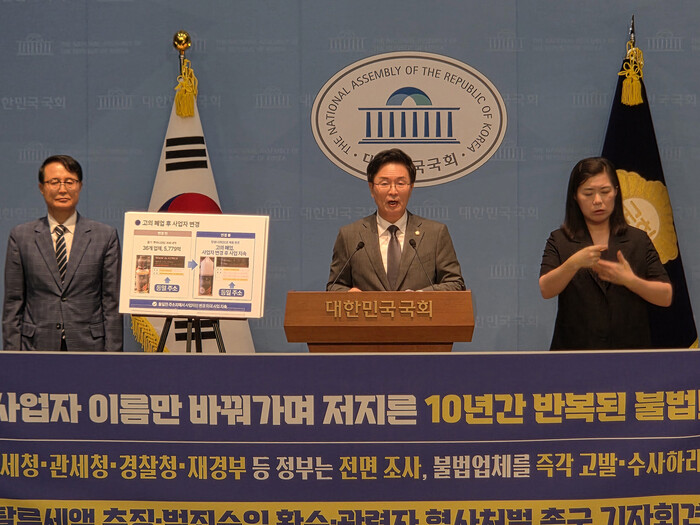
South Korean Lawmaker Jeong Jin-wook Pushes Synthetic Nicotine Vape Probe, Highlighting Supply Chain and Tax Concerns
South Korean lawmaker Jeong Jin-wook has again called for stronger government action against liquid synthetic nicotine vape manufacturers and sellers, alleging that some businesses may have avoided regulation through product labeling changes and corporate restructuring. According to Newsworks, JNILBO and other Korean reports, Jeong has held his third press conference on the issue, calling for a government-wide investigation. The dispute involves whether synthetic nicotine products should fall under tobacco regulations, tax implications and supply-chain transparency. South Korean government agencies have previously said some estimates of potential tax losses cannot be verified due to limited sales data.
Jul.27
Spain Plans to Extend Smoking Ban to Terraces and Beaches, Bringing Vapes Under New Restrictions
Spain is advancing a new tobacco-control reform that would expand smoking restrictions to additional public spaces, including restaurant terraces and beaches, while bringing vaping and other nicotine products into the same regulatory framework. The proposed measures aim to reduce secondhand smoke exposure, protect young people and expand smoke-free environments. The proposal remains under legislative development, and final implementation details have not yet been confirmed.
Jul.23
Charlie’s Says 30 PACHA Vape SKUs Tentatively Identified for FDA’s Non-Priority Enforcement Public List
Charlie’s Holdings said the U.S. Food and Drug Administration notified the company on June 23, 2026, that 30 PACHA vape SKUs with submitted PMTAs had been tentatively identified for inclusion on a planned public-facing FDA webpage. Under enforcement guidance issued by FDA in May, the webpage is intended to identify certain unauthorized products for which the agency generally does not intend to prioritize enforcement of premarket authorization requirements. Charlie’s disclosed the development alongside second-quarter revenue of $3.8 million, up 116% year over year.
Aug.25