Convenience Store Denied Alcohol License for Selling Counterfeit Tobacco

Regulations by 2FIRSTS.ai
Jan.10.2024
Convenience Store Denied Alcohol License for Selling Counterfeit Tobacco
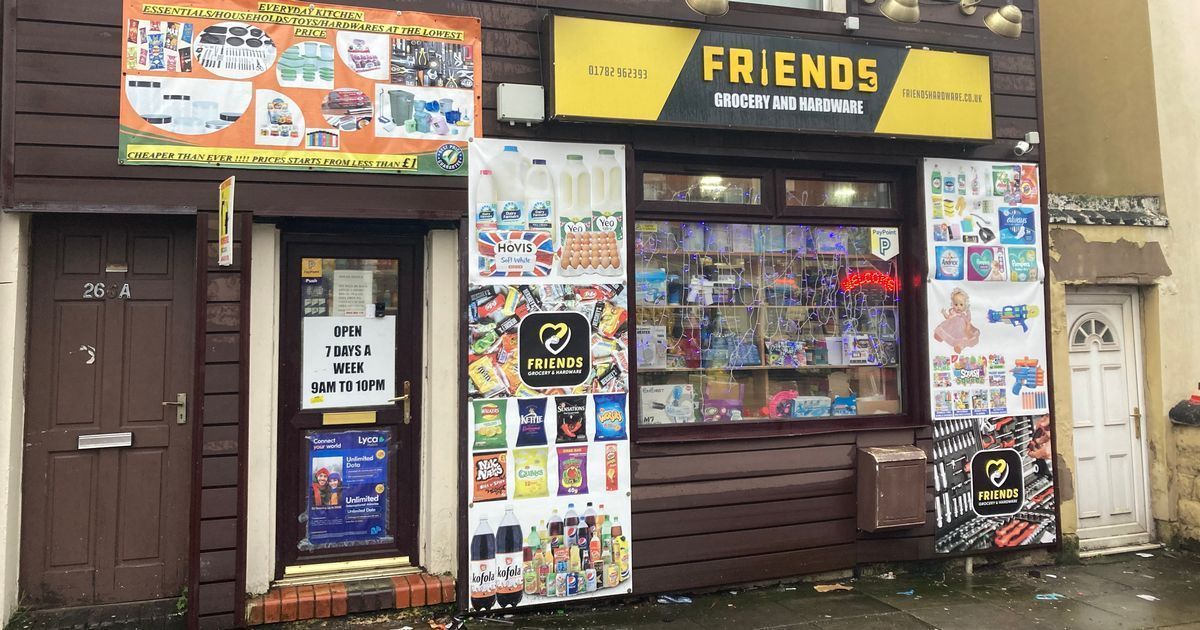
Mini convenience store on Waterloo Road denied alcohol license for selling counterfeit tobacco and illegal e-cigarettes. Investigation underway.

According to a report from UK media outlet Stoke Sentinel on January 10th, a mini convenience store on Waterloo Road has been denied an alcohol license due to selling counterfeit tobacco and illegal e-cigarettes.


Trade standards officials are under investigation after purchasing a pack of Richmond cigarettes and an over-the-limit disposable e-cigarette for £5, sparking concerns within the department.


Dahana Nasumutin, the business manager of this convenience store, applied for a liquor license. However, the trade standards department rejected the application for selling alcohol, as they deemed the store to be in violation of the licensing goals of preventing crime and disorder.


Ms. Nasimutin responded by stating that measures have been taken to remove all tobacco products from customer view and prominently display notices regarding age restrictions for tobacco sales in the store. She also emphasized that all activities deemed illegal have ceased. Despite detailing crime and chaos prevention measures in the application form, the city council licensing committee still rejected the alcohol sales permit during deliberations and will provide reasons for the denial at a later date.


We welcome news tips, article submissions, interview requests, or comments on this piece.

Please contact us at info@2firsts.com, or reach out to Alan Zhao, CEO of 2Firsts, on LinkedIn


Notice

1.  This article is intended solely for professional research purposes related to industry, technology, and policy. Any references to brands or products are made purely for objective description and do not constitute any form of endorsement, recommendation, or promotion by 2Firsts.

2.  The use of nicotine-containing products — including, but not limited to, cigarettes, e-cigarettes, nicotine pouchand heated tobacco products — carries significant health risks. Users are responsible for complying with all applicable laws and regulations in their respective jurisdictions.

3.  This article is not intended to serve as the basis for any investment decisions or financial advice. 2Firsts assumes no direct or indirect liability for any inaccuracies or errors in the content.

4.  Access to this article is strictly prohibited for individuals below the legal age in their jurisdiction.


Copyright


This article is either an original work created by 2Firsts or a reproduction from third-party sources with proper attribution. All copyrights and usage rights belong to 2Firsts or the original content provider. Unauthorized reproduction, distribution, or any other form of unauthorized use by any individual or organization is strictly prohibited. Violators will be held legally accountable.

For copyright-related inquiries, please contact: info@2firsts.com


AI Assistance Disclaimer


This article may have been enhanced using AI tools to improve translation and editorial efficiency. However, due to technical limitations, inaccuracies may occur. Readers are encouraged to refer to the cited sources for the most accurate information.

We welcome any corrections or feedback. Please contact us at: info@2firsts.com

CCPIT Says Trade Friction Index for China-Related Electronics Sector Remains High, With Vape Products Among Areas of Focus
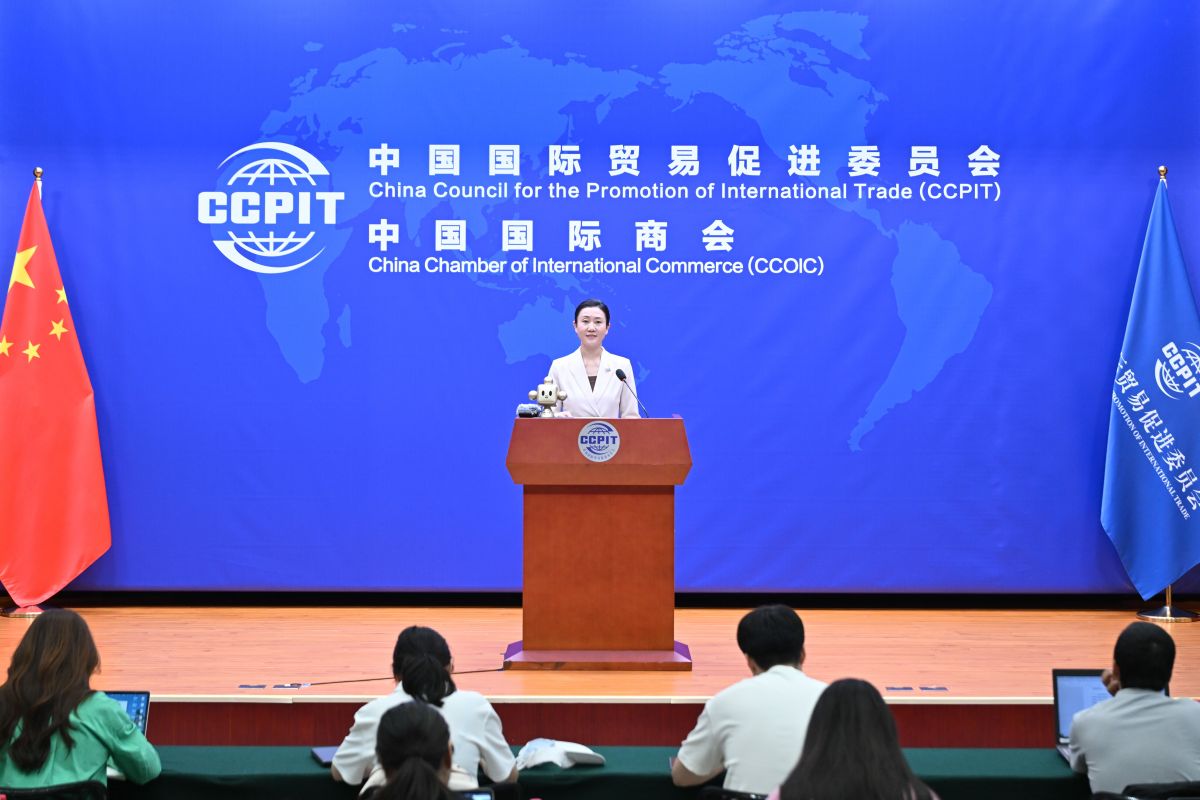
China Council for the Promotion of International Trade (CCPIT) held its July regular press conference on July 31, 2026, releasing the May 2026 Global Economic and Trade Friction Index. CCPIT spokesperson Yang Fan said the global trade friction index stood at 95 in May, remaining at a medium-to-high level. By industry, the electronics sector recorded the highest trade friction index among 13 monitored industries. In China-related trade frictions, the index stood at 93, with electronics products including drones, chips and vape products among areas where friction remained elevated.
Aug.03
Product | PMI Launches Airport-Exclusive IQOS Skylens Limited Edition, Expanding From Japan’s Narita to Travel Retail Markets in 13 Countries Summary
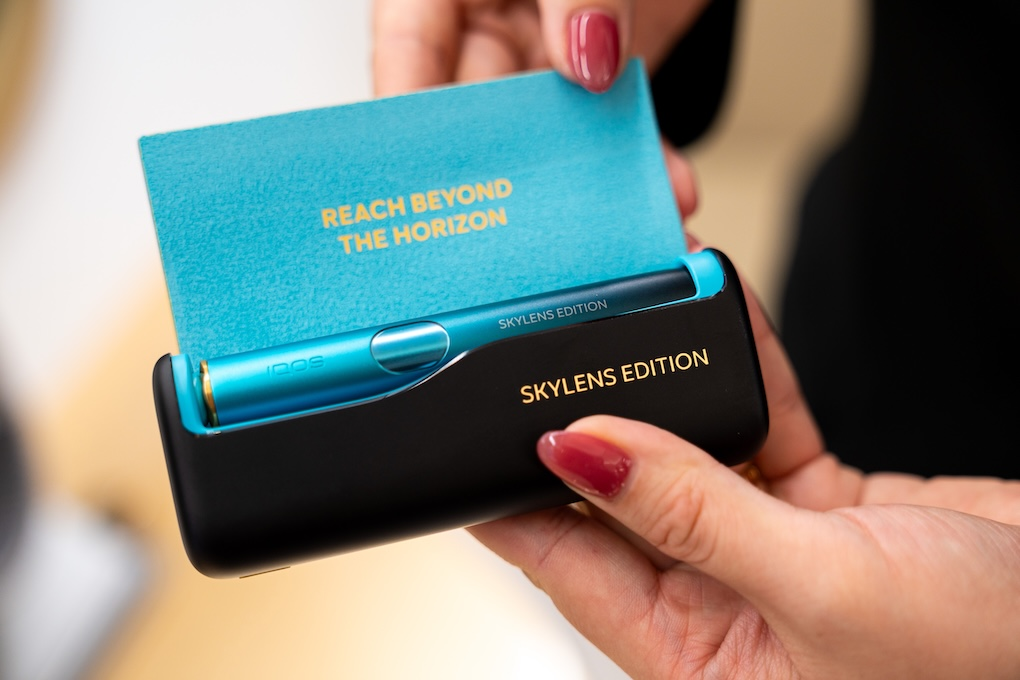
Philip Morris International (PMI) has introduced the airport-exclusive limited-edition IQOS ILUMA i PRIME Skylens, the company’s first device created specifically for airport travel retail. Inspired by the world of flight and finished in metallic blue, Skylens debuted at Narita International Airport in Japan before expanding into selected airport duty-free and travel-retail channels across 13 countries in Europe, Asia, the Middle East and Africa. The product retains the existing IQOS ILUMA i PRIME platform, with differentiation centered on airport exclusivity, design and travel-retail execution rather than a new heating architecture.
PMI
Aug.19
Kelly White Bets on Female Consumers as Nicotine Pouch Competition Intensifies | 2Firsts Interview
Swedish nicotine pouch brand Kelly White is building its strategy around adult female consumers. Founder and CEO Sophia Wilsby told 2Firsts that women accounted for around 70% of the brand’s repeat customers on HAYPP in Sweden in 2025. The interview explores female consumer segmentation, product and design differentiation, gender stereotypes, packaging regulation, and how independent brands can compete with global players such as ZYN and VELO while considering funding, partnerships and future ownership options.
Business
Sep.24
Charlie’s Bets on Age-Gating and 678 PMTA Assets as U.S. Vape Enforcement Landscape Shifts
Charlie’s Holdings said in its latest shareholder letter that it is moving to commercialize PACHA products and monetize its PMTA assets as the FDA changes enforcement priorities for unauthorized ENDS products. Thirty PACHA SKUs were previously tentatively identified for a proposed public list of products that the FDA generally does not intend to prioritize for enforcement. Charlie’s is also preparing test-market sales of age-gated flavored disposables and says it currently holds 678 PMTA-related product assets while seeking additional strategic transactions and partnerships.
Sep.11
China Tobacco Yunnan files patent for cellulose-free nicotine pouch scaffold to replace microcrystalline cellulose
China Tobacco Yunnan Industrial Co., Ltd. has filed a patent application for a cellulose-free scaffold material for nicotine pouches, proposing a combination of bioceramic material, polydextrose and sugar alcohols to replace conventional microcrystalline cellulose and cellulose derivatives. The filing aims to address issues including powdery mouthfeel, residue and limited release control, while also reducing reliance on existing cellulose-based patent portfolios. In patent examples, one fast-release formulation reached a nicotine release rate of 50% at 10 minutes and more than 90% at 20 minutes.
Sep.02
China Tobacco Hubei explores staged nicotine pouch delivery, using dynamic membranes to slow early release and gradient particles to sustain later delivery
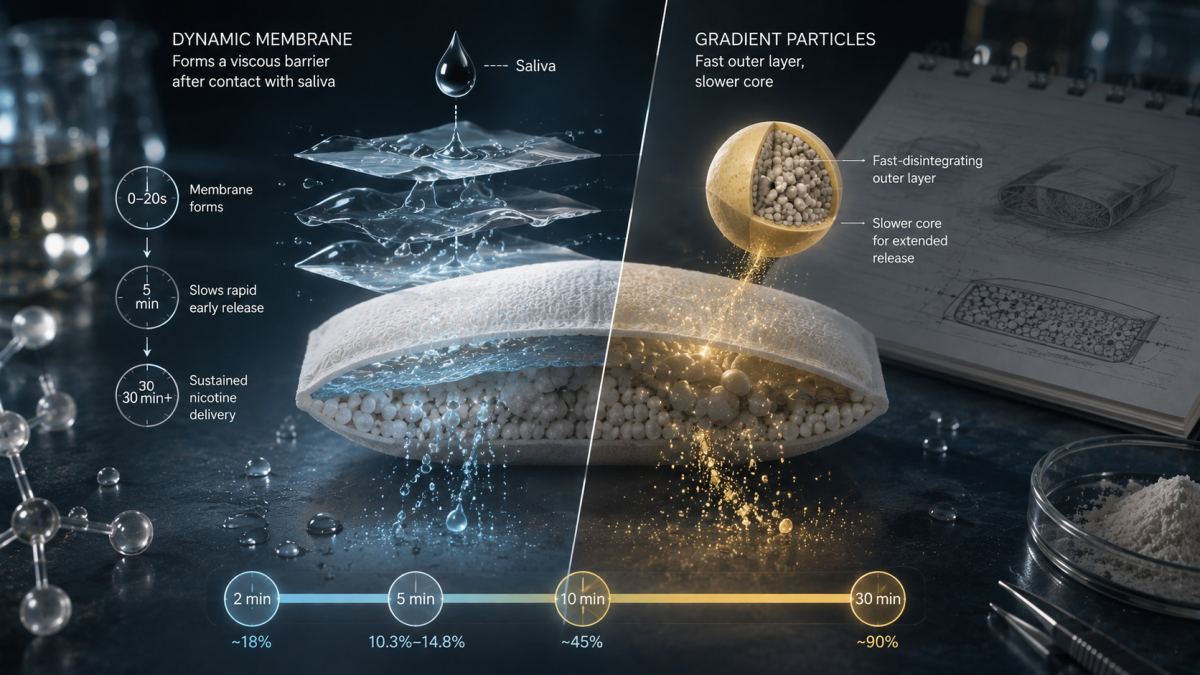
China Tobacco Hubei Industrial Co., Ltd. disclosed several oral nicotine-related patent applications in August 2026, including two that approach staged nicotine release from different directions. One uses a high-viscosity membrane that forms inside the pouch after contact with saliva to slow rapid early release, while the other uses gradient particles with a faster-disintegrating outer layer and a slower core to create a fast-to-sustained release profile. Together, the filings explore how nicotine pouches could balance initial delivery with release later in use.
Sep.03