Key Points
- Kumulus Vape, Europe’s first publicly listed vape company, reported a 7.8% H1 revenue decline.
- Physical store sales increased 41.5%, becoming a key growth area.
- The company is using retail expansion and multi-channel operations to manage market pressure.
- France’s vape market is facing regulatory, competitive and consumer changes.
- Kumulus Vape’s performance provides insight into the evolution of Europe’s vape industry.
2Firsts
July 27, 2026
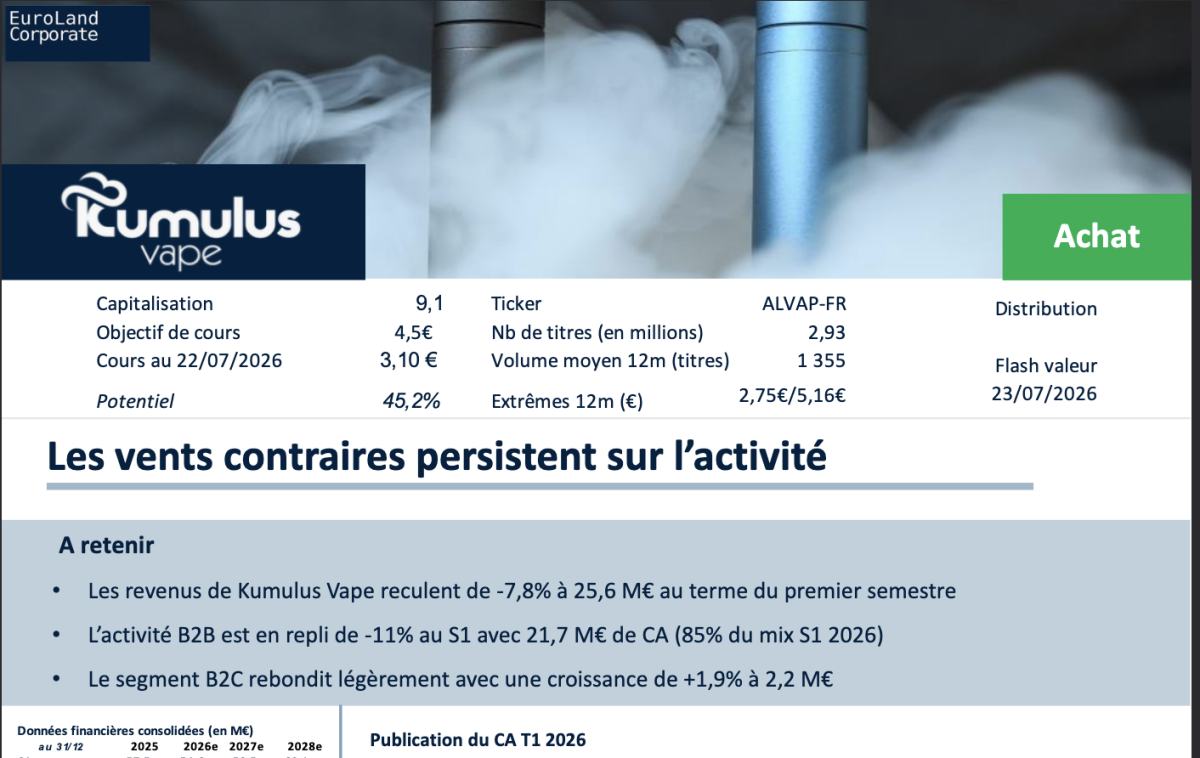
Kumulus Vape, Europe’s first publicly listed vape company, reported a 7.8% year-on-year decline in first-half 2026 revenue as the company navigated a challenging French vape market through retail expansion and channel diversification.
According to Boursorama, Ideal Investisseur and other reports, Kumulus Vape said market conditions remained challenging during the period, but its diversified sales channels helped maintain business resilience, with physical retail operations continuing to grow.
Kumulus Vape listed on Euronext Access Paris in 2019, becoming Europe’s first publicly listed vape company, before transferring to Euronext Growth Paris in 2021. The company has become one of the market’s representative publicly traded vape businesses, making its performance a reference point for industry trends.
Kumulus Vape Faces H1 Revenue Pressure
Kumulus Vape reported a 7.8% year-on-year decline in first-half revenue.
The company said the vape market is undergoing structural changes, with competition, consumer behavior shifts and regulatory developments affecting business conditions.
However, Kumulus Vape did not attribute the decline to a single factor, instead emphasizing its efforts to adjust its business model and strengthen distribution channels.
For European vape companies, competition is increasingly shifting from rapid market expansion toward operational efficiency, channel strength and customer retention.
Retail Stores Become a Growth Driver
While overall revenue declined, Kumulus Vape’s physical retail business showed stronger performance.
The company reported that store sales increased 41.5% year on year during the first half.
The performance highlights the continued importance of specialist vape stores in the European market. Compared with online-only channels, physical stores provide product guidance, customer education and after-sales services.
Kumulus Vape is using retail expansion to reduce exposure to volatility in individual sales channels.
French Vape Market Enters Structural Adjustment
Kumulus Vape’s results reflect broader changes in France’s vape market.
In recent years, the European vape sector has faced multiple pressures, including regulatory developments, changing consumer preferences and increased competition.
Companies are increasingly required to balance product compliance, distribution strategies and market operations.
For retailers, reliance on a single channel creates greater risk, making multi-channel strategies increasingly important.
Kumulus Vape Expands Multi-Channel Strategy
To respond to market pressure, Kumulus Vape continues developing multiple sales channels.
Beyond physical stores, the company also operates online sales and professional customer channels to expand market reach.
Across the vape industry, companies are moving beyond product-focused competition toward stronger retail networks, customer services and brand operations.
For listed vape companies, channel quality and business model stability are becoming increasingly important measures of long-term competitiveness.
European Vape Companies Move Toward Operational Maturity
Kumulus Vape’s first-half results highlight a new phase for the European vape market.
While previous growth was driven largely by consumer adoption and category expansion, companies are now facing more complex regulation, higher operating costs and more mature competition.
Future success will depend not only on product innovation but also on retail capabilities, supply-chain management and market adaptability.
As one of Europe’s publicly listed vape companies, Kumulus Vape’s trajectory reflects the sector’s transition from expansion toward more disciplined and sustainable operations.
Follow 2Firsts for the latest updates on global tobacco and nicotine markets, company developments and regulatory changes.
Cover Image source: Kumulus Vape