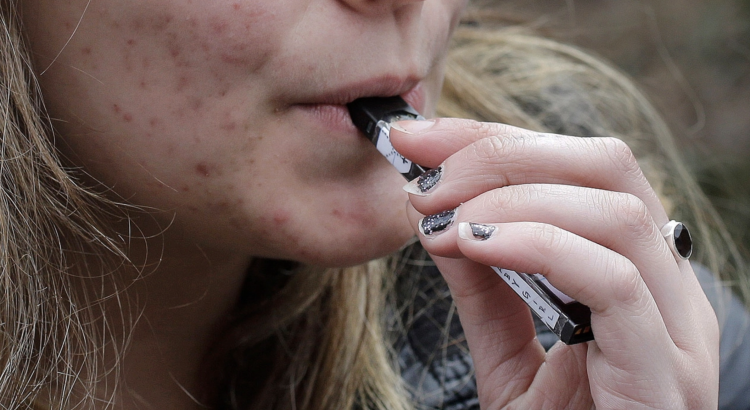
According to a research report by Drugwatch, a US organization that monitors medications, approximately 25% of high school students in the US use e-cigarettes, while the proportion among adults is approximately 6%. Currently, over 35% of high school students in West Virginia use e-cigarette products, making it the state with the highest usage rate in the country.
The state with the highest proportion of high school students using electronic cigarettes
According to data from drug monitoring, the state with the highest usage of electronic cigarettes by young people is West Virginia, at 35.7%, followed by North Carolina at 35.5%, New Mexico at 34%, and New Hampshire at 33.8%.
According to data from the West Virginia Division of Tobacco Prevention, the rate of tobacco use among adults in the state is the highest in the country, with approximately 25.2% of adults in West Virginia using tobacco.
Currently, the tax rate on traditional cigarettes in West Virginia is significantly higher than that of electronic cigarettes. The state charges $1.20 for every 20 traditional cigarette sticks, while only charging $0.15 for every 2 milliliters of e-cigarette liquid.
The issue of electronic cigarette use among middle school students.
Across the United States, there have been reports from various states of students being hospitalized as a result of using electronic cigarettes.
For example, three students at Mountaineer Junior High School in West Virginia used THC electronic cigarettes on school grounds and displayed signs of being under the influence. Two of the students were taken to the hospital, and local officials stated that it was fortunate the electronic cigarettes did not contain fentanyl.
In November 2022, three students from Barbour High School in West Virginia were hospitalized after experiencing "very serious adverse reactions" to something, fortunately, it was not fentanyl. Officials have not confirmed whether the reaction came from something in a vaping device.
In December 2022, four high school students in Portland, Connecticut were sent to the hospital after using e-cigarettes in the bathroom. The teacher noticed they were feeling drowsy and called an ambulance for them.
Related Reading:
A high school student in the United States fell ill after vaping in a school bathroom.
Reference:
A recent study has revealed that high school students in West Virginia have the highest rates of vaping in the United States.
Disclaimer
This article is provided solely for professional research, industry discussion, and informational purposes. Any references to brands, companies, products, technologies, or policies are made for factual reporting and analytical purposes only, and do not constitute endorsement, recommendation, promotion, or advertising by 2Firsts.
Nicotine-containing products, including but not limited to cigarettes, e-cigarettes, heated tobacco products, and nicotine pouches, carry significant health risks. Readers are responsible for complying with all applicable laws and regulations in their respective jurisdictions, including age restrictions and access limitations.
The information contained in this article should not be regarded as investment, legal, medical, regulatory, or commercial advice. While 2Firsts strives to ensure the accuracy and reliability of its content, it does not assume liability for any direct or indirect loss arising from errors, omissions, inaccuracies, or reliance on the information contained herein.
This article is not intended for individuals below the legal age for accessing tobacco or nicotine-related information in their jurisdiction.
Copyright Notice
This article is either original content produced by 2Firsts or content reproduced, translated, summarized, or adapted from third-party sources with attribution where applicable. The intellectual property rights of the original content remain with 2Firsts or the respective original rights holders.
No individual or organization may copy, reproduce, distribute, republish, modify, translate, or otherwise use this content without prior authorization. Any unauthorized use may result in legal action.
For copyright-related inquiries, corrections, or removal requests, please contact: info@2firsts.com.
AI-Assisted Translation and Editing Notice
Portions of this article may have been translated, edited, or reviewed with the assistance of artificial intelligence tools to improve efficiency and readability. Due to the limitations of AI-assisted translation and editing, discrepancies, omissions, or inaccuracies may exist when compared with the original source.
Where applicable, readers are advised to refer to the original source for the most complete and accurate information. If you identify any errors or believe that any content infringes upon your rights, please contact us at info@2firsts.com, and we will review and address the matter promptly.