The Indonesian Vape Consumer Association opposes unlabeled e-cigarette packaging

Nov.01.2024
The Indonesian Vape Consumer Association opposes unlabeled e-cigarette packaging
Indonesia’s Akvindo and AVI urge government to reassess plain packaging for e-cigarettes, citing consumer rights to clear product information.

The Indonesian Vape Consumer Association (Akvindo) is urging the government to reconsider its policy on plain packaging for e-cigarettes and regular tobacco, according to a Nov. 1 report by Indonesia Inside.


Akvindo’s chairman, Paido Siahaan, believes that the Ministry of Health’s draft regulations on the management of tobacco and e-cigarette products infringe upon consumers' rights to clear and accurate product information. 


These regulations, formulated under Government Regulation No. 28 of 2024 as an implementation guideline for the Health Law No. 17 of 2023, compromise the interests of e-cigarette consumers.


Wiratna Eko Indra Putra, secretary of the Indonesia Vapers Association (AVI), explained that under the Consumer Protection Law No. 8 of 1999, the government is obligated to protect citizens’ rights to safe and clear product information.


"Merchants must provide complete information on labels, such as product name, specifications, net weight, and production date, not just health warnings."


He also emphasized that the policy review should involve all relevant stakeholders, not only those who agree with the policy.


Wiratna cautioned that implementing a plain packaging policy would equate e-cigarettes with traditional tobacco, potentially running counter to the government's efforts to reduce smoking rates in Indonesia.


We welcome news tips, article submissions, interview requests, or comments on this piece.

Please contact us at info@2firsts.com, or reach out to Alan Zhao, CEO of 2Firsts, on LinkedIn


Notice

1.  This article is intended solely for professional research purposes related to industry, technology, and policy. Any references to brands or products are made purely for objective description and do not constitute any form of endorsement, recommendation, or promotion by 2Firsts.

2.  The use of nicotine-containing products — including, but not limited to, cigarettes, e-cigarettes, nicotine pouchand heated tobacco products — carries significant health risks. Users are responsible for complying with all applicable laws and regulations in their respective jurisdictions.

3.  This article is not intended to serve as the basis for any investment decisions or financial advice. 2Firsts assumes no direct or indirect liability for any inaccuracies or errors in the content.

4.  Access to this article is strictly prohibited for individuals below the legal age in their jurisdiction.


Copyright


This article is either an original work created by 2Firsts or a reproduction from third-party sources with proper attribution. All copyrights and usage rights belong to 2Firsts or the original content provider. Unauthorized reproduction, distribution, or any other form of unauthorized use by any individual or organization is strictly prohibited. Violators will be held legally accountable.

For copyright-related inquiries, please contact: info@2firsts.com


AI Assistance Disclaimer


This article may have been enhanced using AI tools to improve translation and editorial efficiency. However, due to technical limitations, inaccuracies may occur. Readers are encouraged to refer to the cited sources for the most accurate information.

We welcome any corrections or feedback. Please contact us at: info@2firsts.com

Russia Adds Vapes to “Strategic Goods” List, Illegal Cross-Border Trade Faces Up to Five Years in Prison
Russia will place e-cigarettes and related nicotine products under its “strategic goods” framework from August 20, 2026. According to TVP World’s report published on August 19, the newly listed items include e-cigarettes, electronic smoking devices, vape liquids and nicotine salts. Individuals who illegally move these products across Russia’s customs border or its state border with other Eurasian Economic Union (EAEU) members could face up to five years in prison if shipment values exceed 100,000 rubles (about €1,000), provided all elements of a criminal offence are established.
Aug.20
U.S. Ninth Circuit Upholds FDA Denial of MH Global’s Flavored Vape PMTA Applications
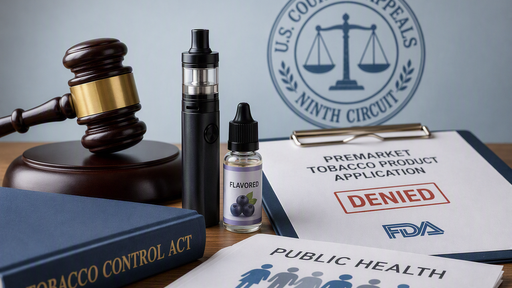
The U.S. Court of Appeals for the Ninth Circuit upheld the FDA’s denial of MH Global LLC’s applications to market flavored electronic nicotine delivery systems (ENDS). The court ruled that FDA’s comparative-efficacy framework, which requires applicants to show that flavored products provide greater cessation or switching benefits than tobacco-flavored alternatives, is consistent with the Tobacco Control Act’s “appropriate for the protection of the public health” standard. The court also found that FDA was not required to establish the framework through notice-and-comment rulemaking.
Aug.26
China Tobacco Hubei explores staged nicotine pouch delivery, using dynamic membranes to slow early release and gradient particles to sustain later delivery
China Tobacco Hubei Industrial Co., Ltd. disclosed several oral nicotine-related patent applications in August 2026, including two that approach staged nicotine release from different directions. One uses a high-viscosity membrane that forms inside the pouch after contact with saliva to slow rapid early release, while the other uses gradient particles with a faster-disintegrating outer layer and a slower core to create a fast-to-sustained release profile. Together, the filings explore how nicotine pouches could balance initial delivery with release later in use.
Sep.03
California Lawmakers Pass Disposable Nicotine Vape Ban, With Sales Prohibition Set for 2028
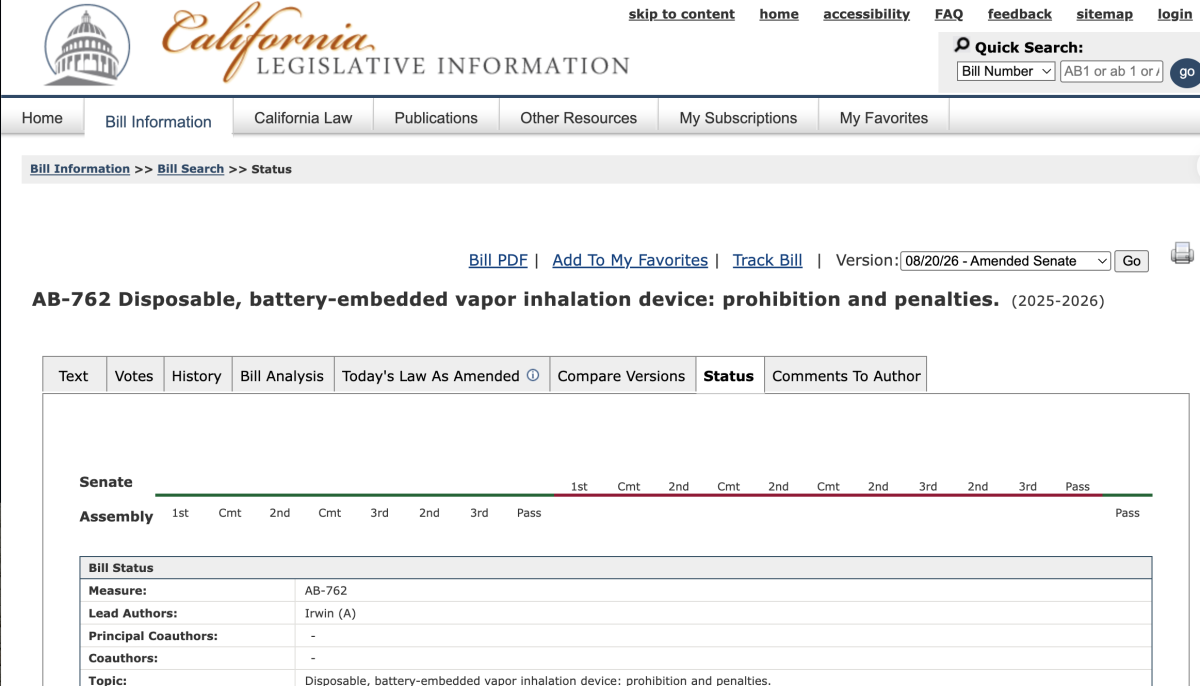
According to CBS Los Angeles on August 27, 2026, California lawmakers have passed Assembly Bill 762, which would phase out disposable, battery-embedded nicotine vapes in the state. If signed by Governor Gavin Newsom, manufacturing and importation of the covered products would be prohibited beginning January 1, 2027, followed by a sales ban on January 1, 2028. Driven primarily by concerns over electronic waste, lithium-battery fires and environmental pollution, the legislation would further shift California’s legal vape market toward rechargeable, refillable or replaceable-pod devices.
Aug.28
China’s Shanghai Tobacco Group Launches CNY 10.98 Million (Approximately US$1.53 Million) Procurement for Heated Tobacco Production Utility Equipment
Shanghai Tobacco Group Co., Ltd., a tobacco manufacturing company under China National Tobacco Corporation (CNTC), has launched a public tender for heated tobacco products (HTPs) production utility equipment at its Shanghai Cigarette Factory. The project is valued at CNY 10.98 million and covers six combined air-conditioning units, electrical cabinets and control systems for production facilities. The procurement includes equipment design, supply, installation, commissioning and related training services.
Aug.07
China Tobacco Yunnan files patent for cellulose-free nicotine pouch scaffold to replace microcrystalline cellulose
China Tobacco Yunnan Industrial Co., Ltd. has filed a patent application for a cellulose-free scaffold material for nicotine pouches, proposing a combination of bioceramic material, polydextrose and sugar alcohols to replace conventional microcrystalline cellulose and cellulose derivatives. The filing aims to address issues including powdery mouthfeel, residue and limited release control, while also reducing reliance on existing cellulose-based patent portfolios. In patent examples, one fast-release formulation reached a nicotine release rate of 50% at 10 minutes and more than 90% at 20 minutes.
Sep.02